
Setting up an FRP pipe factory is an exciting opportunity, but it also comes with many technical decisions. One of the most important steps is choosing the right FRP pipe manufacturing equipment. The equipment you select will determine your production capacity, product quality, operating costs, and long-term competitiveness.
From my experience working with composite manufacturing projects, many companies focus only on price when purchasing equipment. In reality, factors like automation level, pipe specifications, and long-term reliability are just as important. In this guide, we’ll walk through the key considerations to help you select the best machinery for your fiberglass pipe production line.
Why Equipment Selection Matters
FRP pipes are widely used in industries such as wastewater treatment, chemical processing, irrigation, and seawater desalination. These applications require pipes with precise mechanical properties and consistent quality.
This is why choosing the right FRP pipe manufacturing equipment is essential. The right machines ensure:
-
Stable pipe quality
-
Consistent wall thickness
-
Efficient material usage
-
High production efficiency
-
Lower maintenance costs
On the other hand, poorly chosen equipment can lead to production bottlenecks, inconsistent products, and higher operating costs.
Understand Your Production Goals First
Before selecting machinery, it’s important to define your production requirements.
Ask yourself a few basic questions:
-
What pipe diameters will you produce?
-
What is your target production capacity?
-
Which industries will your pipes serve?
-
What level of automation do you need?
For example, a municipal wastewater project may require large-diameter pipes, while chemical plants often need smaller pipes with high corrosion resistance.
Clearly defining these goals makes choosing the right FRP pipe manufacturing equipment much easier.
Core Equipment in an FRP Pipe Production Line
A typical fiberglass pipe manufacturing plant includes several key machines. Understanding their functions will help you evaluate equipment suppliers more effectively.
1. Filament Winding Machine
The filament winding machine is the heart of any FRP pipe production line.
This machine winds resin-impregnated fiberglass fibers around a rotating mandrel to build the pipe structure layer by layer.
Important features to evaluate include:
-
CNC control system accuracy
-
Winding angle control
-
Fiber tension management
-
Maximum pipe diameter and length
High-quality winding machines allow manufacturers to produce pipes with consistent mechanical strength and pressure resistance.
2. Resin Mixing and Feeding System
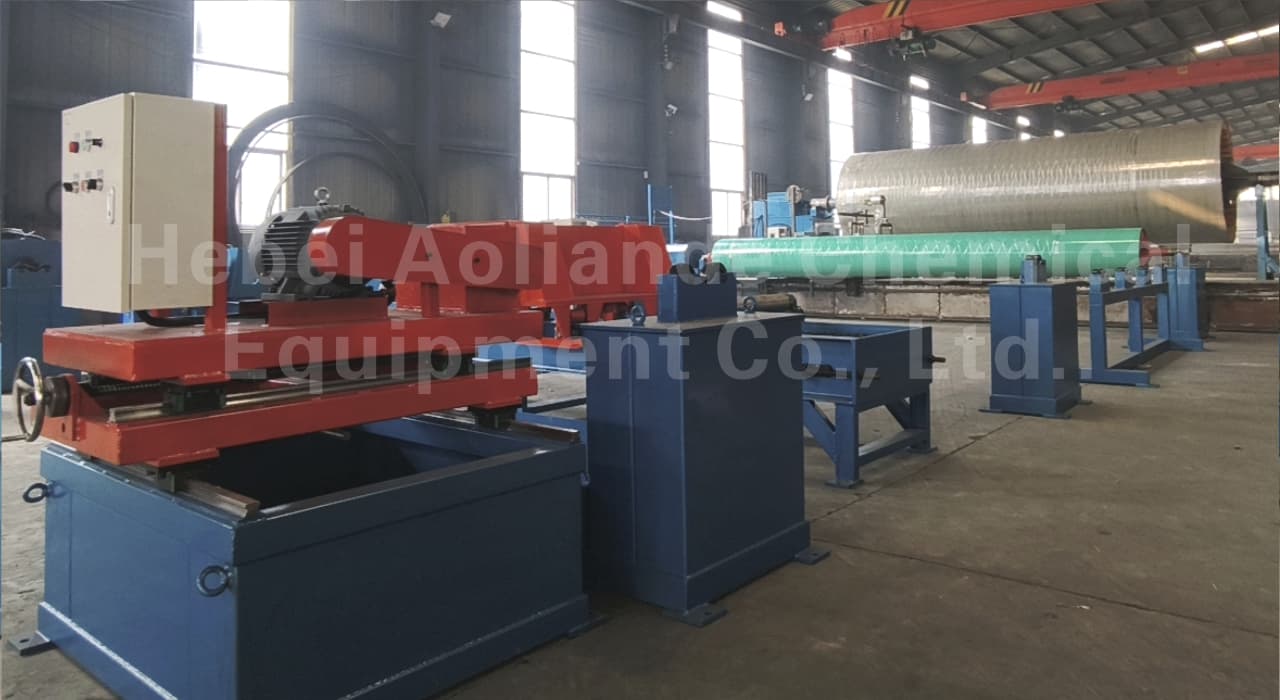
The resin system prepares and delivers resin to the production line.
Typical components include:
-
Resin storage tanks
-
Mixing equipment
-
Pumps and pipelines
-
Metering systems
A stable resin supply ensures consistent fiber impregnation, which directly affects the durability of the pipe.
Cuando choosing the right FRP pipe manufacturing equipment, make sure the resin system can maintain accurate mixing ratios and steady flow.
3. Liner Forming Machine
Many FRP pipes include an inner corrosion-resistant liner.
The liner forming machine applies resin and fiberglass surface mats to create this protective inner layer before structural winding begins.
This layer improves resistance to chemicals, acids, and wastewater gases.
For industries such as chemical processing or sewage treatment, liner quality is extremely important.
4. Sand Feeding System
Some FRP pipes—especially large-diameter pipes—use sand reinforcement to increase stiffness.
A sand feeding system adds silica sand between fiberglass layers during the winding process.
Benefits include:
-
Reduced resin consumption
-
Increased pipe rigidity
-
Lower production costs
This system is commonly used in reinforced plastic mortar pipes (FRPM pipes).
5. Curing Equipment
After winding, the resin must cure to solidify the pipe structure.
Curing systems may include:
-
Heated curing ovens
-
Infrared heating systems
-
Controlled temperature curing rooms
Proper curing is essential for achieving the designed mechanical strength and chemical resistance.
6. Demolding Machine
Once curing is complete, the finished pipe must be removed from the mandrel.
Demolding machines use hydraulic or mechanical systems to safely extract the pipe without damaging its internal surface.
A reliable demolding system reduces downtime between production cycles.
7. Pipe Cutting and Finishing Equipment
After demolding, pipes must be trimmed and prepared for installation.
Typical finishing equipment includes:
-
Pipe cutting machines
-
Edge trimming tools
-
Joint forming machines
These machines ensure that each pipe meets dimensional and connection requirements.
Key Factors When Choosing the Right FRP Pipe Manufacturing Equipment
Now that we’ve reviewed the main machines, let’s look at the most important selection factors.
1. Pipe Diameter Range
Different production lines support different pipe sizes.
Some machines specialize in small industrial pipes, while others can produce large municipal pipelines.
Make sure the equipment can cover your required diameter range.
2. Production Capacity
Production capacity determines how many pipes you can produce per day or per year.
High-capacity production lines may include:
-
Multiple winding stations
-
Automated material feeding
-
Fast curing systems
If your goal is large-scale export production, capacity becomes a critical factor.
3. Automation Level
Modern factories increasingly rely on automated production systems.
Advanced production lines include:
-
CNC winding control
-
Automated resin delivery
-
Automatic pipe extraction
-
Digital monitoring systems
Higher automation improves consistency and reduces labor costs.
4. Equipment Reliability
Production downtime can be extremely costly.
Cuando choosing the right FRP pipe manufacturing equipment, reliability should be a top priority.
Look for suppliers who offer:
-
Proven equipment designs
-
High-quality components
-
Long service life
It’s also helpful to visit existing factories using the same equipment.
5. Technical Support and Training
FRP pipe manufacturing requires specialized knowledge.
A good equipment supplier should provide:
-
Installation guidance
-
Operator training
-
Process optimization support
-
After-sales technical service
These services help ensure the production line operates efficiently from the start.
Example: Equipment Selection for a New Factory
Let’s consider a simple example.
Imagine a company planning to produce FRP pipes for wastewater infrastructure. Their target pipe diameter range is 300–2000 mm, and they expect to produce 10,000 tons of pipes annually.
In this case, the recommended production line might include:
-
CNC filament winding machine
-
Automated resin mixing system
-
Liner forming equipment
-
Sand feeding system
-
Heat curing station
-
Hydraulic demolding machine
-
Pipe cutting and finishing equipment
With the right setup, the factory could achieve stable production with consistent pipe quality.
Future Trends in FRP Pipe Manufacturing Equipment
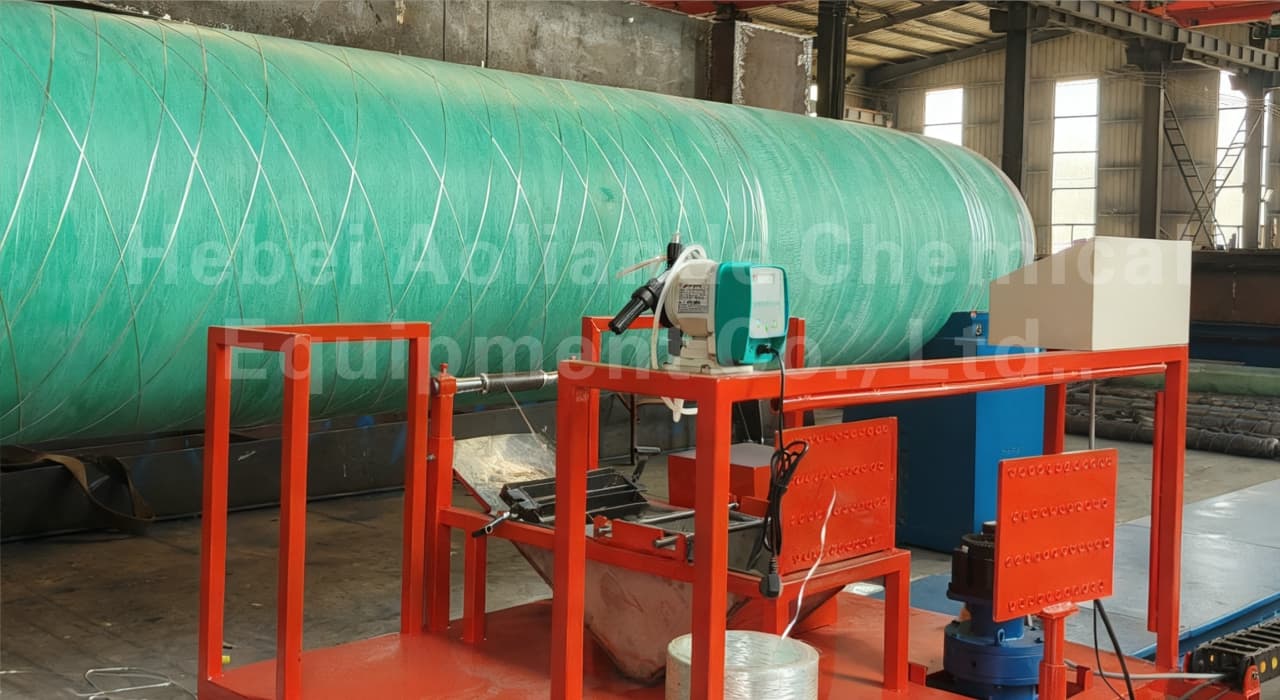
The fiberglass industry is evolving quickly, and new technologies are improving production efficiency.
Some emerging trends include:
-
Smart manufacturing systems
-
AI-assisted production monitoring
-
Energy-efficient curing technology
-
Fully automated pipe handling systems
These innovations will continue to influence how manufacturers approach choosing the right FRP pipe manufacturing equipment.
Pensamientos finales
Building a successful fiberglass pipe manufacturing facility starts with selecting the right machines. From filament winding systems to curing equipment and finishing tools, every component plays an important role in ensuring efficient and reliable production.
By carefully evaluating factors such as pipe size range, automation level, production capacity, and supplier support, companies can make smarter investment decisions.
In the long run, choosing the right FRP pipe manufacturing equipment not only improves product quality but also strengthens a manufacturer’s competitiveness in the growing global composites market.