
Fiberglass reinforced plastic (FRP) tubes are widely used in industries such as chemical processing, water treatment, construction, and energy systems. These tubes are valued for their corrosion resistance, high strength, and lightweight structure. Behind their production is a specialized piece of equipment known as the FRP tube winding machine.
If you’re involved in composite manufacturing—or considering starting a fiberglass production facility—understanding how this machine works is extremely important. In this guide, I’ll explain what an FRP tube winding machine is, how it operates, its key components, and why it has become a core technology in modern FRP manufacturing.
What Is an FRP Tube Winding Machine?
Un FRP tube winding machine is industrial equipment used to manufacture fiberglass tubes using the filament winding process. During production, continuous glass fibers are coated with resin and wound around a rotating mandrel in controlled patterns.
As the layers of fiber accumulate, they form a composite structure that becomes extremely strong once the resin cures. After curing, the finished tube is removed from the mandrel and prepared for final processing.
This manufacturing method allows precise control over fiber orientation, wall thickness, and structural strength. As a result, manufacturers can produce tubes with consistent quality and predictable performance.
How an FRP Tube Winding Machine Works
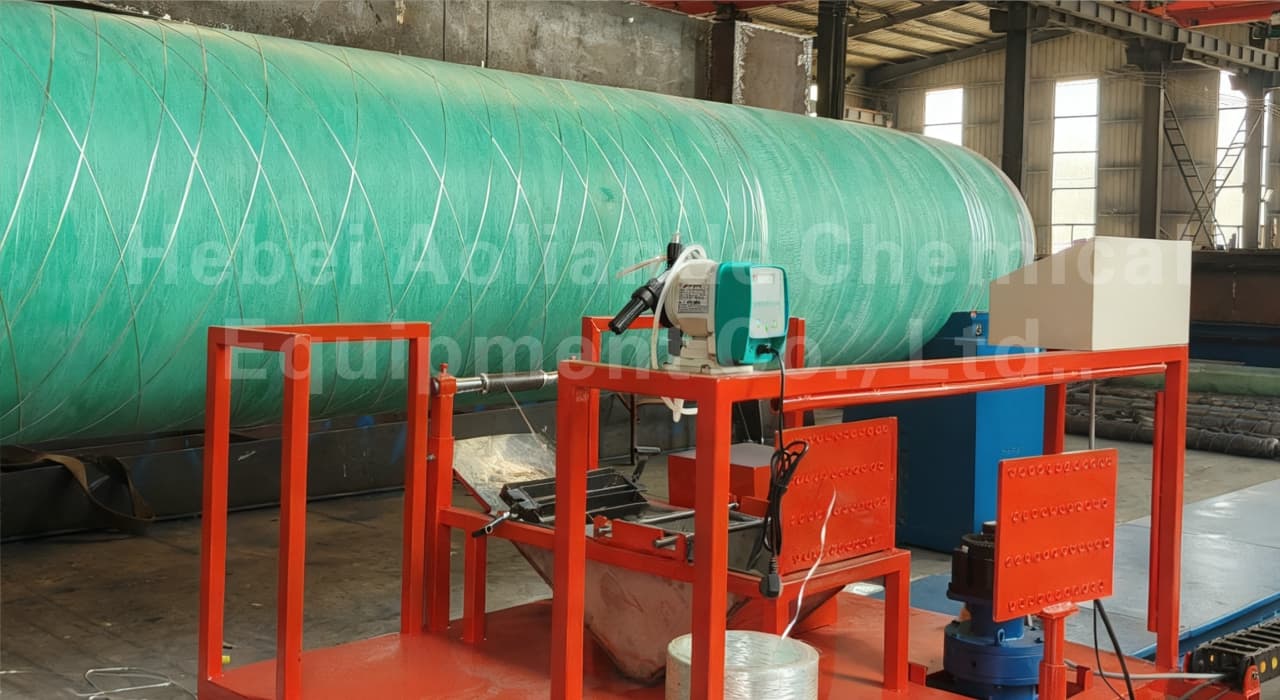
Although the technology may appear complex, the production process follows a clear sequence of steps. Let’s walk through the typical workflow.
1. Mandrel Preparation
The mandrel is the cylindrical mold used to form the tube. Its diameter determines the inner size of the finished product.
Before production begins, the mandrel is coated with a release agent. This prevents the cured fiberglass tube from sticking to the surface and makes demolding easier.
Mandrels are usually made of steel or aluminum and are mounted on a rotating system within the FRP tube winding machine.
2. Fiber Feeding System
Fiberglass rovings are placed on spools or creels. These continuous fibers are then fed into the winding system.
The machine carefully controls fiber tension during this step. Maintaining consistent tension is essential for ensuring uniform strength and thickness throughout the tube wall.
In modern machines, computerized control systems automatically regulate this tension.
3. Resin Impregnation
Before the fibers reach the mandrel, they pass through a resin bath or resin injection system.
This stage ensures the fibers are fully saturated with resin. The resin acts as the matrix that binds the fibers together and provides chemical resistance.
Common resins used in fiberglass tube production include:
-
Polyester resin
-
Vinyl ester resin
-
Epoxy resin
Each resin type offers different performance characteristics depending on the application.
4. Filament Winding
The core operation of the FRP tube winding machine is the filament winding stage.
The resin-coated fibers are wound around the rotating mandrel while the fiber delivery carriage moves back and forth along its length. This coordinated motion creates specific winding patterns.
These patterns determine the mechanical properties of the tube.
Common winding patterns include:
bobinado arolo
Fibers are wrapped nearly perpendicular to the tube axis, providing excellent resistance to internal pressure.
bobinado helicoidal
Fibers are applied at an angle to provide balanced strength in multiple directions.
bobinado polar
Used for reinforcing special sections or end structures.
By combining different winding angles, manufacturers can tailor the tube’s performance to meet specific engineering requirements.
5. Layer Formation
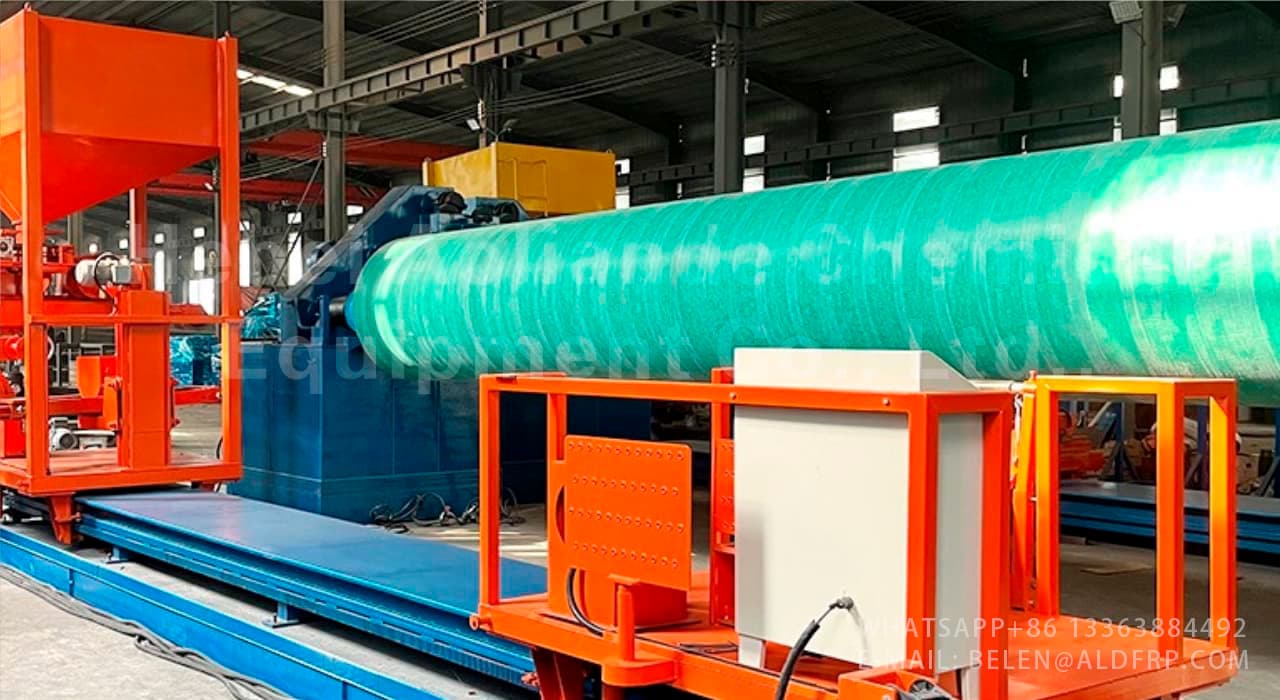
The tube wall is built up gradually as more layers of fiberglass are applied.
Depending on the product design, the structure may include:
-
Inner corrosion-resistant liner
-
Structural fiberglass layers
-
Outer protective layer
The flexibility of the FRP tube winding machine allows manufacturers to adjust wall thickness and reinforcement levels according to the application.
6. Resin Curing
Once the winding process is complete, the resin must cure to form a rigid composite structure.
Curing methods may include:
-
Ambient temperature curing
-
Heated curing ovens
-
Infrared heating systems
During curing, the resin undergoes a chemical reaction that hardens and permanently bonds the fiberglass fibers together.
7. Demolding and Finishing
After curing, the finished tube is removed from the mandrel.
Demolding systems or hydraulic extraction machines are typically used to safely remove the product without damaging the internal surface.
The tube then goes through finishing processes such as:
-
Cutting to required lengths
-
Edge trimming
-
Surface inspection
-
Quality testing
At this stage, the tube is ready for shipment or further assembly.
Key Components of an FRP Tube Winding Machine
A typical FRP tube winding machine includes several integrated systems working together to ensure precise production.
Mandrel System
Provides the rotating mold used to shape the tube.
Fiber Creel
Holds multiple spools of fiberglass rovings for continuous feeding.
Resin Impregnation Unit
Ensures fibers are evenly coated with resin before winding.
Winding Carriage
Moves along the mandrel to guide the fiber placement.
Drive System
Controls mandrel rotation speed and stability.
CNC Control System
Manages winding angles, fiber tension, and machine synchronization.
Together, these components create a highly controlled manufacturing process.
Advantages of Using an FRP Tube Winding Machine
Manufacturers rely on filament winding machines because they offer several important benefits.
Consistent Product Quality
Computerized control systems ensure precise fiber placement and uniform wall thickness.
High Strength Composite Structure
The alignment of fiberglass fibers produces tubes with excellent mechanical performance.
Efficient Material Usage
The process minimizes waste, making it more cost-effective than many traditional manufacturing methods.
Flexible Tube Design
Manufacturers can easily adjust winding patterns, tube diameters, and wall thickness to meet different specifications.
High Production Efficiency
Automated winding machines significantly increase production speed compared with manual methods.
Applications of Fiberglass Tubes
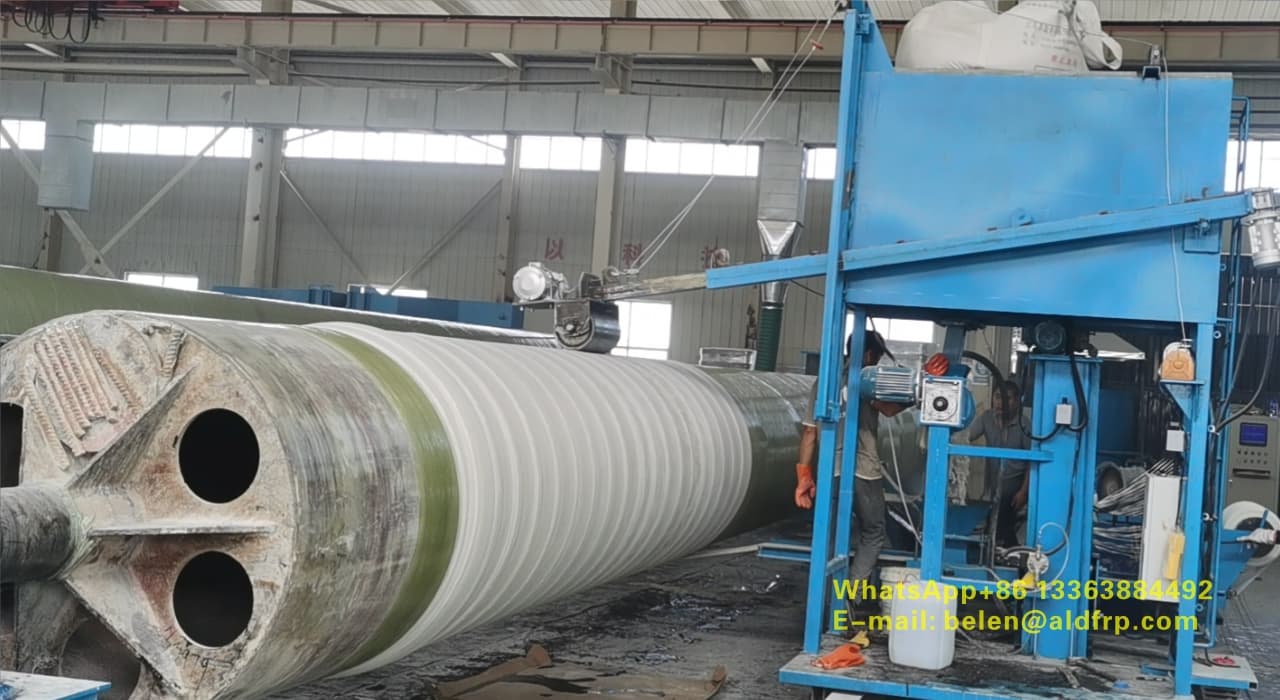
Fiberglass tubes produced by an FRP tube winding machine are used in many industries.
Chemical Industry
Transport systems for corrosive liquids.
Water and Wastewater Systems
Pipes and tubes that resist chemical attack and biological corrosion.
Construcción
Structural reinforcement elements and lightweight support structures.
Energy Industry
Cooling systems and offshore pipeline structures.
Industrial Equipment
Protective casings, tanks, and machine components.
Because of their durability and corrosion resistance, fiberglass tubes are becoming increasingly popular in modern infrastructure projects.
Choosing the Right FRP Tube Winding Machine
For manufacturers planning to invest in fiberglass production, selecting the right equipment is crucial.
Key factors to consider include:
-
Tube diameter range
-
Maximum winding length
-
Production capacity
-
Automation level
-
Control system accuracy
Advanced machines often include CNC control systems that allow operators to store multiple production programs and quickly switch between different product specifications.
Pensamientos finales
El FRP tube winding machine is a vital piece of equipment in the fiberglass manufacturing industry. By combining precise mechanical control with advanced composite materials, these machines enable the efficient production of strong, corrosion-resistant fiberglass tubes.
As industries continue to demand lightweight and durable materials, the importance of filament winding technology will only continue to grow. For manufacturers looking to expand into composite production, investing in a reliable FRP tube winding machine is often the first step toward building a successful fiberglass manufacturing operation.