
In modern industries such as chemical processing, fertilizer production, water treatment, and power generation, storage requirements can vary widely. Off-the-shelf tanks often cannot meet unique capacity, chemical, or structural demands. This is where a custom FRP tank becomes an ideal solution.
Custom FRP tanks combine the corrosion resistance and durability of fiberglass reinforced plastic (FRP) with the flexibility to design tanks tailored to specific operational requirements. In this guide, I’ll explain what custom FRP tanks are, their advantages, manufacturing processes, and how to choose the right manufacturer for your project.
What Is a Custom FRP Tank?
Un custom FRP tank is a storage container made from fiberglass reinforced plastic that is specifically designed to meet unique industrial requirements. Unlike standard tanks, custom FRP tanks can vary in:
-
Shape (vertical, horizontal, conical, or specialized forms)
-
Capacity (from a few hundred liters to tens of thousands of liters)
-
Wall thickness and reinforcement
-
Resin type for chemical compatibility
-
Features such as nozzles, baffles, and inspection openings
Because each tank is designed according to the specific needs of a facility, custom FRP tanks provide optimal performance and safety.
Why Industries Choose Custom FRP Tanks
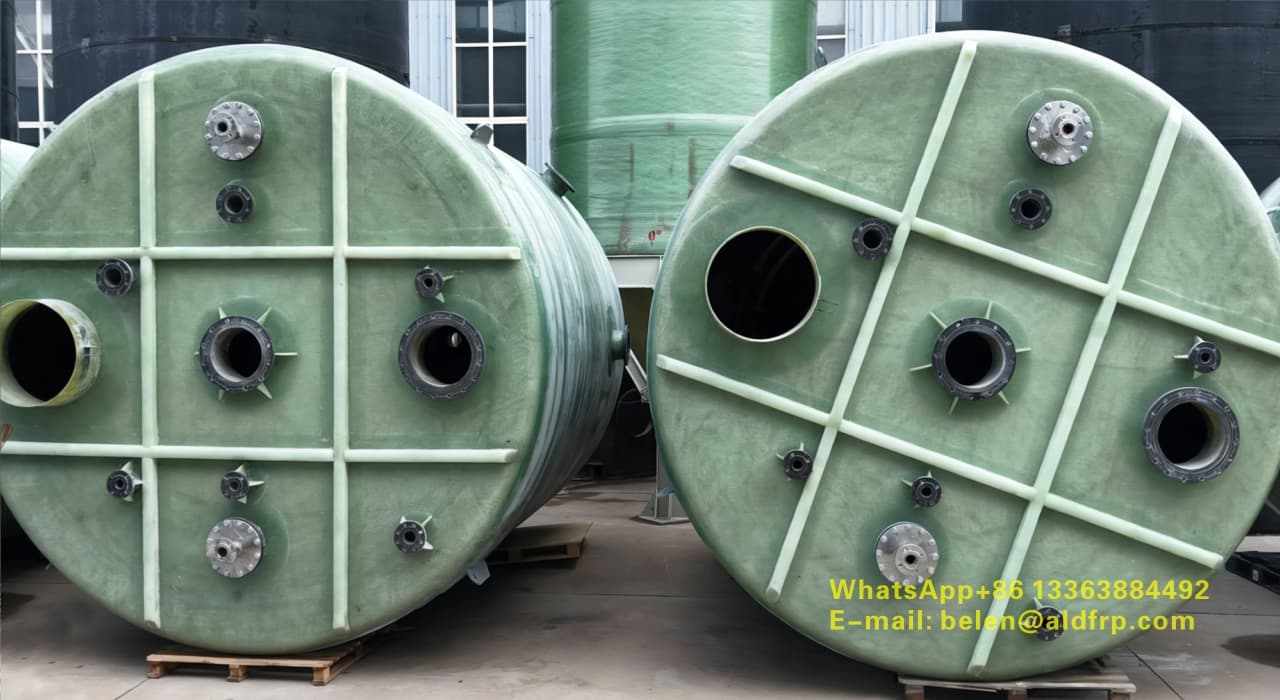
There are several reasons why companies prefer custom FRP tanks over standard tanks:
1. Chemical Resistance
Custom FRP tanks are designed with specific resin systems and fiber reinforcements to handle the chemicals used in your process.
For example:
-
Polyester resin is suitable for general chemicals
-
Vinyl ester resin handles highly corrosive acids and bases
-
Epoxy resin is ideal for industrial solvents
By selecting the right combination, a custom tank ensures longevity and reduces the risk of chemical damage.
2. Size and Capacity Flexibility
Standard tanks may not fit your facility layout or required storage volume. Custom FRP tanks can be designed to:
-
Maximize space efficiency
-
Meet exact volume requirements
-
Fit in areas with restricted access or height limitations
This flexibility is crucial for industrial plants with unique site conditions.
3. Enhanced Structural Strength
Custom FRP tanks allow manufacturers to adjust:
-
Fiber orientation for axial or hoop strength
-
Wall thickness for high-pressure applications
-
Additional reinforcement around nozzles or openings
This ensures the tank can handle internal pressure, external loads, or seismic activity safely.
4. Multi-Layer and Specialized Features
Many industrial processes require tanks with multiple functional layers. A custom FRP tank can include:
-
Inner corrosion-resistant liners
-
Structural reinforcement layers
-
UV-resistant outer layers
-
Built-in baffles for mixing or flow control
-
Integrated fittings and inspection ports
These features allow the tank to meet both chemical and mechanical performance requirements.
Manufacturing Process of Custom FRP Tanks
Professional FRP tank manufacturers use advanced production methods for custom tanks. The main processes include:
avvolgimento filamento
Filament winding is commonly used for large vertical or horizontal tanks. The process involves:
-
Impregnating continuous fiberglass fibers with resin
-
Winding the fibers around a rotating mandrel in precise angles
-
Building up layers according to design specifications
-
Curing the resin to form a rigid, durable structure
Filament winding ensures uniform wall thickness and excellent structural integrity.
Hand Lay-Up
For highly specialized shapes or small batches, the hand lay-up process is preferred. Workers manually apply fiberglass and resin layers onto a mold, allowing:
-
Complex geometries
-
Multi-layer customization
-
Precise integration of features such as nozzles or baffles
Both methods can be combined depending on tank size and design complexity.
Applications of Custom FRP Tanks
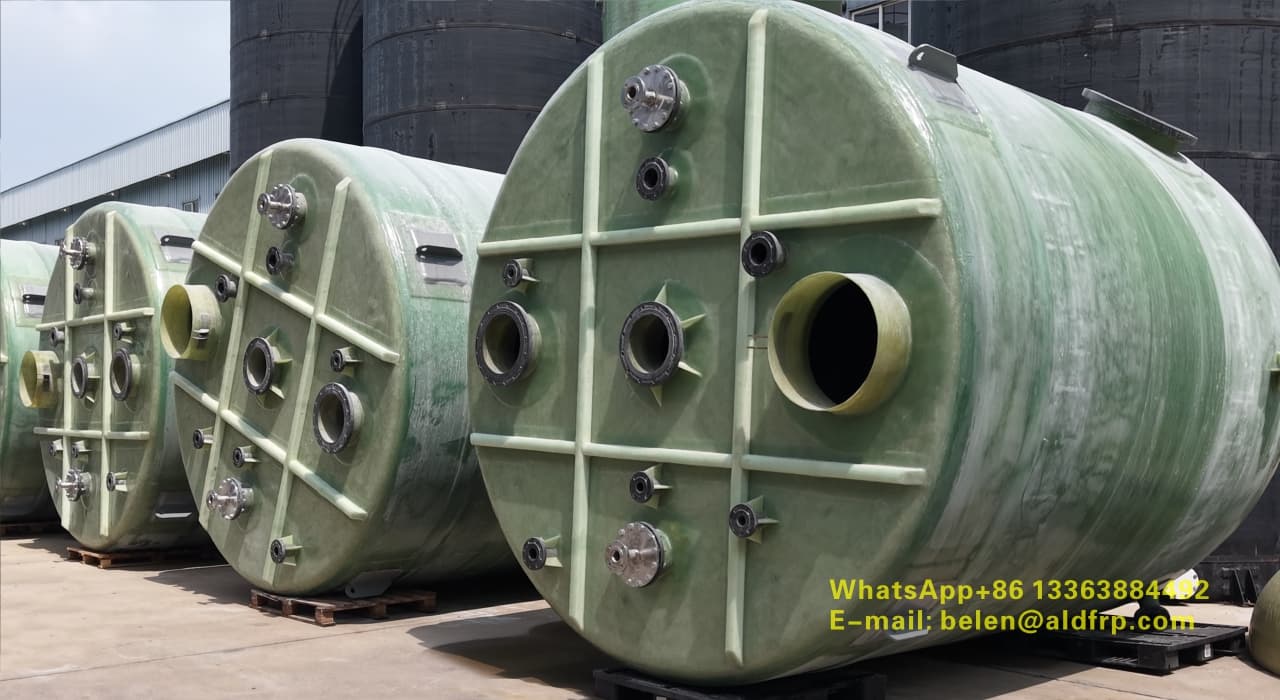
Custom FRP tanks are widely used across industries where chemical resistance, durability, and design flexibility are crucial.
Chemical Industry
-
Storage of acids, bases, and corrosive liquids
-
Tanks designed for specific chemical compatibility
Water and Wastewater Treatment
-
Storage of treatment chemicals such as chlorine or sodium hypochlorite
-
Tanks optimized for volume and site layout
Fertilizer Production
-
Storage of raw materials like hydrochloric acid or potassium sulfate solutions
-
Tanks resistant to highly corrosive environments
Power Plants
-
Cooling water or chemical storage tanks
-
High-pressure or high-temperature design adaptations
Choosing the Right Custom FRP Tank Manufacturer
When investing in a custom FRP tank, selecting a reliable manufacturer is critical. Look for companies that offer:
-
Engineering Support: Assistance in designing tanks according to your operational and chemical requirements
-
Material Expertise: Knowledge of fiberglass types, resin systems, and reinforcement techniques
-
Manufacturing Capability: Advanced equipment such as filament winding machines and quality inspection systems
-
Compliance with Standards: Adherence to ASME RTP-1, ASTM D3299, or EN 13121 standards
-
After-Sales Support: Installation guidance, maintenance advice, and long-term service
Working with a certified manufacturer ensures your custom FRP tank will perform safely and efficiently for years.
Advantages of Custom FRP Tanks Over Standard Tanks
-
Tailored design to meet unique capacity and space requirements
-
Optimized chemical resistance for specific process liquids
-
Enhanced structural performance for pressure, load, or seismic conditions
-
Integration of features such as baffles, nozzles, and inspection ports
-
Longer service life with minimal maintenance
By customizing the tank, facilities can avoid the limitations of off-the-shelf tanks and reduce operational risks.
Conclusione
Un custom FRP tank provides a versatile, durable, and cost-effective storage solution for industries dealing with corrosive chemicals, high pressures, or unique operational requirements.
Key benefits include:
-
Excellent chemical resistance
-
Flexible sizing and design
-
High structural strength and reliability
-
Multi-layer construction and feature integration
-
Long service life with low maintenance
For industrial facilities seeking safety, efficiency, and long-term performance, investing in a custom FRP tank from a professional manufacturer is the optimal choice.