
Fiberglass reinforced plastic (FRP) pipes are widely used in industries such as water treatment, chemical processing, irrigation, and oil and gas. Their popularity comes from their corrosion resistance, long service life, and relatively low weight compared with traditional materials like steel or concrete.
But how are these pipes actually made?
One of the most common manufacturing methods is the Filament Winding Process for FRP Pipes. This advanced technique allows manufacturers to produce pipes with high strength, precise wall thickness, and consistent quality. In this article, I’ll walk you through how the process works, why it’s so effective, and where it’s commonly used in modern industrial production.
What Is the Filament Winding Process?
Il Filament Winding Process for FRP Pipes is a manufacturing technique where continuous fiberglass strands are impregnated with resin and wound around a rotating mandrel in controlled patterns.
As the fibers accumulate layer by layer, they create a strong composite structure. Once the resin cures, the pipe becomes rigid and ready for finishing.
This process allows engineers to carefully control the orientation of the fibers. That control is important because fiber direction determines how the pipe handles pressure, bending, and external loads.
From my perspective, this is one of the reasons filament winding has become the preferred method for producing high-performance fiberglass pipes.
Key Materials Used in the Process
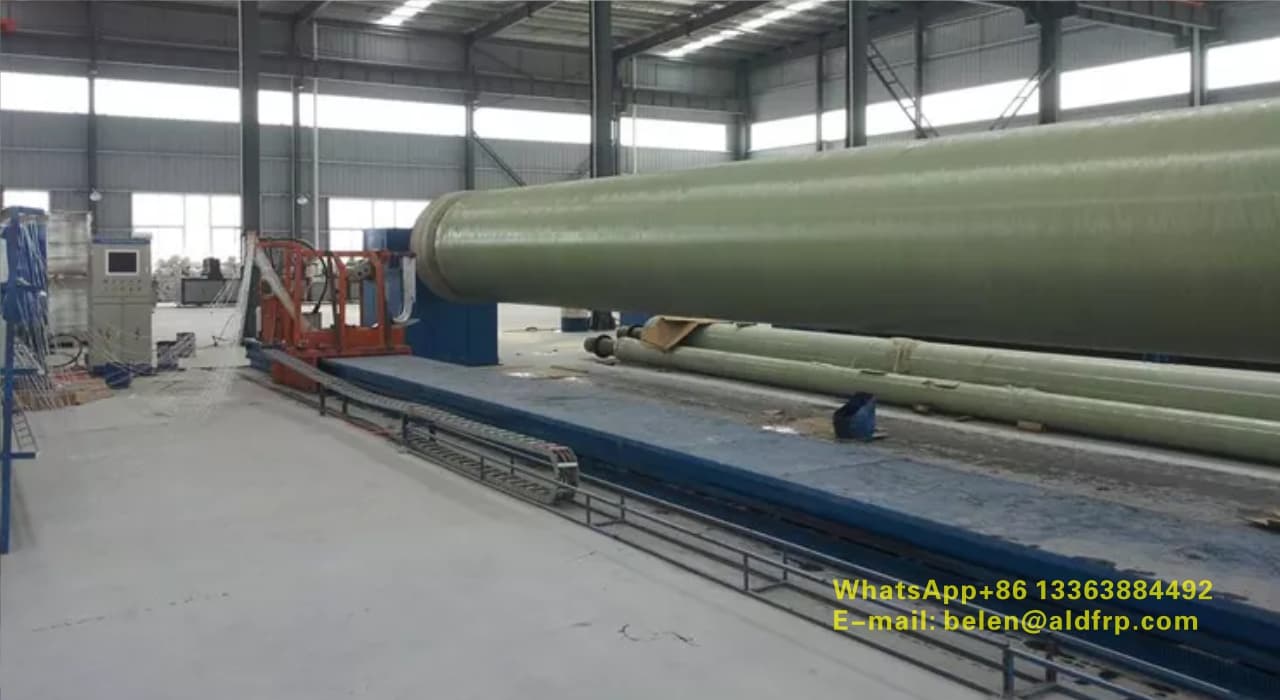
Before we explore the manufacturing steps, it helps to understand the basic materials involved in the Filament Winding Process for FRP Pipes.
Fiberglass Rovings
Fiberglass rovings are bundles of continuous glass fibers. These fibers provide the main structural strength of the pipe.
Depending on the application, different types of fiberglass may be used, including:
-
E-glass fibers
-
C-glass fibers
-
High-strength glass fibers
Each type offers different mechanical and chemical properties.
Resin Systems
Resin acts as the matrix that binds the fiberglass together and protects it from environmental damage.
Common resins used in FRP pipe manufacturing include:
-
Polyester resin
-
Vinyl ester resin
-
Epoxy resin
The choice of resin depends largely on chemical resistance and operating conditions.
Fillers and Additives
Some manufacturers add fillers such as silica sand or calcium carbonate to improve stiffness and reduce production costs. These materials can also enhance the structural performance of large-diameter pipes.
Step-by-Step Filament Winding Process for FRP Pipes
Let’s break down the Filament Winding Process for FRP Pipes into its main stages.
1. Mandrel Preparation
The first step is preparing the mandrel, which acts as the mold for the pipe. The mandrel is typically a steel or composite cylinder mounted on a rotating system.
Before production begins, the mandrel is coated with a release agent. This coating prevents the cured pipe from sticking to the surface, making removal easier after curing.
The size of the mandrel determines the inner diameter of the pipe.
2. Fiber Feeding and Tension Control
Fiberglass rovings are placed on creels that hold multiple spools of fiber. The fibers are pulled from the spools and guided toward the winding system.
During this step, the machine maintains consistent tension on the fibers. Proper tension is important because it helps maintain structural uniformity in the pipe wall.
In modern production lines, computerized control systems automatically regulate this tension.
3. Resin Impregnation
Before the fibers reach the mandrel, they pass through a resin bath or a resin injection chamber.
This stage ensures that the fibers are fully saturated with resin. Proper impregnation is critical for strong bonding between fibers and resin, which ultimately determines the mechanical strength of the pipe.
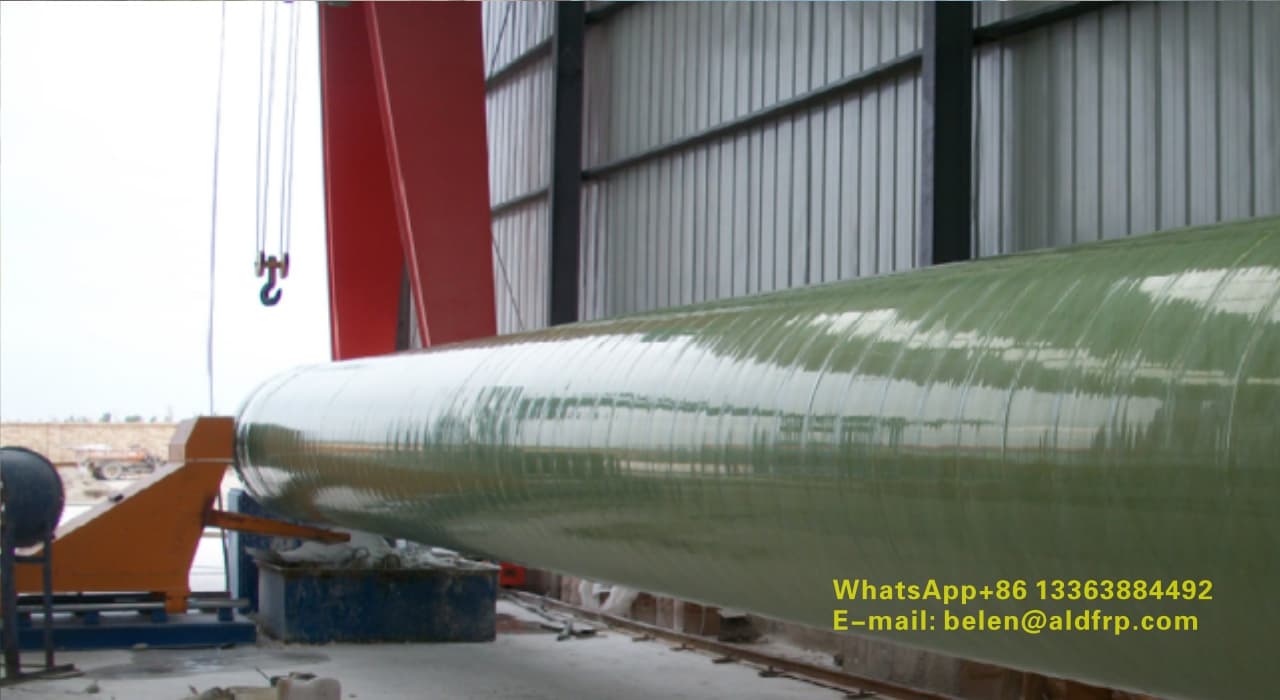
Manufacturers carefully control the resin content during this stage to achieve the desired fiber-to-resin ratio.
4. Filament Winding
This is the core stage of the Filament Winding Process for FRP Pipes.
The resin-coated fibers are wound around the rotating mandrel in specific patterns. The winding head moves back and forth along the mandrel while the mandrel rotates.
The winding angle determines the pipe’s structural properties.
Common winding patterns include:
Avvolgimento anello
Fibers are wrapped nearly perpendicular to the pipe axis. This pattern provides excellent resistance to internal pressure.
Avvolgimento elicale
Fibers are wound at an angle, creating balanced strength in multiple directions.
avvolgimento polare
Used for special shapes or reinforced sections.
By combining different winding patterns, manufacturers can optimize the pipe’s mechanical performance.
5. Layer Formation
The pipe wall builds up gradually as multiple layers of fiberglass are added.
Depending on the design, the pipe may include several structural layers such as:
-
Inner corrosion-resistant liner
-
Structural reinforcement layers
-
Outer protective layer
In some cases, sand or filler materials are added between layers to increase stiffness while keeping costs lower.
6. Resin Curing
After the winding process is complete, the resin must cure to form a solid composite structure.
Curing can occur in several ways:
-
Room temperature curing
-
Heated ovens
-
Infrared heating systems
The curing process triggers a chemical reaction that hardens the resin and permanently bonds the fiberglass layers together.
Once curing is finished, the pipe becomes rigid and structurally stable.
7. Demolding
After curing, the finished pipe must be removed from the mandrel.
Extraction machines or hydraulic systems are typically used to pull the pipe off the mandrel without damaging the internal surface.
This stage marks the completion of the main Filament Winding Process for FRP Pipes.
8. Cutting and Finishing
The final stage involves preparing the pipe for use.
Typical finishing steps include:
-
Cutting the pipe to the required length
-
Trimming edges
-
Grinding or smoothing surfaces
-
Quality inspection
Some pipes may also receive additional coatings or joint machining depending on the application.
Advantages of the Filament Winding Process
There are several reasons why manufacturers prefer the Filament Winding Process for FRP Pipes.
High Strength and Durability
Controlled fiber placement creates pipes with excellent mechanical strength and pressure resistance.
Consistent Quality
Computerized control ensures precise wall thickness and fiber alignment.
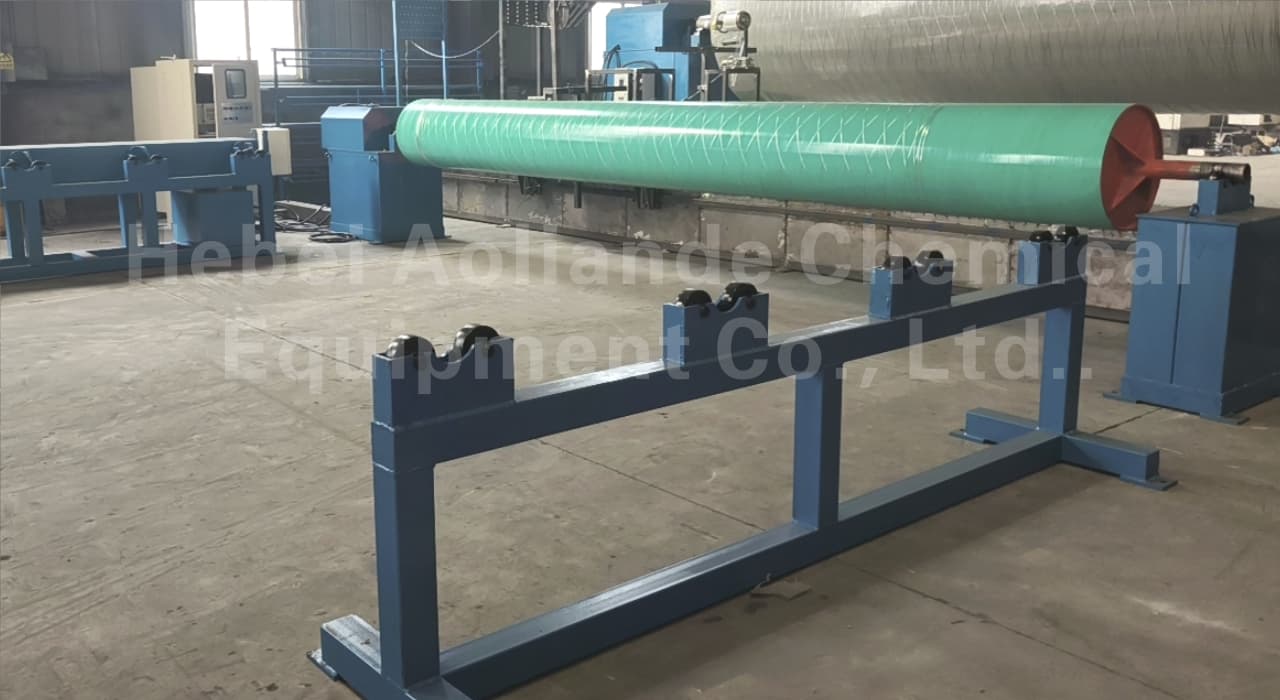
Material Efficiency
The process minimizes material waste, which reduces production costs.
Flexible Design
Manufacturers can adjust winding angles, wall thickness, and materials to meet different engineering requirements.
Large Diameter Capability
Filament winding allows the production of pipes with very large diameters, making it ideal for municipal infrastructure projects.
Common Applications of FRP Pipes
Pipes produced using the Filament Winding Process for FRP Pipes are used in many industries.
Water Supply Systems
Municipal water pipelines and irrigation systems.
Wastewater Treatment
Pipes resistant to corrosion and biological activity.
Chemical Processing
Transport of corrosive chemicals and industrial fluids.
Desalination Plants
Seawater pipelines and cooling systems.
Power Plants
Cooling water pipelines and industrial piping systems.
Because of their durability and corrosion resistance, FRP pipes are increasingly replacing traditional metal pipelines in many applications.
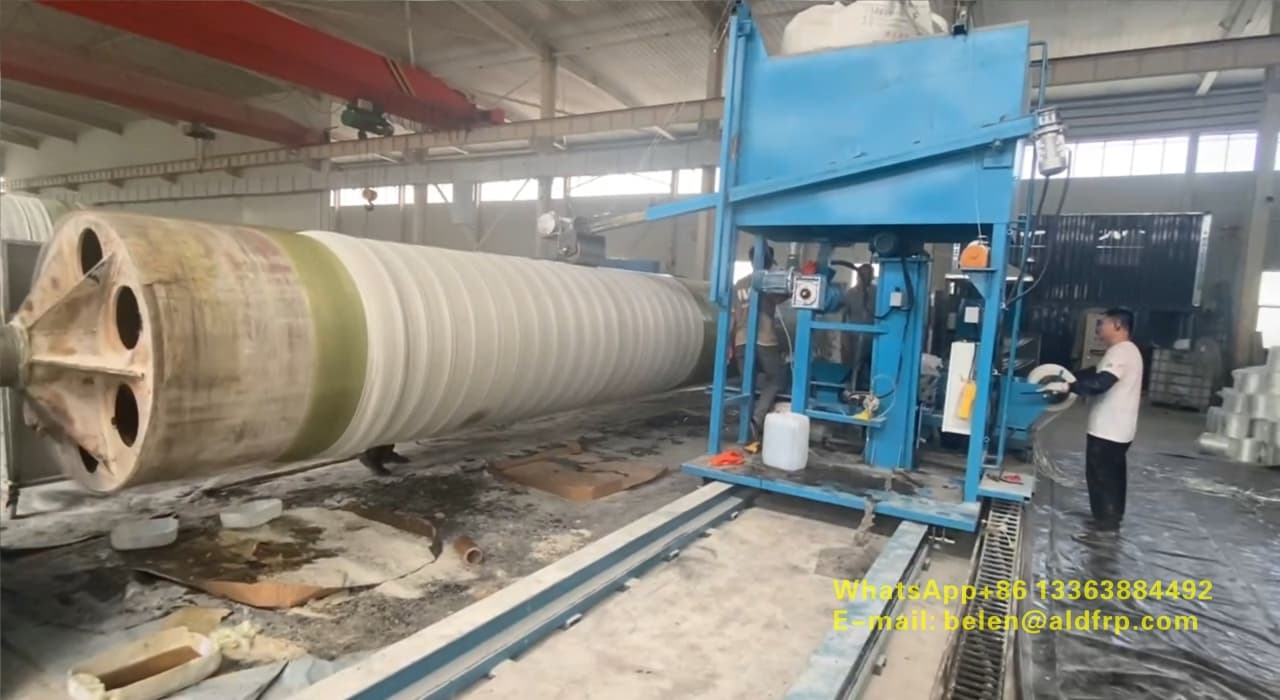
Pensieri finali
Il Filament Winding Process for FRP Pipes is a highly efficient and precise manufacturing method that produces strong, durable fiberglass pipes used across many industries.
By carefully controlling fiber placement, resin content, and curing conditions, manufacturers can create pipes that meet demanding mechanical and chemical performance requirements.
As industries continue to seek corrosion-resistant and long-lasting piping solutions, the filament winding process will remain one of the most important technologies in modern FRP pipe production.