
Setting up an FRP pipe manufacturing facility involves more than just one machine. A modern fiberglass pipe factory relies on a coordinated system of equipment that works together to transform raw materials—fiberglass, resin, and fillers—into finished pipes ready for industrial use.
In this guide, I’ll walk you through the FRP pipe production line equipment list, explain the function of each machine, and show how they connect to form a complete production system. From my experience in the composites industry, understanding the entire equipment setup is essential for building an efficient and profitable FRP pipe manufacturing plant.
What Is an FRP Pipe Production Line?
An FRP pipe production line is a group of machines designed to manufacture fiberglass reinforced plastic pipes through automated or semi-automated processes. These machines perform sequential tasks such as liner formation, filament winding, curing, demolding, trimming, and testing.
Most modern lines use computer-controlled filament winding technology to ensure precise fiber placement, consistent wall thickness, and stable pipe strength.
When all the machines operate together, they create a continuous production process that increases efficiency and reduces manual labor.
FRP Pipe Production Line Equipment List
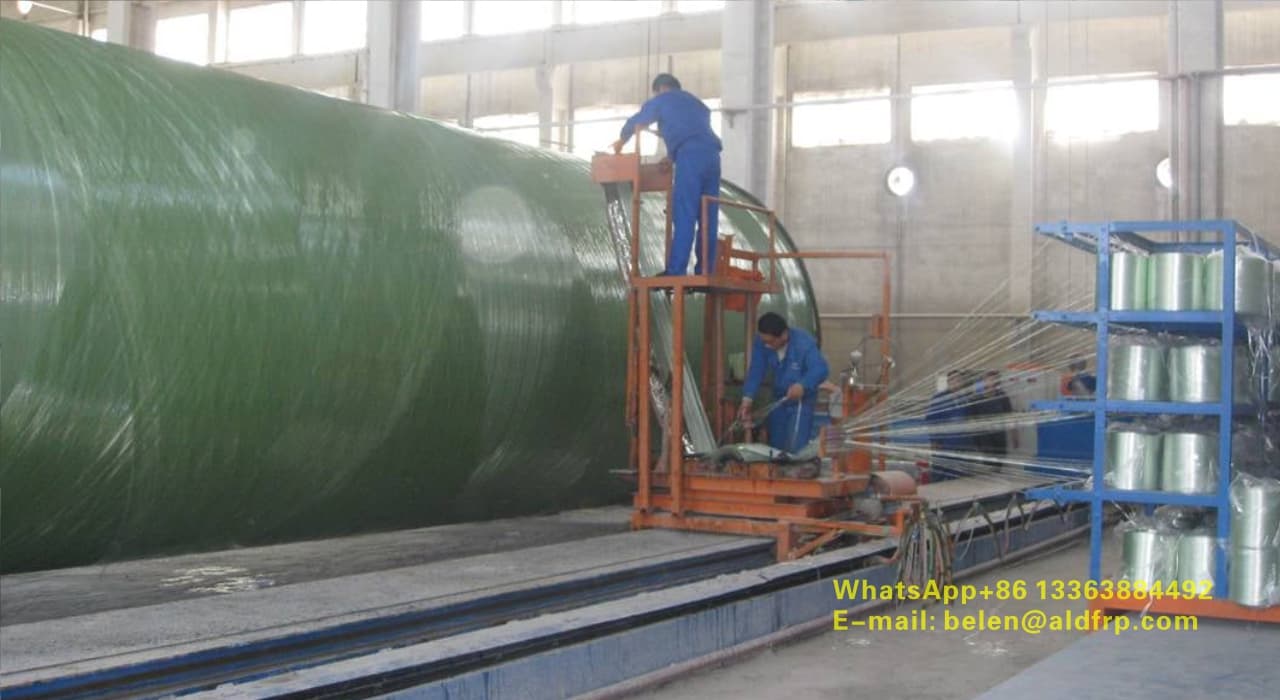
Below is a typical FRP pipe production line equipment list used in many industrial manufacturing facilities.
1. Resin Mixing and Feeding System
The first component in the production line is the resin preparation system. This system stores, mixes, and supplies resin to the production machines.
Main components
-
Resin storage tanks
-
Agitators for mixing
-
Resin pumps
-
Metering and delivery pipelines
The system ensures that resin and additives are mixed accurately and supplied at a constant rate to the winding equipment. Proper resin control is critical because it directly affects pipe strength and corrosion resistance.
Some production lines also include temperature control systems to maintain optimal resin viscosity.
2. Liner Making Machine
The liner forming machine produces the inner corrosion-resistant layer of the pipe.
This layer protects the pipe from chemicals, wastewater, and corrosive fluids. In most systems, fiberglass surface mats are sprayed with resin and applied onto the rotating mandrel to form a smooth internal lining.
According to FRP manufacturing equipment descriptions, the liner forming machine is typically the first major machine in the production sequence.
Functions
-
Creates corrosion-resistant inner layer
-
Provides smooth internal pipe surface
-
Improves chemical resistance
Without a proper liner layer, FRP pipes could be damaged by aggressive fluids.
3. Filament Winding Machine
Il macchina per avvolgere filamenti is the core equipment in the entire production line. It winds resin-impregnated fiberglass rovings around the mandrel at specific angles.
The machine controls several parameters simultaneously:
-
Fiber tension
-
Winding angle
-
Rotation speed
-
Resin distribution
Computer-controlled winding systems ensure consistent pipe structure and high mechanical strength.
Types of winding machines
-
Continuous filament winding machines
-
Discontinuous filament winding machines
-
CNC controlled winding machines
This machine builds the structural layer of the pipe and determines its pressure resistance.
4. Sand Feeding System (Optional)
For reinforced plastic mortar pipes (FRPM pipes), a sand feeding system is added.
This system deposits silica sand between fiberglass layers during winding.
Benefici
-
Reduces resin consumption
-
Improves pipe stiffness
-
Lowers production cost
Large diameter sewer pipes often use sand-filled structures to increase stiffness without increasing weight.
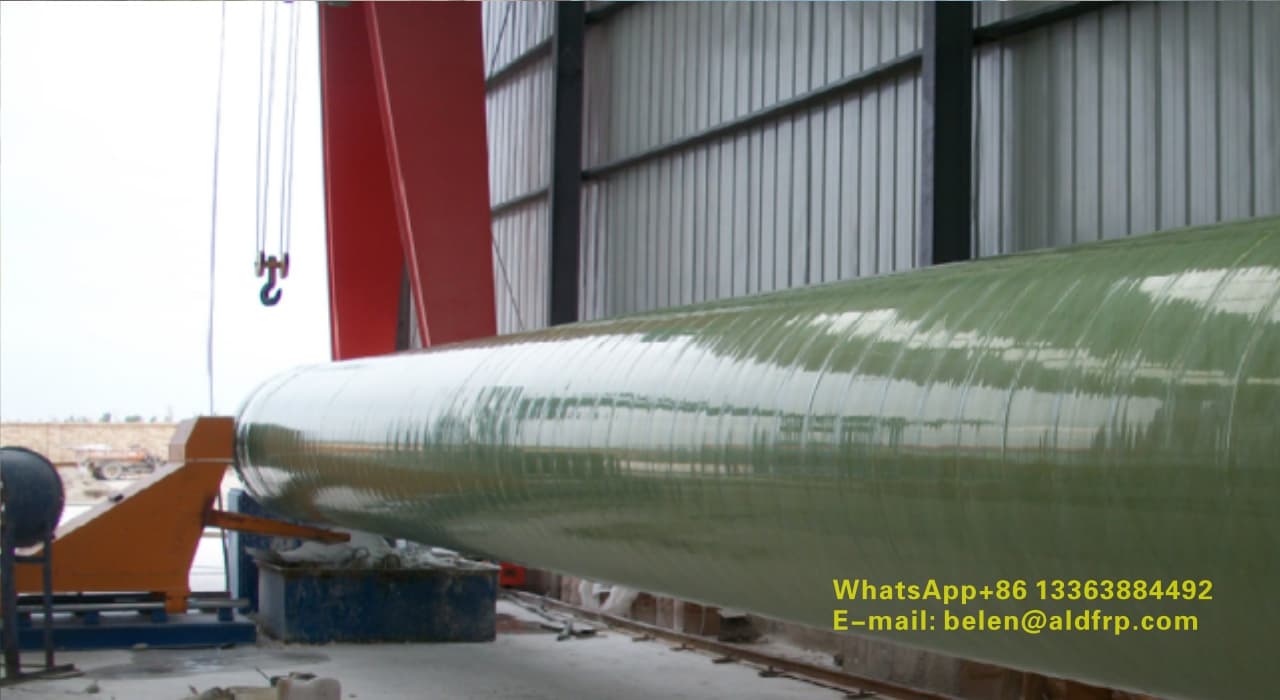
5. Curing Station or Oven
Once the pipe layers are wound, the resin must cure to solidify the structure.
The curing station uses controlled heat or ambient conditions to initiate polymerization of the resin.
Types of curing systems
-
Room-temperature curing stations
-
Heating ovens
-
Infrared curing systems
Proper curing ensures the pipe achieves its final mechanical strength and chemical resistance.
6. Demolding (Extraction) Machine
After curing, the pipe must be removed from the mandrel.
This step is handled by the demolding machine, also called an extraction machine.
According to equipment descriptions for FRP pipe production lines, the extraction system removes the finished pipe safely without damaging the inner surface.
Common demolding systems
-
Chain extraction machines
-
Hydraulic extraction machines
-
Gantry-type demolding systems
Efficient demolding improves productivity and reduces downtime between production cycles.
7. Pipe Cutting and Trimming Machine
Once the pipe is removed from the mandrel, the ends need to be trimmed.
The trimming machine cuts the pipe to precise lengths and smooths the edges.
Functions
-
Cutting pipe to required length
-
Preparing socket or spigot ends
-
Removing excess resin
Accurate trimming ensures that pipes can be installed easily during field assembly.
8. Pipe Finishing and Repair Station
Minor defects such as surface irregularities or resin drips may occur during production.
The finishing station corrects these issues.
Typical tasks include:
-
Surface grinding
-
Additional resin coating
-
Pipe joint finishing
This stage ensures that each pipe meets appearance and dimensional standards.
9. Hydrostatic Pressure Testing Machine
Quality control is essential in FRP pipe manufacturing.
A hydrostatic testing machine checks whether pipes can withstand the designed pressure levels.
Testing parameters
-
Internal pressure resistance
-
Leak detection
-
Structural integrity
Many production lines integrate automatic testing equipment to guarantee that every pipe meets industry standards.
10. Control System and Automation Unit
Modern production lines rely heavily on computer control systems.
These systems manage:
-
Winding angles
-
Mandrel rotation speed
-
Resin flow rate
-
Sand feeding ratio
Industrial control computers automatically coordinate the movement of machines, improving accuracy and reducing operator error.
Automation is one of the key factors that allows manufacturers to produce large volumes of high-quality FRP pipes.
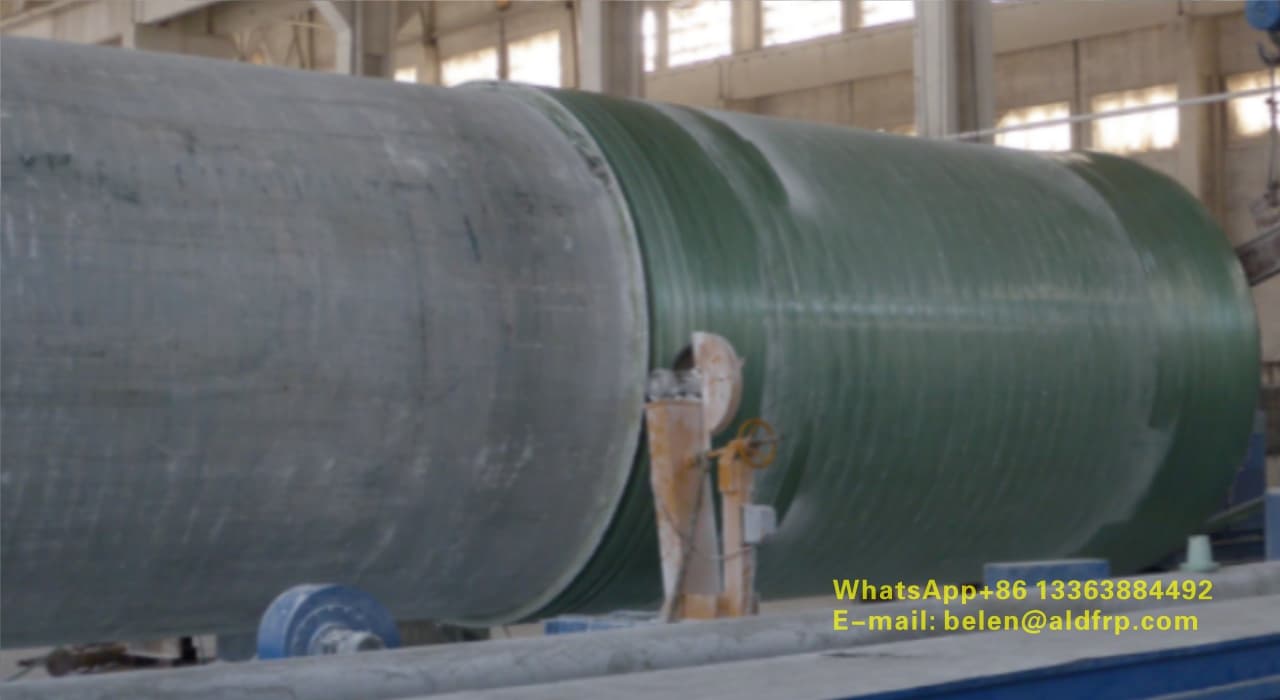
Optional Equipment in Advanced FRP Pipe Production Lines
Depending on factory size and production capacity, additional equipment may be included.
Mandrel systems
-
Collapsible mandrels
-
Steel mandrels
-
Composite mandrels
Auxiliary machines
-
Pipe joint forming machines
-
Socket and spigot forming machines
-
Automatic pipe stacking equipment
These machines increase efficiency and allow manufacturers to produce pipes with more complex designs.
Typical Production Workflow
To better understand how the equipment works together, here’s the general workflow in an FRP pipe production line:
-
Resin preparation and mixing
-
Liner formation on mandrel
-
Filament winding of structural layers
-
Sand filling (optional)
-
Resin curing
-
Pipe demolding
-
Cutting and trimming
-
Surface finishing
-
Pressure testing
-
Storage or packaging
Each machine plays a specific role in ensuring the final product meets mechanical and dimensional requirements.
Why Equipment Selection Matters
Choosing the right machines for your FRP pipe production line equipment list can determine the success of your factory.
Key factors to consider include:
-
Pipe diameter range
-
Production capacity
-
Automation level
-
Energy efficiency
-
Maintenance requirements
From my experience, manufacturers who invest in well-integrated production lines see higher efficiency, fewer defects, and lower production costs.
Conclusione
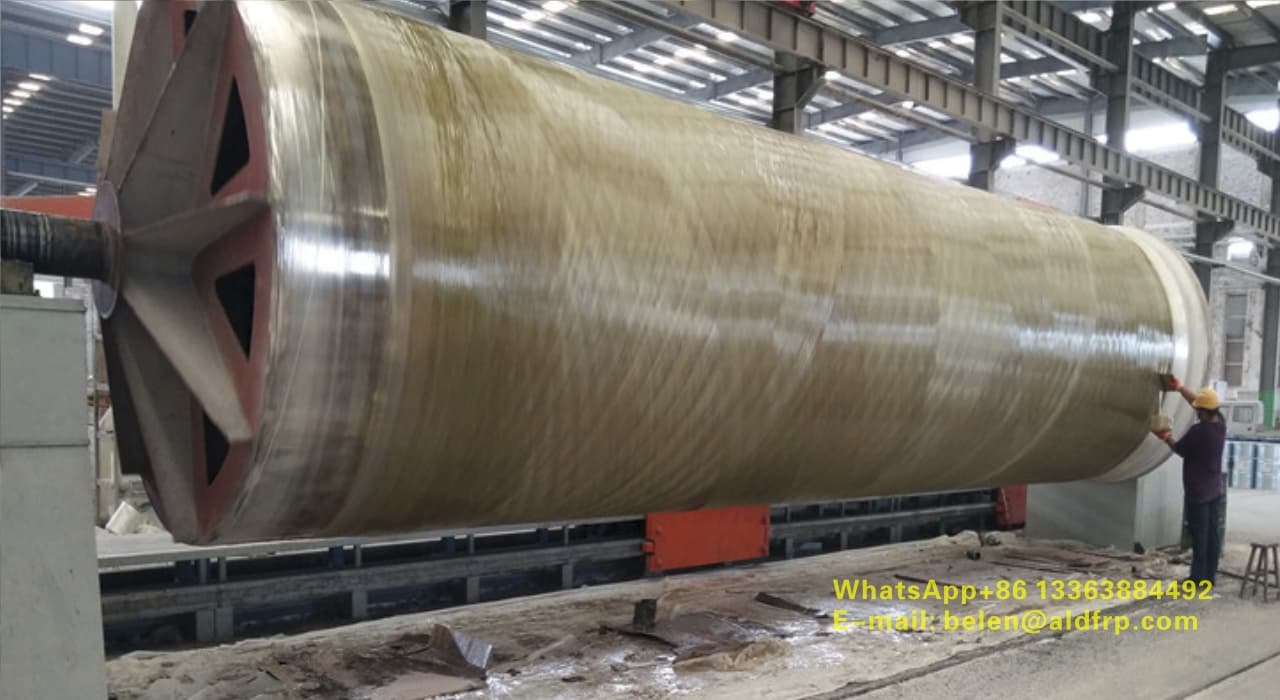
A modern FRP pipe factory relies on a coordinated set of machines to transform fiberglass and resin into durable industrial pipes. The FRP pipe production line equipment list typically includes resin mixing systems, liner forming machines, filament winding machines, curing stations, demolding machines, trimming equipment, and testing systems.
When these machines operate together in a well-designed production line, manufacturers can produce high-quality FRP pipes efficiently and consistently.
Understanding the full equipment setup not only helps engineers design better factories but also allows businesses to optimize production and compete in the growing global FRP pipe market.