
Storing acids in industrial settings requires careful planning and the right materials. Traditional steel or concrete tanks often struggle with corrosion, leakage, and maintenance issues when storing aggressive acids. That’s why FRP tanks for acid storage have become the preferred solution for chemical plants, fertilizer factories, and water treatment facilities.
Fiberglass Reinforced Plastic (FRP) combines glass fibers with resin to create a lightweight, strong, and highly corrosion-resistant material. In this guide, we’ll explore why FRP tanks are ideal for acid storage, their design and manufacturing process, advantages, and important considerations when choosing a tank.
What Is an FRP Tank for Acid Storage?
Un FRP tank for acid storage is a specialized storage tank made from fiberglass reinforced plastic, specifically engineered to safely store corrosive acids such as:
-
Sulfuric acid (H₂SO₄)
-
Hydrochloric acid (HCl)
-
Nitric acid (HNO₃)
-
Phosphoric acid (H₃PO₄)
The combination of fiberglass fibers and resin provides exceptional corrosion resistance while maintaining structural integrity. Unlike steel tanks, which may require protective coatings that wear over time, FRP tanks inherently resist chemical attack, reducing maintenance and extending service life.
Manufacturing Process of FRP Acid Storage Tanks
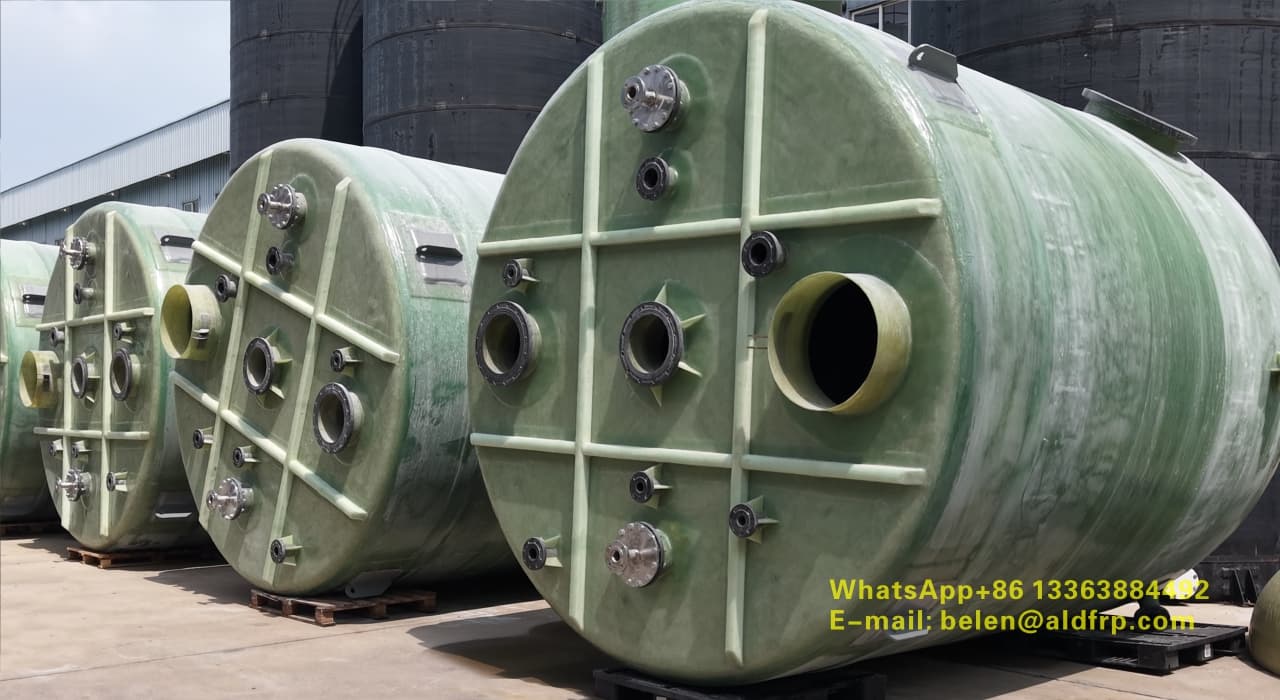
Professional FRP tank manufacturers use advanced composite techniques to produce durable acid storage tanks. The main processes include:
avvolgimento filamento
Filament winding is a highly controlled process ideal for large tanks. It involves:
-
Impregnating continuous fiberglass fibers with acid-resistant resin
-
Winding the fibers around a rotating mandrel at precise angles
-
Building up layers according to design specifications
-
Curing the resin to create a rigid, strong tank wall
This method ensures uniform wall thickness, high pressure resistance, and long-term durability.
Hand Lay-Up
For custom shapes or small batches, the hand lay-up process may be used. Skilled technicians manually apply fiberglass and resin layers onto a mold, allowing:
-
Complex or irregular tank shapes
-
Integration of features like baffles, nozzles, or inspection ports
-
Multi-layer construction for chemical and structural performance
Many manufacturers combine both methods depending on tank size, design, and application requirements.
Key Design Features for Acid Storage
FRP tanks designed for acid storage have several important design features:
-
Corrosion-Resistant Inner Liner: The inner layer comes into direct contact with the acid and is made with a specialized resin system that resists chemical attack.
-
Structural Reinforcement Layer: Provides strength and supports the weight of the liquid. Fiberglass fibers are placed in specific orientations to optimize axial and hoop strength.
-
Outer Protective Layer: Protects against UV damage, moisture, and physical impact.
-
Custom Fittings and Accessories: Includes nozzles, vents, inspection ports, and baffles to accommodate operational requirements.
Advantages of FRP Tanks for Acid Storage
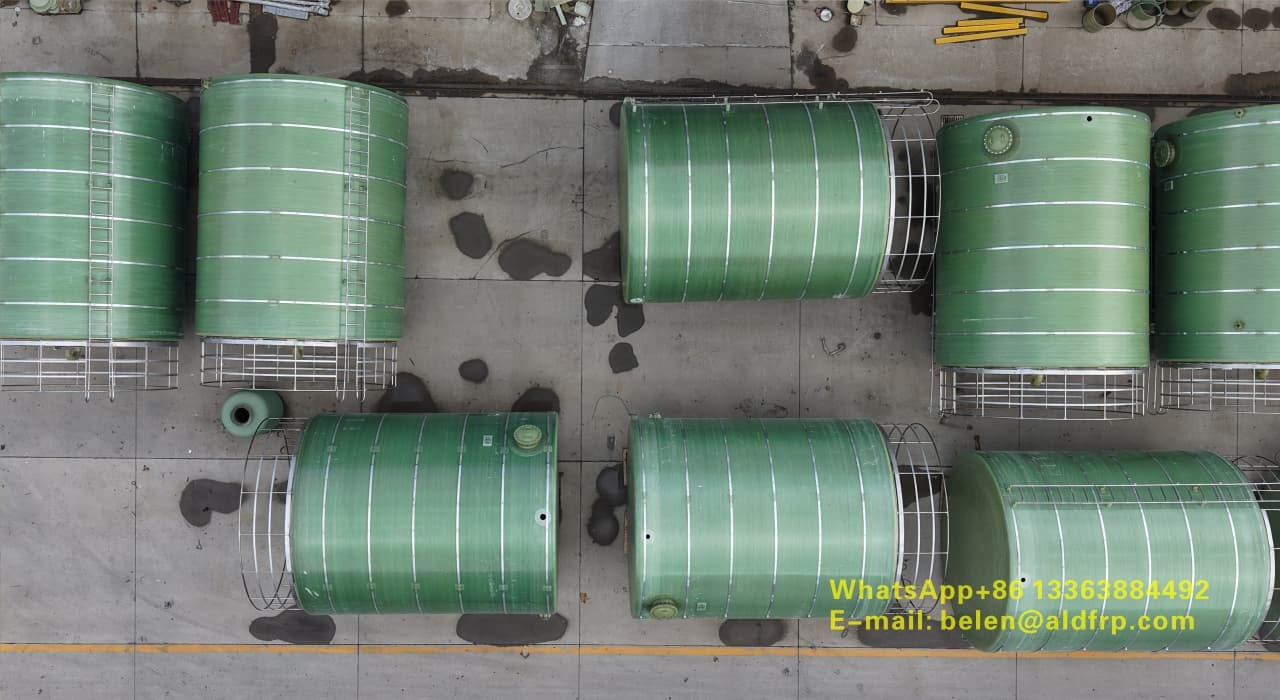
Using an FRP tank for acid storage provides multiple benefits over traditional storage options:
1. Exceptional Corrosion Resistance
FRP tanks resist acids, bases, salts, and other corrosive substances without additional coatings. This significantly reduces the risk of leaks and contamination.
2. Lightweight Construction
FRP tanks are much lighter than steel or concrete tanks of similar capacity. This makes transportation and installation easier and reduces the need for heavy equipment.
3. Long Service Life
High-quality FRP acid storage tanks can last 20–30 years with minimal maintenance, even in highly corrosive environments.
4. Low Maintenance Requirements
Unlike steel tanks, which need regular coating and inspection, FRP tanks require little maintenance. Routine visual inspections are usually sufficient to ensure safe operation.
5. Customizable Design
FRP tanks can be tailored to your facility’s needs, including:
-
Diameter and height
-
Wall thickness for high-pressure storage
-
Acid-specific resin selection
-
Integration of baffles, vents, or nozzles
This flexibility makes them suitable for unique process requirements and space constraints.
Applications of FRP Acid Storage Tanks
FRP tanks for acid storage are widely used in industries where chemical corrosion is a concern:
Chemical Industry
Used for safe storage of strong acids, alkalis, and chemical solutions in manufacturing plants.
Fertilizer Production
Stores hydrochloric acid, sulfuric acid, and other acids used in fertilizer manufacturing.
Wastewater Treatment
Stores acids and treatment chemicals like sulfuric acid or sodium bisulfate.
Power Plants
Stores acids for boiler water treatment or chemical processing.
Marine and Coastal Applications
Resistant to saltwater corrosion, making them suitable for coastal chemical storage.
Key Considerations When Choosing an FRP Acid Storage Tank
When selecting an FRP tank for acid storage, consider the following factors:
-
Chemical Compatibility: Choose a resin system that can handle the specific acid concentration and temperature.
-
Capacity: Ensure the tank size matches your storage requirements.
-
Temperature and Pressure: FRP tanks are designed to handle specific operating temperatures and pressures.
-
Design Standards Compliance: Tanks should adhere to standards such as ASME RTP-1, ASTM D3299, or EN 13121.
-
Manufacturer Expertise: Choose a manufacturer experienced in acid storage tanks and custom designs.
Conclusione
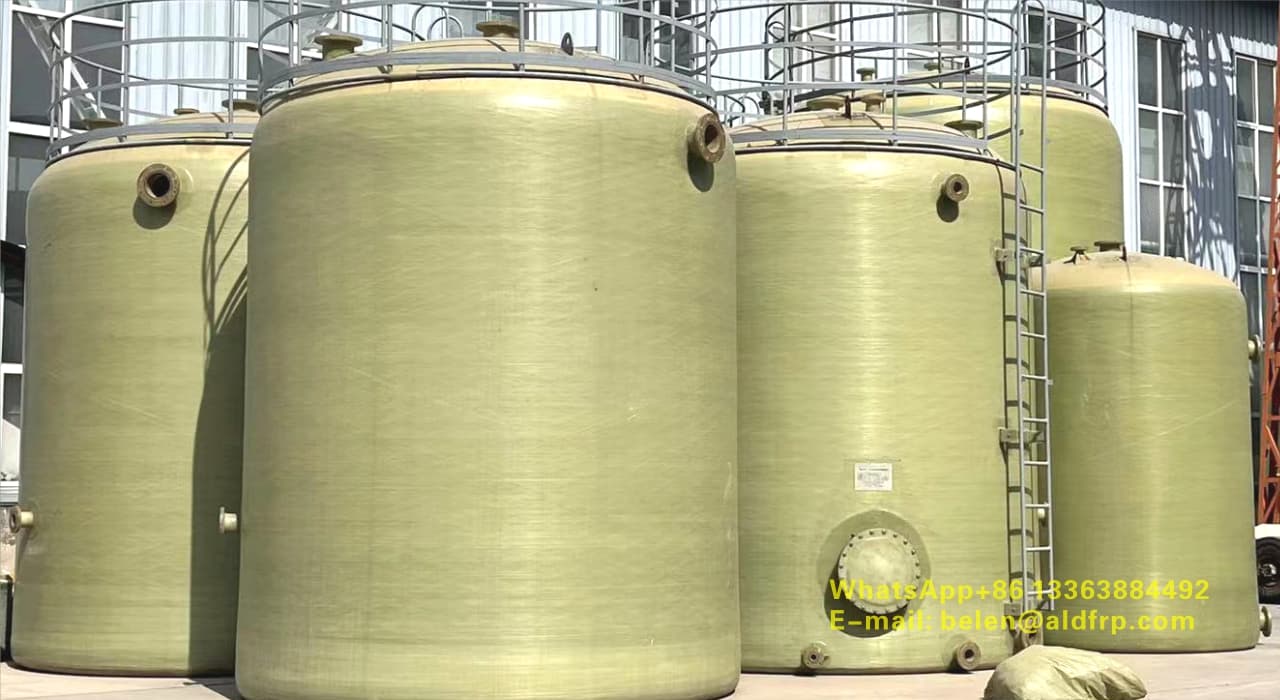
Un FRP tank for acid storage provides a safe, durable, and cost-effective solution for storing corrosive liquids.
Key benefits include:
-
Outstanding chemical resistance
-
Lightweight and easy installation
-
Long service life
-
Minimal maintenance requirements
-
Customizable design to meet specific industrial needs
For chemical plants, fertilizer production facilities, wastewater treatment plants, and power plants, investing in a high-quality FRP acid storage tank ensures safety, efficiency, and long-term reliability.