
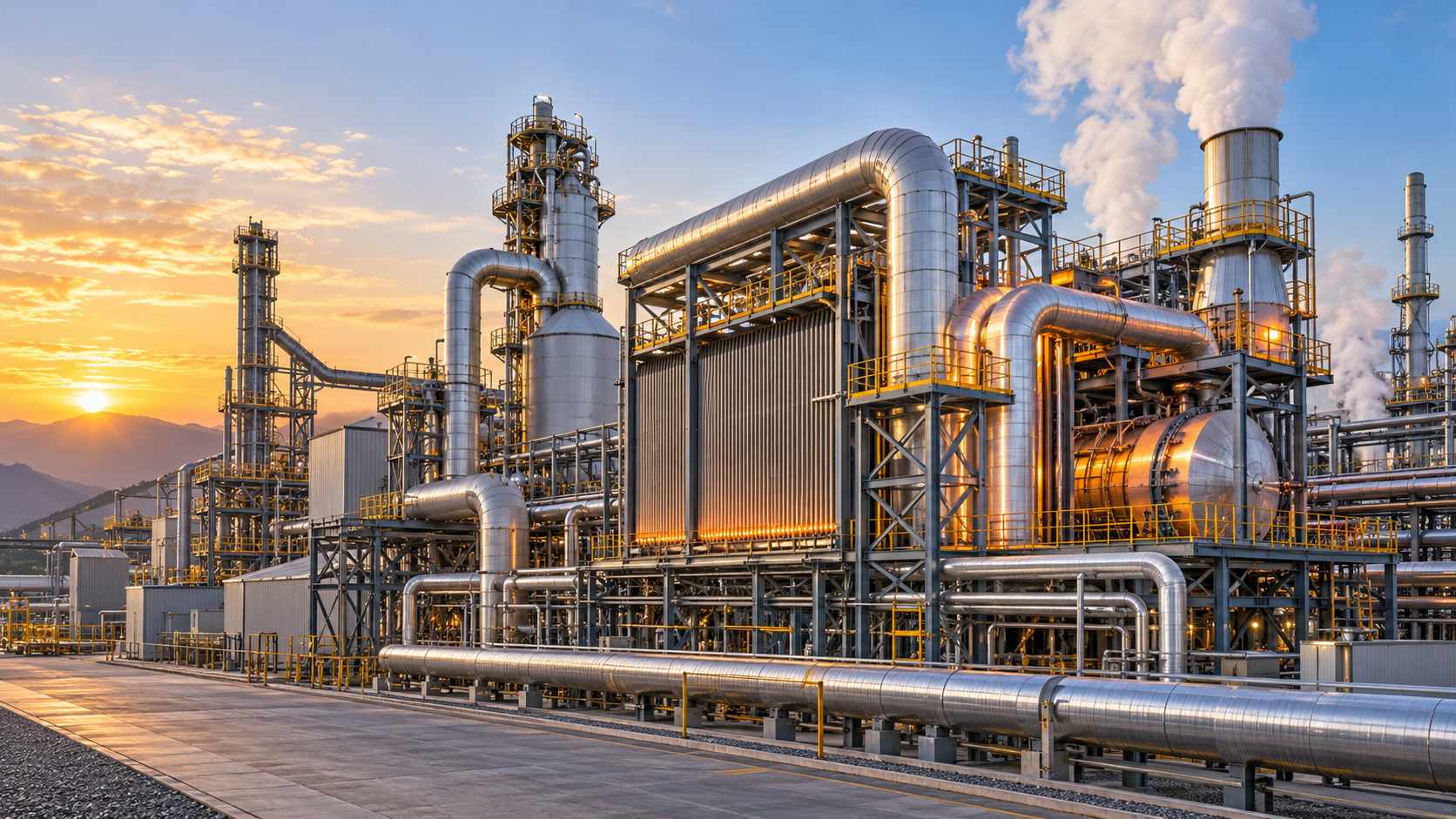
Heat recovery is a central design question for a sulfuric acid production line. Sulfur combustion and catalytic conversion release useful heat, while acid circulation, gas cooling, and steam generation determine how much of that heat can be used. A project that treats heat recovery as an afterthought may require more external fuel, cooling duty, or utility capacity than expected.
Where Useful Heat Is Created
The sulfur furnace produces high-temperature gas. Conversion from sulfur dioxide to sulfur trioxide also releases heat across the catalyst beds. Absorption and acid circulation then create lower-temperature heat that may be suitable for hot water, feed preheating, or other plant services.
| Heat source | Typical use | Design question |
| Furnace gas | Waste-heat boiler or steam generation | Gas temperature and fouling margin |
| Converter gas | Interpass or final gas cooling | Heat-exchanger approach temperature |
| Hot acid circulation | Water or feed preheating | Acid concentration and corrosion materials |
| Cooling water | Low-grade heat service | Temperature level and demand |
The actual arrangement depends on capacity, acid grade, steam demand, cooling-water conditions, and site utilities. Heat should be matched by temperature level, not only by total energy.
Waste-Heat Boiler and Steam Balance
A waste-heat boiler can recover furnace heat into steam. Its performance depends on gas flow, temperature profile, pressure, water chemistry, circulation, and the cleanliness of heat-transfer surfaces. The boiler must also tolerate start-up, turndown, and the impurity level of the sulfur feed.
Steam balance should list generation, process users, tracing, deaeration, start-up demand, and export or vent conditions. A high theoretical recovery does not help when the site cannot use the steam. The engineering basis should therefore state whether steam is consumed internally, exported, or condensed.
Matching Heat Exchangers to Acid Service
Hot sulfuric acid is corrosive, and concentration changes its corrosion behavior. Materials, velocity, residence time, gasket selection, and inspection access all matter. An exchanger that provides a close temperature approach may have a less forgiving materials requirement.
Acid-side fouling can reduce transfer area over time. Operators should monitor inlet and outlet temperatures, flow, pressure drop, acid concentration, and calculated duty. A trend in pressure drop or approach temperature often indicates a maintenance need before production is affected.
Control Strategy During Start-Up and Turndown
Heat recovery is not constant during start-up. The furnace, boiler, converter, and absorption sections reach operating conditions at different times. Interlocks and bypasses protect equipment while gas temperature, steam pressure, and acid circulation stabilize.
At low load, heat-transfer surfaces may operate outside their preferred range. Control valves should maintain safe temperatures and avoid unstable steam pressure. The operating manual should define permissives, ramp rates, alarm limits, and the response to loss of cooling or steam demand.
Utility and Maintenance Planning
Provide fuel, cooling water, boiler-feedwater quality, electricity, instrument air, and steam-user data to the supplier. Buyers can review the sulfuric acid production equipment e contact the project engineering team before selecting a recovery arrangement.
Maintenance access is part of efficiency. Platforms, removable bundles, drain points, inspection ports, water-treatment provisions, and spare instruments reduce the time that recovered-heat equipment is unavailable. Cleaning intervals should be based on actual trends rather than a fixed calendar alone.
Design Checks Before Selecting Recovery Equipment
A useful heat-recovery study starts with operating cases rather than one nameplate point. List normal production, minimum stable load, start-up, shutdown, ambient conditions, and expected feed changes. For each case, record gas flow, temperature, pressure, acid concentration, steam demand, cooling-water temperature, and allowable pressure drop. The result is a recovery envelope that shows when equipment is productive and when bypass operation is required.
Heat integration also needs a clear boundary. A boiler may supply the acid plant, a neighboring process, or a utility header. Each destination has different pressure, quality, and continuity requirements. Export steam cannot be counted as useful recovery if the receiving system is unavailable during the same operating period.
Instrumentation and Performance Verification
Temperature and flow instruments should be installed where they can be inspected and calibrated. Differential-pressure transmitters across exchangers and filters help identify fouling. Steam flow, feedwater flow, acid flow, and gas temperatures should be recorded on a common time base. A commissioning test can then compare calculated duty with measured duty without relying on one sensor.
Performance should be reviewed after the plant reaches stable operation. Changes in sulfur feed, catalyst condition, acid concentration, or cooling-water quality may alter the balance. A simple monthly review of recovered steam, exchanger approach temperature, pressure drop, and bypass time can reveal drift early.
Efficiency Without Sacrificing Reliability
The highest recovery target is not always the best operating target. A smaller temperature approach may require more expensive materials, tighter cleaning intervals, or higher pressure drop. A practical design leaves room for fouling, maintenance, turndown, and safe isolation. This protects the production line from becoming dependent on a single exchanger or boiler condition.
Energy accounting should separate recovered heat from avoided external fuel and from heat rejected to cooling water. That distinction helps the owner decide whether an additional exchanger, storage tank, or steam user is justified. It also makes future modifications easier because the plant has a measured baseline.
Condensate, Water Quality, and Corrosion Control
Steam recovery depends on more than the gas side. Poor boiler-feedwater quality can form scale, raise tube temperature, and reduce heat transfer. Dissolved oxygen, hardness, silica, conductivity, and chemical dosing should be controlled for the selected steam pressure. Blowdown must be included in both the water balance and the heat balance.
Condensate recovery can reduce make-up water and heating duty when the return stream is clean. The plant should identify every condensate source, its pressure, possible contamination, and return destination. Suspect condensate needs monitoring or segregation rather than automatic return to the boiler system.
Cold surfaces create another risk. If gas or acid equipment drops below the relevant condensation condition, corrosive liquid may form where the material was selected for dry service. Insulation, drains, start-up heating, and minimum-temperature interlocks protect these areas. Shutdown procedures should prevent wet gas from remaining in cool equipment.
Questions for a Technical Bid Review
- Which heat sources and operating cases are included in the guaranteed balance?
- What steam pressure, temperature, and annual availability form the design basis?
- How are bypass operation, turndown, cleaning, and equipment isolation handled?
- Which water-quality and corrosion limits must the owner maintain?
- What measurements are supplied for confirming recovered duty after commissioning?
Answers should be placed in the process description, heat and material balance, equipment data sheets, and control narrative. A single efficiency figure cannot replace those documents. The buyer should also confirm whether auxiliary fuel, start-up steam, chemical dosing, water treatment, and condensate polishing are inside or outside the quoted scope.
Heat recovery decisions affect plot layout. Steam drums, piping slopes, vents, drains, access platforms, and maintenance lifting space need room. Placing the equipment only by process sequence may leave poor access or long condensate routes. A layout review with operations and maintenance staff can prevent these problems before fabrication.
Hebei Aoliande Chemical Equipment Co., LTD. supplies sulfuric acid production line equipment and engineering support based on feed properties, utilities, site conditions, and required operating scope. Heat recovery design should be confirmed together with process configuration, materials, controls, and commissioning responsibilities.
Conclusão
Sulfuric acid plant heat recovery improves process efficiency when heat sources, temperature levels, steam demand, corrosion materials, controls, and maintenance access are designed as one system. The best design is the one that can use recovered heat reliably across normal load changes.
FAQ
What heat can a sulfuric acid plant recover?
Furnace gas, converter gas, hot acid circulation, and selected cooling-water streams can provide useful heat at different temperature levels.
Does more recovered heat always mean better efficiency?
No. Recovery must match real steam or hot-water demand and remain stable during turndown and maintenance.
Why are materials important in acid heat exchangers?
Sulfuric acid corrosion changes with concentration, temperature, velocity, and contaminants, so material selection affects service life.
What data does a supplier need?
Capacity, sulfur feed, acid grade, steam demand, cooling water, boiler-feedwater quality, utilities, turndown, and site conditions.