
In industries such as chemical processing, fertilizer production, wastewater treatment, and power generation, storing aggressive liquids safely is a critical challenge. Traditional materials like steel or concrete often struggle when exposed to acids, alkalis, or saltwater environments. This is where fiberglass reinforced plastic tanks come in.
Um FRP chemical storage tank is specifically designed to handle corrosive chemicals while maintaining structural strength and long-term reliability. Thanks to advances in composite materials and manufacturing technology, FRP tanks are now widely used across many industrial sectors.
In this guide, we’ll explore what an FRP chemical storage tank is, how it’s manufactured, its advantages, and what to consider when selecting the right tank for your application.
What Is an FRP Chemical Storage Tank?
Um FRP chemical storage tank is a storage vessel made from fiberglass reinforced plastic, a composite material consisting of glass fibers and thermosetting resin.
The fiberglass provides structural strength, while the resin matrix protects the tank against chemical corrosion. This combination results in a material that is lightweight, strong, and extremely resistant to aggressive environments.
FRP chemical storage tanks are commonly used to store:
-
Sulfuric acid
-
Hydrochloric acid
-
Sodium hydroxide
-
Industrial wastewater
-
Fertilizer solutions
-
Seawater and brine
Because of their chemical resistance and durability, these tanks are widely used in chemical plants and industrial processing facilities.
How an FRP Chemical Storage Tank Is Manufactured
Most manufacturers produce FRP chemical storage tanks using advanced composite manufacturing techniques. The two most common methods are filament winding and hand lay-up.
Filament Winding Process
Filament winding is a highly automated manufacturing method.
In this process, fiberglass fibers are impregnated with resin and wound around a rotating mold (mandrel). The fibers are placed in precise patterns to create a strong composite structure.
The advantages of filament winding include:
-
Uniform wall thickness
-
High mechanical strength
-
Consistent product quality
-
Efficient material use
Large industrial tanks are often produced using this process.
Hand Lay-Up Process
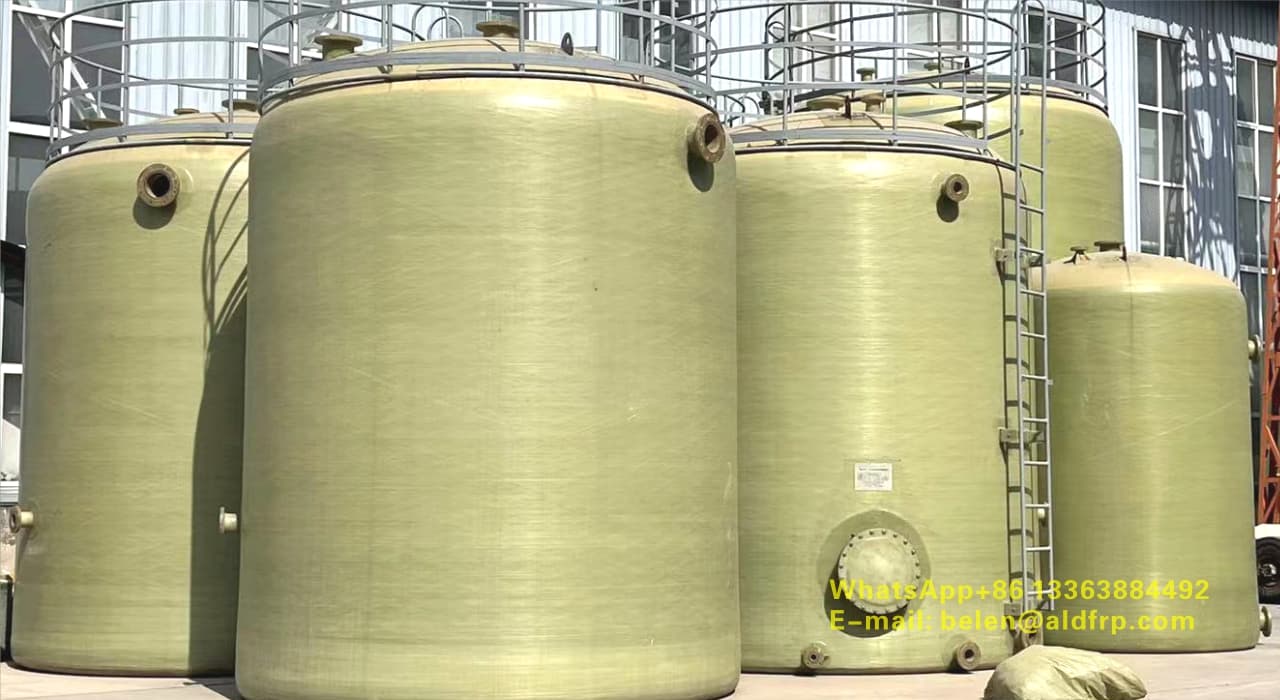
For certain custom tank designs, the hand lay-up method may be used.
In this process, technicians apply layers of fiberglass and resin manually onto a mold. Although it requires skilled workers, it allows manufacturers to create complex shapes and customized tank structures.
Many FRP chemical storage tank manufacturers combine both production methods depending on the tank size and application.
Structure of an FRP Chemical Storage Tank
A well-designed FRP chemical storage tank typically consists of several layers, each serving a specific function.
Inner Corrosion-Resistant Liner
The inner layer directly contacts the stored chemical. It is made with corrosion-resistant resin and specialized fiberglass materials to protect against chemical attack.
Structural Layer
The structural layer provides mechanical strength and supports the weight of the stored liquid. This layer is usually reinforced with fiberglass using filament winding.
Outer Protective Layer
The outer layer protects the tank from environmental factors such as UV radiation, moisture, and physical damage.
This multi-layer design ensures both durability and chemical resistance.
Advantages of FRP Chemical Storage Tanks
There are several reasons why industries increasingly choose FRP chemical storage tanks over traditional metal tanks.
Excellent Corrosion Resistance
One of the biggest advantages of FRP tanks is their ability to resist corrosive chemicals.
Unlike steel tanks that may rust or degrade over time, FRP tanks maintain their structural integrity even when storing aggressive substances such as acids and alkalis.
Lightweight and Easy Installation
FRP tanks are much lighter than steel tanks of the same capacity.
This makes them easier to transport and install, reducing the need for heavy lifting equipment and lowering installation costs.
Long Service Life

A properly designed FRP chemical storage tank can last 20–30 years with minimal maintenance.
The composite material resists corrosion, scaling, and environmental damage, making it ideal for long-term industrial use.
Low Maintenance Requirements
Steel tanks often require protective coatings and frequent inspections to prevent corrosion.
FRP tanks, however, require far less maintenance because the material itself is corrosion resistant.
Flexible Design
FRP tanks can be customized to meet specific project requirements. Manufacturers can adjust:
-
Tank diameter and height
-
Wall thickness
-
Resin type for chemical compatibility
-
Reinforcement patterns
This flexibility allows FRP tanks to be used in many different industries.
Applications of FRP Chemical Storage Tanks
Because of their durability and corrosion resistance, FRP chemical storage tanks are widely used in various industrial applications.
Chemical Industry
Chemical plants use FRP tanks to store acids, alkalis, solvents, and other corrosive materials.
Wastewater Treatment Plants
FRP tanks are used to store treatment chemicals such as chlorine, sodium hypochlorite, and sulfuric acid.
Fertilizer Production
Facilities producing fertilizers like potassium sulfate or ammonium sulfate often require corrosion-resistant storage tanks for process chemicals.
Desalination Plants
FRP tanks are ideal for seawater environments because they resist salt corrosion.
Power Plants
Cooling water systems and chemical treatment facilities in power plants often rely on FRP storage tanks.
Important Factors When Choosing an FRP Chemical Storage Tank
Selecting the right FRP chemical storage tank requires careful consideration of several factors.
Chemical Compatibility
The resin system must be compatible with the stored chemical. Different resins provide different levels of resistance.
Common options include:
-
Polyester resin
-
Vinyl ester resin
-
Epoxy resin
Tank Capacity
The tank must be designed to handle the required storage volume while maintaining structural stability.
Operating Temperature
FRP tanks can operate within a wide temperature range, but the resin system must be chosen based on the expected operating temperature.
Industry Standards
Professional tanks should be designed according to recognized standards such as:
-
ASME RTP-1
-
ASTM D3299
-
EN 13121
These standards ensure structural safety and product reliability.
Future of FRP Chemical Storage Tanks
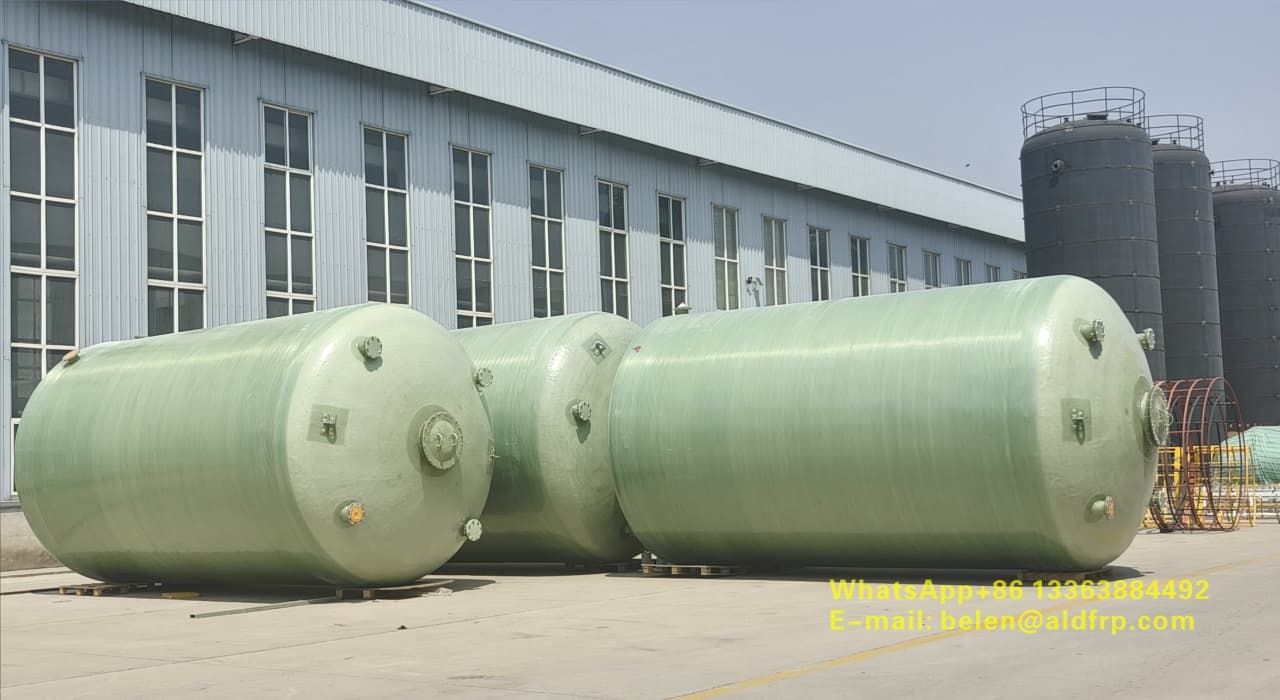
As industries continue to seek durable and corrosion-resistant storage solutions, the demand for FRP chemical storage tanks is expected to grow.
Advances in composite materials and automated manufacturing technologies are making these tanks stronger, more efficient, and more cost-effective than ever before.
Many industrial facilities are now replacing traditional steel tanks with FRP alternatives due to their long-term performance advantages.
Conclusão
Um FRP chemical storage tank provides a safe, durable, and cost-effective solution for storing corrosive liquids in industrial environments.
Key benefits include:
-
Excellent corrosion resistance
-
Lightweight construction
-
Long service life
-
Low maintenance requirements
-
Flexible design options
For industries dealing with aggressive chemicals or harsh environmental conditions, FRP tanks offer a reliable alternative to traditional steel or concrete storage systems.
By working with an experienced manufacturer and selecting the appropriate design and materials, companies can ensure safe and efficient chemical storage for decades.