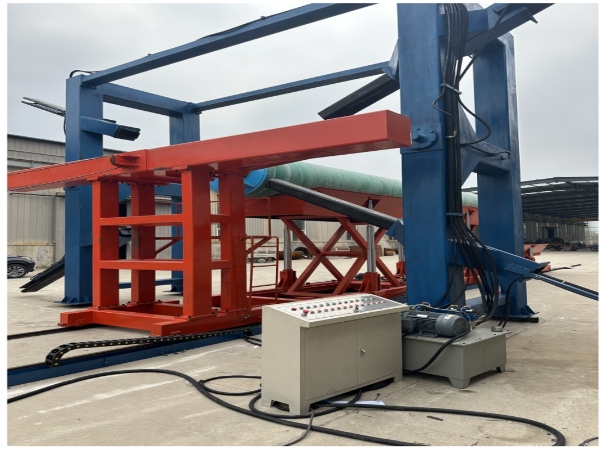
A computer control filament winding machine is not a single “best” machine. It is a production choice that has to match the product, the plant, and the project risk. A line built for small-diameter pipe will not solve the same problem as a system designed for chemical storage tanks. And once transport limits enter the picture, an on-site winding setup may be the only practical answer. For buyers comparing a filament winding machine supplier, the real question is simple: which machine type fits the job without creating waste, idle capacity, or quality problems later?
Start with the Project, Not the Machine
Most top-ranking buying guides do one thing well: they begin with use case, output, and product range instead of starting from a machine brochure. That approach works because composite production is driven by end use. A municipal drainage pipe order, a cable casing line, a chemical tank shop, and a large on-site storage project all ask for different winding ranges, line layouts, and support equipment.
Before comparing a computer control filament winding machine, it helps to split projects into three groups.
Pipe Projects: Volume, Diameter Range, and Cycle Time
Pipe production usually rewards stability and repeat work. Buyers in this segment care about diameter range, pipe length, winding angle control, resin feed stability, curing speed, and demoulding time. On the Sopplant product side, the pipe-related systems shown under the computer control filament winding machine category cover small-diameter production as well as large pipe manufacturing, with published ranges extending from 50–300 mm on one line family to as large as DN4000 mm on another, with pipe lengths up to 12 m and published output around 1000 kg/h for the larger line.
That matters in real factory planning. A cable casing producer serving power projects may value quick repeatability in the 50–300 mm band. A wastewater contractor or infrastructure supplier will think very differently. In that case, line length, sand adding, curing temperature, and demoulding force become more important than compact footprint alone. A machine that looks affordable at first can become expensive if it slows curing, limits diameter growth, or creates bottlenecks at mould unloading.
Tank Projects: Geometry, Inner Liner, and Chemical Duty
Tank work is less forgiving than many new buyers expect. A tank winding machine is not judged only by maximum diameter. Buyers also need to look at winding angle range, carriage control, positioning accuracy, inner liner preparation, and how the line handles different wall structures for corrosive service. On Sopplant’s tank-side product pages, the published tank winding range reaches DN600–DN4000 mm, with winding angles between 45° and 90°, positioning tolerance below 1 mm, and listed productivity around 500 kg/h. The site also presents a dedicated inner liner automatic forming machine and notes that liner-forming output can improve by more than five times when that unit is used for tank liner production.
For a fertilizer plant, an acid storage project, or a process water tank supplier, liner quality is not a side issue. It is part of the product. If the supplier cannot explain how the liner is formed, how winding and liner steps connect, and how the finished tank is checked before delivery, the inquiry is still incomplete.
On-Site Tank Projects: When Transport Decides the Machine
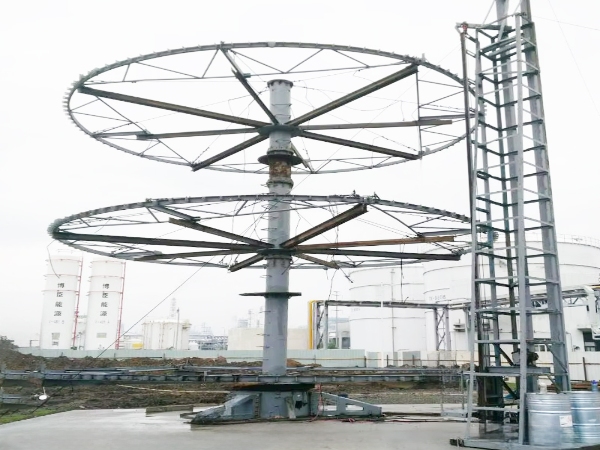
Some buyers only discover the transport problem after design is already fixed. That is late. Sopplant’s on-site winding page states directly that tanks above DN4000 mm become difficult because of transport limits, which is why the company offers large-scale site winding systems that are assembled beside the tank foundation. The same page lists working ranges from 4 m up to 25 m in diameter for vertical on-site tank winding, with section height up to 6 m, installation space around 35,000 mm by 35,000 mm, and typical applications in chemical, petroleum, and brewing fields.
For this kind of project, the right question is no longer “Which FRP tank winding machine is cheaper?” The better question is “What is the total project path from transport to assembly to training to final winding on site?” That is where many buying decisions go wrong.
A Simple Way to Match Machine Type to the Job
Once the project is clear, the selection becomes easier to frame.
| Project type | Typical production focus | What the machine must do well | Common buying mistake |
|---|---|---|---|
| Pipe and cable casing | Repeat orders, fixed sizes, shorter cycle time | Stable winding, steady curing, fast demoulding, practical diameter coverage | Buying only on entry price |
| Chemical and process tanks | Corrosion duty, liner quality, wall structure control | Accurate carriage movement, liner integration, reliable angle control | Looking only at max diameter |
| Large on-site tanks | Oversized diameter, transport limits, field assembly | Modular setup, site installation support, stable winding on foundation | Treating site work like normal factory production |
That table looks simple, but it reflects how buyers actually search. Search demand around FRP pipe winding machine, FRP tank winding machine, and filament winding machine supplier is not just informational. It is tied to production decisions, layout limits, and delivery risk.
The Five Checks That Prevent a Costly Mismatch
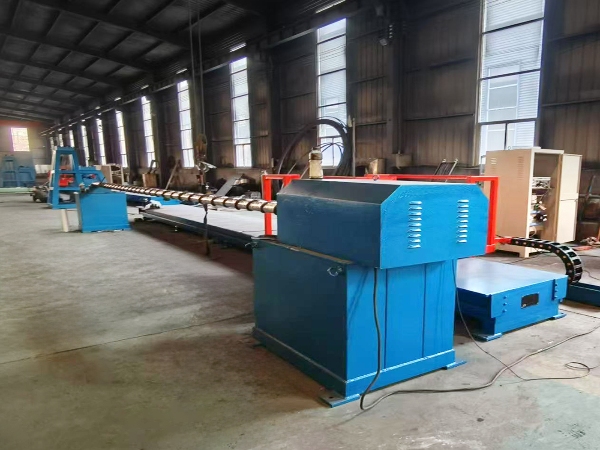
After project type is set, the next step is to test whether the machine can support daily production rather than just a showroom demonstration.
Check 1: Diameter and Length Range Must Match the Sales Plan
A line should fit not only today’s order book but also the next step up. Sopplant’s published pipe and tank pages show that different systems are built around very different size windows, from small pipe work to DN4000 mm pipe and tank manufacturing, and then to 4–25 m site-built tanks. That spread shows why “one machine for everything” is usually a weak buying assumption.
If the sales team expects a move from municipal pipe into larger corrosion-resistant tanks within two years, the machine choice should already reflect that. Otherwise, the plant pays twice: once for the first line and again for the gap it cannot cover.
Check 2: Look Beyond the Main Winding Unit
A strong winding unit still needs the right support chain. Sopplant’s product category and selection guide show that the broader system may include resin supply, liner forming, sand adding, curing, mandrel processing, demoulding, and hydrostatic pressure testing. The hydrostatic testing machine on the site is described as a special device for leakage inspection of FRP pipe. That is a useful signal for buyers: finished-product inspection should be part of the discussion before the order is placed, not after the first batch fails a site test.
For example, a large-diameter pipe line without a sensible sand-adding arrangement may lose cost advantage. A tank line without a good liner process may create downstream rework. A supplier that talks only about winding speed but not about inspection is not giving the full picture.
Check 3: Ask How the Line Handles Changeover
This point is often missed by first-time buyers. A machine can be technically capable yet commercially awkward if size changes take too long, if software setup is clumsy, or if mould handling is slow. Sopplant’s published descriptions repeatedly stress computer-controlled parameter input, automatic linearity design, regular roving arrangement, and compatibility with different diameters through matched support systems. Those details matter because changeover time affects labor cost, output planning, and on-time delivery.
A plant making a few standard pipe sizes can live with a narrower setup. A job shop serving custom tanks cannot.
Check 4: Check Curing, Power, and Floor Space Early
The published Sopplant pages give concrete numbers here. One larger pipe line lists total power at 193.6 kW and curing temperature at 105–160°C. The smaller pipe line shows total capacity at 70 kW and uses infrared heating in the curing station. The on-site large-tank system lists installation space around 35,000 mm by 35,000 mm. These numbers are not minor details. They shape building layout, power planning, ventilation, and project timing.
Many inquiries ask for price first and layout later. In practice, layout should come much earlier. A cheap machine that does not fit the workshop, the curing plan, or the local power conditions is not cheap.
Check 5: Judge the Supplier by the Quality of Its Questions
A reliable filament winding machine supplier should ask about the target product, diameter range, production mix, resin system, liner needs, inspection method, and site conditions. Market-facing buying guides and industrial selection pages consistently point buyers toward application, materials, capacity, maintenance, certifications, and written specifications when comparing suppliers.
That is a useful filter. If the supplier asks almost nothing and sends a generic quotation, the technical match is probably weak.
What to Prepare Before Sending an Inquiry
The fastest way to get a useful reply is to send better inputs.
| Information to prepare | Why it matters |
|---|---|
| Main product: pipe, tank, or on-site tank | It changes the whole machine direction |
| Diameter and length range | It decides whether the line is even suitable |
| Target output per day or year | It affects curing, demoulding, and labor planning |
| Resin and corrosion duty | It influences liner and process structure |
| Available workshop size and power | It can rule out a line before shipment |
| Need for testing and training | It affects the full project scope |
This kind of inquiry usually gets a better response than a one-line request for “best price.”
About Hebei Aoliande Chemical Equipment Co., LTD.
Before the conclusion, one company point matters for buyers comparing suppliers. According to the Sopplant website, Hebei Aoliande Chemical Equipment Co., LTD. is based in Hengshui, Hebei, started in 2016, and presents itself as a manufacturer of computer control filament winding machines and related FRP equipment. The site states that the company has more than 300 employees, over 10 R&D engineers, over 10 QA/QC inspectors, and management system certifications including ISO9001, ISO14001, and OHSAS18001. It also says the business provides technical advice, goods supply, transportation, and installation supervision, with products sold in markets such as the United States, Brazil, Japan, Germany, India, Malaysia, Iran, and Egypt. For buyers, that combination suggests a supplier that is not limited to one machine body, but works across design, manufacturing, and project support.
Conclusão
Choosing a computer control filament winding machine is really a matching job. Pipe production, tank production, and on-site tank construction may sit under the same product category, but they do not behave the same way in daily manufacturing. A useful buying decision starts with the project, then moves through size range, support equipment, changeover, curing, testing, and supplier depth. Buyers who follow that order usually get a machine that fits the plant. Buyers who skip it often end up paying for limits they did not see at the quotation stage.
FAQ
What is the best computer control filament winding machine for pipe production?
The best choice depends on diameter range, pipe length, target output, curing method, and whether the line needs sand adding and hydrostatic testing. A plant making standard cable casing has very different needs from a factory building large FRP pipe for wastewater or industrial service.
How is an FRP tank winding machine different from a pipe winding line?
An FRP tank winding machine puts more weight on liner quality, tank geometry, angle control, and chemical-duty structure. Pipe lines usually focus more on repeat output, cycle time, and efficient handling across set pipe dimensions.
When is an on-site filament winding machine the better option?
It becomes the better option when tank diameter makes transport difficult or unrealistic. Sopplant’s on-site winding page specifically frames large tanks above DN4000 mm as a transport challenge and gives an on-site solution for much larger diameters.
What should be included in a full filament winding machine inquiry?
A useful inquiry should include product type, diameter and length range, output target, resin or corrosion duty, workshop size, power conditions, and whether testing, installation, or training are needed. Suppliers can only recommend a suitable computer control filament winding machine when those details are clear.
How to choose a filament winding machine supplier for long-term projects?
Look for a supplier that can discuss process flow, liner forming, curing, demoulding, testing, training, and installation instead of quoting only the main machine. That usually matters more than a low starting price.