
Fiberglass reinforced plastic (FRP) pipes are widely used in industries like wastewater treatment, chemical transport, irrigation, and energy systems. One of the main reasons for their reliability and high performance is the FRP pipe filament winding machine. This specialized equipment uses the filament winding process to produce strong, lightweight, and corrosion-resistant pipes.
If you’re considering setting up an FRP pipe production line—or just curious about the technology—it’s important to understand the advantages of FRP pipe filament winding machines. In this guide, I’ll explain these benefits in a practical, easy-to-understand way, with real-world examples and insights from my experience in composite manufacturing.
What Is an FRP Pipe Filament Winding Machine?
Before diving into the advantages, let’s briefly review what this machine does.
An FRP pipe filament winding machine produces fiberglass pipes by winding resin-impregnated fiberglass fibers around a rotating mandrel. The fibers are applied layer by layer in precise patterns, which are controlled by a computer system. Once the resin cures, the pipe becomes a rigid, durable structure with excellent mechanical and chemical properties.
This technology has become the backbone of modern FRP pipe production because it allows manufacturers to create high-quality pipes efficiently and consistently.
Key Advantages of an FRP Pipe Filament Winding Machine
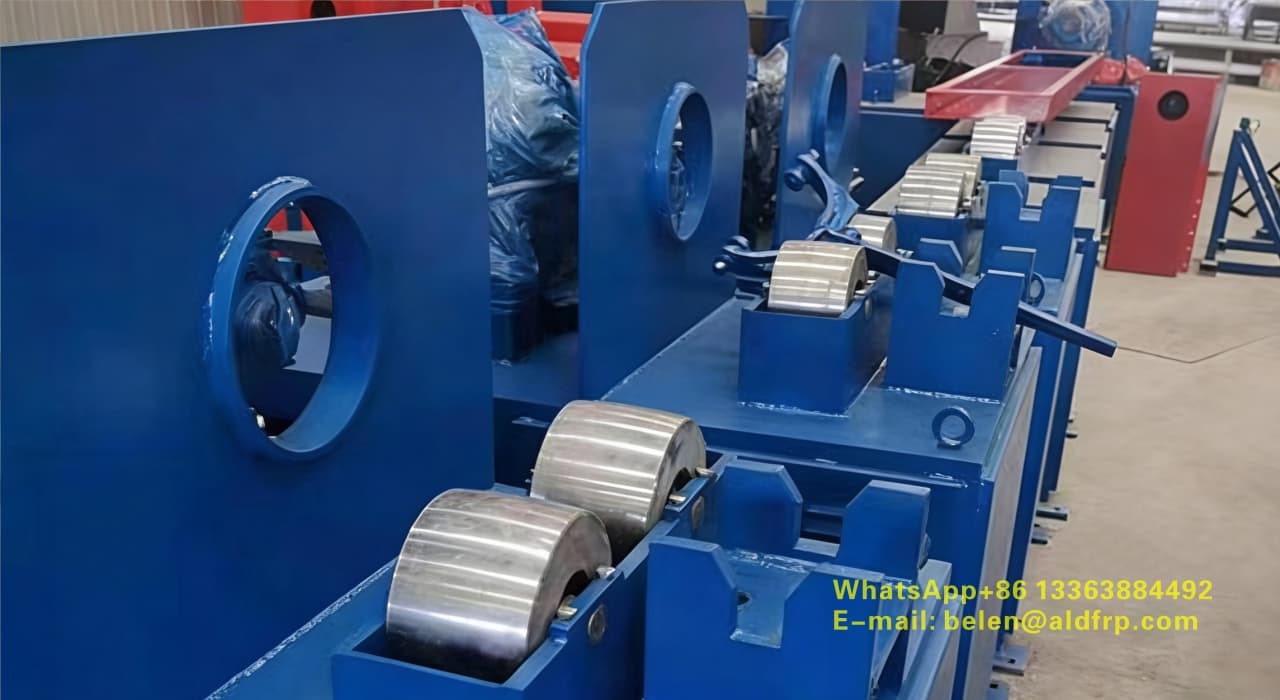
Let’s break down the main advantages of using a filament winding machine for FRP pipe production.
1. Consistent and High-Quality Pipes
One of the biggest advantages of an FRP pipe filament winding machine is its ability to produce consistent pipe quality.
Because the winding angles, fiber tension, and resin saturation are precisely controlled, each pipe has uniform wall thickness and mechanical strength. This is particularly important in industrial applications where pressure resistance and durability are critical—for example, chemical pipelines transporting corrosive liquids.
From my experience, manual winding methods often produce irregularities in fiber placement, which can compromise the pipe’s performance. Filament winding eliminates this problem.
2. High Mechanical Strength
The filament winding process aligns fibers in specific patterns to optimize structural performance. Common patterns include hoop winding for pressure resistance and helical winding for balanced axial strength.
The result is a pipe that is much stronger for its weight compared to conventional materials like steel or PVC. This makes FRP pipes ideal for high-pressure applications or long-span pipelines.
For example, in wastewater treatment plants, pipes must withstand internal pressure and external soil loads. Filament-wound FRP pipes meet these requirements while being lighter and easier to install.
3. Corrosion Resistance
Another major advantage of pipes produced by an FRP pipe filament winding machine is chemical and corrosion resistance.
Unlike steel pipes that rust over time or concrete pipes that can degrade in acidic conditions, FRP pipes maintain their integrity in harsh environments. This makes them ideal for chemical processing, seawater systems, and wastewater applications.
In real-world use, I’ve seen FRP pipelines last over 20 years in corrosive environments without significant maintenance. This longevity is a direct benefit of the precise manufacturing process provided by filament winding machines.
4. Design Flexibility
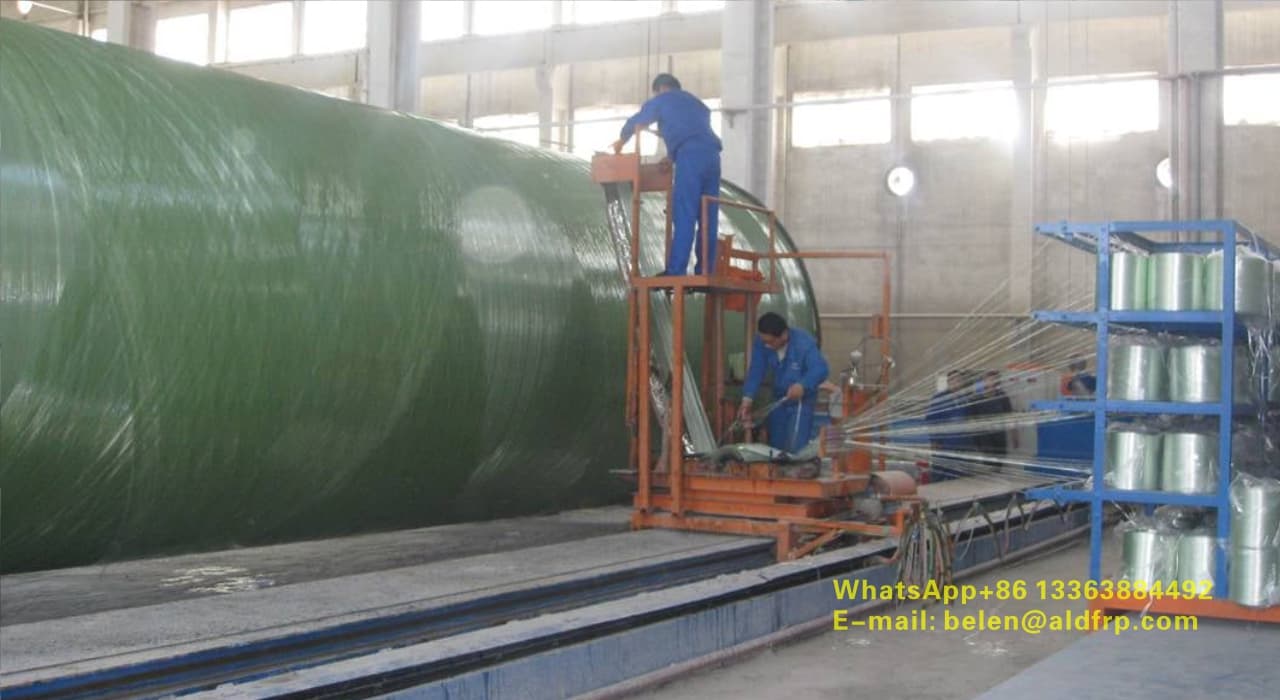
Filament winding machines allow manufacturers to adjust pipe dimensions, wall thickness, and fiber orientation according to specific project requirements.
This flexibility means you can produce:
-
Small-diameter industrial pipes
-
Large municipal pipelines
-
Pipes with reinforced layers or inner liners for chemical resistance
In other words, whether your project requires lightweight irrigation pipes or high-strength chemical transport pipelines, filament winding technology can accommodate it.
5. Efficient Material Use
The controlled process of filament winding minimizes waste. Fiberglass fibers and resin are applied exactly where needed, reducing excess consumption.
Compared with hand lay-up or molding methods, this efficiency lowers production costs while maintaining high-quality standards. In my experience, a well-configured winding machine can reduce resin waste by 15–20% compared to manual methods.
6. High Production Efficiency
Automation is a key feature of FRP pipe filament winding machines. Modern machines use CNC or PLC systems to control mandrel rotation, fiber tension, carriage movement, and resin delivery.
This allows manufacturers to produce large quantities of pipes consistently and quickly. For example, a single automated winding machine can produce dozens of pipes per day, depending on size, compared to a few using manual techniques.
High efficiency also reduces labor costs and increases overall profitability.
7. Ability to Produce Large-Diameter Pipes
Filament winding machines can produce pipes with diameters ranging from a few centimeters to several meters. This is particularly useful for municipal water supply or sewer systems, where large-diameter pipes are required.
Other manufacturing methods often struggle with large pipes due to material handling challenges. Filament winding machines solve this problem by combining precise control with scalable production.
8. Multi-Layer and Reinforced Structures
Some FRP pipes require additional features such as inner corrosion-resistant liners or sand-reinforced layers for stiffness.
Filament winding machines make it easy to produce these complex structures because fibers can be placed in multiple layers with precise control. This capability is critical for high-performance applications like chemical transport or industrial pipelines.
9. Long-Term Reliability
Finally, pipes produced using filament winding machines are extremely reliable. The combination of consistent fiber placement, resin impregnation, and controlled curing ensures that each pipe meets design specifications.
Long-term performance reduces maintenance costs and replacement frequency—important factors for large infrastructure projects where downtime is expensive.
Real-World Applications
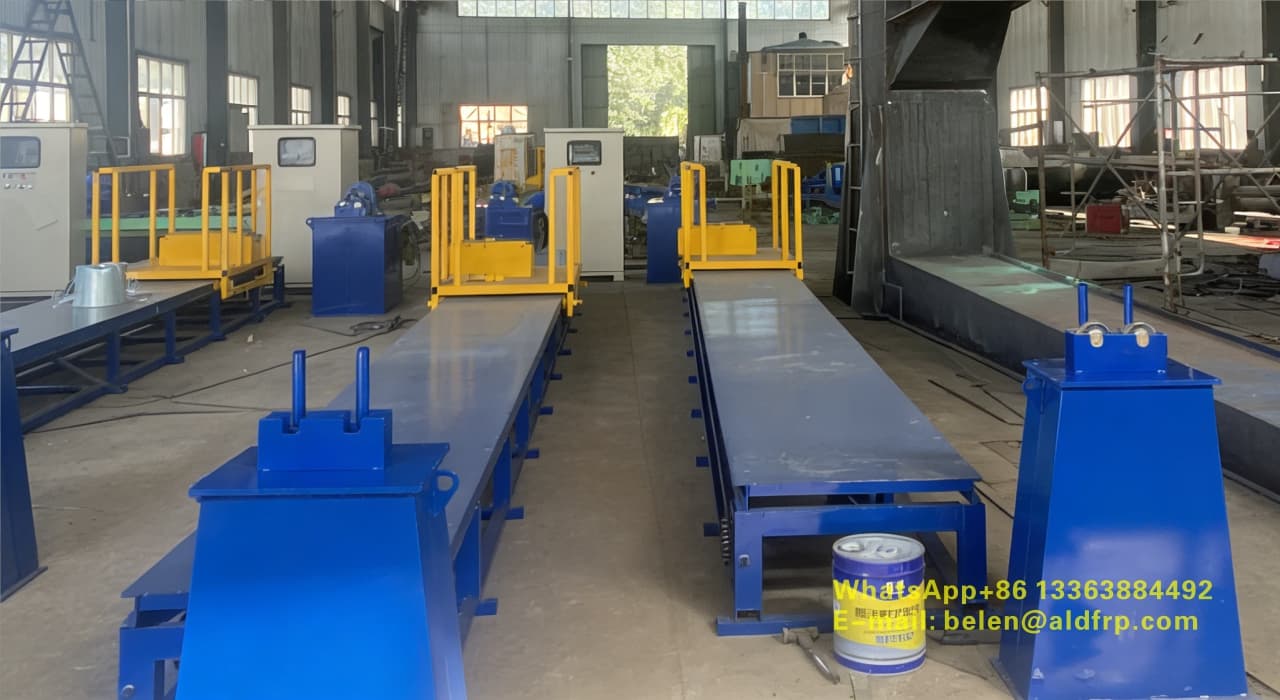
The advantages outlined above make FRP pipe filament winding machines indispensable in many industries:
-
Wastewater treatment plants – corrosion-resistant pipes handle aggressive sewage and chemical exposure.
-
Chemical industry – pipelines transport acids, alkalis, and other corrosive fluids safely.
-
Desalination plants – seawater-resistant pipes for water intake and discharge.
-
Irrigation systems – lightweight, durable pipes for agricultural water supply.
-
Power plants – cooling water pipelines that require high pressure resistance.
In every case, the filament winding process ensures the pipes meet strict quality and durability standards.
Conclusion
The FRP pipe filament winding machine is a game-changer in fiberglass pipe manufacturing. Its main advantages include:
-
Consistent product quality
-
High mechanical strength
-
Corrosion resistance
-
Design flexibility
-
Efficient material use
-
High production efficiency
-
Ability to produce large-diameter pipes
-
Multi-layer and reinforced structures
-
Long-term reliability
For manufacturers looking to produce durable, high-performance FRP pipes, investing in a reliable filament winding machine is one of the smartest decisions you can make.
From my experience, understanding these advantages also helps explain why filament winding has become the standard method for producing modern fiberglass pipes. It’s not just about automation—it’s about precision, efficiency, and long-term performance.