
Fiberglass Storage Tank: Durable and Corrosion-Resistant Solution for Industrial Storage
When it comes to storing liquids safely, choosing the right storage solution is crucial. Whether you’re dealing with chemicals, water, or other industrial liquids, a fiberglass storage tank offers a reliable, long-lasting option. I’ve worked with industrial clients for years, and I can confidently say that the advantages of fiberglass tanks make them a preferred choice over traditional steel or concrete tanks.
What Is a Fiberglass Storage Tank?
ألف fiberglass storage tank is made from fiberglass reinforced plastic (FRP), a composite material that combines glass fibers with thermosetting resin. This combination gives the tank both structural strength and excellent resistance to corrosion, chemicals, and environmental damage.
Fiberglass storage tanks come in various sizes and designs, including:
-
Vertical and horizontal tanks
-
Underground and aboveground tanks
-
Custom shapes for specific industrial requirements
Because of their corrosion resistance, these tanks are commonly used in industries such as chemical processing, wastewater treatment, fertilizer production, and water storage facilities.
How Fiberglass Storage Tanks Are Manufactured
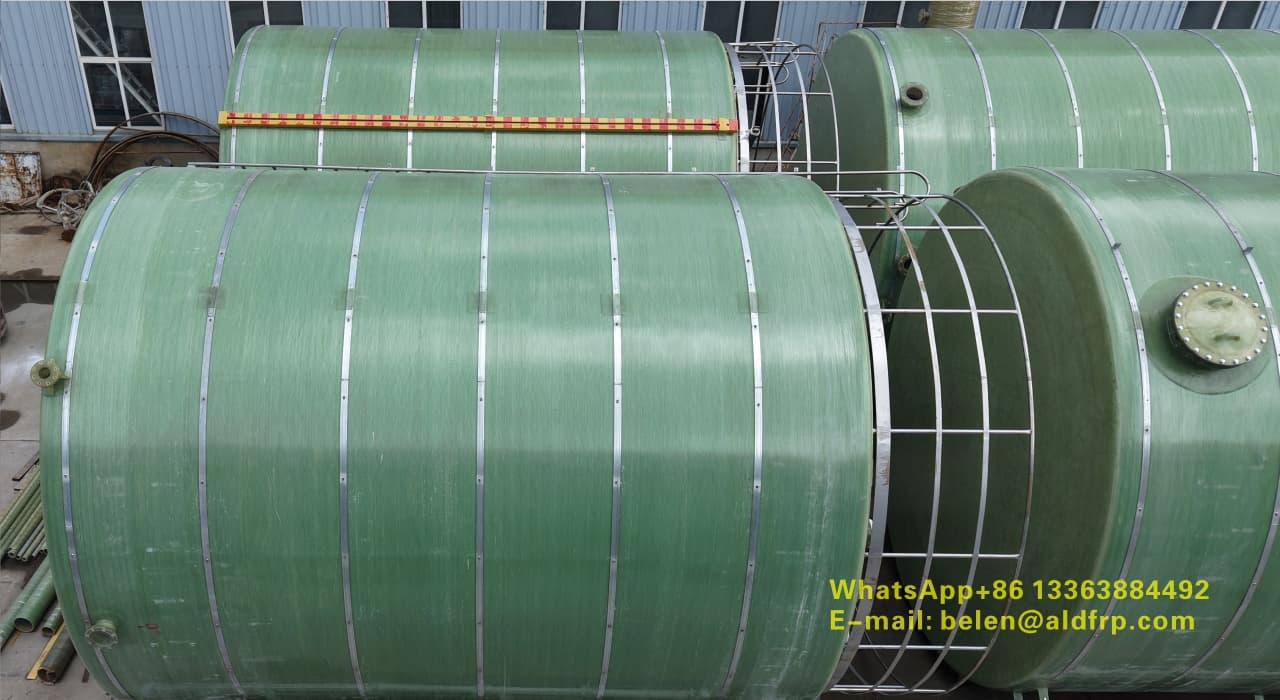
Manufacturing a fiberglass storage tank involves advanced techniques that ensure durability and reliability. The two most common methods are filament winding and hand lay-up.
1. Filament Winding
Filament winding is widely used for large industrial tanks. In this process, continuous fiberglass fibers are impregnated with resin and wound around a rotating mandrel. The fibers are strategically placed to create maximum structural strength and uniform wall thickness. Once the layers are complete, the tank is cured to form a rigid structure.
I’ve seen tanks made this way last decades in chemical plants without any significant maintenance, which is impressive compared to traditional steel tanks.
2. Hand Lay-Up Process
For smaller or custom tanks, the hand lay-up method is often used. Here, skilled technicians manually layer fiberglass and resin on a mold. This allows for:
-
Custom shapes and dimensions
-
Multi-layer reinforcement
-
Integration of nozzles, baffles, and inspection ports
Both methods are widely trusted in the industry and produce fiberglass storage tanks that are safe, durable, and efficient.
Advantages of a Fiberglass Storage Tank
There are several reasons why industries choose fiberglass storage tanks over steel or concrete alternatives:
1. Corrosion Resistance
Unlike steel tanks that can rust or degrade over time, fiberglass tanks naturally resist chemical corrosion. This makes them ideal for storing acids, alkalis, salts, and other corrosive liquids.
2. Lightweight Construction
Fiberglass tanks are much lighter than steel or concrete tanks of the same capacity. This makes transportation and installation easier and reduces costs.
3. Long Service Life
High-quality fiberglass storage tanks can last 20–30 years with minimal maintenance. I’ve consulted on facilities where tanks installed over 15 years ago are still in perfect working condition.
4. Low Maintenance
Steel tanks often require periodic recoating and inspection to prevent rust. Fiberglass tanks, on the other hand, need only routine visual inspections to maintain reliability.
5. Customizable Design
One of my favorite things about fiberglass storage tanks is their flexibility. Manufacturers can design tanks to meet specific needs, including:
-
Tank diameter and height
-
Wall thickness for pressure requirements
-
Chemical-specific resin selection
-
Integrated fittings, vents, and baffles
This makes them perfect for facilities with unique storage requirements or limited space.
Applications of Fiberglass Storage Tanks
Fiberglass storage tanks are widely used across industries:
-
Chemical Industry: For storing acids, bases, and solvents safely.
-
Water Treatment: For potable water, wastewater, and chemical storage.
-
Fertilizer Production: For hydrochloric acid, sulfuric acid, and other corrosive solutions.
-
Power Plants: For cooling water storage and chemical treatment solutions.
-
Agriculture: For liquid fertilizers, water, and irrigation systems.
-
Marine Applications: Resistant to saltwater and coastal environments.
Design Standards for Fiberglass Storage Tanks
To ensure safety and durability, fiberglass storage tanks are manufactured according to recognized standards such as:
-
ASME RTP-1: Covers design, fabrication, and inspection for corrosion-resistant tanks
-
ASTM D3299 / D4097: Provides material and manufacturing guidelines
-
EN 13121: European standard for GRP tanks and vessels
Following these standards ensures your fiberglass storage tank is safe, reliable, and compliant with industrial regulations.
Installation Considerations

Installing a fiberglass storage tank requires careful planning:
-
Proper foundation or bedding to prevent deformation
-
Adequate ventilation and access for inspection
-
Correct backfilling for underground tanks
-
Compliance with local safety and environmental regulations
When installed properly, a fiberglass tank will outperform steel or concrete tanks in both longevity and reliability.
Why I Recommend Fiberglass Storage Tanks
Having worked in industrial design and plant consulting for years, I’ve seen firsthand how fiberglass storage tanks outperform traditional options:
-
They require minimal maintenance
-
They are easier to install
-
They resist corrosion even in harsh chemical environments
-
They last decades, reducing long-term costs
In short, investing in a fiberglass tank saves money, time, and stress over the lifetime of a project.
استنتاج
ألف fiberglass storage tank is a safe, durable, and cost-effective solution for industrial liquid storage. With advantages such as corrosion resistance, lightweight construction, long service life, and customizable design, it’s no wonder that industries are increasingly replacing steel and concrete tanks with FRP tanks.
Whether you’re storing chemicals, water, or industrial liquids, a fiberglass storage tank offers peace of mind and reliable performance for decades.