
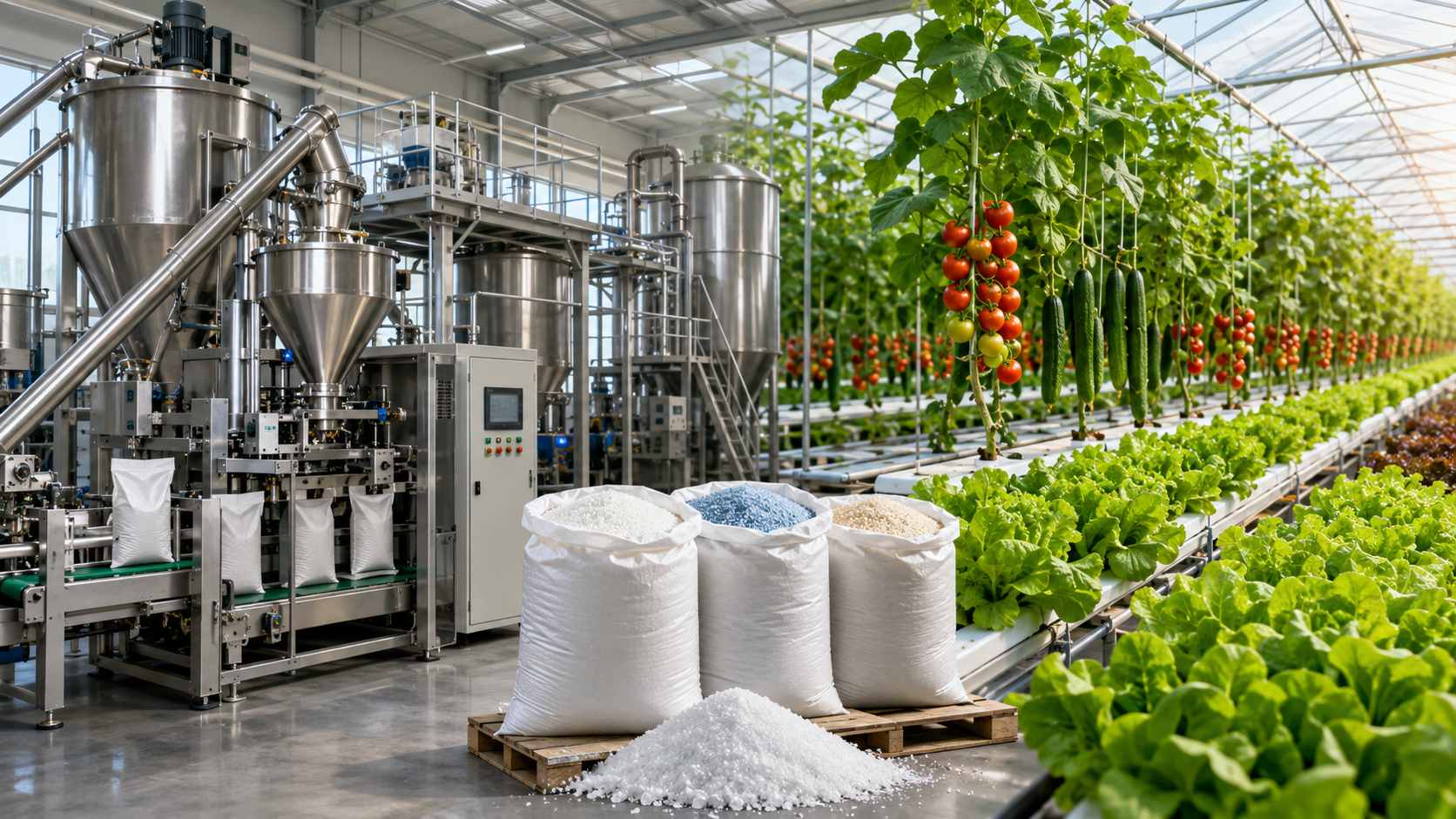
Greenhouse tomato, cucumber, lettuce, spinach and herbs are grown in controlled spaces, but their nutrition problems are often very practical. A tomato crop may look healthy in the morning and show calcium-related fruit issues two weeks later. Cucumbers can lose vigor when the feed is not steady. Leafy greens may react quickly to high salt, poor solubility or uneven nutrient supply.
For growers dissolved and easy transport through the fertigation system is required. For manufacturers of water soluble fertilizer production of stable, uniform products for the market is their objective. They have to produce a product which performs well for application by drip irrigation, foliar sprays, soilless cultivation and hydroponic production of vegetable crops. Consequently production of water soluble fertilizer for use on greenhouse vegetables requires more than mere NPK compounds mixed together in a pot.
Why Greenhouse Crops Need Clean Water Soluble Fertilizer
Many commercial greenhouses feed their crops through the irrigation water. Greenhouse crops are typically grown fast, so any small error in solubility or in the correct nutrient balance for the plants could quickly affect the thousands of plants growing in a 5,000 square meter greenhouse.
Tomato, cucumber and leafy greens have different feeding habits and therefore place different demands on the fertilizer manufacturers.
| Crop | Main fertilizer concern | Common production requirement |
| Greenhouse tomato | Fruit setting, calcium supply, potassium demand | Stable NPK formula with good solubility |
| Greenhouse cucumber | Fast growth, flowering, magnesium and micronutrients | Uniform nutrient distribution in each batch |
| Leafy greens | EC sensitivity, clean leaves, short crop cycle | Low residue, fast dissolving powder or granules |
A good quality fertilizer for greenhouse vegetable production should not have any visible impurities in the tank. It should be easy to use, easy to make up a solution and consistent from bag to bag. When using a stock solution poor mixing can lead to problems with unstable EC readings, blocked filters and variable plant color between rows.
Formula Design Starts with Crop Use
A water soluble fertilizer formula is more than a list of raw materials. The fertilizer product must be suited to the growth stage of the crop, to the quality of the water, to the growing medium, to the climate and to the method of irrigation.
Tomato Fertilizer Needs
Fertilizers for Greenhouse Tomatoes are frequently changed during the development stages of the plant. Young seedlings and plants require a consistent supply of nitrogen and phosphorus to produce roots and leaves while mature plants in the flowering and fruit filling stages require increased levels of potassium. Additionally, Calcium and Magnesium play critical roles in the production of high quality fruit and must be taken up in a balanced manner by the plant.
In production, this means raw materials such as soluble nitrogen sources, potassium salts, phosphates, magnesium materials and trace element premixes must be weighed accurately and mixed evenly. A small weighing error may not look serious on the production floor, but it can change how a concentrated fertilizer behaves in the tank.
Cucumber Fertilizer Needs
Greenhouse cucumber requires a fertilizer that promotes rapid vine growth and continues to promote fruit production. This crop is extremely sensitive to any changes in its feeding program. Even a weak or inconsistent mix can produce pale leaves, poor flowering and soft growth.
Cucumber formulas require a clean powder fertilizer mix, a stable flow during the packing process and good moisture management. Hygroscopic ingredients should not be left open for too long as they absorb moisture from the air. This is particularly relevant during the humid seasons.
Leafy Greens Fertilizer Needs
We are constantly looking for a fertilizer that is not only good but also gentle for the leaves of our leafy greens such as lettuce, spinach and basil. These short-cycle crops are very sensitive for big changes in EC and for insoluble residue. These crops are grown in hydroponic systems such as channels, floating systems or in bags with substrate. Because of this the quality of the nutrient solution is visible on a daily basis.
The final product needs to dissolve quickly, make a clear solution and maintain the nutrient ratio of the final product. A clean product will help to reduce complaints to hydroponic stores, farm managers and private label customers.
Water Soluble Fertilizer Production Process
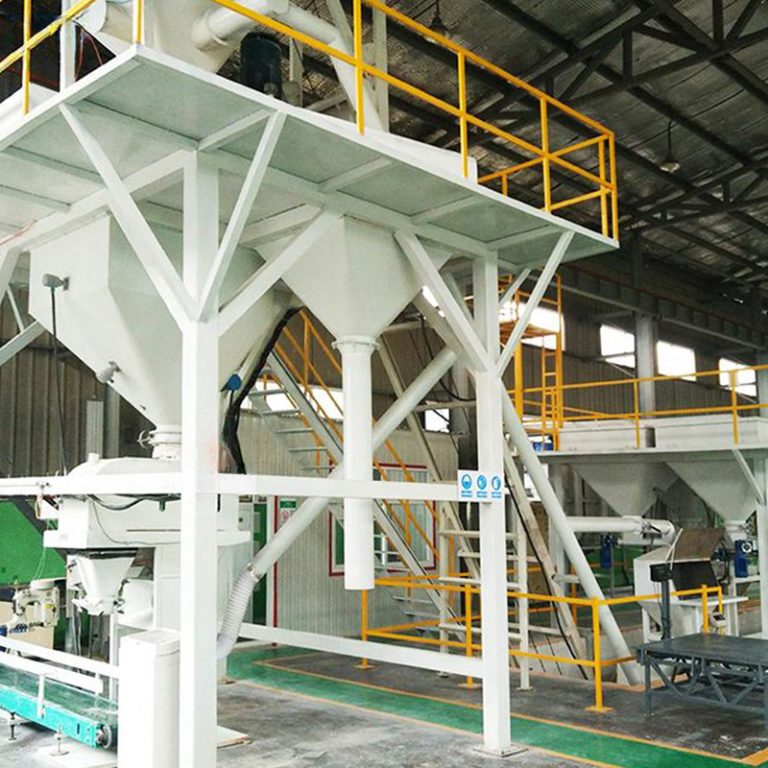
Línea de producción de fertilizantes solubles en agua: feeding of raw materials, mixing according to a formula, mixing of the fertilizer, automatic quantitative packaging. Simple looking but important for the quality of the end product.
Raw Material Feeding
First, soluble raw materials are added to the system. These can be nitrogen materials like ammonium sulfate as well as potassium nitrate, monoammonium phosphate, magnesium sulfate and a variety of micronutrient premixes. Each material has its specific characteristics regarding flowability, density and moisture.
A clean feeding system can help to reduce dust, material loss as well as manual handling. This is particularly important in the production of a greenhouse fertilizer, as many formulas contain fine powders, and also contain a large number of small-dose trace elements.
Formula-Based Batching
Batching is the core of production of NPK water soluble fertilizer. A production line with 3-10 ingredients can be made to produce different formulas for production of tomato, cucumber, lettuce and other green house vegetables. Static weighing, fast feeding and slow feeding are the ways to keep the formula exact.
Many a factory is set up to run one line of production. For example in the morning a tomato fruiting formula is made and in the afternoon a leafy greens formula is made. By storing these formulas and then automatically batching them out just before use the changeover time is significantly reduced. For products that are sold to the professional farmer accuracy of batching to about ±0.1%–±0.2% is critical in order to get batch-to-batch stability.
Fertilizer Mixing
To avoid dead spots when mixing, all ingredients are mixed thoroughly together without any “unused” material remaining. For powder fertilizer, a horizontal double ribbon mixer is often the most suitable equipment, because it makes sure all particles are moving in different and also all directions to achieve an optimal mix.
When a formula is made up of different size particles, such as large potash and small micronutrient premix, mixing is a critical operation. If the large particles settle to the bottom of the bag and the small particles remain at the top of the bag, one bag may end up to be a very high potash formula and the next bag a high micronutrient formula. Such segregation is expensive and can cause poor crop response and customer claims.
Embalaje cuantitativo automático
The final stage of packaging involves measurement, bag gripping, filling, sealing and conveying. Most fertilizer packing machines are able to handle a variety of powder or particle materials and are generally able to pack in a variety of common sizes used in the greenhouse market.
In commercial farms packaging is usually done in 10 kg, 20 kg or 25 kg bags, in hydroponic shops and retail distributors are sold in 1 kg or 5 kg packs, and in export markets they require printed moisture-resistant bags. Automatic quantitative packaging increases control over weight, improves labor efficiency and changes the appearance of packaging.
Common Problems in Greenhouse Fertilizer Manufacturing
Many product complaints are not due to the NPK formula but rather to production details.
- Fertilizer caking: often linked to moisture absorption, long air exposure or weak packaging.
- Poor solubility: may come from unsuitable raw material grade, large particles or uneven mixing.
- Fertilizer precipitation: often appears when incompatible ingredients are blended or used at high concentration.
- Drip irrigation clogging: can be caused by insoluble residue, dirty solution tanks or poor product clarity.
- Unstable EC and pH: may reflect formula inconsistency or poor batch control.
Preventing such problems at the production stage as opposed to on a greenhouse farm is easily tackled by the manufacturer. As a general rule, ensuring clean feeding, the accurate batching of all individual constituents, fast mixing and the shortest possible time before packaging and subsequent sealing to prevent moisture from entering will suffice to guarantee the quality of the end product.
Choosing Equipment for Greenhouse Fertilizer Production
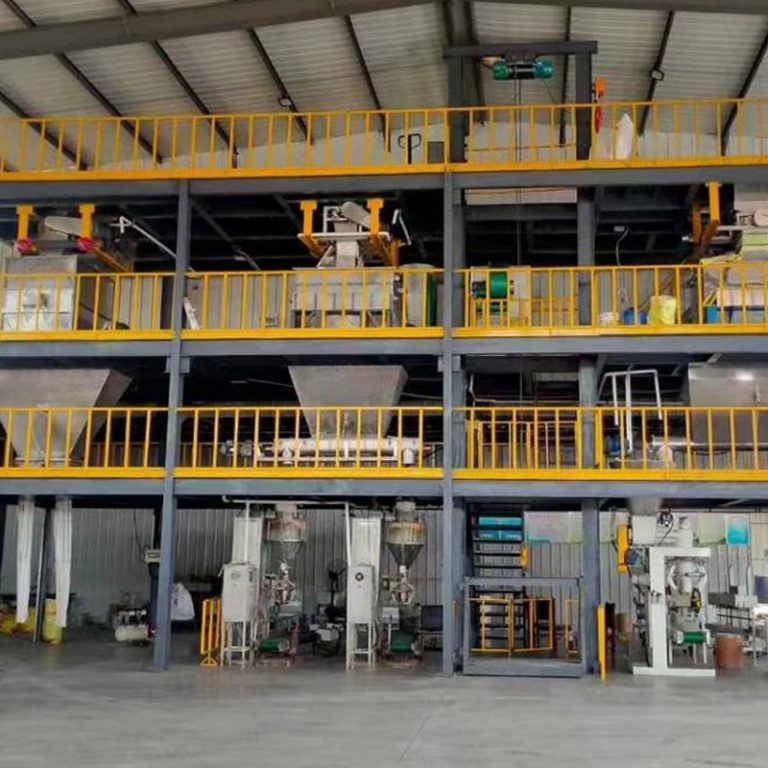
Choose a water soluble fertilizer plant on the basis of real products, not only on basis of the capacity. A factory for the production of fertilizer for greenhouse crops needs flexibility. Depending on region and season there are differences in the crop formula and the packing sizes.
Key points to check include:
- Number of ingredients used in each formula
- Target products such as tomato fertilizer, cucumber fertilizer and leafy greens fertilizer
- Powder or granular product form
- Required hourly capacity
- Bag sizes for farms, dealers and retail channels
- Contact material such as stainless steel where needed
- Dust control and easy cleaning
- Formula storage and automatic weighing
- Local installation, training and technical support
Practical fertilizer mixing and packing line helps factory to make stable products, reduce labor force and respond to custom water soluble fertilizer orders promptly.
Hebei Aoliande Chemical Equipment Co., LTD. as a Supplier
Hebei Aoliande Equipo Químico Co., LTD. is a China chemical equipment and fertilizer production equipment supplier. We manufacture Water soluble fertilizer production lines, Potassium/sodium sulfate production lines, HPMC production lines, calcium chloride production lines, FRP/GRP product equipment etc.
Our water soluble fertilizer production line offers a complete plant from conveying the material, to batching, mixing, to packaging. This can batch out multiple ingredients in one formula, to mix them evenly, then measure, fill, and pack out automatically. The material contact parts can be made of steel of suitable material as per client’s requirement. Our production line for water soluble fertilizer has features of less dust, shorter material staying time, can run efficiently in client’s factory.
The company also has design capabilities for materials, structures and equipment solutions. Our teams comprise of production personnel, R&D engineers and quality control personnel. Our management systems are certified and we can provide technical advice, supply of goods and materials, transportation and installation supervision to customers. For fertilizer manufacturers entering the greenhouse vegetable fertilizer market, our engineering expertise can help to match a formula range, production capacity, plant layout and packaging plan.
Conclusión
Greenhouse-grown tomatoes, cucumbers and leafy greens require fertilizers that are dissolved easily, are fed out uniformly and function smoothly in fertigation systems. The manufacturer has a variety of production challenges to achieve the production of high-quality fertilizers in accurate, clean, stable and stackable form for distribution to various markets.
Una línea de producción de fertilizantes solubles en agua can be perfectly tuned to the specific needs of crop nutrition and then be applied on a large scale in a production plant. This concerns the design of an automatic fertilizer batching system as well as the mixing of the fertilizer and the filling in exact quantities.
Preguntas frecuentes
What is the best fertilizer for greenhouse tomatoes?
Greenhouse tomato fertilizers are typically used depending on the stage of the tomato plant, water quality and the growing medium. In most cases it is best to start with a fertilizer that contains balanced amounts of nitrogen and phosphorus and then move to a fertilizer that contains higher amounts of potassium, calcium and magnesium during the flowering and fruit filling stages. A water soluble fertilizer for tomatoes needs to dissolve well in water and be suitable for use in fertigation.
Can the same water soluble fertilizer be used for tomatoes, cucumbers and leafy greens?
A general fertilizer for the greenhouse vegetable production can be used as well for different crops. However most commercial greenhouses are used for single crops and a crop specific formula is preferred. Fertilizers for tomato, cucumber and the leafy greens can contain different nutrient schedules and have different EC tolerances, therefore a custom water soluble fertilizer formula is often used for serious productions.
What equipment is used in a water soluble fertilizer production line?
Water Soluble Fertilizer Production Line. A complete production line includes: raw material supply, batching, mixing, weighing, packaging. For the production of NPK Water Soluble Fertilizer, an Automatic Fertilizer Batching System and Double Ribbon Mixer are necessary to ensure accurate ratio and homogeneous mixture.
How can manufacturers reduce drip irrigation clogging?
Clogging of drip irrigation systems can be prevented by manufacturers using a number of methods. By using the materials in their fertilizers in a soluble grade, controlling the particle size, ensuring that the mixing of the fertilizer is of a high standard and that there is the minimum of insoluble residue, manufacturers can take steps to prevent clogging. It is also important that the packaging of the fertilizer is of a suitable nature to prevent moisture absorption and subsequent caking of the fertilizer in storage.
What package sizes are common for greenhouse fertilizer products?
Greenhouse fertilizer products are available in packs of 1 kg, 5 kg, 10 kg, 20 kg and 25 kg depending on the market. In hydroponic shops and for retail greenhouse growers, the smaller packs are the most suitable. For larger commercial greenhouse growers and distributors, the bigger packs are more common.