
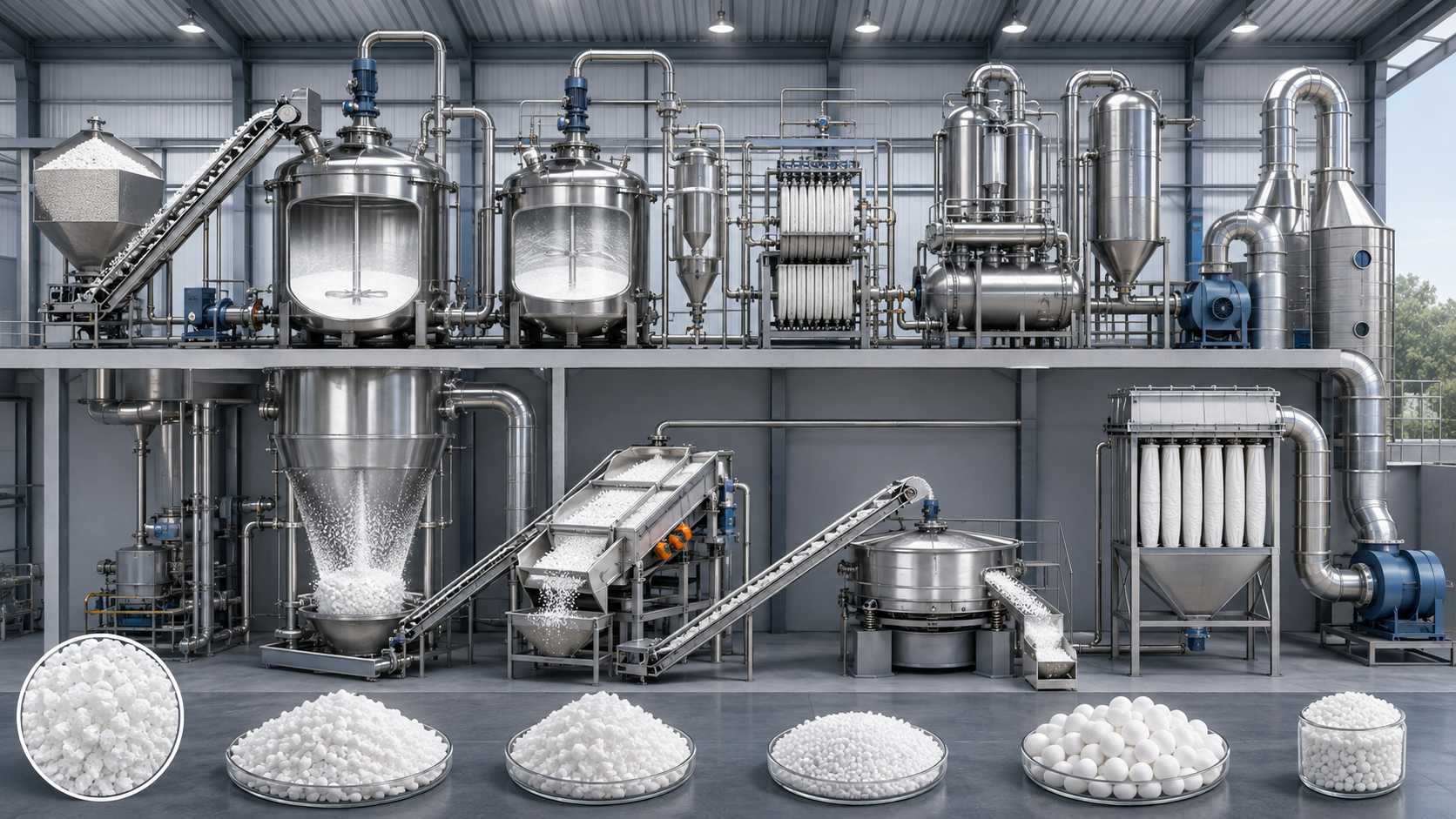
Preventing Scale in Calcium Chloride Evaporators
Preventing scale in calcium chloride evaporators starts before the liquor reaches the heating surface. Feed clarification, impurity control, concentration limits, circulation velocity, steam conditions, and cleaning practice all affect deposition. In a línea de producción de cloruro de calcio, evaporation links wet chemistry with drying or granulation, so unstable evaporator duty soon appears as a production and product-quality problem.
What Forms the Scale
Calcium chloride itself is highly soluble, but real feed liquor contains more than calcium and chloride. Limestone can introduce magnesium, silica, iron, alumina, and insoluble matter. By-product hydrochloric acid may carry metals or suspended material from its source process. Neutralization can also leave unreacted solids or precipitates when pH, mixing, and residence time are poorly controlled.
As water evaporates, these minor constituents become concentrated. A compound that caused no visible trouble in the reaction tank may reach its solubility limit at the heat-transfer surface. Local wall temperature can be higher than the bulk liquor temperature, which makes the surface the first place where a deposit grows.
Deposit analysis is worth the effort. A cleaning chemical selected for carbonate-rich scale may do little against silica-bearing material, while an aggressive cleaner can attack gaskets, welds, or heat-transfer surfaces.
Stabilize Liquor Preparation First
Reaction and neutralization should deliver a clear, controlled liquor to evaporation. Measure hydrochloric acid strength, calcium source composition, pH, density, suspended solids, and the impurities that matter for the selected product grade. A daily composite sample often reveals variation that a single grab sample misses.
Mixing quality deserves close attention. Acid entering a poorly mixed vessel can create a local low-pH zone, while excess limestone can remain as fine solid. Both conditions make downstream behavior harder to predict. Control the addition rate, confirm agitator operation before dosing, and allow enough residence time for reaction and gas release.
Clarification and filtration equipment must be sized for the actual solid load, not only nominal flow. If a filter is bypassed whenever differential pressure rises, the evaporator becomes the filter. The deposit then forms on the most expensive surface in the wet process.
Practical feed controls include:
A defined turbidity or suspended-solids limit before evaporation.
Routine acid and limestone lot records linked to liquor analysis.
A filter differential-pressure range with a cleaning or cloth-change response.
A controlled destination for first liquor after a process upset or grade change.
Protect the Heat Transfer Surface
Scale growth depends on wall temperature, concentration at the wall, residence time, and the ability of flowing liquor to carry crystals away. When a heat-transfer coefficient begins to fall, raising steam pressure may restore production briefly, but it also raises the wall temperature and can accelerate deposition.
Operators need a stable operating window. Track steam pressure, condensate condition, liquor inlet and outlet temperature, circulation flow, vacuum where applicable, density or concentration, and evaporation rate. Review the relationship among them. A slow increase in steam use per unit of water removed is often more useful than one temperature reading.
The feed point should mix incoming liquor quickly without striking a hot surface as a concentrated jet. Recirculation piping should avoid dead legs where solids settle. Pumps must hold the required flow against changing liquor viscosity and system resistance. A worn impeller may lower circulation long before a low-flow alarm is triggered.
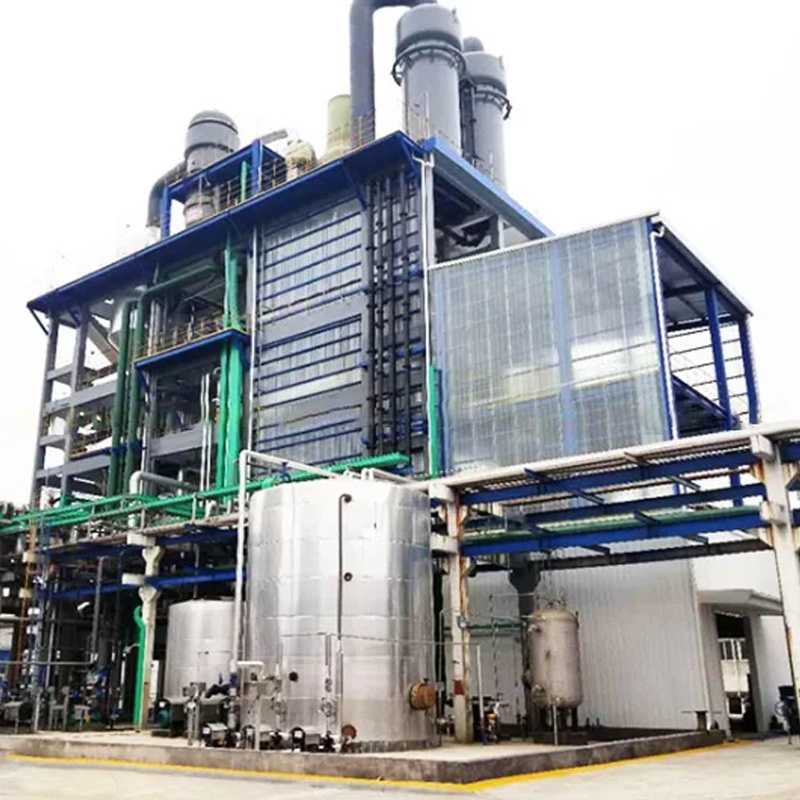
Calcium Chloride Evaporation System
Control Concentration Without Chasing the Final Number
The evaporator outlet concentration should match the next process step. A drying or granulation system needs a feed range that supports atomization, heat balance, and particle growth. Concentrating beyond that range can increase viscosity and scaling without creating useful capacity downstream.
Density is a fast operating measurement, but temperature correction and impurity effects matter. Periodic laboratory analysis should verify the relationship between density and calcium chloride concentration for the actual liquor. This calibration is especially useful when the hydrochloric acid source or limestone source changes.
Avoid abrupt concentration swings. A sudden feed-rate change, loss of vacuum, low circulation, or steam-control movement can push the wall condition beyond the normal limit even when the final tank sample looks acceptable. Alarm logic should focus on combinations that create risk, such as high steam pressure with low circulation.
Watch the Heat Exchanger Rather Than Waiting for Failure
A useful scale-monitoring routine turns ordinary operating data into a trend. Record the evaporation rate and the temperature difference across the heating surface at comparable load. If more temperature difference is needed for the same duty, thermal resistance is increasing. Pressure drop and pump current add context because they can reveal blocked passages or circulation changes.
Keep the comparison disciplined. A lower feed temperature, different concentration, or changed vacuum alters heat duty even when the surface is clean. Normalize the review to a known operating condition or use a calculation agreed during commissioning.
Inspect these signs together:
Steam consumption rises for the same feed and outlet condition.
Liquor circulation becomes unstable or pump current shifts.
Outlet concentration varies while control valves move more frequently.
Cleaning intervals shorten without a documented feed change.
Deposit fragments appear in strainers or downstream nozzles.
Plan Cleaning Around Deposit Chemistry
Cleaning should remove deposits without thinning metal, damaging linings, swelling elastomers, or leaving chemicals that affect the next batch. Start with a sample of the deposit. Identify whether it dissolves in water, responds to an approved acid or alkaline solution, or requires mechanical assistance.
The cleaning procedure should define isolation, drain-down, rinse condition, chemical concentration, circulation direction, temperature, time, end point, neutralization, and final inspection. It should also state which materials have been checked for compatibility. “Acid wash” is not a complete procedure.
Mechanical cleaning may be needed for hard scale, but tools and access must suit the heat-transfer surface. Scratching a plate or tube can create a future deposit site. High-pressure water can damage thin surfaces or force liquid into insulation. Record the removed deposit mass or visual condition so the next interval is based on evidence.
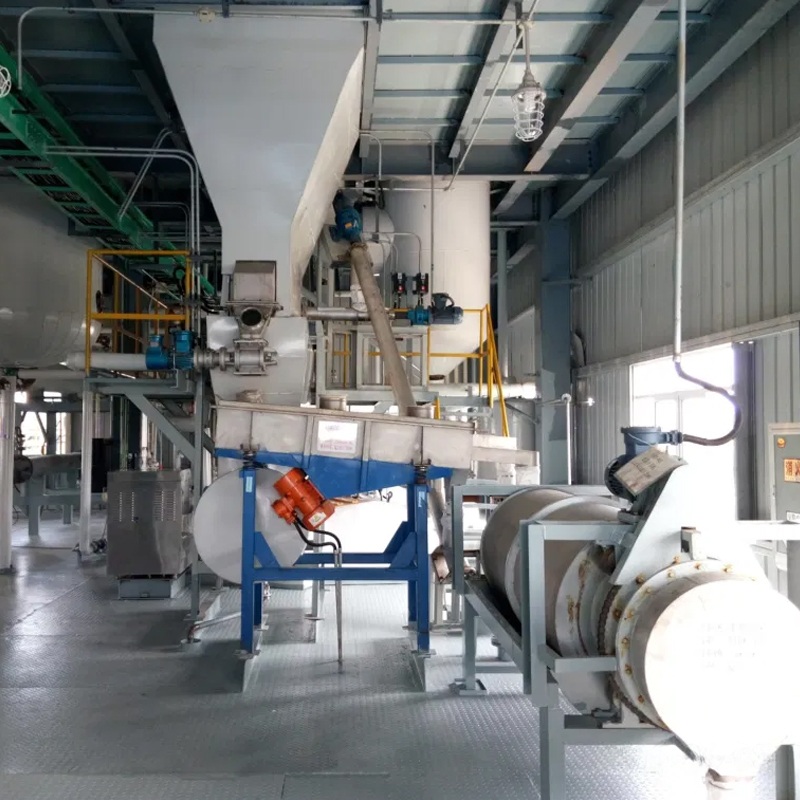
Calcium Chloride Concentration Equipment
Match Evaporation with Drying and Granulation
An evaporator does not operate alone. If the downstream dryer reduces its rate, concentrated liquor can remain hot for longer or cycle through a holding tank. If granulation needs a different concentration, operators may push the evaporator between targets. These changes affect viscosity, residence time, and deposit risk.
El calcium chloride equipment category should therefore be reviewed as one material-flow system. Define minimum and maximum rates for reaction, clarification, evaporation, drying, cooling, and packing. Where rates do not match, size buffer capacity around a clear operating plan rather than using storage as an uncontrolled delay.
Mother-liquor return also needs a limit. Recycle can reduce material loss, but it can bring soluble impurities back to the evaporator. A mass balance should track calcium chloride, water, and key impurities. If the impurity concentration rises from cycle to cycle, the process needs a purge or a treatment step.
Acceptance Data for a New Evaporator
Before fabrication, the buyer should provide feed composition, normal and extreme flow, inlet concentration, required outlet concentration, impurity limits, steam and cooling-water conditions, electrical supply, elevation, cleaning chemicals, and downstream feed needs. The equipment supplier should state the design basis and the clean-surface duty.
During commissioning, establish a clean baseline at more than one load point. Record feed and product analysis, temperatures, pressures, vacuum, steam flow, condensate, circulation, pump current, and evaporation rate. Take samples only after the system has reached a defined steady condition.
Buyers can discuss process data with the engineering team before final equipment selection. The acceptance document should also identify who supplies instruments, laboratory methods, cleaning connections, insulation, platforms, and spare gaskets. Missing scope at these interfaces often appears later as unreliable measurements or difficult cleaning access.
Supplier Scope and Engineering Review
Hebei Aoliande Chemical Equipment Co., LTD. supplies calcium chloride production lines covering calcium liquor preparation and drying or granulation. The company’s published process information notes the use of hydrochloric acid and limestone and the option to adapt equipment to feed source and output needs. Final design data must still come from the specific project.
The broader production line portfolio can help buyers define shared utilities and project interfaces when calcium chloride production is linked to a source of by-product hydrochloric acid. Feed ownership, storage, transfer pressure, analysis frequency, and off-spec routing should be settled before equipment drawings are frozen.
Conclusión
Scale prevention is mainly a control problem supported by good equipment access. Clean liquor preparation, realistic concentration limits, strong circulation, measured heat-transfer performance, deposit analysis, and a compatible cleaning procedure keep the evaporator available. Raising steam pressure to hide lost duty usually shortens the time until the next shutdown.
Preguntas frecuentes
These answers cover the first questions raised when scale begins to reduce calcium chloride evaporator duty.
Why does a calcium chloride evaporator scale if calcium chloride is soluble?
Real process liquor contains mineral fines, magnesium, iron, silica, and reaction by-products. These impurities become concentrated during evaporation and may deposit at the hotter heat-transfer surface even though calcium chloride remains dissolved.
What operating trend gives the earliest warning of scale?
A rising temperature difference or steam use for the same evaporation duty is a strong sign. Confirm it with feed condition, circulation flow, vacuum, pressure drop, and liquor concentration so a process change is not mistaken for fouling.
How often should an evaporator be cleaned?
The interval should follow heat-transfer performance, deposit analysis, and inspection history. A fixed calendar interval is useful only after the plant has enough stable data to show that feed and operating conditions are repeatable.