
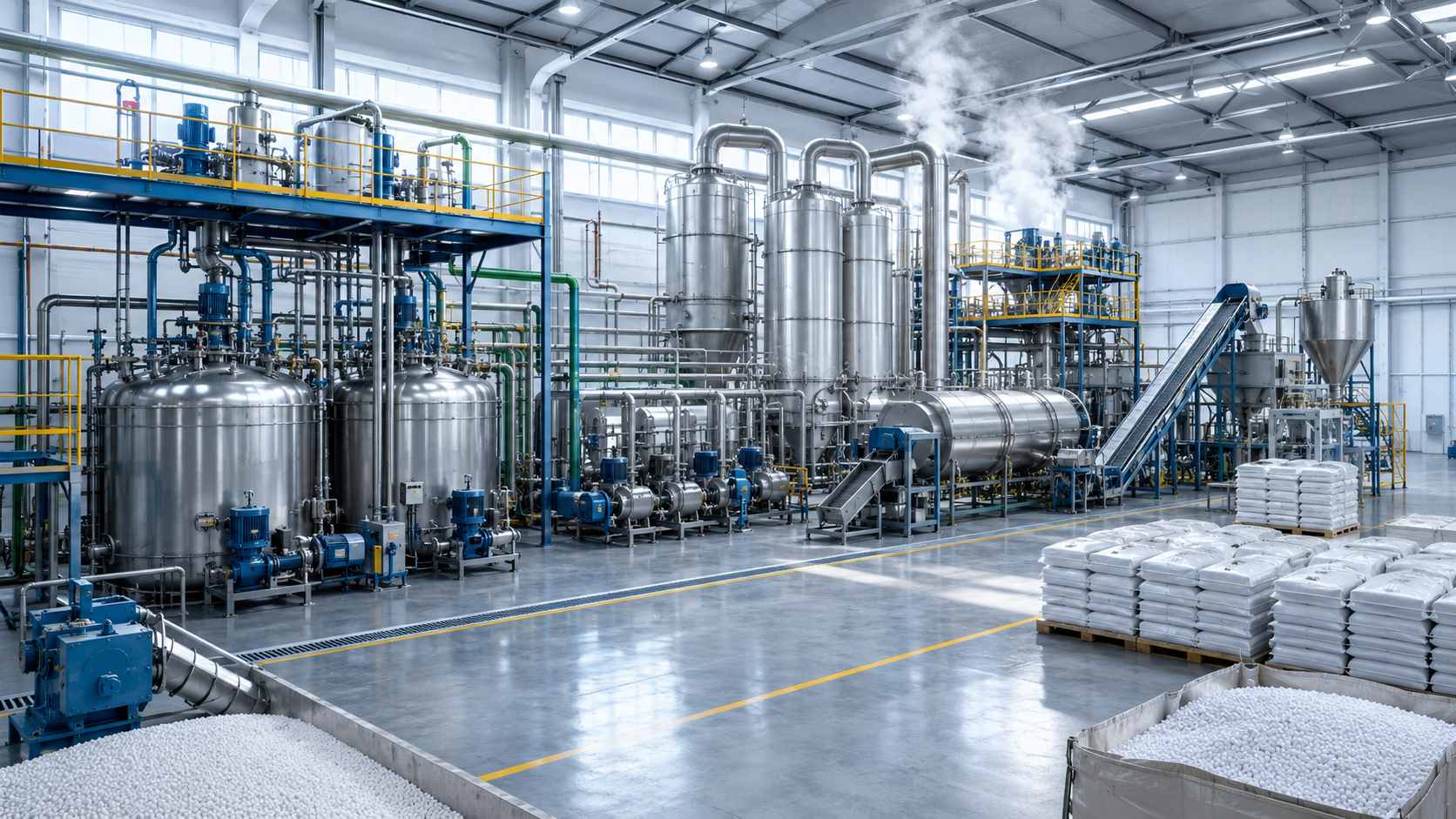
Línea de producción de cloruro de calcio is not one individual piece of equipment with an inflexible pricing formula. The calcium chloride production line is an entire plant, from the handling of raw materials to reactions, purification, evaporation, drying or granulation, exhaust handling, packaging, utilities and controls.
The basis of a realistic budget for a calcium chloride production plant is made up of four components: the quality of hydrochloric acid, the quality of limestone, the desired form of the product and local utility availability.
Why Calcium Chloride Production Line Prices Vary
The calcium chloride production line price reflects process duty, not just nameplate capacity. Product grade, feedstock, site conditions, and supply scope all matter.
Capacity and Product Specification
Calcium chloride solution manufacturing lines will consume lower amounts of water compared to the manufacture of dry crystals or anhydrous beads.
Solid products will necessitate more heating capacity, dust collection, cooling, sizing, and moisture-proof packaging.
Increased production capacity may involve multiple reactors and evaporators, higher storage capacity, and expanded utility systems.
Feedstock Quality and Stability
Hydrochloric acid and limestone are widely used to prepare calcium chloride liquor. Industrial feedstocks, however, are rarely consistent. Acid concentration may vary. Limestone can contain magnesium, iron, silica, or insoluble matter. These differences affect reaction time, filtration, product color, equipment wear, and waste volume.
A plant using by-product hydrochloric acid should work from a recent chemical analysis. Its impurities must be removable without excessive chemical use or product loss.
Site Conditions and Project Boundary
One quotation may cover process equipment only. Another may include pipelines, valves, instruments, electrical systems, utilities, installation guidance, and commissioning. Civil works, foundations, boilers, transformers, water treatment, warehouses, and permits are often separate.
A turnkey calcium chloride plant cost must therefore be checked against a written battery limit showing where the supplier’s responsibility starts and ends.
Main CAPEX Items in a Calcium Chloride Plant
Capital expenditure covers the assets needed to build and start the plant. The following groups should appear clearly in a technical offer.
| Cost area | Typical scope | Main price drivers |
| Feed and reaction | Acid storage, limestone handling, reactors, dosing | Acid strength, corrosion level, operating mode |
| Purification | Settling, filtration, impurity removal | Feed cleanliness, required grade |
| Concentración | Evaporators, heat exchangers, pumps | Water removal, steam pressure, scaling |
| Drying and granulation | Dryer, granulator, air system, cooling, screening | Moisture, particle size, product form |
| Environmental system | Tail-gas washing, dust collection, wastewater handling | Local limits, gas volume, recovery target |
| Packing and storage | Weighing, sealing, conveying, warehouse controls | Bag size, automation, humidity |
| Plant integration | Piping, electrical work, instruments, utilities | Layout, standards, control level |
Process Equipment Is Only Part of CAPEX
Reactors, evaporators, and dryers receive most attention, yet supporting systems decide whether the plant runs steadily. Pumps, pipelines, valves, and instruments must suit hot chloride service and remain accessible for maintenance.
Dry calcium chloride absorbs moisture quickly. Good granules can still cake if cooling, transfer, or packing is poorly designed. Humidity control and short transfer routes are operating necessities.
Start-Up and Contingency Costs
Operators need training, control loops need tuning, and actual feedstocks may behave differently from samples. A realistic CAPEX plan includes commissioning materials, tests, initial spare parts, training, and a contingency allowance.
OPEX: The Cost of Producing Each Tonne
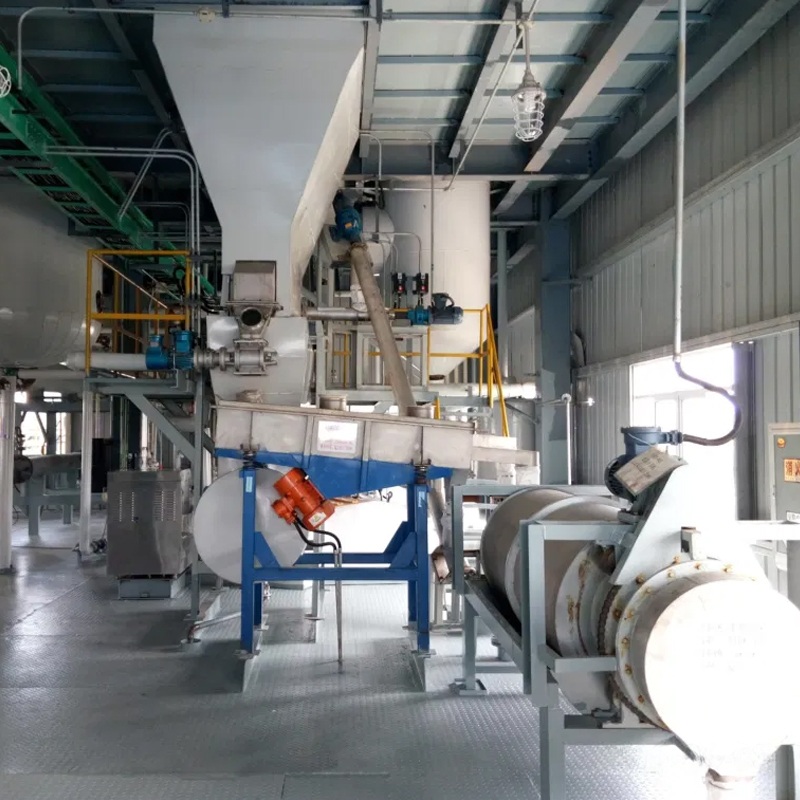
Operating expenditure is driven mainly by raw materials and energy, followed by labor, maintenance, treatment chemicals, packing, and waste handling.
Raw Materials and Saleable Yield
The real cost of hydrochloric acid depends on concentration, transport, storage, and impurity treatment. Limestone cost depends on purity, particle size, moisture, and delivery distance. Cheap limestone may create more residue and filtration work.
Yield should be calculated from saleable product, not reactor output. Losses occur in filtration sludge, exhaust dust, off-spec batches, screen rejects, spills, and caked stock. Recovering these losses can lower calcium chloride manufacturing cost.
Energy in Evaporation and Drying
Removing water is a major energy duty in solid calcium chloride production. Feed concentration, final moisture, steam conditions, heat recovery, and dryer air management all affect fuel or power use.
High-speed spray fluidized bed dryer ensures intimate mixing of hot air and the material, enabling heat transfer and agglomeration. Feed and moisture consistency is critical since any significant fluctuation results in the formation of agglomerates, fines, and additional recycle.
Labor, Maintenance, and Packing
The process becomes automated but not the manpower. Reaction, filtration, evaporation, drying, emissions, and packaging require constant monitoring.
Common recurring costs include:
- filter media, seals, pump parts, nozzles, and valves;
- treatment chemicals and laboratory supplies;
- moisture-resistant bags, liners, pallets, and wrapping;
- cleaning, corrosion inspection, and planned shutdown work;
- dust collection and wastewater treatment.
How to Judge ROI Before Ordering Equipment
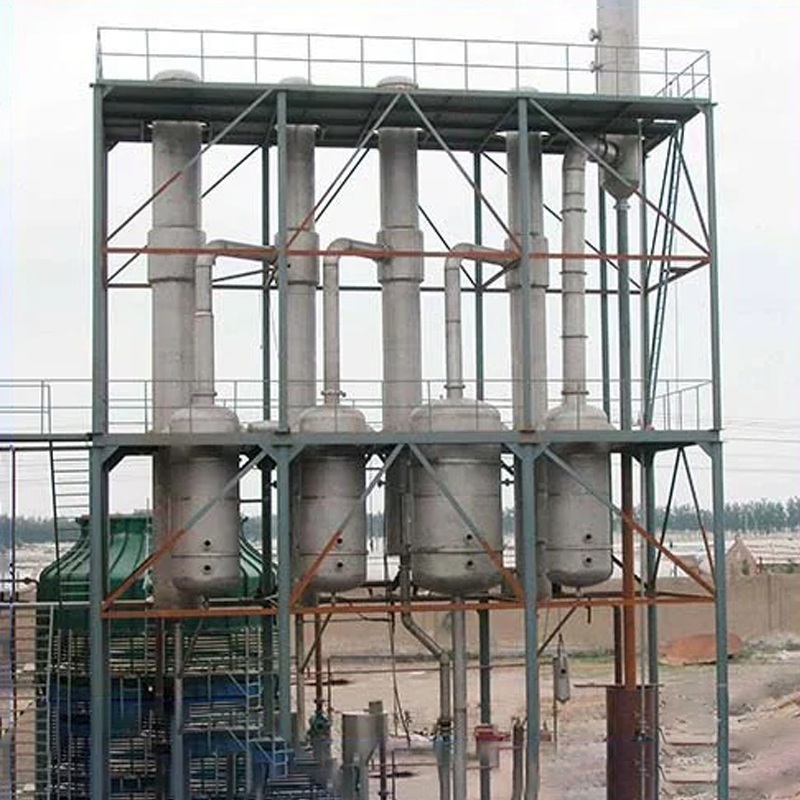
Return on investment depends on market demand as much as plant performance. Calcium chloride serves deicing, dust control, drilling fluids, industrial drying, refrigeration, construction, and chemical processing. Each market has different purity, form, particle size, moisture, and packing requirements.
Build the Calculation Around Saleable Output
Simple payback divides total project investment by annual net cash flow. A better model also includes ramp-up time, seasonal sales, finance costs, tax, shutdowns, and working capital.
Three scenarios help expose risk:
- a base case using normal output and average selling price;
- a downside case with higher energy cost and lower utilization;
- an upside case with stable by-product acid supply and a stronger product mix.
A project is more resilient when the line keeps quality stable during feed changes and can serve several qualified markets.
Data Needed for a Reliable Quotation
Before requesting a calcium chloride production line quote, prepare annual and daily capacity, operating days, acid analysis, limestone analysis, target concentration, particle size, packing format, utility conditions, emission limits, site drawings, and electrical standards.
Hebei Aoliande Chemical Equipment Co., LTD. as a Supplier
Hebei Aoliande Equipo Químico Co., LTD. supplies calcium chloride production line engineering and equipment for projects based on hydrochloric acid and limestone. The scope can cover liquor preparation, concentration, anhydrous product drying and granulation, pipelines, electrical systems, instruments, valves, utilities, and environmental treatment.
Its production line uses spray fluidized bed drying for granulation and can be configured around required output. The process supports automated operation, stable running under feed and moisture changes, and tail-gas treatment through washing and related environmental equipment. Anhydrous calcium chloride purity can reach above 95% when raw materials and operating conditions meet the design basis.
Established in Hebei, China, the company reports more than 300 employees, research and quality-control staff, and management system certifications. Its industrial equipment portfolio is supported by technical advice, equipment and material supply, transportation, and installation supervision. A useful inquiry submitted through the project contact page should include raw material analyses, target capacity, product requirements, and site utility data.
Conclusión
Calcium chloride production line cost cannot be judged from equipment price alone. Feedstock quality, water removal, product form, corrosion control, emissions, packing, site services, and commissioning shape the real investment. Offers should be compared on the same process basis, while OPEX should be calculated from saleable tonnes rather than theoretical output.
Clear technical data and defined battery limits make quotations easier to compare and reduce late additions that can damage the budget and schedule.
Preguntas frecuentes
These questions address the points most buyers raise during early project planning.
How much does a calcium chloride production line cost?
Cost depends on capacity, feedstock composition, product form, automation, environmental controls, utility scope, and local installation work. A reliable figure requires process data and a defined supply boundary.
What affects calcium chloride plant operating cost most?
Acid concentration, limestone purity, evaporation and drying energy, product yield, packing, maintenance, and plant utilization usually have the greatest effect.
Can by-product hydrochloric acid be used in a calcium chloride production line?
Yes. Many industrial by-product acid streams can be used after their concentration and impurities are checked. The purification system must match the actual analysis.
What information is needed for a turnkey calcium chloride plant quote?
The supplier needs target capacity, operating schedule, raw material analyses, required purity and product form, particle size, packing method, utilities, emission rules, site layout, and electrical standards.
How is calcium chloride plant ROI calculated?
ROI is based on total installed investment, annual saleable output, selling price, raw material and utility costs, labor, maintenance, packing, taxes, finance costs, and expected utilization.