

A calcium chloride production line should not be accepted simply because every machine has arrived and the motors can run. The real question is whether the installed system can turn the agreed raw material into saleable calcium chloride at the promised capacity, quality, energy use, and emission level.
A sound acceptance plan follows a clear sequence: factory acceptance test, site acceptance test, commissioning, performance guarantee test, ramp-up, and final handover. Each stage answers a different question.
Set the Acceptance Rules Before Shipment
Acceptance starts with the purchase contract, not with the first inspection. The technical agreement should define the feed composition, product grade, test method, sampling method, operating time, utility conditions, allowable deviation, and action required after a failed test.
It should name authorized witnesses and state which punch-list items block shipment or final acceptance.
| Acceptance stage | Main question | Typical evidence |
| FAT | Was the equipment built and tested as ordered? | Drawings, certificates, inspection and function records |
| SAT | Was it delivered, installed, and connected correctly? | Installation, loop, dry and wet commissioning records |
| Performance test | Does the line meet contractual output and quality? | Production logs, laboratory results, meter readings |
| Final handover | Can the plant be run and maintained safely? | Training, manuals, spare-parts list, closed punch list |
Factory acceptance testing checks technical and contractual requirements before equipment leaves the manufacturing site. Site acceptance testing repeats critical checks after installation under the buyer’s actual utility and operating conditions.
Factory Acceptance Test Before Shipment
The factory acceptance test, or FAT, is the buyer’s best chance to find fabrication, documentation, and control problems while corrections can still be made in the supplier’s workshop.
A useful FAT checklist should cover the complete calcium chloride production equipment package, not only the main reactor or dryer.
Check Documents Against the Contract
Review approved process flow diagrams, P&IDs, data sheets, electrical drawings, instrument lists, material certificates, test reports, and packing lists. Tag numbers and nozzle positions should match.
The PLC sequence, alarm list, interlocks, emergency stops, manual mode, automatic mode, and data-recording functions need written test results.
A control sequence should be tested by creating the actual fault condition where practical. Confirming that an alarm appears on the screen is not enough. The test must also show that the related pump, valve, fan, or heating system responds correctly.
Inspect Equipment and Interfaces
Walk down tanks, pumps, pipelines, instruments, drying and granulation equipment, conveyors, tail-gas treatment, and packing sections. Check dimensions, access, materials, cable entries, and utility connections.
A small interface error can cause a large site delay. A misplaced steam inlet may require new pipework; an inaccessible instrument creates a maintenance problem.
The inspection should also cover maintenance access. Pump seals, filters, spray nozzles, screens, bearings, and instruments must be removable without cutting pipes or dismantling unrelated equipment.
Shipment release should require signed FAT records and a controlled punch list. Major safety, material, dimensional, or functional defects should remain hold points.
Site Acceptance Test Under Actual Plant Conditions
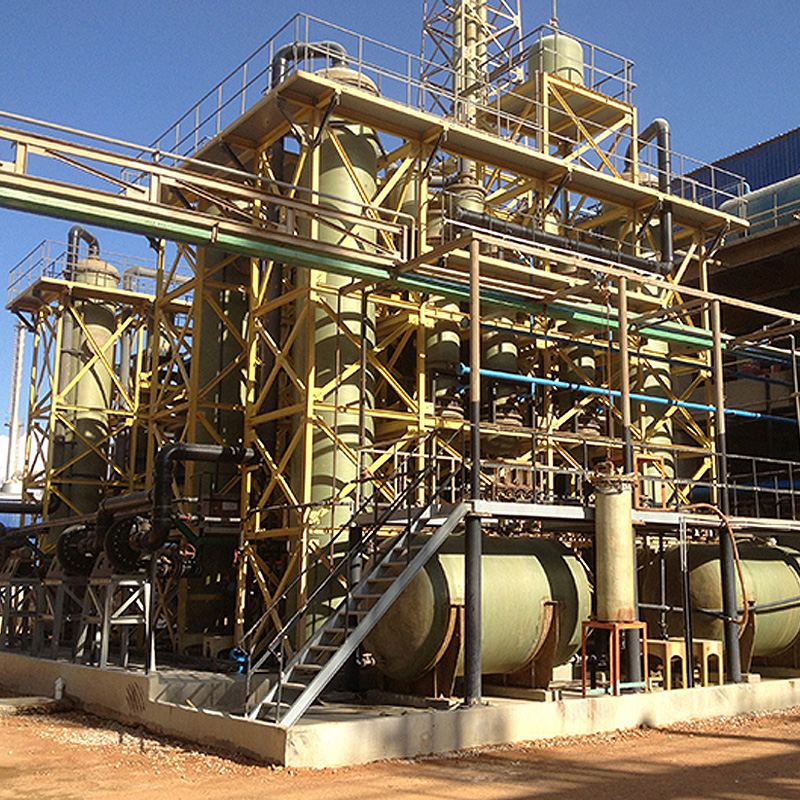
After installation, the site acceptance test, or SAT, confirms that transport, erection, wiring, piping, and integration have not changed the equipment’s function.
SAT should begin only after mechanical completion. Foundations, alignment, grounding, guards, platforms, and utilities must be ready.
Complete Dry Commissioning First
Dry commissioning is carried out without process feed. Confirm motor direction, vibration, valve travel, instrument signals, alarms, interlocks, emergency shutdowns, conveyors, screens, and ventilation.
Each field signal should be checked from the instrument to the PLC and back to the final element. Testing only the control screen can miss a reversed cable or incorrectly fitted actuator.
Rotating equipment should be run long enough to identify unusual noise, rising bearing temperature, loose supports, or excessive vibration. Conveyors and screens should be checked both empty and with a safe test load.
Move to Wet Commissioning Carefully
Wet commissioning uses water, a safe test liquid, or actual feed. Watch for leaks, unstable flow, cavitation, plugged nozzles, weak level control, and pressure changes.
For a line using hydrochloric acid and limestone, check acid dosing, reaction control, calcium-liquor clarity, filtration, concentration, and the effect of impurities. The production route may cover calcium liquid preparation, drying, granulation, utilities, instruments, pipelines, valves, and environmental treatment.
Results from dry and wet commissioning should be recorded by equipment tag. Notes such as “pump checked” provide little value during a later warranty claim. Record the test condition, expected result, actual result, date, and responsible person.
Run a Measurable Performance Guarantee Test
SAT proves that the system operates. A performance guarantee test proves that it performs as purchased.
The protocol should be agreed before startup. Actual feed must meet the contract specification, utilities must be stable, instruments must be calibrated, and the plant should reach steady operation before official readings begin.
| Guarantee item | Practical acceptance method |
| Production capacity | Saleable output during the agreed continuous test |
| Calcium chloride purity | Witnessed samples tested by the agreed method |
| Moisture | Samples taken at set intervals after stable drying |
| Particle size distribution | Screen analysis against the product specification |
| Steam and power use | Meter readings divided by accepted output |
| Emissions | Outlet testing during steady production |
| Operating stability | Logged trips, blockages, fouling, and off-spec output |
Do not accept phrases such as “normal consumption” or “stable quality.” Use a guaranteed value, accepted tolerance, measurement method, and pass-or-fail rule.
For example, a contract might require a 72-hour continuous performance test. If an unplanned shutdown occurs after 60 hours, it should state whether the test restarts, continues after repair, or fails. The same clarity is needed for off-spec batches and poor utility supply.
Product sampling also needs written rules. Samples taken only at the end of a successful shift may hide temporary moisture or particle-size problems. A better method is to collect witnessed samples at fixed intervals and combine laboratory results with the production log.
An anhydrous calcium chloride production line may use calcium-liquid production followed by spray fluidized bed drying and granulation. Aoliande’s process can produce anhydrous calcium chloride above 95% purity, with exhaust treated through washing and desulfurization. Final project guarantees must still be written into the technical contract.
Use a 30-Day Ramp-Up Checklist
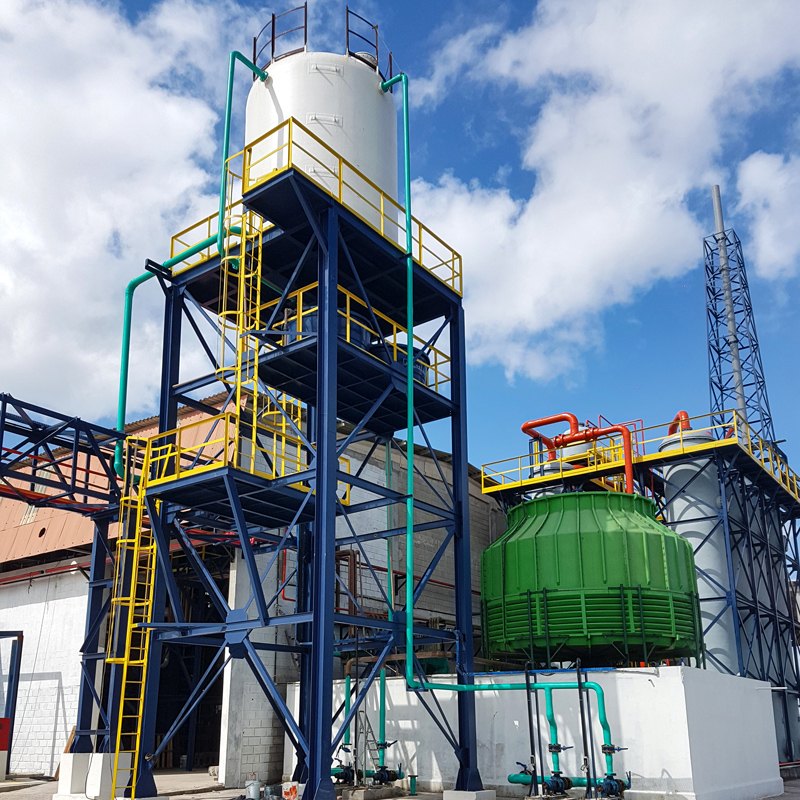
A performance test is a controlled event. The next 30 days show whether operators can keep the calcium chloride plant startup stable during normal shifts, feed variation, cleaning, and routine maintenance.
Days 1–7: Stabilize the Front End
Track acid concentration, limestone quality, dosing ratio, reaction pH, filtration pressure, calcium-liquor clarity, tank levels, and corrosion-prone points. Close safety punch-list items immediately.
Daily logs should show why settings were changed. Without this record, different shifts may repeatedly adjust acid flow, pH, or filtration pressure in opposite directions.
Days 8–14: Tune Drying and Granulation
Record feed concentration, inlet and outlet temperatures, bed pressure, atomization, moisture, granule size, fines, oversize material, recycle load, and cooling. Change one setting at a time so the result can be traced.
A dryer may reach the required moisture while producing too many fines. Raising the temperature again may lower moisture but increase dust and product loss. The operating team must balance moisture, particle size distribution, recycle load, and saleable output.
Days 15–21: Confirm Capacity and Consumption
Repeat production and quality checks across normal shifts. Compare saleable output with rated production capacity. Review steam, power, water, material loss, unplanned stops, and cleaning time.
Utility use should be calculated per ton of accepted product rather than total material leaving the dryer. Off-spec fines, wet material, and rejected oversize particles should not inflate the reported production capacity.
Days 22–30: Prepare the Handover
Before final acceptance:
- Train operators in startup, shutdown, emergency response, sampling, and cleaning.
- Issue operating procedures and preventive maintenance schedules.
- Verify critical spare parts, tools, lubricants, and consumables.
- Deliver as-built drawings, PLC backups, manuals, certificates, and test reports.
- Close major punch-list items and date the remaining minor corrections.
The final handover documents should form a usable plant record, not a box of unindexed files.
Hebei Aoliande as a Calcium Chloride Line Supplier
Hebei Aoliande Equipo Químico Co., LTD. designs and manufactures chemical production equipment, including customized calcium chloride production lines. Its calcium chloride scope covers calcium-liquid preparation, drying and granulation, piping, electrical systems, instruments, valves, utilities, and exhaust treatment.
The company combines manufacturing with material, structural, and process design. Support can include technical advice, equipment supply, transportation, and installation supervision.
For a serious quotation, the buyer should provide raw-material analysis, target product purity and form, required capacity, available steam and power, local emission limits, site conditions, and proposed acceptance criteria. These details allow the process and equipment scope to be matched to actual plant conditions rather than a generic equipment list.
Conclusión
A calcium chloride production line is ready for acceptance only when documents, equipment, controls, installation, product quality, capacity, utility consumption, emissions, training, and handover records have been checked against written criteria.
FAT catches problems before shipment. SAT checks installation under real site conditions. The performance guarantee test measures contractual promises. A disciplined 30-day ramp-up checklist then turns a successful test run into repeatable production.
Clear acceptance rules also protect both parties. The buyer receives measurable proof of performance, while the supplier can separate equipment issues from unsuitable feed, weak utilities, or incorrect operation.
Preguntas frecuentes
What is the difference between FAT and SAT for a calcium chloride production line?
FAT is performed before shipment at the supplier’s facility. It checks fabrication, documents, controls, interlocks, and basic functions. SAT takes place after installation and checks site connections, utilities, instruments, dry commissioning, wet commissioning, and system integration.
How long should a calcium chloride plant performance test run?
The duration should be stated in the contract. Projects may use a continuous run measured in hours or days, depending on plant size, process stability, feed variation, and the buyer’s risk level. The restart rule for an unplanned shutdown should also be defined.
What should a calcium chloride production line supplier guarantee?
The contract may cover saleable capacity, calcium chloride purity, moisture, particle size distribution, steam consumption, power consumption, emissions, automation, continuous operating time, documents, and operator training.
Which documents are required for final plant handover?
The package commonly includes as-built drawings, equipment data sheets, PLC backups, operating manuals, maintenance schedules, FAT and SAT reports, laboratory records, emission results, spare-parts lists, training records, and the final punch list.
When should final acceptance be signed?
Final acceptance should follow successful SAT and performance testing, delivery of required documents, completion of training, and closure of all safety-critical or production-critical punch-list items.