
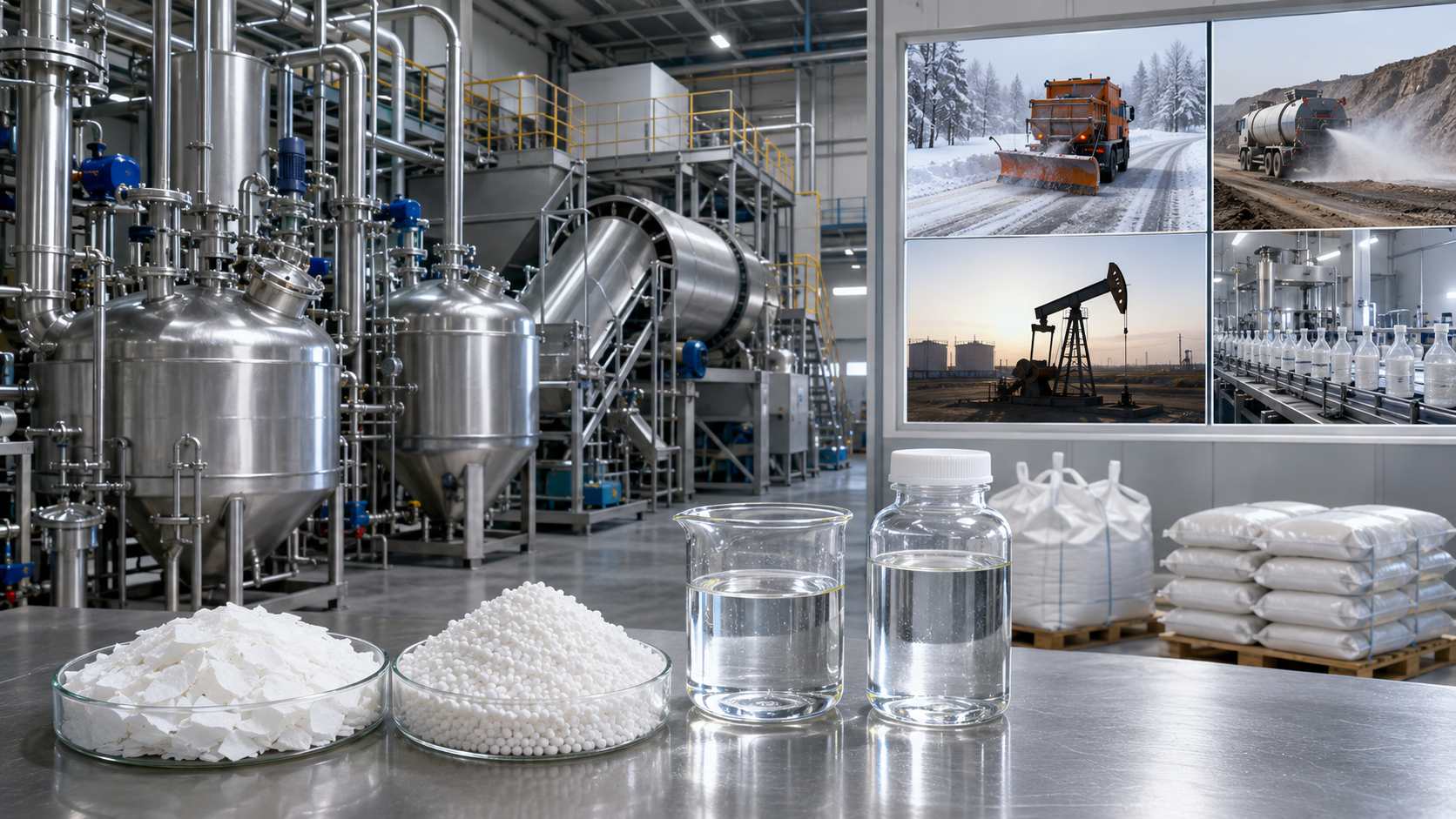
A single production line for calcium chloride can serve more than one market but the end product cannot be produced to a ‘single specification’. While Deicing, Dust Control, Oilfield fluids and even Food-grade calcium chloride are all produced from CaCl2, each has its own requirements with respect to form, purity, moisture content, particle size, packaging and a range of associated tests.
A good design for a calcium chloride plant starts by linking the process design to the market requirements from the very beginning.
Why do calcium chloride markets need different product forms?
Calcium chloride dissolves quickly, absorbs moisture and makes a very strong brine solution. It is used for winter time road treatment, for dust suppression, as oilfield brines, in food processing, in construction, as a refrigerant, and for industrial drying applications. However, each of these markets buys the chemical in a different form.
Which form fits each application?
| Market | Common Form | Main Requirement |
| Deicing | Flakes, granules, liquid calcium chloride | Fast melting, easy spreading, anti-caking packing |
| Dust control | Liquid calcium chloride or dissolved flakes | Stable concentration and low application cost |
| Oilfield | Anhydrous calcium chloride, granules, brine | Purity, solubility, low insoluble matter |
| Food-grade use | Food grade calcium chloride powder, flakes, or solution | Clean processing, testing, traceability |
Flakes of calcium chloride are widely used in snow removal and industrial drying. Calcium chloride granules have advantages in terms of spread, pack and dosage. Liquid calcium chloride is ideal for road spraying and for dust control. Anhydrous calcium chloride is chosen if high active content and highest drying power are required.
How does the production line shape the final product?
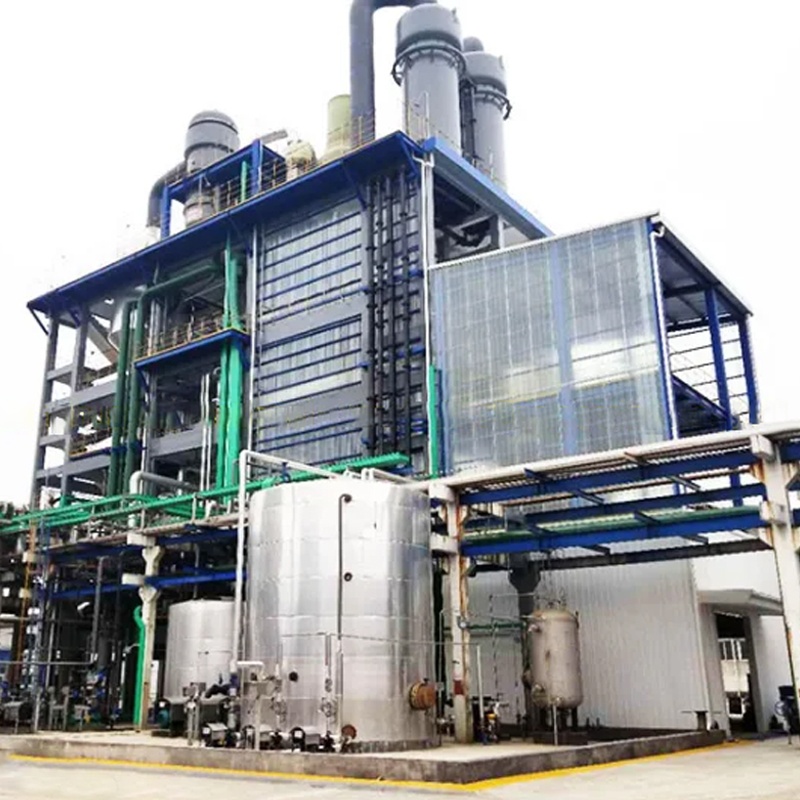
The process for the production of calcium chloride typically begins with hydrochloric acid and limestone. The resulting reaction mixture is a solution of calcium chloride which is subsequently clarified, concentrated and dried. The resulting solid can then be granulated, cooled, screened and then packed for market place sale, with each process having an effect on the market value of the end product.
What process details matter most?
A production line supplying various markets must pay particular attention to the quality of the raw materials, the calcium liquid production, the process of drying granulation, the control of the moisture and the environmental treatment. The small differences can in fact be the difference between an industrial product in general use and a high value added product.
Important design points include:
- Stable calcium liquid preparation
- Concentration control before drying
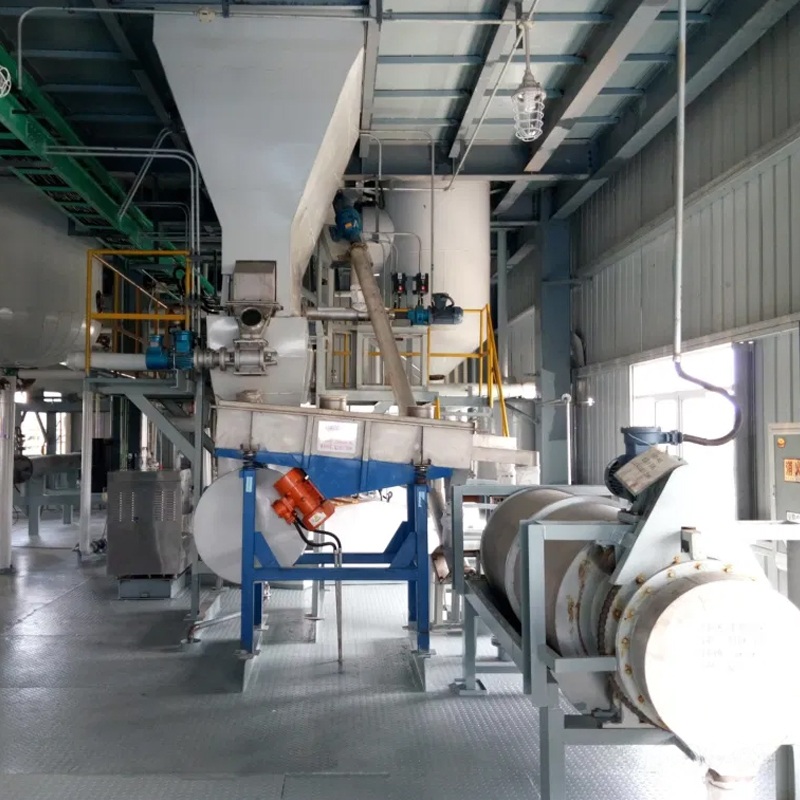
- Spray fluidized bed drying for heat exchange and granulation
- Moisture control to reduce caking
- Screening for uniform particle size
- Tail gas washing, desulfuration, and dust recovery
- Packing for bags, jumbo bags, liquid tanks, or bulk delivery
By planning the relevant sections in a suitable manner, a single line for the production of calcium chloride can be used to service a variety of product directions, as opposed to a single grade.
Can the line serve deicing and dust control markets?
Yes. Deicing is one of the most common markets for calcium chloride flakes, granules, and liquid calcium chloride. Municipal road teams, airport service companies, parking lot operators, and winter product distributors need products that spread evenly, melt snow and ice quickly, and stay usable after storage.
What does the deicing market care about?
Calcium chloride flakes are fast dissolving and come bagged so are ideal for small scale snow clearance operations. The granules or pellets are more suitable for larger scale operations and are frequently used with mechanical spreaders on roads, sidewalks, loading yards and car parks etc. Liquid calcium chloride is also available and is frequently used for anti-icing and pre-wetting salt.
For producers, this market puts pressure on drying and packing. If moisture is too high, the product may absorb water and form lumps during transport. Moisture-proof packaging and stable particle size can reduce complaints.
Why is liquid calcium chloride useful for dust control?
Calcium chloride dust control is typically used on dry surfaces such as mining roads, construction site access roads, rural unsealed roads, coal yard stores and stockpiles and other logistics areas where dust can become a problem. It works by attracting moisture from the air to keep the surface of the road damp for longer thereby preventing loose material from developing into dust.
Liquid calcium chloride is easy to apply with spray trucks and storage tanks. Solid calcium chloride can also be dissolved near the job site when shipping liquid product is too expensive. Liquid product can work near local road maintenance customers, while flakes or granules are often better for export or long-distance delivery.
What do oilfield and food-grade markets require?
Value is added to Oilfield calcium chloride by ensuring stable quality. Calcium chloride brine is used in drilling, completion, workover and other related fluid systems. When considering repeat orders, customers check the following factors of the brine: purity, solubility, insoluble matter, moisture content and packing strength.
Why does purity matter for oilfield calcium chloride?
The variety of oilfield fluids are typically used in a number of applications including circulating through pumps and surface equipment such as tanks and pipes, as well as being used downhole. Because of poor solubility or excessive levels of insoluble material, it can create problems with handling of such systems. Therefore, anhydrous calcium chloride as well as uniform granules of calcium chloride are typical choices for making brine solutions.
Oilfield applications require a production line that makes a higher purity of calcium chloride, low insoluble matter, a controlled amount of moisture, correct particle size, moisture resistant bags and clear records of test results for every batch.
Can one line make food-grade calcium chloride?
A production line for food-grade calcium chloride can be set up, but it will require more control than standard industrial production lines. Food-grade calcium chloride can be used as a firming agent, stabilizer, pH control aid or processing aid in the food processing industry.
Process to make food-grade Calcium Chloride requires cleaner raw materials, cleaner contact surfaces on processing equipment, cleaner filling area, ability to trace and test each batch of material for impurities. A normal industrial plant for making Calcium Chloride can be the basis of the process but must be discussed with food-grade requirements in mind.
Why choose Hebei Aoliande Chemical Equipment Co., LTD. as a supplier?
Hebei Aoliande Chemical Equipment Co., LTD. designs and manufacture chemical production line for special chemical such as calcium chloride, potassium and sodium sulfate, sulfuric acid, HPMC, water soluble fertilizer etc and relevant chemical equipment. For calcium chloride projects, it includes production of calcium liquid, drying and granulating, production line pipes, electrical control, measurement and control instrument, valves etc. utility design.
What makes the production line suitable for project buyers?
The production line for the calcium chloride is designed to work with the hydrochloric acid and the limestone. The line can produce anhydrous calcium chloride with a purity of more than 95 %. The spray fluidized bed drying is favorable because of the good contact between the hot gas and the dry material and also the good heat transfer. In addition, the energy required can be decreased. The tail gas desulfuration, the washing and the dust removal complete the clean release of the materials and a low material loss.
Before purchasing a calcium chloride production plant, potential buyers should carefully check a number of points, such as: the target market, the raw material source, the end product form, the plant capacity, the moisture content, the purity, the packing type and the local environmental regulations. A calcium chloride production plant needs to be designed in a flexible way to correspond with the real sales channels and not only with the typical equipment supply.
Conclusion
A calcium chloride production line can be developed to supply the deicing, dust control, oilfield and food-grade markets. The production line is designed around the product form and quality targets for each market. The production of deicing and dust control calcium chloride must be easy to handle, dissolve quickly and have stable packing. The oilfield market requires high purity calcium chloride that is highly soluble in water to make a strong brine. The food-grade calcium chloride requires very close control of the raw materials, good hygiene practices, accurate testing and good traceability.
In practice you would start with the definition of your target market and then design your production line, adjust the capacity, select the appropriate drying technology, package and monitor quality in a manner suitable for your target market.
Questions fréquentes
Can one calcium chloride production line produce both flakes and granules?
A single production line can be designed to manufacture all of the different forms of calcium chloride – flakes, granules, liquid, and anhydrous – and that line would consist of the various processes of drying, granulation, cooling, screening and packing, all of which would depend on the end product for which it is being manufactured.
Is calcium chloride better for deicing or dust control?
Both de-icing and dust suppression are successfully treated with our calcium chloride product. While in the form of flakes or granules it is often used for de-icing. In a liquid or dissolved solid form it is a very effective dust suppressant.
What form is best for oilfield calcium chloride?
Anhydrous, uniform granules or calcium chloride brine is generally the preferred product by oilfield buyers to meet brine density, handling and fluid requirements.