
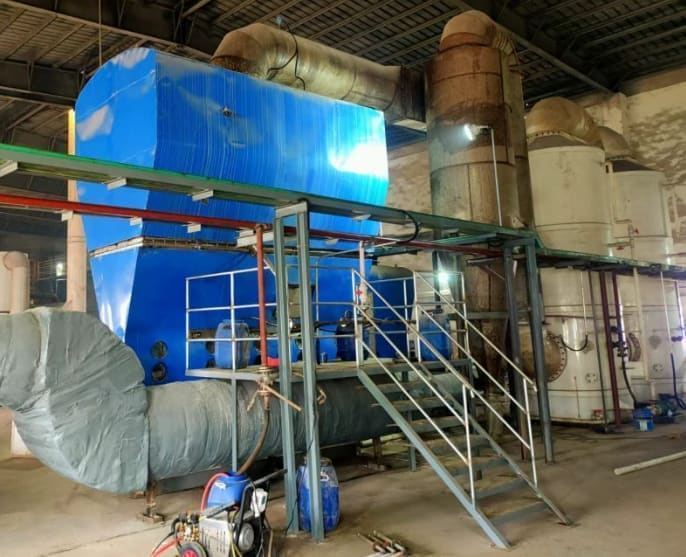
ALT: Neutralization and Impurity Removal Before Calcium Chloride Evaporation
A finished-product assay alone cannot locate the source. A linea di produzione di cloruro di calcio needs a feed range before equipment is selected.
The Raw-Liquor Envelope
The feed envelope should describe variation as well as a typical assay. Actual dosing must use measured feed assays. A low-grade acid delivery may change free acidity or trace-metal content. A different limestone lot may change insoluble loading. Put the credible high and low values beside the intended grade and final product form.
| Feed property | Sample point | Why it belongs in the design basis |
|---|---|---|
| HCl strength and free acid | Acid receipt and raw-liquor tank | Sets reagent demand and corrosion exposure |
| Calcium source assay | Before reaction | Defines insoluble load and excess feed need |
| Iron and magnesium | Raw liquor, then filtered liquor | May affect color, precipitation and deposits |
| Suspended solids | After reaction and after filtration | Shows what could reach a hot surface |
| Density or CaCl2 concentration | Evaporator feed tank | Sets water-removal duty |
| Product grade and form | Finished-product specification | Sets moisture and impurity acceptance |
Neutralization at the Injection Point
Bulk pH can conceal a locally strong reagent plume. Show the addition point, mixer and accepted sampling point on the same piping diagram. A deposit formed beside the nozzle will not disappear because the tank-outlet number looks reasonable. Mixing and residence should be checked at the operating flow range. The location of that sample belongs on the piping diagram.
Dose from measured liquor flow and acid strength. Use a pH signal for trim and laboratory titration for an independent check after a feed or reagent change. A surprising reading should trigger a look at probe coating, sample temperature and reagent concentration before the setpoint moves.
The useful pH window belongs to the project feed. Test the low and high pH boundaries against the intended grade.
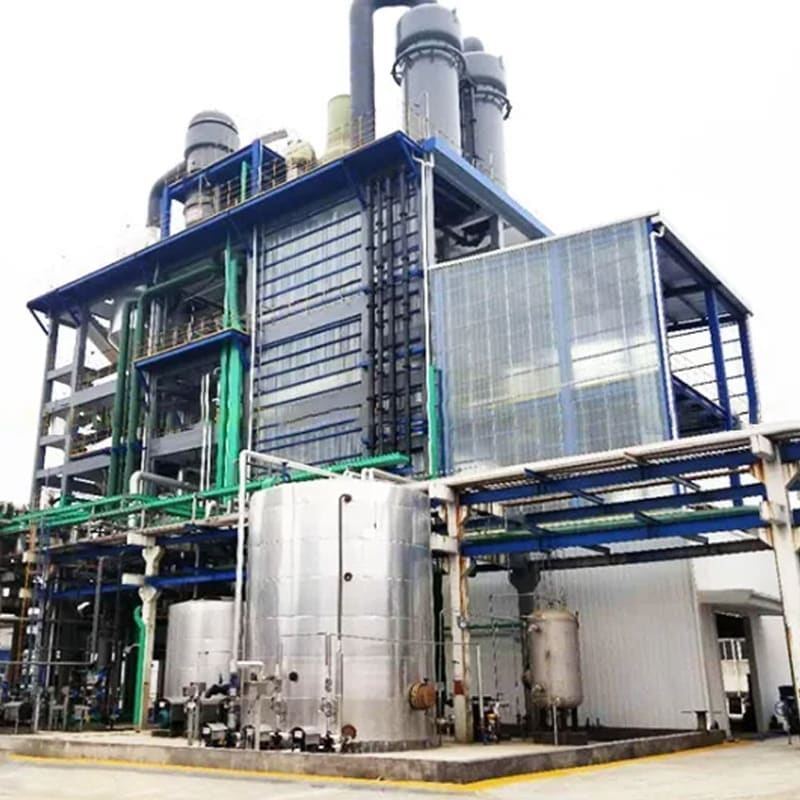
ALT: Calcium Chloride Fluidized Bed Production Equipment
Give Precipitate a Route Out
Freshly formed particles may leave the reactor before they settle if the inlet and overflow are too close. Inspect tank flow and the age of the precipitate when a filter suddenly receives finer solids. The separation equipment then has to match the particles actually produced.
| Duty | Suitable check | Warning sign |
|---|---|---|
| Primary solids removal | Sludge mass and clarified overflow | Bulk solids reaching a fine filter |
| Final filtration | Filtrate turbidity and differential pressure | Clear pressure trend but turbid outlet |
| Filter integrity | Media, seals and bypass position | Particles pass without a pressure rise |
| Solids disposal | Cake mass, moisture and retained CaCl2 | Product loss in the sludge route |
Filter Selection Questions
• Solids mass per hour: size the primary step for a high-load feed, not one clear sample.
• Particle behavior: test settling and cake release with liquor at its normal temperature.
• Filtrate target: state a turbidity or suspended-solids acceptance method at the evaporator inlet.
• Salt loss: assay the separated cake before treating it as waste.
• Upset route: provide a hold or diversion path when filter integrity fails.
The Effect of Concentration
Use a water balance to frame the duty. One tonne of 30% CaCl2 liquor contains 300 kg salt. At 50% and no salt loss, that same salt sits in 600 kg liquor after 400 kg water has left. Nonvolatile impurities are then carried in less liquid, even before any new precipitation is considered.
It does not set an allowable solids limit or predict scale composition; those come from the feed assay and product specification.
The heater may show a rising temperature approach or falling output before product composition visibly changes. A buffer tank gives time to reject or blend a suspect batch. Its value depends on a defined sample point and an actual diversion route. Without those, it is merely extra hold-up between a weak filter and a hot surface.
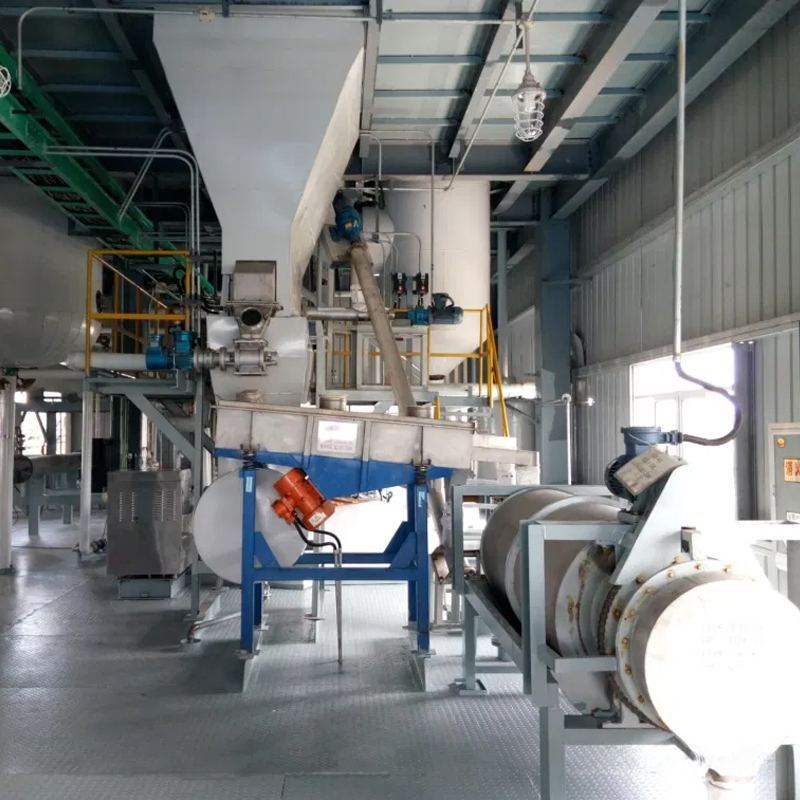
ALT: Calcium Chloride Particle Size Control in Fluidized Beds
Sampling That Preserves Cause and Effect
| Sample point | Minimum record | Question answered |
|---|---|---|
| Raw liquor | Feed source, acid strength, free acidity | Did the incoming chemistry change? |
| Reaction outlet | pH, temperature, residence period | Did dosing and mixing complete? |
| Clarifier or filter outlet | Turbidity or solids, filter cycle | Did precipitate leave the stream? |
| Evaporator inlet | Density, temperature, tank identity | What reached the heater? |
| Finished product | Assay, color, insolubles, moisture | Which grade limit changed? |
Sample handling must be consistent. Record whether hot liquor is cooled or filtered before a laboratory reading. Put time and tank identity on every result. A bagging result obtained at the end of a shift may represent liquor prepared hours earlier.
A shift handover can preserve the trail with five short checks:
• Which acid and calcium feed lots entered the reactor?
• Was reagent strength confirmed after the last delivery?
• Did filtrate turbidity or pressure drop change?
• Which buffer tank supplied the evaporator during the upset?
• Was the product sample taken before or after that tank emptied?
When fouling follows a cleaning stop, compare the feed and filtrate results from that exact period. If the filter plugs rapidly, examine the newly formed solids before ordering different media. If product color changes, compare iron results and acid deliveries. Those checks are more useful than raising the reagent dose in response to every symptom.
Decision Record for a Feed Change
• Date and source of the new acid or calcium-bearing feed;
• laboratory assay compared with the design envelope;
• reagent concentration and pH-probe calibration status;
• first filtrate result after the change;
• buffer-tank destination and the liquor sent to evaporation.
This record separates a new feed problem from a filter fault or an evaporator problem. It also makes the next trial more useful than a general note that fouling increased.
Before Equipment Selection
Provide at least a normal and high-impurity feed assay, the flow range, final product form, reagent supply, utilities and sludge route. Hebei Aoliande Chemical Equipment Co., LTD. can use that envelope to scope reaction, solids removal, evaporation and finishing. The proposal should identify the acceptance sample points and the route for liquor outside specification. It should state who verifies the feed envelope and where an off-spec stream can be held.
Conclusione
An evaporator cannot remove the uncertainty in its feed. Dosing, reaction time, staged solids removal and a usable diversion point give operators ways to protect heat transfer before deposits form. Send representative liquor assays through the project contact page for a line review.
Domande frequenti
These answers cover common pretreatment checks.
Why can clear liquor still leave scale?
Dissolved impurities can become less soluble during concentration. Check feed chemistry beside clarity.
Can a fine filter take the whole sludge load?
Usually not for long. Primary separation and final polishing serve different duties.
Which measurement helps detect filter bypass?
Unexpected outlet turbidity without the pressure-drop pattern of a loaded filter calls for an integrity check.
What does the buffer tank add?
It gives operators a sampling and diversion point before off-spec liquor reaches the heater.
Which data belong in a supplier inquiry?
Include the feed variation, target grade and product form, utilities, reagent supply and sludge and wastewater routes.