
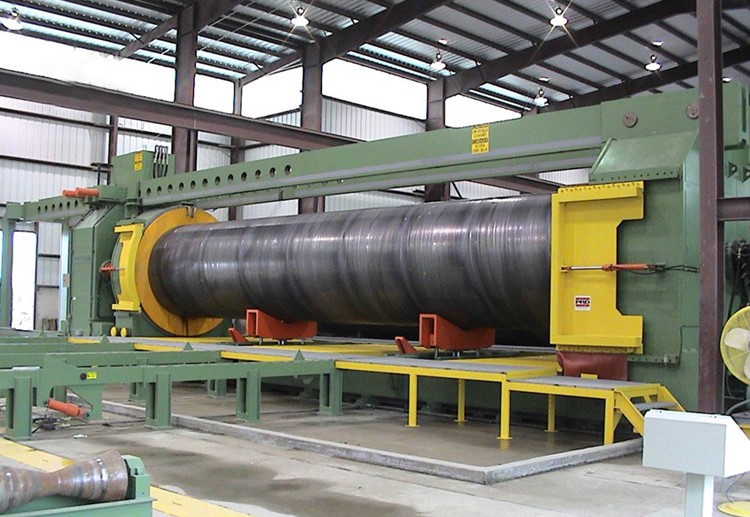
Choosing between continuous filament winding and discontinuous filament winding is not a minor process decision. It shapes output, labor use, pipe consistency, floor layout, and how fast a plant can move from raw materials to finished GRP or FRP pipe. In practice, both methods can make strong corrosion-resistant pipe. The better option depends on product mix, order volume, diameter range, and how much flexibility a factory needs from its production line. Continuous systems are widely associated with high-output pipe manufacturing and stable wall build-up, while discontinuous or reciprocal winding is commonly used where production needs more flexibility across specifications and project-based orders.
What filament winding does in GRP and FRP pipe manufacturing?
Before comparing the two methods, it helps to look at what the filament winding process is doing inside a pipe plant.
How the filament winding process works?
In GRP pipe manufacturing, fibers are laid onto a rotating mandrel while resin is applied in a controlled pattern. The winding angle, resin content, and layer sequence all affect pressure strength, stiffness, and long-term performance. In many FRP pipe production lines, the winding section works together with upstream and downstream equipment such as inner liner forming, molds, mandrel preparation, and hydrostatic pressure testing. That is why winding method selection is not just a machine question. It is a line design question. Sopplant’s product range for this segment reflects that reality, with pipe and tank winding machines supported by molds, inner liner automatic forming equipment, mandrel processing, and pressure testing equipment.
What is continuous filament winding?
The comparison becomes clearer once the production logic of continuous winding is laid out.
How continuous filament winding machines run?
A continuous filament winding machine builds pipe in a steady, ongoing process rather than as isolated one-off cycles. Public technical descriptions of CFW systems describe a continuously advancing mandrel concept, often using a steel band structure that supports layer build-up as materials are added. In GRP pipe production, that setup is closely linked with automated feed control, stable wall formation, and efficient output over long production runs. Continuous filament winding is especially attractive where a plant wants repeatable manufacturing conditions for standard pipe ranges and daily volume matters more than frequent changeover.
In real factory terms, continuous winding usually fits plants that need to keep the line moving. Municipal water projects, irrigation supply, cooling water networks, and large utility jobs often call for many pipes with similar dimensions and performance targets. In that environment, time lost in repeated setup changes adds cost fast. Continuous production helps reduce that drag.
What is discontinuous filament winding?
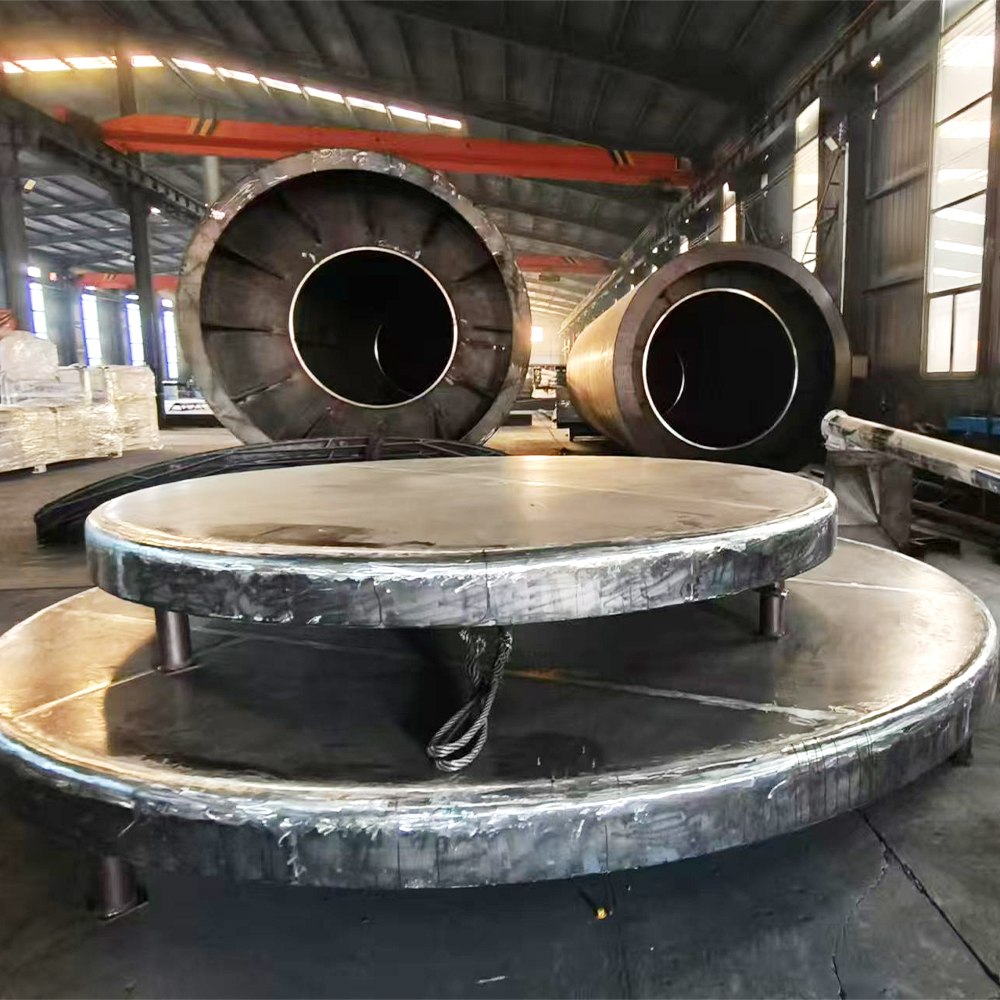
The second method often appears under a different name, so readers searching with either term should be able to recognize the overlap immediately.
Why is it also called reciprocal winding?
Discontinuous filament winding is commonly described as reciprocal winding because the fiber delivery carriage moves back and forth along the mandrel axis as the pipe is built. Technical literature on GRP pipes uses the reciprocal method to describe this back-and-forth winding movement, and published research has examined pipes made on discontinuous filament winding machinery across a broad range of configurations. In practical plant terms, this method gives manufacturers more room to adjust lay-up, size, and production rhythm when the order book is less standardized.
That flexibility matters in several common situations. A factory may need to switch between pipe classes, respond to smaller custom orders, or serve contractors who buy by project rather than by long annual schedule. In those cases, discontinuous filament winding can be a better fit even if it does not chase the same nonstop production rhythm as a continuous line.
Continuous vs discontinuous filament winding?
A side-by-side view is often the fastest way to judge which process suits a plant.
Key differences that affect production decisions?
| Fattore | Continuous filament winding | Discontinuous filament winding |
|---|---|---|
| Production mode | Ongoing, high-throughput process | Batch-like, reciprocal process |
| Best fit | Standardized, larger-volume pipe runs | Flexible, project-based production |
| Changeover demand | Lower when running repeat sizes | Easier to adapt across varied specs |
| Automation level | Typically high | Can vary by machine design |
| Pipe consistency | Strong repeatability in stable runs | Good when process control is disciplined |
| Labor impact | Often lower per unit at scale | Can be more dependent on setup skill |
| Investment logic | Better for long-run output plans | Better for flexible or mixed orders |
The table does not mean one process makes better GRP pipe in every case. It means each process rewards a different factory strategy. Continuous filament winding tends to work best when a plant is built around output, standardization, and repeat runs. Discontinuous filament winding tends to work best when the plant values adaptability, shorter runs, or more varied order profiles. Public industry material around CFW repeatedly links it with high-speed production and uniformity, while technical work on discontinuous GRP pipe production shows how widely it can be applied across pipe configurations.
Which process gives better pipe quality?
Quality is where many buyers hesitate, because output numbers are easy to compare but pipe performance is what decides claims, repairs, and long-term reputation.
What quality factors matter most?
Pipe quality in either method depends on more than whether the process is continuous or discontinuous. The real drivers are fiber placement, winding angle, resin impregnation, liner quality, curing control, and dimensional consistency. Continuous systems often have an advantage in repeatability when the same product range runs for long periods. Stable rhythm can help maintain uniform wall thickness and predictable structural build-up. Discontinuous systems can still produce high-quality FRP pipe, especially when operator control, carriage motion, and material feed are well managed. Research on GRP pipe failure behavior has shown that lay-up and manufacturing variables matter heavily in final performance, which is why process discipline matters as much as machine category.
For buyers, the more useful question is not “Which process sounds more advanced?”. It is “Which process keeps quality stable for the exact pipes this plant will sell?”.
Which process is more cost-effective?
Cost is another area where surface-level comparisons can mislead.
What should a buyer include in the cost calculation?
Machine price alone rarely tells the full story. Total cost in a GRP pipe production line includes raw material handling, liner forming, mandrel preparation, curing time, testing, labor, scrap, floor space, maintenance, and downtime during product changeover. A continuous filament winding line may need stronger upfront investment, but it can pay back faster when volume is high and specifications stay within a repeatable range. A discontinuous filament winding machine may make more sense when output is lower, orders vary, or a factory wants to avoid overspending on a line built for volume it does not yet have.
A more realistic comparison looks like this
- Expected daily or monthly output
- Main pipe diameter range
- Number of specification changes eachweek
- Pressure classes to be produced
- Scrap and rework tolerance
- Available labor skill level
- Future expansion plan
Those are the questions that separate a smart machine purchase from an expensive mismatch. Sopplant’s recent industry content on machine selection and production line investment follows the same logic: the right line depends on product, plant conditions, and project risk, not on a single “best” machine label.
How to choose the right process for an FRP pipe production line?
The decision gets easier when it is tied to actual plant situations instead of broad claims.
Choose continuous filament winding when?
Continuous winding is usually the stronger choice when a plant has stable demand, repeat diameters, and a clear target for high daily output. It suits factories supplying utility networks, water transmission, industrial cooling systems, and other applications where long production campaigns matter.
Choose discontinuous filament winding when?
Discontinuous winding is often the better choice when orders change often, quantities are smaller, or the sales model is based on projects with varied specifications. It can also suit plants entering the market gradually, where production flexibility matters more than maximum throughput.
Supporting equipment also shapes the answer?
The winding section does not work alone. A complete FRP pipe production line may include:
- Inner liner automatic forming equipment
- Pipe and fitting molds
- Mandrel processing equipment
- Resin and fiber feed sections
- Curing and finishing stages
- Hydrostatic pressure testing equipment
When these parts are matched correctly, both continuous and discontinuous filament winding can support strong pipe production results. When they are not matched, even a good winding machine will struggle to deliver stable output. Sopplant’s composite equipment portfolio reflects this full-line view rather than treating winding as an isolated step.
A brief look at Hebei Aoliande Chemical Equipment Co., LTD.?
Process selection is easier when the supplier can discuss the whole line instead of just one machine.
Why supplier depth matters?
Hebei Aoliande Chemical Equipment Co., LTD. works in computer control filament winding machines as part of a broader composites and industrial equipment business. The company’s capabilities include FRP pipe filament winding machines, FRP tank filament winding machines, FRP molded grating equipment, pultrusion equipment, rebar equipment, and related finished products. Its published company information also points to in-house design capability in materials, structures, and products, along with technical advice, goods and material supply, transportation, and installation supervision. The company states that it has more than 300 employees, dedicated R&D and QA/QC personnel, international certifications, and global exports across markets in Asia, Europe, the Americas, and the Middle East. That combination matters for buyers who need a supplier that can discuss equipment, process matching, and delivery support in one conversation.
Conclusione
Continuous filament winding is usually the better process for GRP or FRP pipe production when output, repeatability, and production rhythm are the main priorities. Discontinuous filament winding is often the better choice when a factory needs flexibility across specifications, smaller batches, or project-driven orders. Neither process is automatically superior. The right answer comes from matching the winding method to pipe range, order structure, labor profile, and full production line layout. In pipe manufacturing, good decisions come from fit, not slogans.
Domande frequenti
What is the difference between continuous and discontinuous filament winding?
Continuous filament winding runs in an ongoing production mode and is often used for higher-throughput GRP pipe production. Discontinuous filament winding, also called reciprocal filament winding, builds pipe through back-and-forth carriage movement and is often chosen for more flexible production plans.
Which process is better for GRP pipe production?
The better process depends on the factory. Continuous filament winding is often better for standard pipe ranges and larger output. Discontinuous filament winding is often better for custom work, mixed orders, or lower-volume production.
Is reciprocal filament winding the same as discontinuous filament winding?
In GRP pipe manufacturing literature, reciprocal winding is commonly used to describe the discontinuous winding method because the fiber carriage moves back and forth along the mandrel during production.
What equipment is needed besides a filament winding machine?
A complete FRP pipe production line often includes inner liner forming equipment, molds, mandrel processing equipment, curing and finishing stages, and hydrostatic pressure testing equipment in addition to the winding machine.
Which filament winding process is more cost-effective?
Continuous filament winding can be more cost-effective in large-volume production because output and labor efficiency improve at scale. Discontinuous filament winding can be more cost-effective for flexible, smaller, or project-based production where frequent changeovers are part of the business.