
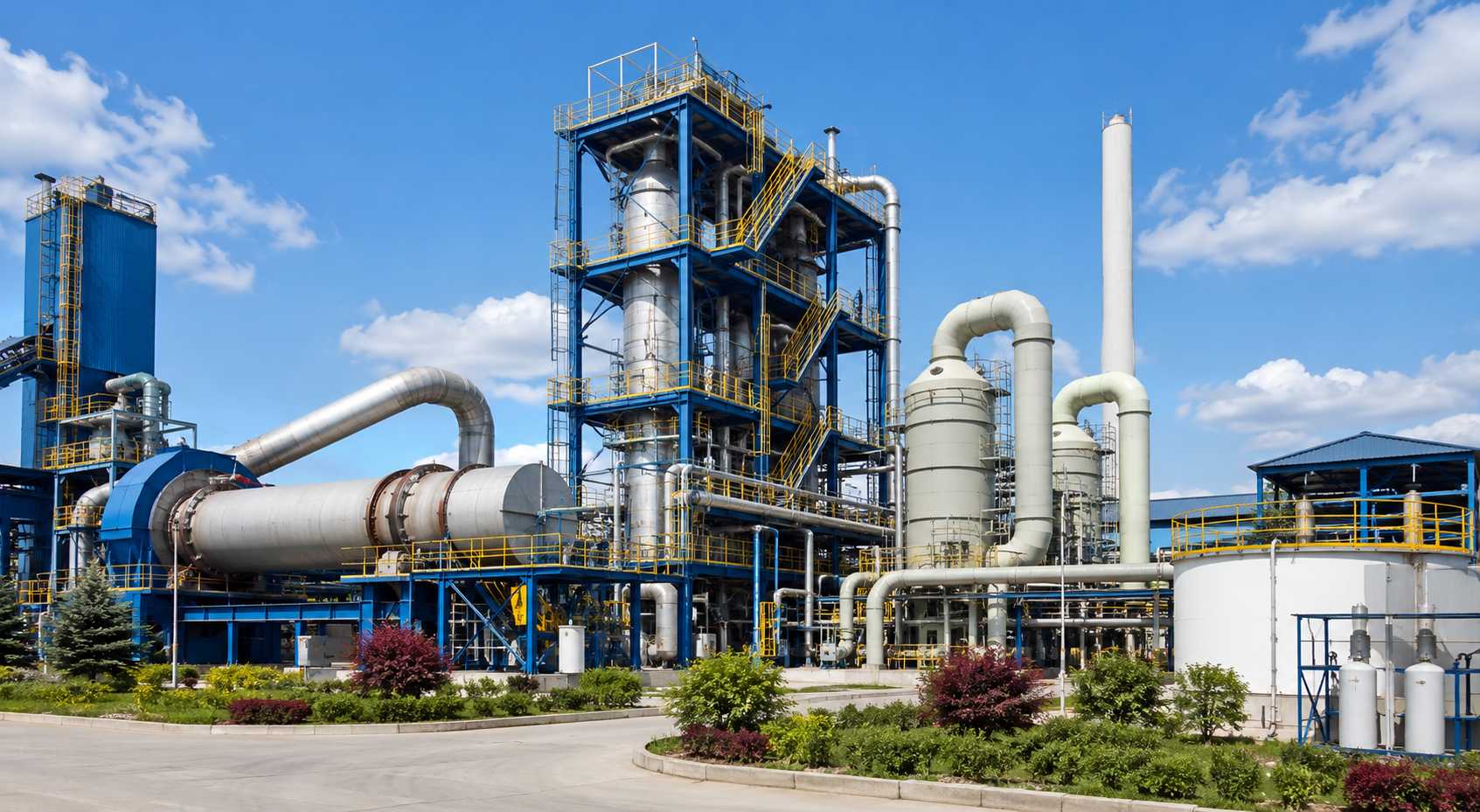
A Mannheim process potassium sulfate production line is not only a furnace project. It is a long-term industrial investment tied to raw material supply, energy cost, by-product handling, labor planning, environmental rules, and fertilizer market demand. For many fertilizer producers, chemical plants, and project investors, the real question is not simply how to build an SOP plant. The more practical question is how to build one that can run steadily, control cost, and create saleable output year after year.
SOP, or potassium sulfate, is valued because it supplies potassium and sulfur without adding chloride. That makes it useful for chloride-sensitive crops such as tobacco, grapes, potatoes, citrus, tea, vegetables, and greenhouse crops. A plant that can produce stable SOP quality while recovering hydrochloric acid can serve both the fertilizer market and chemical users that need HCl.
Why Does ROI Matter Before Building a Mannheim SOP Plant?
A Mannheim process SOP plant usually requires serious upfront spending. Civil construction, furnace systems, corrosion-resistant materials, absorption equipment, storage tanks, automation, utilities, and installation work all add to the total budget. Looking only at equipment price can lead to a poor investment decision.
Capital cost is only one part of the picture
A low initial quotation may look attractive, but plant owners also need to check what is included. Some offers cover only the main furnace. Others include feeding, reaction, cooling, HCl absorption, gas treatment, control cabinets, installation guidance, and process transfer. These differences can change the final project cost by a large margin.
A practical ROI review should include land, workshop layout, power supply, fuel supply, raw material storage, acid-resistant pipelines, gas ducts, packaging, and environmental equipment. In many projects, missing auxiliary systems become expensive later because they must be redesigned after installation starts.
Operating cost decides long-term profit
A Mannheim process potassium sulfate production line consumes potassium chloride, sulfuric acid, fuel, electricity, water, spare parts, and labor. The plant also needs regular maintenance because the production environment involves high temperature and acidic gas. Even small gains in reaction completeness, heat transfer, HCl absorption, and automation can affect annual profit.
For example, if feedstock ratio control is unstable, unreacted raw material may remain in the product. If the furnace has uneven heating, energy use rises and product quality may vary between shifts. If the HCl absorption section is weak, the plant may lose by-product value and face odor or emission pressure.
What Drives the Profit of a Mannheim Process Potassium Sulfate Production Line?
Profit usually comes from three sides: SOP output, HCl by-product recovery, and stable plant operation. A buyer should look at all three before signing a contract.
Main cost and income factors
The table below shows how each factor affects a typical SOP plant project.
| Fattore | Perché è importante | Buyer’s Checkpoint |
| Potassium chloride price | Main raw material cost | Local supply, import duty, delivery distance |
| Sulfuric acid supply | Affects reaction cost and safety planning | Acid purity, storage tank design, unloading method |
| Fuel consumption | Major daily running cost | Furnace flue design, heat use, insulation quality |
| Recupero di HCl | Adds by-product income and supports cleaner operation | Absorption efficiency, storage, downstream buyers |
| Labor cost | Affects shift cost and safety | PLC control, alarm system, operator training |
| Maintenance cost | Impacts yearly downtime | Furnace material, corrosion resistance, spare parts |
| Product quality | Decides market price and buyer repeat orders | SOP purity, low chloride, stable particle or powder form |
HCl by-product should not be treated as waste
The Mannheim process creates potassium sulfate and hydrochloric acid through the reaction of potassium chloride and sulfuric acid. In a simple view, the reaction can be written as:
2 KCl H2SO4 → K2SO4 2 HCl
This is why HCl recovery is a key part of plant profitability. A well-designed absorption system turns acid gas into a usable chemical product. The recovered hydrochloric acid may be sold to chemical plants, water treatment users, metal processing plants, or used in related production lines, depending on local demand and quality.
When HCl recovery is weak, the plant loses value twice. First, it loses a saleable by-product. Second, it may need more spending on exhaust treatment and environmental control. For investors comparing Mannheim SOP plant options, the HCl absorption system should be reviewed as carefully as the furnace itself.
How Should Buyers Plan SOP Plant Capacity?
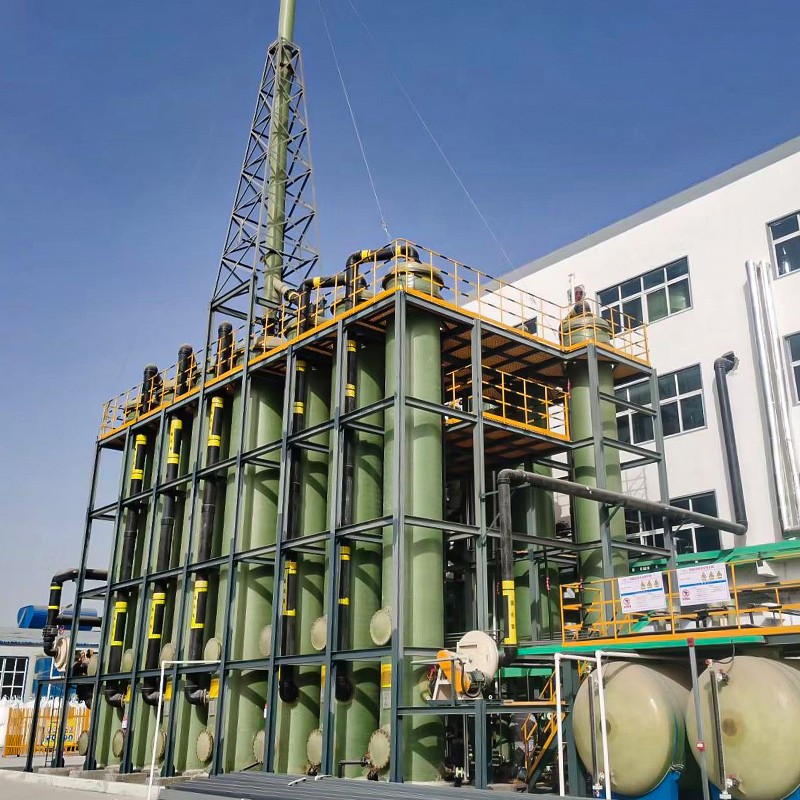
Capacity choice should match raw material access, market size, financing ability, utility supply, and technical team strength. Bigger capacity is not always better if the local market cannot absorb the product or if raw material supply is unstable.
Small and medium plants
A small or medium potassium sulfate production line may suit regional fertilizer companies, agricultural groups, or chemical investors entering the SOP market for the first time. The advantage is lower project risk and easier management. It can also help the owner test local demand for chloride-free fertilizer.
However, small plants may face higher unit cost if labor, fuel, and maintenance are not well managed. Buyers should ask whether the production line can be expanded later, whether the site layout leaves room for extra furnaces, and whether the HCl system can handle future growth.
Large-scale SOP plants
Large plants fit investors with stable KCl and sulfuric acid supply, strong downstream fertilizer sales, and HCl sales channels. A larger Mannheim process SOP plant can lower unit cost when the plant runs continuously at high load. It also supports bigger fertilizer brands that need stable quality and regular shipment volume.
Still, large output brings stricter needs. Feedstock storage must be planned carefully. The furnace section, acid absorption, tail gas treatment, cooling, packaging, and warehouse flow must be matched. If one section is too small, the whole line slows down.
Which Equipment Details Affect Energy and Stability?
The furnace is the heart of a Mannheim process SOP plant, but profit depends on the full system. Good equipment design links reaction, heat, gas collection, absorption, automation, and maintenance access.
Furnace structure and heating quality
The reaction takes place at high temperature in a muffle furnace. Uneven heating can cause poor reaction, higher fuel use, and product variation. A better furnace design pays attention to material selection, heat distribution, flue structure, and service access.
In real plant operation, operators often judge furnace quality from daily signs: stable temperature, smooth discharge, fewer blockages, lower fuel use, and predictable maintenance intervals. If the furnace material cannot handle heat and corrosion, shutdowns may become frequent after the plant enters full production.
HCl absorption and corrosion resistance
The acid gas section is one of the most demanding areas in the plant. Equipment, ducts, towers, tanks, and pipelines must resist corrosion. Poor material selection can lead to leakage, short service life, and safety risk.
A strong HCl absorption system should support:
- steady gas collection from the reaction section
- effective absorption into hydrochloric acid
- safe storage and transfer
- lower acid mist escape
- easier inspection and cleaning
This section matters to both profit and environmental performance. In many SOP plant projects, buyers spend too much time on the furnace price and too little time on acid recovery. That is a mistake.
PLC control and feedstock ratio
Automatic control can reduce mistakes in feeding, temperature checking, ratio adjustment, and alarm response. A PLC automatic control system helps operators keep the process within a set working range. It also reduces the need for constant manual adjustment.
For a Mannheim SOP plant, stable feedstock ratio is especially important. Too much sulfuric acid may affect operation and downstream handling. Too much potassium chloride may leave unreacted material and reduce product quality. A good control system helps maintain a steady balance across shifts.
How Can Environmental Compliance Protect the Investment?
Environmental cost should be included before construction, not added after inspection problems appear. SOP production involves acidic gas, dust, heat, wastewater from cleaning, and solid handling. A cleaner plant is usually easier to permit, easier to operate, and easier to present to overseas customers.
Key compliance areas
A practical environmental review for a potassium sulfate production line should include gas collection, HCl absorption, acid mist control, dust control, wastewater treatment, noise control, and safe acid storage. Local regulations differ, but the basic engineering logic is similar: collect emissions early, treat them close to the source, and keep corrosive materials inside sealed systems.
| Area | Main Risk | Practical Design Focus |
| Furnace gas | HCl gas and acid mist | Sealed ducting and absorption tower |
| Manipolazione del prodotto | Dust during cooling and packing | Dust collection and enclosed transfer |
| Acid storage | Leakage and corrosion | Suitable tanks, bund area, safe unloading |
| Workshop air | Operator exposure | Ventilation, monitoring, training |
| Wastewater | Acidic cleaning water | Neutralization and controlled discharge |
Cleaner production can support sales
Many fertilizer buyers now care about stable quality, lower chloride content, and responsible production. A plant with better gas treatment, acid recovery, and process control is easier to explain to distributors and large agricultural buyers. It also reduces the chance of shutdowns caused by complaints, odor, or failed inspections.
What Should Be Included in a Supplier RFQ?
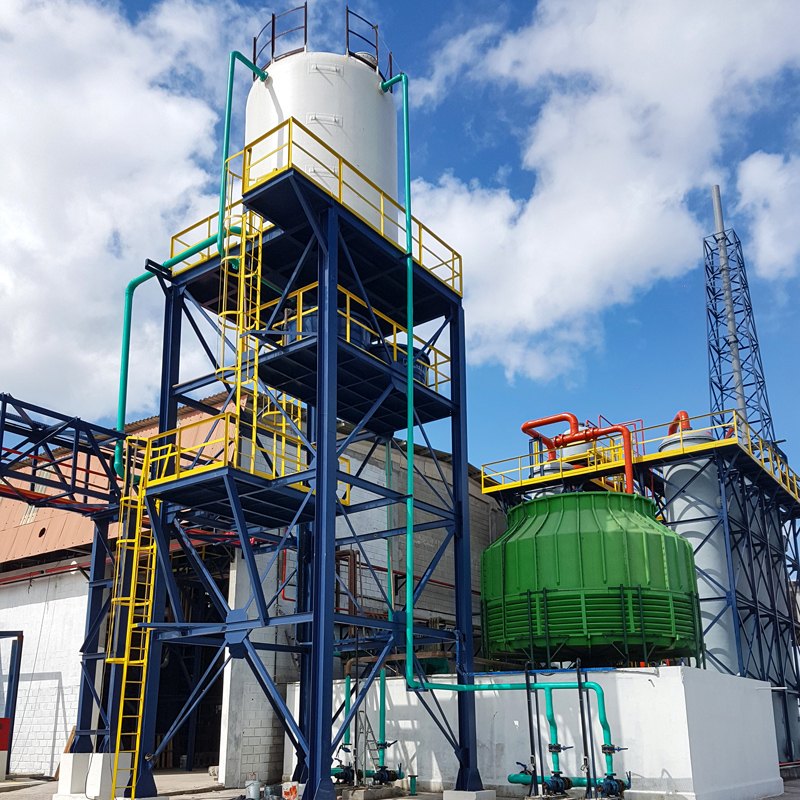
A clear RFQ makes supplier comparison easier. It also helps avoid vague quotations that look cheap but leave out important systems. For Mannheim process potassium sulfate production line projects, the RFQ should ask for both technical scope and service scope.
Practical RFQ checklist
Before choosing a supplier, buyers can request the following information:
- expected annual capacity and working days
- raw material specifications for KCl and sulfuric acid
- furnace quantity and arrangement
- fuel type and estimated consumption range
- HCl absorption process and expected acid quality
- tail gas treatment plan
- PLC control scope
- corrosion-resistant material plan
- installation and commissioning guidance
- operator training scope
- spare parts list
- maintenance access design
- packing and storage recommendations
A serious SOP plant proposal should connect equipment with process, utilities, safety, and site conditions. A simple equipment list is not enough for a project that needs stable operation for many years.
Why Choose Hebei Aoliande Chemical Equipment Co., LTD. as a Mannheim SOP Plant Supplier?
Hebei Aoliande Chemical Equipment Co., LTD. is a professional supplier of Mannheim process potassium/sodium sulfate production line systems and related chemical equipment. Its work covers equipment manufacturing, process support, material and structural design, technical consulting, supply, transportation, installation guidance, and commissioning support.
The company has experience with Mannheim furnace equipment, potassium sulfate production line engineering, FRP/GRP corrosion-resistant products, and other chemical production lines. Its own potassium fertilizer factory in Inner Mongolia provides a practical reference for visitors, with annual output capacity for potassium sulfate and high-quality hydrochloric acid. That matters because SOP plant buyers often need more than drawings. They need working process experience, equipment knowledge, and practical guidance for long-term operation.
For investors, the value of a supplier lies in whether it can connect design, production, corrosion control, acid recovery, automation, and site service. Aoliande’s Mannheim process SOP plant work is relevant for fertilizer producers, chemical manufacturers, EPC contractors, and investors who want a complete production line rather than separate equipment pieces.
Conclusione
A profitable Mannheim process SOP plant starts with clear planning. The main investment decision should cover raw material supply, furnace design, HCl recovery, fuel consumption, automation, environmental control, and long-term maintenance. Equipment price matters, but it should never be the only basis for selection.
The strongest projects are usually built around stable raw material channels, reliable furnace operation, effective hydrochloric acid recovery, and a supplier that can support both equipment and process needs. For buyers comparing potassium sulfate production line options, the best result comes from looking at the full plant life cycle: construction, commissioning, daily operation, maintenance, by-product sales, and market demand.
Domande frequenti
What is a Mannheim process potassium sulfate production line?
A Mannheim process potassium sulfate production line produces SOP by reacting potassium chloride with sulfuric acid at high temperature. The main product is potassium sulfate, and hydrochloric acid is generated as a by-product. A complete line usually includes feeding, furnace reaction, cooling, HCl absorption, gas treatment, control, and packing systems.
Why is HCl recovery important in a Mannheim SOP plant?
HCl recovery can add value to the plant and reduce environmental pressure. Instead of treating hydrogen chloride only as waste gas, a good absorption system converts it into hydrochloric acid that may be sold or used in other chemical processes. This can improve plant economics and make daily operation cleaner.
How can a buyer choose the right SOP plant capacity?
The right capacity depends on raw material supply, local fertilizer demand, HCl sales channels, investment budget, land size, utility supply, and operating team experience. Buyers should not choose capacity only by comparing equipment price. A realistic plan should match the whole production chain.
What equipment affects energy consumption in a potassium sulfate production line?
The furnace design, flue layout, insulation, feeding control, gas collection, and PLC system all affect energy consumption. Better heat distribution and stable feedstock ratio can reduce fuel waste and support more consistent SOP quality.
What should be checked before buying a Mannheim process SOP plant?
Buyers should check furnace material, HCl absorption design, tail gas treatment, PLC control scope, corrosion-resistant components, supplier service scope, installation guidance, spare parts plan, and references from working production lines. These points are more useful than judging only by the lowest quotation.