
Consider a hypothetical handover trial: a packing record shows 52 tonnes of sulfate of potash leaving the finishing area. The furnace log shows a steady run. Meanwhile, hydrochloric acid is being transferred to storage. These are encouraging signs, but they do not necessarily describe the same period of production. Some packed material could have come from earlier stock, and a tank movement is not the same as acid recovered during the test. A handover report has to sort out those differences before it can support an acceptance decision.
This distinction matters when the purchase includes more than a furnace. Aoliande’s Mannheim potassium/sodium sulfate production line information refers to the furnace, process improvements, acid absorption, controls and commissioning-related services. It is a useful description of the supplier’s equipment scope, not a standard test certificate for every installation. Capacity, finished grade, acid recovery and acceptance conditions still have to be written into the actual project documents.
Agree on the trial boundary before the furnace is loaded
There is a difference between getting a plant running and proving its contracted duty. Motor direction, valve position, instrument loops and protective interlocks can be checked before normal production. After first heat, operators may spend time tuning feed rates, furnace draft and downstream equipment. That work is commissioning. The formal performance period starts only when the parties have agreed that the line is ready to be measured against the contract.
A short stoppage exposes gaps in the test procedure very quickly. Suppose cooling water is briefly lost after four hours of otherwise stable operation. Are those four hours retained? Does the clock restart? Does the downtime belong to the supplier or to a utility furnished by the buyer? There is no universal answer. Put the treatment of interruptions, the minimum uninterrupted period and the permitted operating range in the procedure before the first acceptance run, rather than negotiating them after a problem.
Keep one agreed set of clocks. The production tally, feed log, sample labels, tank records and PLC trends need compatible timestamps. The witness sheet should identify who approves the start and finish, which scale and laboratory results will be used, and whether either party may challenge an instrument reading. For more on controls and time-based operating data, Jiubo discusses PLC automation in Mannheim SOP plants.
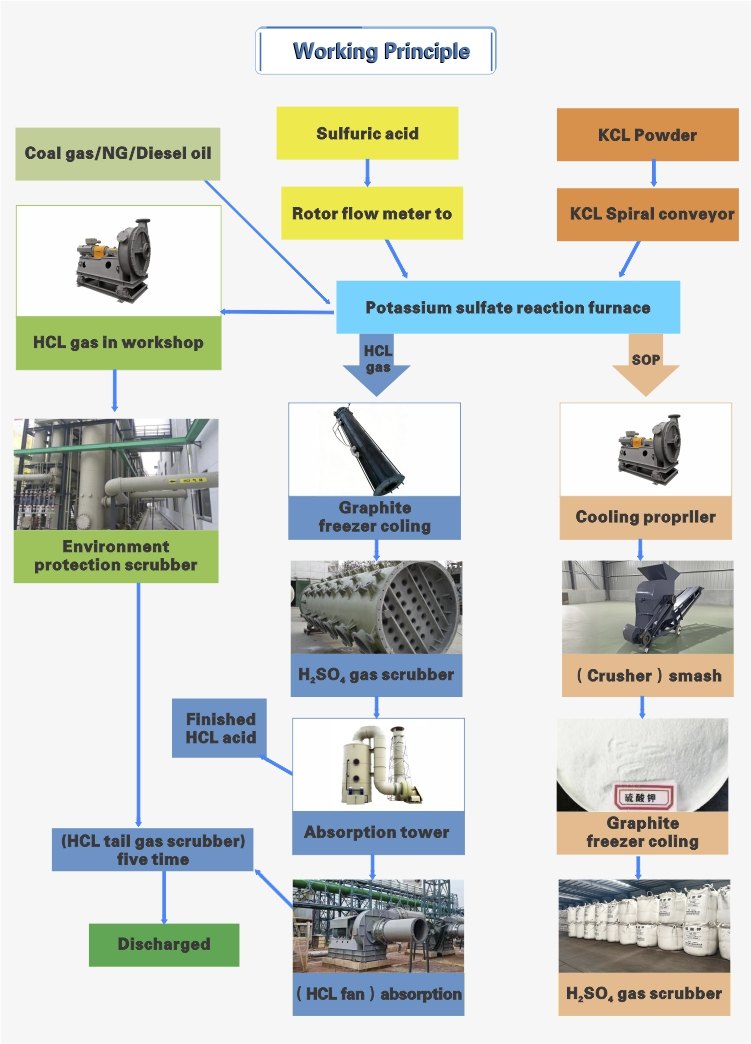
Figure 1. Supplier reference flow diagram, showing the separate SOP finishing and hydrochloric acid recovery routes. Source: Jiubo / Aoliande.
Follow the saleable SOP, not just the furnace discharge
A weigh point immediately after the Mannheim furnace measures a different stream from the one at the end of cooling, crushing, screening and packing. Hot discharge may contain material that still needs finishing or is later rejected. If the contract guarantees finished, on-spec SOP, the accepted tonnage needs to be established at that end of the route. The furnace weight is useful operational data; it is not automatically the sales-grade output.
Stock transfers change the result. In a hypothetical test, 52 tonnes leave on-spec finished stock for dispatch. The stock began at 7 tonnes and ended at 12, with no other transfers. Net finished production is therefore 57 tonnes (52 + 12 − 7). The weighing point and inventory movements are part of the calculation, not footnotes to it. These are illustrative figures, not reported Jiubo results.
Feedstocks deserve the same attention. An SOP rate achieved with a particular potassium chloride grade and sulfuric acid concentration may not tell much about a contract based on different raw materials. The KCl analysis, acid strength, feed quantities and relevant test conditions belong beside the production result. Any departure from the agreed design basis should be visible rather than buried in an operator’s notes.
Annual capacity is another number that can mislead when detached from its assumptions. A stable trial can establish a rate over the accepted hours. It cannot demonstrate a year’s operating availability in a single shift. If the offer states annual tonnes, the contract needs the operating-days or operating-hours basis and the assumptions about planned outages. Keep that calculation separate from the short-run measurement.
A laboratory pass is only one point on the production record
A product sample taken after operators correct the acid-to-KCl ratio may be entirely satisfactory. The buyer still needs to know what was made during the preceding hours and whether the corrected condition held. A sample drawn at the most favorable moment has limited value as evidence for a longer run. The sampling plan should span the accepted period and relate each bottle or bag of sample material to a defined collection point.
Which tests matter depends on the grade being purchased. Fertilizer-grade SOP specifications may cover potassium expressed as K2O, chloride residue, free acidity, moisture and particle-size distribution; the actual limits and methods are project requirements, not universal figures supplied by the process description. A sample at furnace discharge is not interchangeable with one taken after product finishing. Label location, time and method with each reported result.
When chloride is unexpectedly high, the record becomes useful only if that sample can be lined up with the feed ratio, furnace temperature, draft and discharge observations from the same interval. The laboratory tells the team what was in the sample. The process history may explain why. Buyers considering different process routes can read Jiubo’s comparison of Mannheim and double-decomposition SOP production, although the acceptance method here concerns the selected Mannheim line.
Do the HCl calculation on the same production window
The furnace makes hydrogen chloride as well as potassium sulfate. On paper, the overall reaction is 2 KCl + H2SO4 → K2SO4 + 2 HCl. From the molecular masses alone, one tonne of pure K2SO4 corresponds to about 0.419 tonne of hydrogen chloride in the ideal stoichiometric balance. That is a useful cross-check, not a promise that a plant will deliver that mass of saleable acid. Conversion, losses, entrained material, gas cleaning and recovery efficiency all stand between the equation and the storage tank.
There is a second accounting trap. Recovered hydrochloric acid is an aqueous solution; the tank weighs water as well as HCl. At an illustrative 30% HCl by mass, 0.419 tonne of pure HCl would correspond to roughly 1.40 tonnes of acid solution. A test that simply places tonnes of SOP next to tonnes of acid solution is comparing unlike quantities. Record solution mass or flow and concentration, then calculate contained HCl on the stated basis. The 30% example is not a Jiubo product guarantee.
Run the acid balance over the same accepted hours as the SOP balance. A tank reading taken after a transfer, or an absorber trial at reduced furnace load, will not answer whether the full line operated together at the promised rate. Note opening and closing acid inventory, deliveries and returns, sample time and concentration method. The site-specific vent measurements and limits belong to the permit and agreed test procedure, not to a generic catalogue claim.
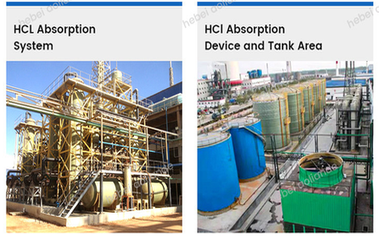
Figure 2. HCl absorption equipment and tank-area photographs from the Aoliande product material.
Absorber circulation, cooler performance, gas draft and pressure drop are especially valuable diagnostic signals when recovery is poor. They help the operations team find out whether the problem came from the furnace load, water balance or absorption train. Jiubo has a separate explanation of HCl absorption design for Mannheim SOP plants; this handover discussion focuses on what the owner should be able to verify rather than how to size the absorber.
Build a record that the next shift can understand
An acceptance summary that reports only “pass” or “fail” leaves too much history behind. The underlying entries can be simple. They need to connect the material, laboratory, acid and control-system evidence to a single period. The layout below is a suggested working record, not an Aoliande-issued commissioning form.
| Evidence | Record beside the result | Question it resolves |
|---|---|---|
| Finished SOP | Weigh point; packed or transferred tonnes; opening/closing on-spec stock; rejects | Was saleable production counted once? |
| Feed basis | KCl certificate; acid concentration; consumption; operating window | Was the agreed feedstock basis used? |
| Product samples | Collection time and location; laboratory method; result | Did the stated grade hold through the run? |
| Recovered HCl | Solution quantity; acid concentration; tank transfers; sample records | How much contained HCl was actually recovered? |
| Utilities and trends | Cooling; furnace draft; absorber circulation; alarms; time stamps | Was the whole line at the stated load? |
| Interruptions | Start/stop; cause; corrective action; agreed treatment | Which hours count toward acceptance? |
A failed run still has value
If the tested line misses an agreed limit, keep the original evidence. A repeat sample does not erase an earlier laboratory result, and a second good run does not make the first set of instrument readings unimportant. The records may show that one feed correction, a changed temperature pattern or a repaired valve made the difference. That history gives the site team something concrete to watch when the supplier’s commissioning crew has gone.
A retest also needs a scope. A suspect analyser can sometimes be checked against a valid independent method; a process change that affects capacity or quality may call for a complete new stable-load period. The purchase documents decide which response is acceptable and who bears the associated work. A short note written before the trial is far more useful than arguing about the remedy at the point of failure.
Successful process figures do not close every contract item. Equipment manuals, spare parts, training, instrument certificates and outstanding installation work are separate handover obligations. Aoliande publishes information about commissioning guidance and related project services, but such assistance should not be confused with a numerical plant performance guarantee unless the contract explicitly says so. The best final file distinguishes accepted performance from work still open, with an owner for each item.