
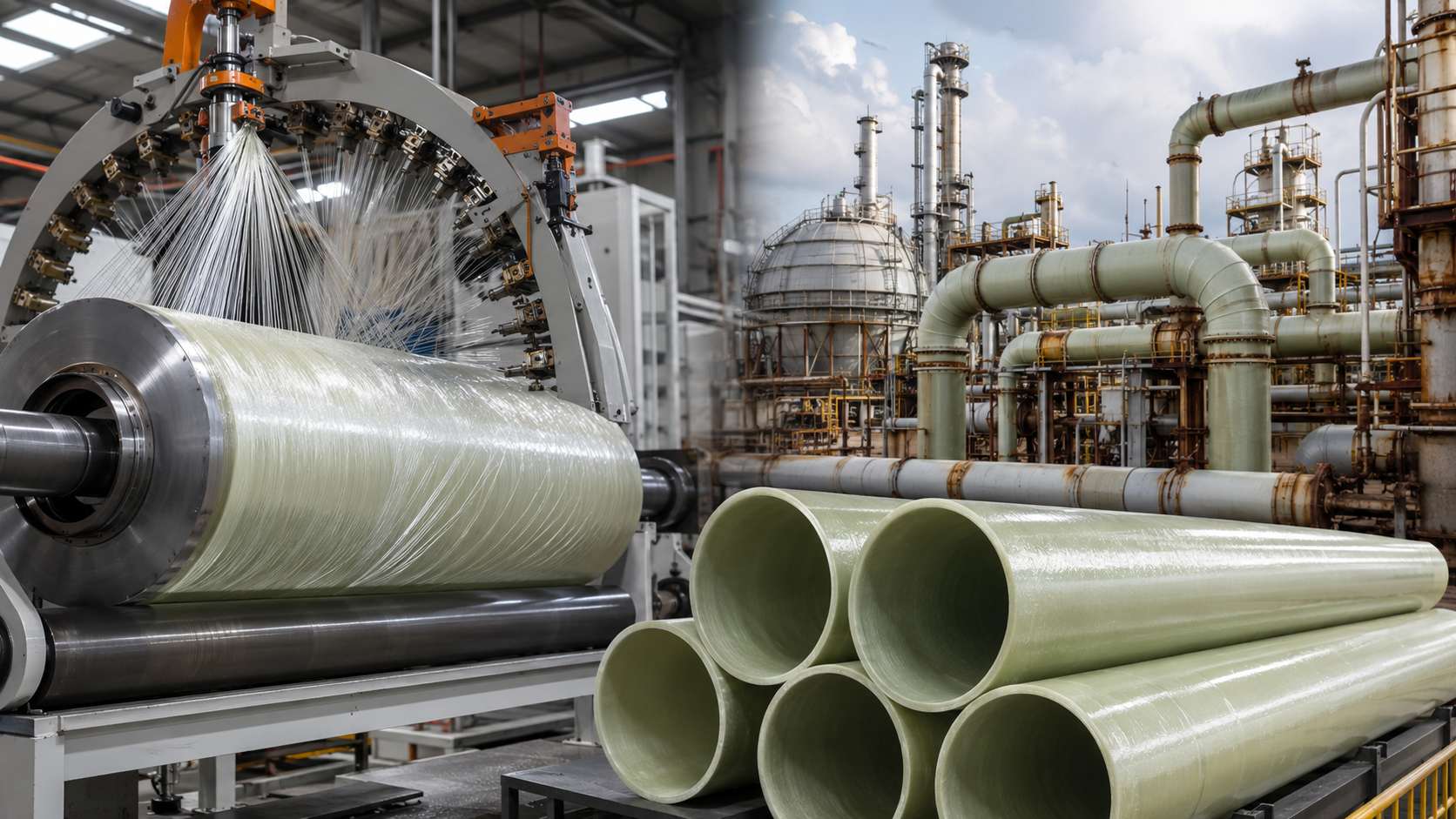
Chemical plants handle acids, alkalis, salt solutions, wastewater, solvents, wet gas and many other aggressive media every day. In these environments, pipe failure is not just a maintenance issue. It can stop production, create leakage risks, increase repair costs and shorten the working life of the whole piping system.
This is why FRP pipes for chemical plants are gaining more attention. FRP, or fiberglass reinforced plastic, combines glass fiber reinforcement with a resin matrix. The resin side gives chemical resistance, while the glass fiber side gives strength. Behind every reliable chemical resistant FRP pipe, however, there is also a manufacturing process. For industrial pipe producers, the FRP pipe filament winding machine has become one of the key pieces of equipment behind stable pipe quality, repeatable wall thickness and large-scale production.
Why are chemical plants moving away from traditional piping materials?
Chemical plants do not choose piping materials based on purchase price alone. A pipe system must work under real factory conditions: chemical splash, high humidity, outdoor exposure, temperature changes, abrasive slurry and long operating hours.
Metal pipes are still used in many areas, especially where high temperature or special pressure conditions are involved. But in corrosive sections, they often need coatings, linings, regular inspection and planned replacement. Once a coating is damaged, corrosion can move fast, especially at joints, elbows, welds and low-flow areas.
FRP pipes give chemical plants another choice. They are not a universal replacement for every pipe, but they fit many services where corrosion is the main problem.
Common reasons include:
- Better resistance to many acids, alkalis and industrial wastewater
- Lower pipe weight for easier handling and installation
- Smooth inner wall, which helps fluid flow and reduces scaling risk
- Lower maintenance pressure in many corrosive lines
- Flexible design for different diameters, wall thicknesses and pressure classes
For a plant engineer or purchasing team, the real value is not only “anti-corrosion.” It is fewer shutdowns, easier installation, lighter support structures and more predictable service life.
What makes FRP pipes suitable for chemical plant applications?
FRP pipes are composite pipes. Their performance comes from the way different layers work together, not from one material alone. The inner corrosion barrier faces the chemical medium. The structural layer carries pressure and mechanical load. The outside layer protects the pipe from handling damage, weather and site exposure.
This layered design explains why chemical resistant FRP pipe is widely used in demanding plants. The resin-rich inner layer can be selected according to the transported medium. For example, a wastewater treatment line may not need the same resin system as a strong acid transfer line. A cooling water line may focus more on hydraulic performance and long pipe length, while a scrubber system may need resistance to wet gas and chemical condensate.
| Chemical plant area | Typical pipe requirement | Why FRP is considered |
| Acid and alkali transfer | Corrosion resistance and leak control | Resin-rich inner liner protects the pipe wall |
| Wastewater treatment | Resistance to mixed chemicals and moisture | FRP performs well in wet corrosive conditions |
| Scrubber and exhaust gas systems | Resistance to condensate and chemical vapor | Lightweight pipe is easier to install at height |
| Cooling water circulation | Large diameter and stable flow | Smooth inner wall supports steady fluid movement |
| Fertilizer and chemical processing | Custom pipe size and chemical compatibility | Resin and wall structure can be matched to service |
The key point is that FRP pipe is not a simple plastic pipe. It is a reinforced composite pipe designed around the job it must do.
How are FRP pipes manufactured for chemical service?
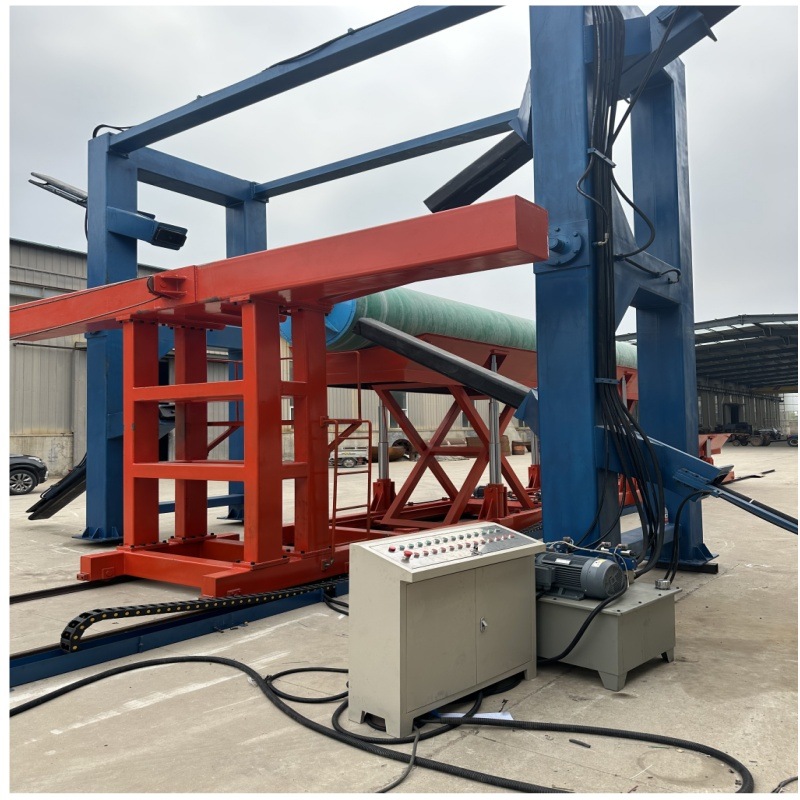
The FRP pipe manufacturing process affects pipe strength, surface quality, chemical resistance and pressure behavior. Among several methods, filament winding is widely used for round pipes because it gives better control over fiber direction, pipe wall build-up and production repeatability.
In a filament winding process for FRP pipes, continuous fiberglass strands are passed through resin and wound onto a rotating mandrel. The machine controls the travel of the winding carriage while the mandrel rotates. Layer by layer, the pipe wall is formed until the required thickness and structure are reached.
Mandrel preparation
The mandrel gives the pipe its inner diameter and shape. A clean and accurate mandrel helps form a smoother inner surface. In chemical plant piping, this matters because rough or uneven surfaces can hold residue, slow down flow and create spots where deposits gather.
For manufacturers producing several pipe sizes, mandrel matching is an important part of production planning. A plant making small chemical process pipes will not use the same setup as a factory producing large drainage or wastewater pipes.
Resin impregnation
The resin system has a direct link to chemical resistance. During production, fiberglass must be fully wetted with resin. Dry fibers, uneven resin content or trapped air can weaken the pipe wall. In chemical service, these small flaws may become larger problems over time.
Good resin impregnation supports both the corrosion barrier and the structural layer. It also helps the pipe meet pressure, stiffness and service requirements more consistently.
Controlled fiber winding
Fiber direction is one of the biggest advantages of filament winding. The winding angle can be set to balance hoop strength and axial strength. Hoop strength helps the pipe handle internal pressure. Axial strength helps the pipe handle lengthwise stress, installation loads and operation movement.
An FRP pipe filament winding machine controls fiber placement, carriage movement and mandrel rotation. If these movements are not matched well, the pipe may have uneven layers, weak zones or unstable wall thickness.
Curing and finishing
After winding, the resin must cure. Proper curing gives the pipe its final hardness, shape stability and mechanical strength. The pipe is then removed from the mandrel, trimmed and prepared for later inspection or connection work.
For chemical plants, this stage cannot be treated as a small detail. Poor curing can affect heat resistance, chemical resistance and long-term performance.
Why does manufacturing technology matter more in chemical piping?
Chemical plant pipes are often judged after years of service, not only after factory production. A pipe may look fine when it leaves the production floor, but hidden problems can appear under pressure, temperature change or chemical exposure.
Manufacturing technology matters because it controls the details that are difficult to see from the outside:
- Fiber tension
- Winding angle
- Resin content
- Wall thickness
- Layer bonding
- Inner liner quality
- Pipe roundness
- Length and diameter accuracy
For pipe producers, stable equipment reduces the gap between one pipe and the next. This is especially important when supplying a full project, where dozens or hundreds of pipe sections must work as one system.
For chemical plants, this consistency makes installation and later operation more predictable. A line carrying wastewater, diluted acid or cooling water should not have random weak points caused by unstable winding.
How does a computer controlled filament winding machine improve pipe production?
A computer controlled filament winding machine brings repeatability into pipe manufacturing. Operators set pipe size, winding angle, layer structure and production parameters. The machine then follows the program with controlled carriage movement and mandrel rotation.
This does not remove the need for skilled workers. It changes where skill is used. Instead of constantly adjusting the machine by hand, workers can focus on raw material preparation, process checks, resin condition, curing quality and finished pipe inspection.
For manufacturers, the benefits are practical:
- Faster changeover between pipe specifications
- More consistent wall thickness
- Better control of fiber angle and tension
- Lower waste from manual errors
- More stable production for batch orders
- Easier production planning for chemical, water and industrial pipe markets
In a factory producing chemical resistant FRP pipe, these points can affect both cost and delivery time. A buyer may ask for different diameters, pressure ratings or resin systems in one project. A flexible FRP pipe production line can support this demand more smoothly than a heavily manual process.
Where are FRP pipes commonly used inside chemical plants?
FRP pipes are often used where corrosion and moisture create long-term trouble for metal systems. In chemical plants, the application is usually tied to the medium, temperature, pressure and pipe layout.
Acid and alkali transfer lines
In acid and alkali service, the pipe inner liner is critical. A suitable resin-rich barrier helps protect the structure from chemical attack. These lines are common in chemical processing, fertilizer production, pickling areas and neutralization systems.
Wastewater and drainage systems
Chemical wastewater is rarely simple. It may contain salts, low-concentration acids, alkalis, suspended solids or process residues. FRP pipe is often considered for plant drainage, treatment lines and underground wastewater transfer because it performs well in wet corrosive conditions.
Scrubber and gas treatment systems
Wet scrubber systems can expose pipes and ducts to acidic condensate, mist and warm exhaust gas. FRP’s corrosion resistance and lighter weight make it useful in elevated pipe runs and exhaust treatment sections.
Cooling water and seawater lines
Cooling water systems often need large diameter pipe and long operating life. In coastal sites, seawater or brine can attack many materials quickly. FRP pipes can reduce corrosion concerns while keeping installation weight lower than many metal alternatives.
What should buyers compare before choosing FRP pipe equipment?
For companies planning to manufacture FRP pipes, buying an FRP pipe filament winding machine is not only a machinery purchase. It is a production decision tied to target markets, plant space, labor skill and pipe specifications.
A practical equipment review should include these points:
| Selection factor | Why it matters |
| Pipe diameter range | Determines mandrel needs, machine size and target market |
| Pressure class | Affects winding design, wall thickness and testing needs |
| Resin system | Links directly to chemical resistance and application field |
| Automation level | Influences labor demand, repeatability and output stability |
| Daily output | Helps match equipment capacity with order volume |
| Testing equipment | Supports quality checks such as pressure testing |
| Technical support | Reduces risk during installation, training and trial production |
The best choice is not always the biggest machine. A factory mainly serving small and medium chemical plants may need flexible size changeover. A producer focused on municipal drainage or large industrial pipes may need stronger large-diameter production capacity. The right FRP pipe production line should match real orders, not just future hopes.
What quality checks matter for FRP pipes in chemical service?
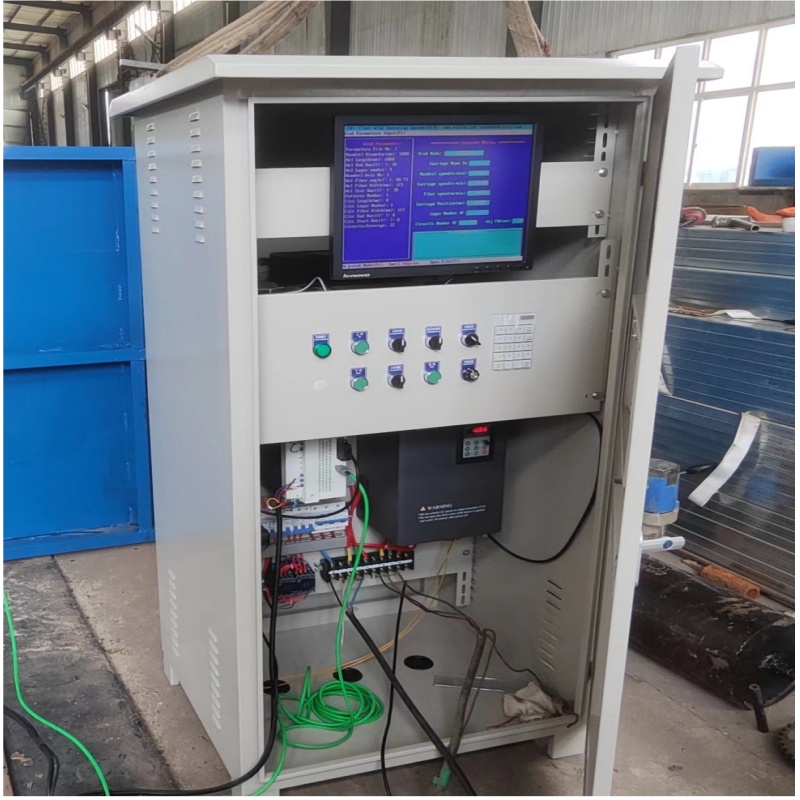
Quality control should start before winding and continue after pipe finishing. Raw materials, resin ratio, fiber condition, mandrel surface, winding program and curing conditions all affect the final product.
After production, common checks may include appearance inspection, dimension measurement, wall thickness check, stiffness evaluation and hydrostatic pressure testing. For chemical plant projects, buyers may also ask about resin compatibility, liner thickness, joint design and long-term service conditions.
Hydrostatic pressure testing is especially important for pressure lines. It gives manufacturers and users a clearer view of pipe behavior under controlled pressure before the pipe enters service. Good testing does not replace good manufacturing, but it helps catch problems before shipment.
Hebei Aoliande as a Pipe Filament Winding Machine supplier
Hebei Aoliande Chemical Equipment Co., LTD. supplies chemical equipment and composite product manufacturing equipment for industrial production. Its product range covers chemical production line systems, computer control filament winding machines, FRP/GRP product machines, molded grating machines, pultrusion machines, rebar machines and pipe, tank and fitting molds.
As a Pipe Filament Winding Machine supplier, the company is positioned for manufacturers that need more than a single machine. A pipe project may involve winding equipment, molds, process matching, testing support, site layout and operator training. This broader equipment background is useful for buyers planning a new FRP pipe production line or upgrading from a more manual process.
For chemical pipe producers, supplier experience matters because small decisions at the equipment stage can affect long-term production. Mandrel choice, winding program control, resin handling, installation guidance and after-sales support all influence how quickly a factory can move from trial production to stable output.
Conclusão
Chemical plants are choosing FRP pipes because corrosion, weight, maintenance and service life are becoming harder to manage with traditional materials in many process areas. FRP pipe is valuable not only because the material resists chemicals, but also because its layered composite structure can be designed for different media, diameters and pressure needs.
For manufacturers, the FRP pipe filament winding machine sits at the center of this value. It controls fiber placement, wall structure, production repeatability and pipe consistency. When the winding process, resin system and testing steps are well matched, FRP pipes can serve chemical plants, wastewater systems, cooling water lines and industrial drainage projects with greater confidence.
FAQ
Why do chemical plants use FRP pipes?
Chemical plants use FRP pipes because they offer strong resistance to many corrosive liquids, wet process areas and industrial wastewater conditions. They are also lighter than many metal pipes, which can reduce installation difficulty in large pipe runs or elevated systems.
What is the main FRP pipe manufacturing process?
The main process for many round FRP pipes is filament winding. Continuous fiberglass strands are impregnated with resin and wound around a rotating mandrel. This process builds the pipe wall layer by layer and allows control over fiber angle, thickness and strength direction.
Is chemical resistant FRP pipe suitable for acid and alkali service?
Chemical resistant FRP pipe can be suitable for many acid and alkali services when the resin system, liner design, temperature range and pressure class are correctly selected. The actual pipe design should match the chemical medium and working conditions of the plant.
What equipment is needed to manufacture FRP pipes?
A typical FRP pipe production setup may include an FRP pipe filament winding machine, mandrels, resin supply system, curing equipment, trimming tools, molds or fittings equipment and pressure testing equipment. The exact setup depends on pipe diameter, production volume and target application.
How does a computer controlled filament winding machine help pipe quality?
A computer controlled filament winding machine helps keep winding angle, carriage movement, mandrel rotation and layer structure more consistent. This supports stable wall thickness, better repeatability and lower manual error during FRP pipe production.