
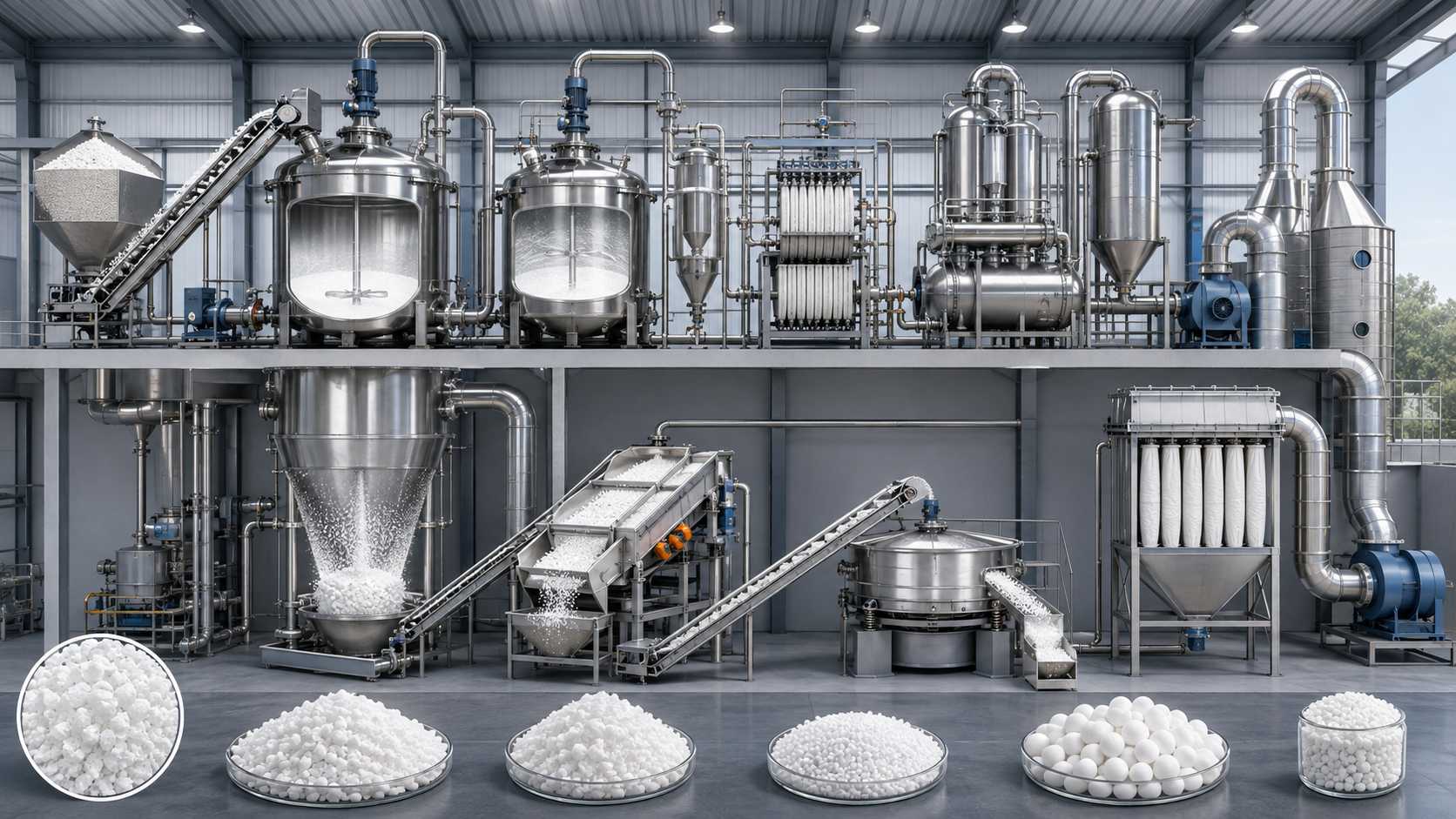
An anhydrous calcium chloride production line takes calcium-bearing raw material and hydrochloric acid and turns them into a dry, free-flowing industrial product. The basic chemistry looks simple. Yet steady production is hard. Water has to leave the material without heavy caking. Corrosion needs tight control. The final granules must show steady purity, moisture level, and size.
The complete calcium chloride production includes reaction, clarification, evaporation, drying, granulation, cooling, screening, dust collection, and packing. Insufficient reaction control may result in a high content of impurities entering the evaporator. It may also cause the formation of deposits inside the dryer.
Why Anhydrous Calcium Chloride Needs a Dedicated Process
Anhydrous CaCl2 absorbs moisture from air extremely quickly. The production process should thus include a proper drying. Protection from humidity during all the stages until the material is packed in sealed bags is also required.
It is used for road deicing, dust suppression, oilfield fluids, desiccants, refrigeration brines, chemical processes, and concrete acceleration if applicable. Buyers for road deicing prefer large granules. Buyers for desiccants pay more attention to moisture content. Buyers for oilfield fluids consider purity and insolubles and solution clarity.
Calcium Chloride Manufacturing Process
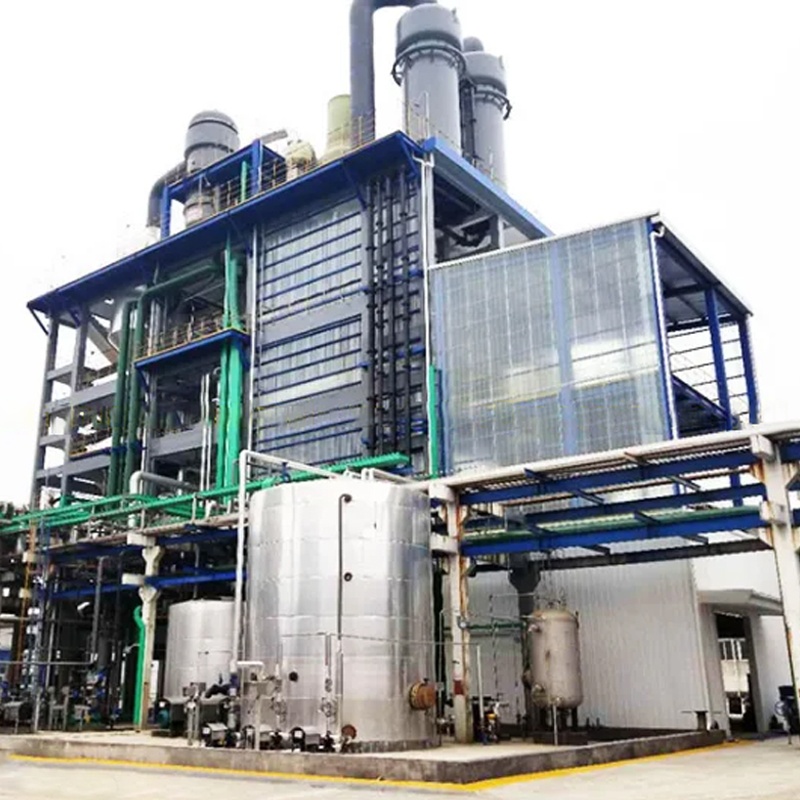
The usual hydrochloric acid and limestone path starts with neutralization:
CaCO3 + 2HCl → CaCl2 + CO2 + H2O
Good commercial quality rests on raw material checks, careful acid dosing, pH control, solids removal, and steady water evaporation.
Raw Material Preparation and Reaction
Crushed limestone goes into a reactor. Hydrochloric acid is added at a steady rate. By-product acid can change in strength, so the feed system must handle shifting conditions.
Operators watch temperature, pH, acid flow, and gas release. Too much acid raises corrosion risk and can harm product quality. Too much limestone leaves unreacted solids. The reactor and pipes need materials that stand up to acidic, chloride-rich conditions. Carbon dioxide also needs proper venting.
Clarification and Filtration
Fresh calcium chloride liquor often holds fine limestone, insoluble minerals, and reaction leftovers. Settling, clarification, and filtration take these solids out before evaporation starts.
Dirty liquor can foul heat-transfer surfaces. It can block spray nozzles. It can also leave particles in the finished product. Filters that workers can reach easily cut cleaning time.
Evaporation and Concentration
Clarified solution is thickened before drying. Sending thin liquor straight to the dryer wastes heat. Too much water would have to leave in one step.
The evaporation system raises CaCl2 strength while keeping boiling and scale under control. Steam pressure, circulation, residence time, and clean heat exchangers all affect output. Multi-effect evaporation or heat recovery can cut steam use.
Concentrated calcium chloride is hot and thick. It tends to form crystals as it cools. Insulated lines, heated tanks, short transfer paths, and circulation loops help stop blockages during slow periods or shutdowns.
Spray Fluidized Bed Drying and Granulation
In a spray fluidized bed granulator, thick liquor is sprayed onto moving seed particles. Hot air keeps the bed fluidized while water leaves. Repeated spraying and drying build the particles layer by layer.
The large contact area gives strong heat and mass transfer. Air temperature, bed temperature, spray rate, droplet size, and residence time must stay in balance. Too much liquid makes wet clumps. Weak fluidization causes deposits.
A well-made air distributor keeps particles moving. It also lets oversized material leave the bed. Automatic control helps because feed moisture and flow often shift during normal work.
Cooling, Screening, and Packing
Hot granules are cooled and screened. Good product goes to packing. Off-size material may be crushed, returned as seed, or dissolved again.
Packing must keep humid air out. Lined bags, sealed conveyors, covered hoppers, and dry storage lower the chance of caking. Warm granules should not sit open after drying.
Main Equipment in a Calcium Chloride Plant
Each unit should be sized from one mass and energy balance.
| Process section | Typical equipment | Main control point |
|---|---|---|
| Reaction | Feeder, acid dosing unit, reactor | pH and acid flow |
| Purification | Settler, clarifier, filter | Insoluble solids |
| Концентрация | Evaporator, pump, heated tank | Liquor concentration |
| Granulation | Atomizer, fluidized bed dryer, air heater | Bed temperature |
| Finishing | Cooler, screen, recycle system, packer | Size and moisture |
| Emission control | Dust collector, scrubber, exhaust fan | Dust and acid mist |
The line also needs utilities, instruments, valves, and safety interlocks.
Product Quality and Operating Risks
A calcium chloride production process is judged by purity, moisture, particle strength, insoluble content, and bulk density. Capacity alone is not enough.
Common operating risks include:
- Caking in tanks and pipes after cooling
- Scale on evaporator surfaces
- Nozzle blockage from suspended solids
- Wet agglomerates caused by high spray loading
- Dust loss during screening and packing
- Corrosion near acid storage, reactors, pumps, and valves
Heated circulation, easy cleaning points, proper construction materials, steady air distribution, and dust capture lower these problems. Maintenance access matters as much as equipment price. Poor access raises upkeep cost and downtime.
Energy Use and Environmental Control
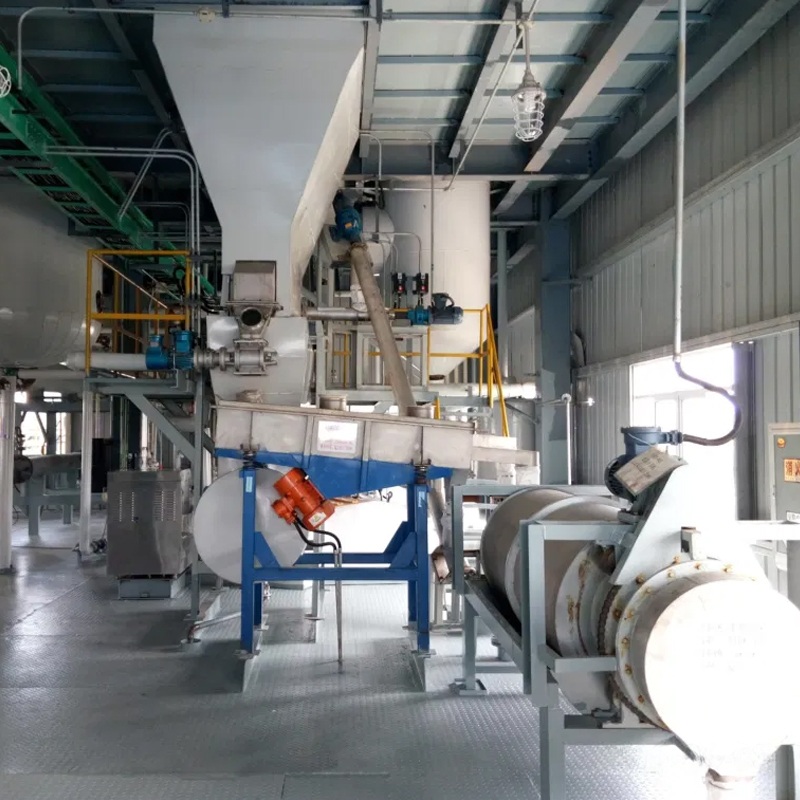
Typically, drying is the most energy-consuming process within an anhydrous calcium chloride manufacturing line. More removal of moisture in evaporation is cheaper compared to its removal during drying. Good insulation, constant strength of material feed, heat recovery, and heat-exchange surfaces cleaning reduce steam/fuel consumption.
Dryer exhaust may carry calcium chloride dust and mild acid traces. Dust collection and wet scrubbing clean the gas and may recover material. The exact setup depends on local limits and the quality of the raw acid.
Wash liquor and wastewater should be planned early. Suitable streams may return to the process. This cuts salt loss and lowers the load on wastewater treatment.
Choosing the Right Calcium Chloride Production Line
A supplier cannot pick equipment from yearly capacity alone. A useful project brief should include:
- Product form: solution, flakes, powder, or granules
- Target purity, moisture, and particle size
- Hydrochloric acid source, concentration, and impurities
- Limestone composition
- Operating hours and maintenance schedule
- Available steam, fuel, electricity, water, and space
- Local dust, acid mist, wastewater, and noise limits
Two plants with the same output may need different equipment. Cheap steam may favor one evaporation layout. A remote site may prefer fewer moving parts. Selection should follow real operating conditions.
Hebei Aoliande as a Calcium Chloride Production Line Supplier
Хэбэй Aoliande Chemical Equipment Co., LTD. supplies calcium chloride production line engineering and equipment for hydrochloric acid and limestone projects.The company specializes in providing a range of solutions from calcium chloride liquor preparation to drying and granulation, including piping, electricity, instrumentation, valves, and utilities design.
The company joins manufacturing with material, structural, and process design. Services may include technical talks, material supply, transport, and installation guidance. Its spray fluidized bed systems support automatic running and different production targets, with washing and related exhaust controls.
Вывод
A steady anhydrous calcium chloride plant rests on careful control from reaction to sealed packing. Filtration protects later equipment. Evaporation carries much of the water-removal work. Spray fluidized bed granulation shapes the final product. Buyers who compare a turnkey calcium chloride plant should look at raw materials, product specs, energy supply, emission rules, maintenance access, and recycle plans as one linked system.
Часто задаваемые вопросы
What raw materials are used in an anhydrous calcium chloride production line?
A common route uses limestone or another calcium carbonate source with hydrochloric acid. The reaction makes calcium chloride liquor, carbon dioxide, and water.
How is anhydrous calcium chloride produced from solution?
The liquor is clarified, filtered, concentrated, and dried. For granular product, concentrated solution is sprayed into a fluidized bed. Water leaves and particles grow in layers.
Why use spray fluidized bed granulation?
It gives close contact between hot air and moving particles. This supports efficient drying, controlled granule growth, steady running, and recycle of some off-size material.
What information is needed for a calcium chloride plant quotation?
Suppliers usually need capacity, raw acid analysis, limestone analysis, final purity, product form, particle size, utility conditions, environmental limits, site location, and supply scope.