
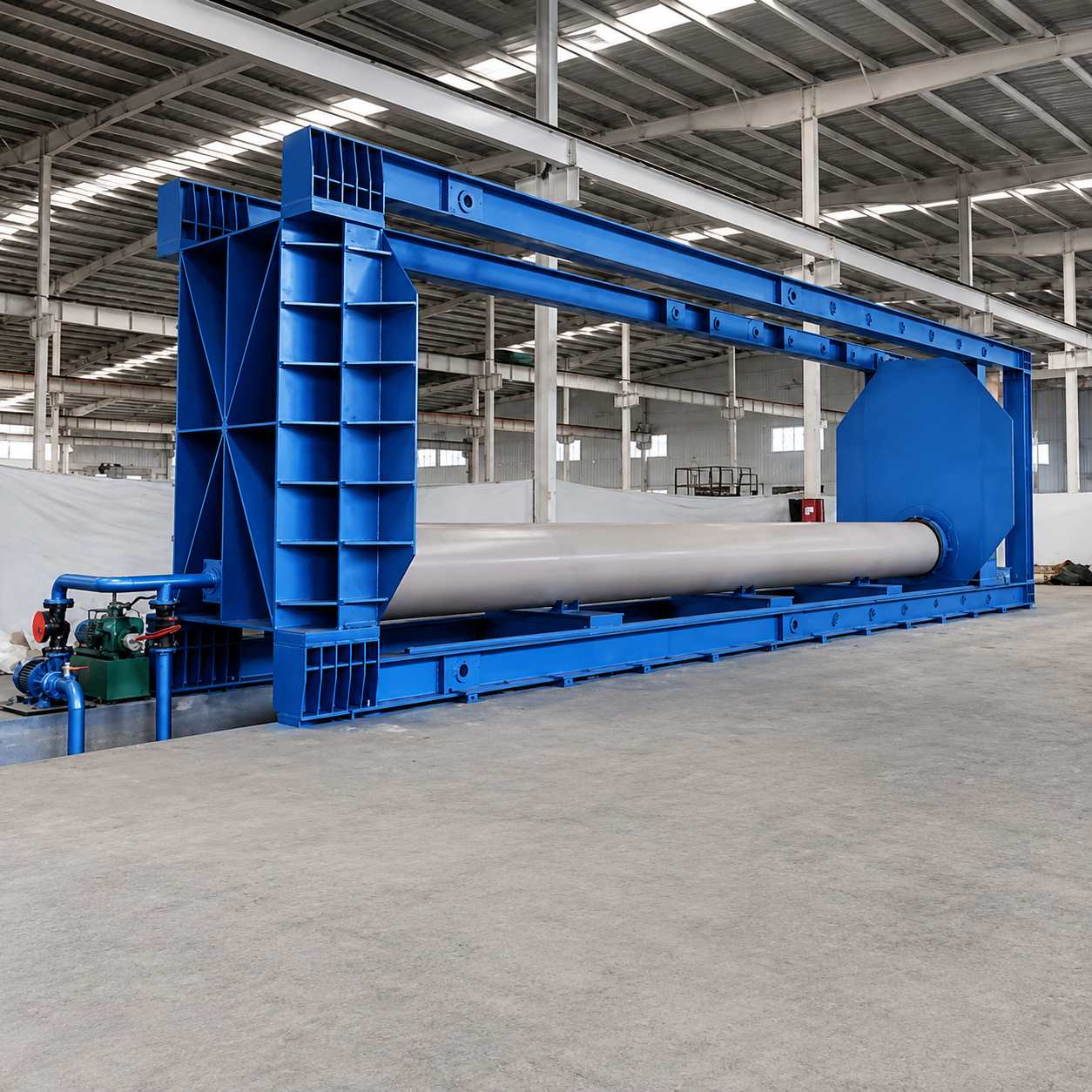
FRP pipes are often chosen for water supply, drainage, sewage treatment, irrigation, chemical transport, and industrial wastewater projects because they combine corrosion resistance with a light but strong composite structure. In many factories, pipe quality starts with a computer controlled filament winding process. Fiberglass roving is soaked with resin, wound around a mandrel, cured, trimmed, and demoulded before final inspection.
Yet a pipe that looks smooth from the outside may still carry hidden risks. A small liner pinhole, poor resin wet-out, uneven roving tension, weak pipe-end sealing, or local wall thickness variation may not appear during visual inspection. These problems usually show up only when the pipe is placed under internal pressure.
This is why FRP pipe hydrostatic pressure testing is a key step after filament winding. It turns manufacturing quality into measurable performance. For buyers, project contractors, and pipe manufacturers, the test answers one direct question: can this filament wound FRP pipe hold pressure without leakage, weeping, or early structural weakness?
Why Does Filament Winding Quality Need Hydrostatic Testing?
Filament winding builds the main strength of an FRP pipe. The winding angle, roving tension, resin content, liner quality, sand layer distribution, and curing result all affect the final pressure resistance of the pipe. A stable winding process can produce a strong composite wall, but final testing is still needed because production conditions change during real factory operation.
A resin batch may have a different viscosity on a cold morning. The liner may trap air if forming speed is too high. A carriage movement error may create a small gap in fiber coverage. Curing may also vary when pipe diameter, wall thickness, or production rhythm changes.
Hydrostatic pressure testing checks the pipe under water pressure rather than relying only on appearance. It helps reveal defects that cannot be judged by touch or sight.
Visual Inspection Is Not Enough
Visual inspection is useful for checking surface scratches, exposed fiber, poor trimming, end damage, and obvious cracks. Dimension checks are also needed for diameter, length, wall thickness, and pipe-end shape.
But visual inspection cannot fully judge:
| Hidden issue | Possible production cause | What pressure testing may show |
|---|---|---|
| Liner pinholes | Air bubbles or low resin coverage | Small leakage points |
| Poor fiber wet-out | Resin flow or roving tension problems | Weeping through pipe wall |
| Layer separation | Weak bonding between layers | Local swelling or pressure loss |
| Weak pipe ends | Poor trimming or sealing surface | Leakage at both ends |
| Uneven wall strength | Winding angle or tension variation | Unstable pressure holding |
For this reason, hydrostatic testing should be seen as part of FRP pipe quality control, not just a final formality before delivery.
What Problems Can Hydrostatic Pressure Testing Find in FRP Pipes?
A good hydrostatic pressure test does more than show whether a pipe passes or fails. It gives production teams useful clues about where the filament winding process needs adjustment.
Leakage at Weak Liner Areas
The liner is the first barrier against water or chemical media. If the liner has pinholes, trapped air, weak resin coverage, or local damage, leakage may appear once internal pressure rises.
In many pipe plants, liner defects are one of the first issues found during an FRP pipe leakage test. The pipe wall may look clean, but water may seep from a tiny point after pressure holding. This usually means the liner forming process, resin ratio, curing time, or surface preparation needs closer control.
Weeping Through the Pipe Wall
Weeping is different from a large leak. It may appear as a damp area on the outer surface of the pipe. This can happen when fiberglass roving is not fully soaked with resin, when resin content is too low, or when fiber arrangement leaves weak paths through the wall.
For pressure pipes used in municipal water, sewage treatment, or industrial pipelines, weeping is a serious warning sign. Even if the pipe does not burst, long-term service may become unreliable.
Poor Bonding Between Layers
Many FRP pipes include a liner layer, structural layer, and sometimes a sand or mortar layer for stiffness. If the bond between layers is weak, pressure may expose local separation, swelling, or abnormal deformation.
This issue is closely linked to timing between process steps. If one layer cures too much before the next layer is added, bonding can suffer. If resin distribution is not even, the problem may repeat across a batch.
Uneven Winding Tension
Roving tension affects wall compactness and fiber placement. Too much tension can squeeze out resin or distort the layer. Too little tension can create loose fibers and weak coverage. Hydrostatic pressure testing helps reveal whether the wound structure behaves consistently under pressure.
When several pipes from the same production batch show different pressure holding results, the winding tension system, carriage movement, mandrel rotation, and control settings should be checked together.
Weak Socket or Pipe-End Sealing
Pipe-end leakage is common when trimming, end shaping, or sealing surfaces are not well controlled. During hydrostatic testing, water pressure often finds the weakest point first. If leakage appears near the end, the problem may not be the pipe body. It may come from the test seal, the pipe end, or poor edge finishing.
How Hydrostatic Testing Fits Into the FRP Pipe Production Line
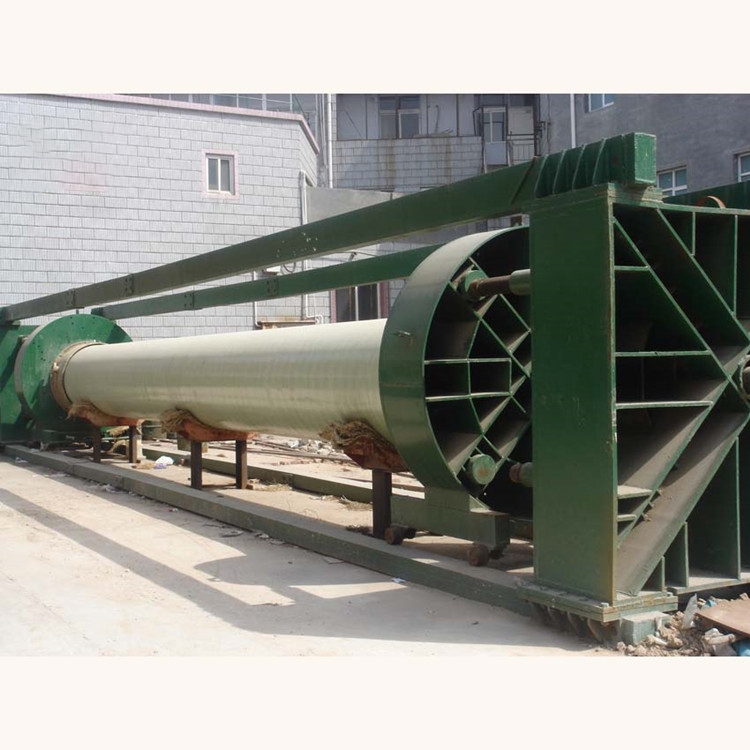
In a complete FRP pipe production line, hydrostatic testing usually comes after forming, curing, trimming, and demoulding. It is a quality gate before storage, delivery, or project installation.
A typical workflow looks like this:
- Inner liner forming
- Computer controlled filament winding
- Resin and fiberglass reinforcement
- Sand or mortar layer addition when required
- Curing
- Trimming and demoulding
- Dimensional inspection
- FRP pipe hydrostatic pressure testing
- Final marking, storage, and shipment
This order matters. If a pipe is tested before it has reached proper curing strength, the result may be misleading. If the pipe is trimmed poorly after testing, the pipe end may still become a risk point. Testing should be linked with the full production process rather than treated as a separate machine operation.
For manufacturers producing different pipe diameters, pressure ratings, or wall structures, test records also help build a production database. Over time, the team can compare leakage points, pressure holding time, pipe size, resin batches, winding parameters, and curing conditions. These records are valuable for reducing repeat defects.
What Happens During an FRP Pipe Hydrostatic Pressure Test?
The basic test process is simple, but details make a big difference. Poor sealing, trapped air, unstable water supply, or fast pressurization can cause false results or unsafe operation.
The Common Testing Process
The usual FRP pipe pressure testing process includes:
- Place the pipe securely on the test machine.
- Seal both pipe ends with suitable fixtures.
- Fill the pipe with clean water.
- Remove trapped air from the pipe body.
- Raise pressure gradually.
- Hold pressure based on the required test rule or customer specification.
- Check the pipe wall, ends, joints, and pressure gauge.
- Record leakage, pressure drop, visible deformation, and test time.
Water is used because it is far safer than compressed air under high pressure. If a defect appears, water pressure testing helps operators find leaks with lower risk.
Why Air Removal Matters?
Trapped air can affect the result. Air compresses under pressure, while water barely compresses. If air remains inside the pipe, pressure behavior may become unstable. It can also create safety risks during sudden failure. Before the pressure holding stage, operators should give enough time for air discharge.
How Does Testing Improve Filament Winding Parameters?
Hydrostatic testing is most useful when the results are fed back into production. A failed test should not be treated only as a rejected pipe. It is a message from the process.
If leakage appears along the liner, the team may need to adjust liner resin content, forming speed, curing condition, or surface cleaning. If weeping appears in the structural layer, roving wet-out and resin bath conditions should be checked. If the pipe fails near the end, trimming accuracy and sealing surface quality need attention.
For computer controlled filament winding, pressure test results can also point to control issues. Repeated weak areas may relate to winding angle, carriage speed, mandrel rotation, roving distribution, or tension control. A small parameter change may reduce scrap in the next batch.
This is especially important for large-diameter FRP pipes. A single rejected pipe means wasted resin, fiberglass, labor time, curing space, and delivery schedule. Consistent testing helps plants find problems earlier and cut hidden production cost.
Why Equipment Accuracy Matters in FRP Pipe Pressure Testing
A hydrostatic pressure testing machine must match the pipe size range, pressure requirement, factory layout, and daily production rhythm. If the testing equipment is too slow or difficult to seal, it can become a bottleneck. If pressure control is unstable, test results may not be trusted by production managers or project buyers.
For medium and large FRP pipe manufacturing, equipment selection should focus on:
- Suitable pipe diameter range
- Stable hydraulic pressure output
- Reliable end sealing structure
- Efficient water filling and drainage
- Easy operation for factory workers
- Clear pressure reading and test recording
- Safe layout around high-pressure areas
- Simple maintenance for pumps, seals, and fixtures
A practical FRP pipe testing machine should also support repeated use in real factory conditions. Dust, resin residue, wet floors, large pipe handling, and different pipe lengths are all part of daily operation. Fancy functions matter less than stable pressure, safe clamping, and fast changeover.
Which Industries Rely on Tested FRP Pipes?
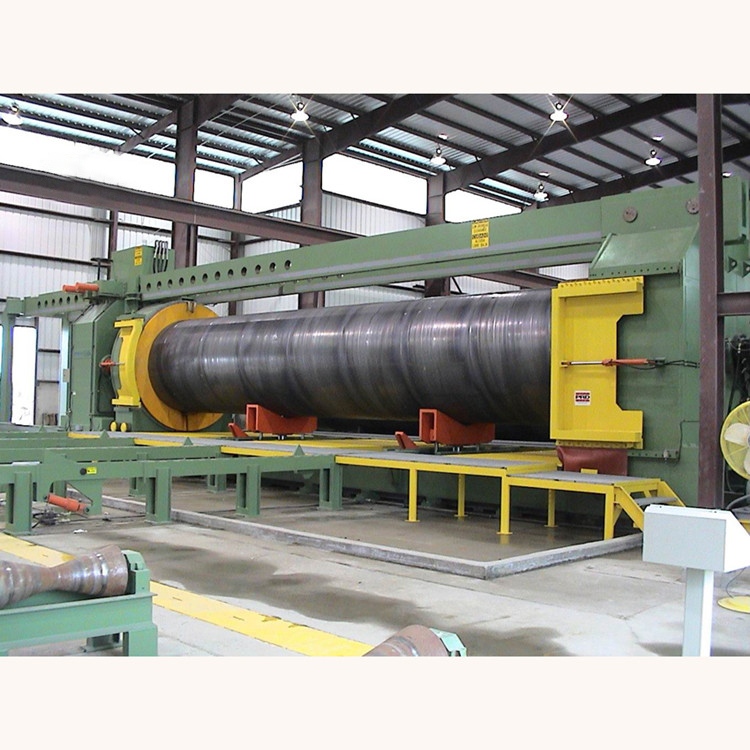
Hydrostatic testing becomes more important when the pipe is used in pressure service, buried pipelines, corrosive media, or public infrastructure. In these projects, a leak does not only mean product failure. It can cause site delay, repair cost, environmental risk, or damage to the supplier’s reputation.
Common application scenes include:
Municipal Water Supply and Drainage
FRP pipes used for water transmission and drainage must keep stable performance over long pipe runs. Hydrostatic testing helps confirm leak resistance before pipes reach the site.
Sewage Treatment Plants
Wastewater pipelines often face corrosive gases, sludge, and changing flow conditions. A tested pipe gives contractors more confidence before installation in tanks, channels, and underground networks.
Agricultural Irrigation
Large irrigation projects need pipes that can handle pressure changes during pumping and valve operation. Pressure testing helps reduce field leakage after installation.
Chemical and Industrial Wastewater Systems
Chemical plants and industrial parks often choose corrosion resistant FRP pipes. Hydrostatic pressure testing is useful for checking the pipe body before it enters a harsh service environment.
Seawater and Coastal Projects
Saltwater service places extra demand on corrosion resistance and pipe wall quality. Testing before delivery helps screen weak pipes before transport and installation.
How to Choose a Hydrostatic Pressure Testing Machine for FRP Pipe Production?
Choosing a hydrostatic pressure testing machine is not only a price decision. The machine must fit the pipe products being made today and the product range planned for the next few years.
Before ordering equipment, buyers should check several points.
| Buying factor | Why it matters |
|---|---|
| Diameter range | The machine should cover regular pipe sizes and future orders |
| Pressure capacity | The system must match the pipe pressure class and test requirement |
| Sealing method | Poor sealing wastes time and may create false leakage |
| Water supply capacity | Faster filling improves daily testing efficiency |
| Operation layout | Operators need safe space for pipe loading and inspection |
| Maintenance access | Pumps, seals, and fixtures need routine service |
| Production rhythm | Testing speed should match winding and curing output |
| Supplier support | Installation, training, and spare parts affect long-term use |
For buyers building a new FRP pipe production line, the testing machine should be discussed together with filament winding equipment, curing stations, trimming machines, mandrels, resin mixing systems, and material handling. A balanced line is easier to run than a collection of machines chosen one by one.
Hebei Aoliande as an FRP Pipe Hydrostatic Pressure Testing Machine Supplier
Хэбэй Aoliande Chemical Equipment Co., LTD. manufactures equipment for chemical production lines and FRP composite product manufacturing, including FRP pipe filament winding machines, FRP tank filament winding machines, molded grating machines, pultrusion machines, rebar machines, molds, and pipe testing equipment.
As an FRP pipe hydrostatic pressure testing machine supplier, the company serves manufacturers that need practical equipment for leakage inspection, production quality control, and pipe delivery checks. Its product range supports both individual machine purchasing and more complete FRP pipe production line planning. This is useful for buyers who need equipment matching, technical advice, installation guidance, and production support rather than only a single machine quote.
For factories entering FRP pipe manufacturing, supplier experience matters. Pipe winding, curing, demoulding, trimming, and pressure testing are closely connected. A supplier familiar with the full production route can help buyers reduce layout mistakes, improve start-up efficiency, and build a more stable quality control process.
Вывод
Hydrostatic pressure testing is not a simple pass-or-fail step at the end of FRP pipe production. It is one of the clearest ways to check whether filament winding quality has become real pressure performance. It can reveal liner leakage, wall weeping, layer bonding problems, pipe-end sealing defects, and unstable winding results.
For pipe manufacturers, every pressure test creates useful feedback. When the results are connected with resin content, winding angle, roving tension, curing time, and trimming quality, the whole production line becomes easier to control. For buyers and project contractors, tested FRP pipes bring more confidence before shipment, installation, and long-term use.
A reliable FRP pipe hydrostatic pressure testing machine helps close the gap between production and performance. In markets where water, sewage, chemical, irrigation, and industrial pipelines must work safely for years, that quality check is not optional. It is part of responsible FRP pipe manufacturing.
Часто задаваемые вопросы
What is FRP pipe hydrostatic pressure testing?
FRP pipe hydrostatic pressure testing is a quality inspection method that fills the pipe with water, raises internal pressure, holds pressure for a required period, and checks for leakage, weeping, pressure drop, or visible damage.
Why is hydrostatic testing important after filament winding?
Filament winding creates the pipe’s main structure, but hidden defects may remain after curing and demoulding. Hydrostatic testing checks whether the filament wound FRP pipe can hold pressure in real service conditions.
What defects can an FRP pipe leakage test find?
An FRP pipe leakage test can reveal liner pinholes, poor resin impregnation, weak bonding between layers, uneven roving tension, pipe wall weeping, and leakage near pipe ends or sealing areas.
Can visual inspection replace hydrostatic pressure testing?
No. Visual inspection can find surface defects, scratches, poor trimming, and obvious damage, but it cannot fully prove pressure resistance. FRP pipe quality control should combine visual checks, dimensional checks, and hydrostatic pressure testing.
How should buyers choose FRP pipe testing equipment?
Buyers should check pipe diameter range, pressure capacity, sealing structure, water filling speed, safety design, maintenance needs, and compatibility with the full FRP pipe production line.