
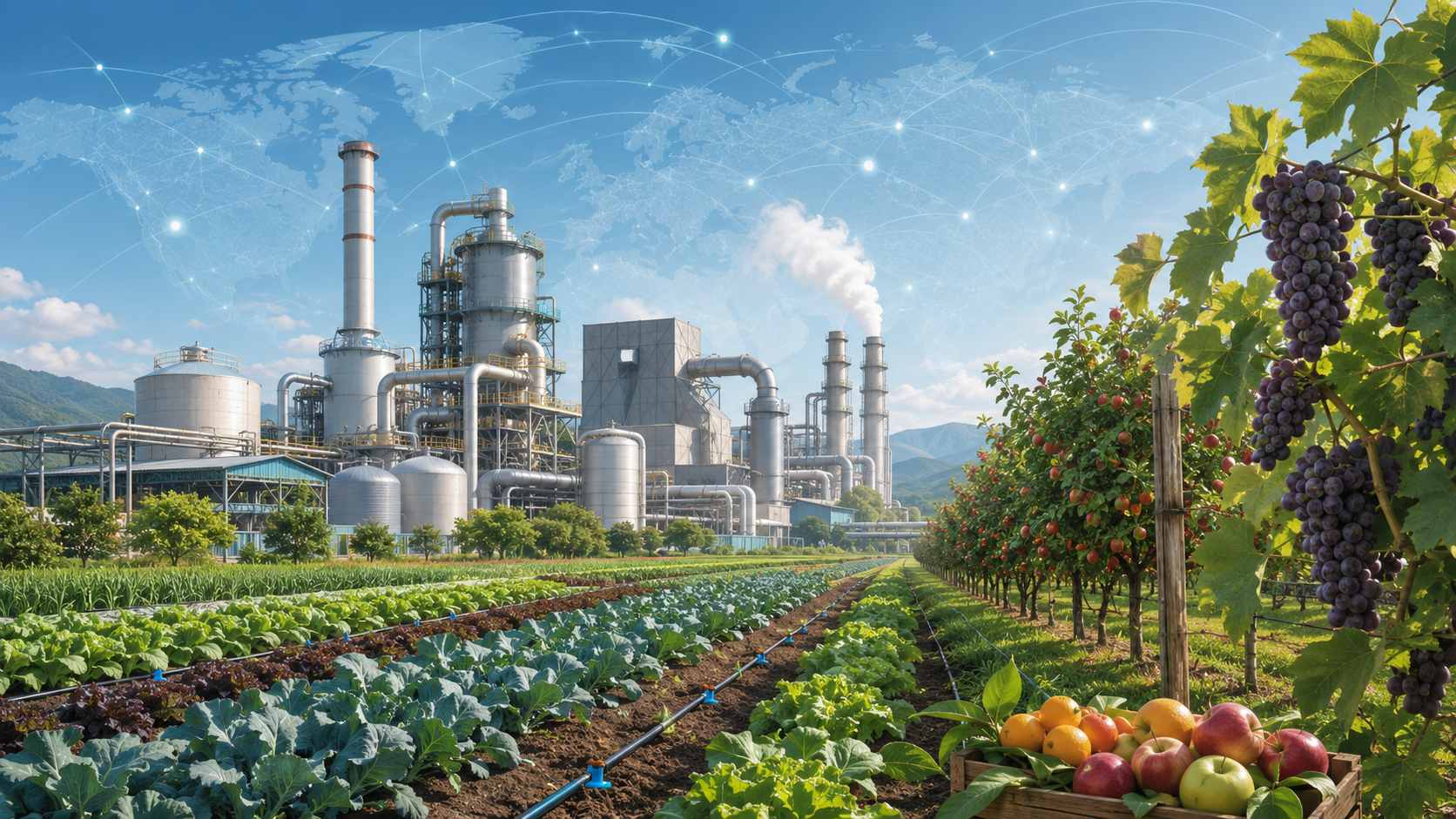
The global potassium sulfate market is entering a more selective stage. Demand is no longer driven only by potassium content. Growers, fertilizer producers, and chemical investors are paying closer attention to crop quality, chloride limits, water-soluble nutrition, regional supply security, and cleaner production. For businesses planning an SOP production plant or reviewing a potassium sulfate production line, future gains will depend on product quality, energy cost, by-product recovery, and stable operation.
Why Potassium Sulfate Holds a Premium Position
Potassium sulfate, commonly known as sulfate of potash or SOP, is a plant nutrient that contains potassium and sulfur. While it is a different type of fertilizer than potassium chloride it can be used as a substitute in many instances. For certain crops, the taste, color and shelf life are affected by high chloride levels in the soil. For others, there is a risk of plant burn, or even salt stress, all of which can affect price and yield.
When SOP is positioned as a premium product the strongest markets are those where crops have high value and where defects cause significant loss in market income. Table grape farm, tobacco estate, green house vegetable project and orchard are examples where growers would be prepared to pay a premium for a low-chloride potassium fertilizer since poor fruit development, dull color or low sugar content all result in lower market returns.
Where SOP Demand Is Most Visible
Potassium demand is quite evident in fruits, vegetables, tobacco, potatoes, tea, coffee, tree nuts, flowers and the many different types of greenhouse crops. All of these commodities require a constant supply of potassium during times such as when fruits are filling, leaves are developing and a crop is flowering. Many of these commodities are being grown using irrigation such as drip and fertigation where a water-soluble fertilizer can be fed to the crop on a regular basis throughout the season in small amounts.
For fertilizer producers there are two markets. One is for the standard SOP fertilizer. The other is for refined fertilizers, like those for use with drip irrigation, foliar feeding, soilless cultivation and other applications as well as for specialty blends.
Market Forces Shaping the Next Stage
The sulfate of potash market is expected to develop steadily, however not equally for all regions of the world. Areas with an increase in fruit and vegetables will be joined by protected agriculture and more strict food export regulations, all of which will require SOP. In many regions dependent on import of potash, investment in a local SOP plant could help to mitigate problems caused by high freight costs, by rapid changes in energy prices or by price jumps in general.
Demand, Price, and Supply Are Now Linked More Tightly
SOP is a premium fertilizer and thus farmers are generally watching crop prices. So when fruit, nut and vegetable prices are high farmers are willing to pay for a top quality potassium sulfate fertilizer. However when farm margins are tight some farmers will delay their purchase of SOP and use other potassium bearing products in the interim.
A plant for the production of potassium sulfate for manufacturers is more than just a plant with a given nameplate capacity. In addition to a stable supply of raw materials a clear customer base and the adequate handling of by-products a potassium sulfate plant has to have the appropriate production costs. These are influenced by the potassium chloride and sulfuric acid prices and by the supply of the acids as well as by the heat required for the Mannheim process and the possibility of recovery of HCl and other by-products as well as by labor and environmental costs.
| Market trend | What it means for buyers | Business impact |
| Chloride-sensitive crops | More need for SOP fertilizer | Better demand for stable SOP output |
| Fertigation growth | More water-soluble fertilizer use | New value beyond bulk fertilizer |
| Raw material swings | KCl and acid costs move margins | Sourcing plans become critical |
| Environmental rules | HCl and waste gas face more review | Older plants may need upgrades |
| Regional supply risks | Imports may be costly or delayed | Local SOP projects gain interest |
Production Technology Will Decide Margins
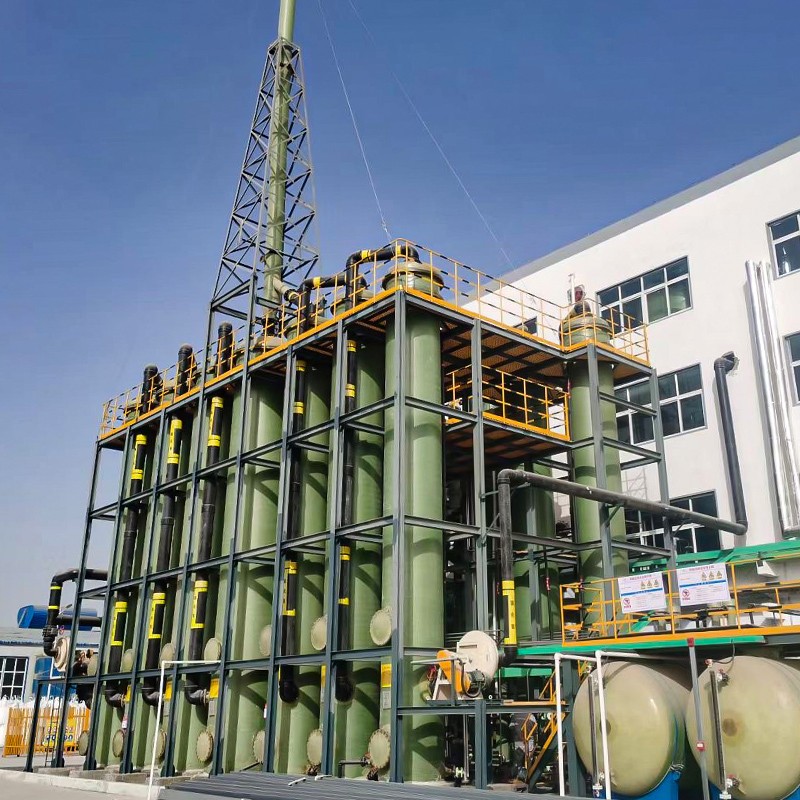
Market demand creates a opportunity which technology can turn into profit. In the Mannheim process for the production of potassium sulfate, this reaction takes place at high temperature: 2 KCl + H2SO4 → K2SO4 + 2 HCl. In practical terms this process is much more complex.
In a Mannheim furnace it is necessary to maintain a constant heat distribution in order to avoid problems such as incomplete reaction, corrosion and problems with the continuous removal of material from the furnace. Incomplete reaction and corrosion can be caused by uneven furnace temperature. This results in higher fuel costs, less consistent products, more maintenance and increased stress on operators. In addition, problems with the absorption and recovery of HCl gas must be prevented.
What a Modern Potassium Sulfate Production Line Needs
A serious buyer wants to look behind the furnace shell, that is behind the production process as a whole. He wants to review the connected processes of the plant to check if production according to SOP is carried out in an efficient and optimal way.
- Furnace structure, heat transfer design, and refractory performance
- Feed ratio control for potassium chloride and sulfuric acid
- Corrosion-resistant materials in key contact sections
- HCl absorption and waste recovery system
- PLC automatic control for stable operation and lower labor pressure
- Dust, acid mist, and waste gas treatment
- Installation support, operator training, and commissioning guidance
Improving the flue system, better control of the feed to the reaction, a stouter HCl recovery section – all these make a difficult by-product into a valuable chemical feedstock. Details such as these have large effects on years of operation: fuel cost, down time, repair cost and customer complaints.
From SOP Fertilizer to Integrated Chemical Projects
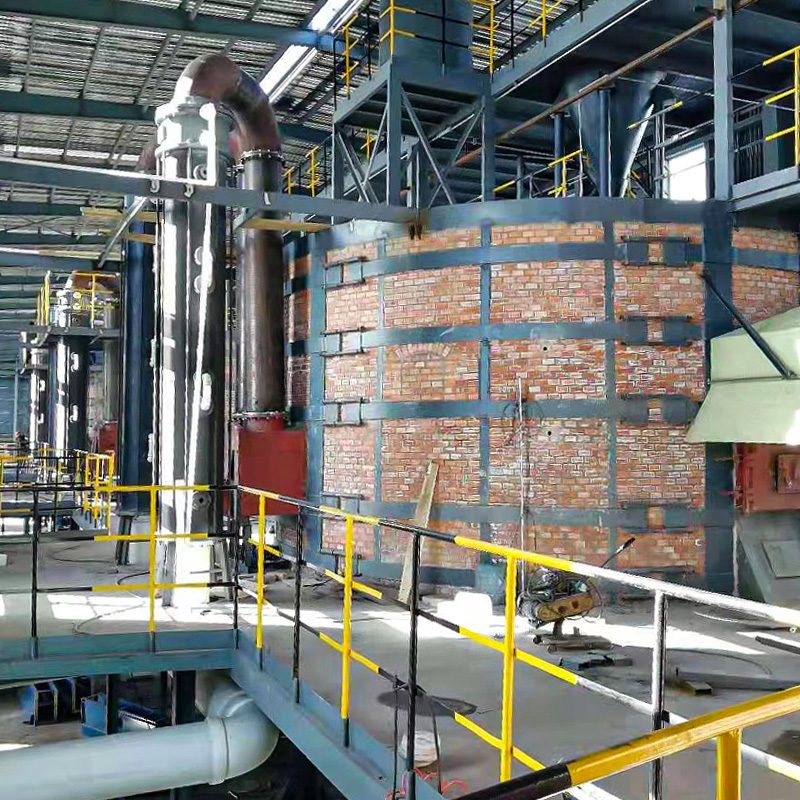
The future of the global potassium sulfate market is not merely in selling a single type of fertilizer. Many investors are planning the overall production facilities. A manufacturer of SOP will need, for example, a supplier of sulfuric acid, a handler of hydrochloric acid, a producer of water-soluble fertilizers, and possibly other chemical productions.
By including a production line for the manufacture of sulfuric acid a manufacturer can support feedstock stability should local acid supply be restricted or prove too expensive. A production line for the manufacture of water-soluble fertilizers can be used to make up a wide variety of formulas using ingredients such as SOP, nitrogen, phosphate and trace elements to name but a few. These can be supplied in a number of different formats for use in drip irrigation and foliar spraying to customized formulas for use by bulk dealers, farmers and distributors alike.
In some regions, production of Calcium chloride can also be included in a chemical production plan. In these cases, the production of hydrochloric acid has to be utilized. Investors are not only interested in the amount of SOP that can be produced with the available raw materials, but also how the raw materials and by-products can be stored, packed and blended with downstream fertilizer products.
A Practical Buyer Checklist
When buying a production line for the manufacture of potassium sulfate it is sensible to compare the designer’s ideas with real life on the market and in the factory.
- Is the target product standard SOP, industrial K2SO4, water-soluble grade, or sodium sulfate?
- Can local suppliers provide potassium chloride and sulfuric acid at predictable quality?
- Is there a market for recovered hydrochloric acid?
- What fuel will be used, and how sensitive is the project to energy price changes?
- Does the supplier provide process design, equipment supply, transportation, installation guidance, and trial production support?
- Can the layout leave space for later fertilizer blending?
Our specification questions provide a way to reduce risk when buying seemingly attractive equipment that in reality is not able to be effectively operated in local circumstances.
Hebei Aoliande as an SOP Plant Supplier
Хэбэй Aoliande Chemical Equipment Co., LTD. offers Mannheim Process Potassium/Sodium Sulfate Production Line SOP Plant solutions to fertilizer and chemical manufacturers. The company also provides the full production line for potassium/sodium sulfate, sulfuric acid, calcium chloride, water-soluble fertilizer, HPMC, and FRP/GRP production equipment.
Mannheim process solution in practical plant operation: furnace structure improvement, even heating, complete reaction, low energy requirement, corrosion resistant main components, HCl recovery, improved absorption, PLC-controlled process, stable process conditions, easy operation on a daily basis. Consultation, technology transfer, plant design, delivery, transportation, plant start-up, commissioning. This complete solution for a new SOP production plant on the basis of practical plant operation saves a lot of time for the buyer during the start-up phase.
In addition to the production of feed quality for plants Aoliande also operates a potassium fertilizer factory in Inner Mongolia. Here an annual output of 160,000 tons of potassium sulfate and 200,000 tons of hydrochloric acid is produced. Thus potential buyers of the Mannheim furnace operation, by-product recovery, plant layout and long-term production management are given a useful reference point.
Вывод
The global market for potassium sulfate is becoming more technical, more regional and more quality-oriented. SOP-fertilizers will continue to play a significant role in chloride sensitive crops, in high value agriculture, in fertigation as well as in production of water-soluble fertilizers.
Instead of just increasing the production capacity of a company entering the market, it is better to set up a potassium sulfate production line that fits the local production of raw materials, the demand for main crops, the outlet for the by-products as well as the future blending of fertilizers. A well-designed production line with Mannheim process SOP production line know-how can function as a fertilizer production unit and as a chemical production unit.
Часто задаваемые вопросы
What is driving growth in the global potassium sulfate market?
Growth is driven mainly by crops requiring chloride to be limited, by high value fruits and vegetables and by greenhouses. The growth is further fueled by the trend towards fertigation and the demand for low chloride potassium fertilizers, such as SOP, which is preferred when crop quality and market value are more important than lowest cost of nutrients.
Why is the Mannheim process widely used for potassium sulfate production?
The Mannheim process is a process to produce potassium sulfate and hydrogen chloride by reaction of potassium chloride and sulfuric acid. The process is wide spread, since the used raw materials are common and in large amounts available. Large amounts of SOP are produced by this process. The greatest problems of the process are the amount of energy, the corrosion, the furnace must work stable and the recovery of the HCl.
How should a buyer choose a potassium sulfate production line?
A buyer should review furnace design, feed control, HCl absorption, energy consumption, corrosion-resistant materials, automation level, installation support, and after-sales service. The best choice depends on annual output, raw material supply, environmental rules, and the target SOP fertilizer market.
Can SOP production be combined with other fertilizer or chemical projects?
Many producers associate SOP production with the supply of sulfuric acid for other water-soluble fertilizers and the processing of hydrochloric acid and/or calcium chloride into fertilizers. Integrated planning can make better use of the raw materials and also increases the value added by by-products in the long term and also the flexibility of a factory in the long term.