
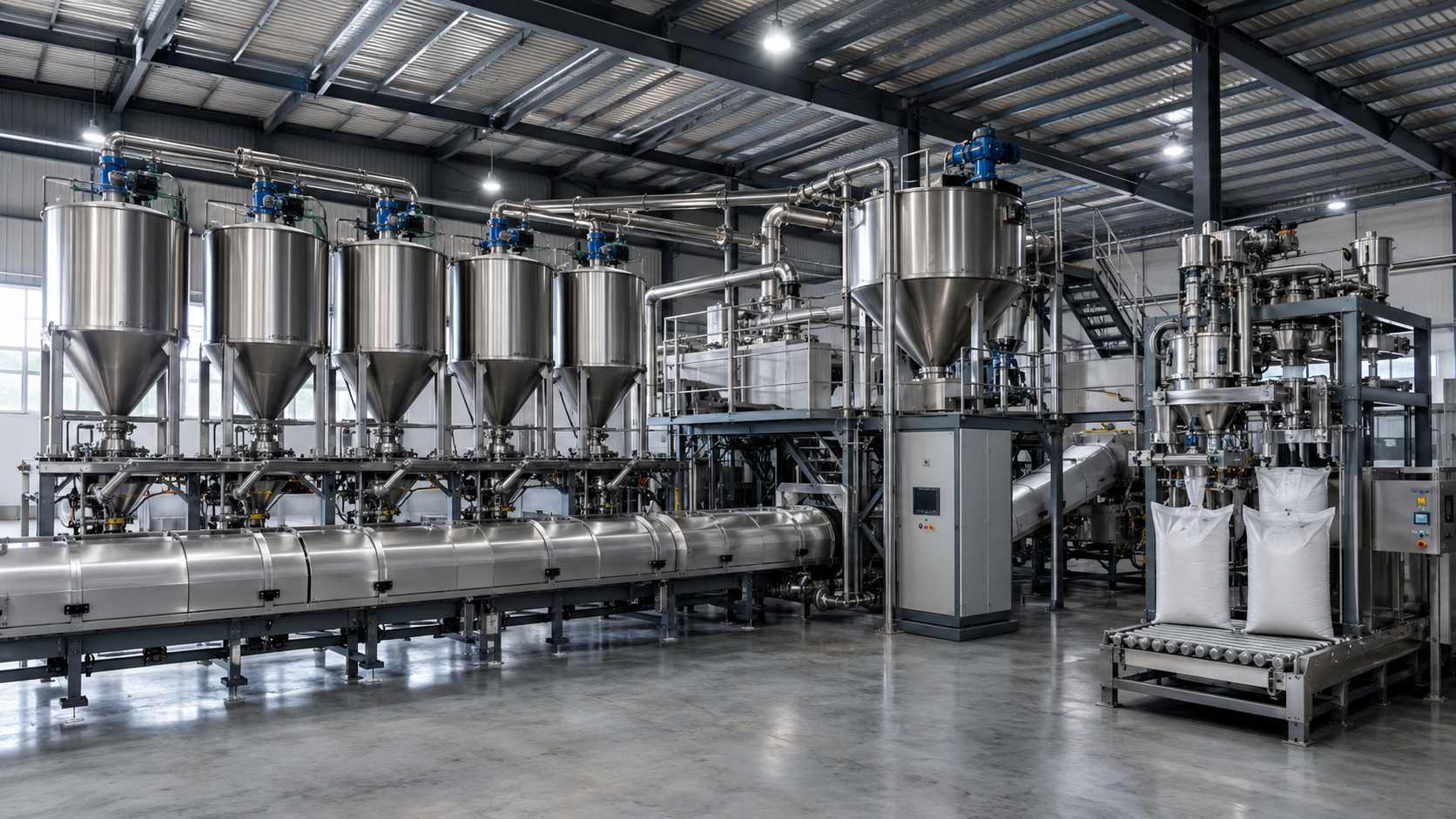
A modern water soluble fertilizer production line is not limited to one fixed recipe. With the right feeding, batching, mixing, weighing and packing systems, one line can produce several formulas for different crops, growth stages, markets and private-label orders. This is one reason many fertilizer plants no longer buy equipment only for a single NPK ratio. They need a line that can move from a balanced 20-20-20 formula to a high potassium formula, a trace element blend or a customer-specific crop nutrition product without rebuilding the whole workshop.
The real question is not only whether one line can handle multiple formulas. The more important question is how well it controls formula accuracy, mixing uniformity, material residue and production changeover.
Why do fertilizer producers need multiple formulas?
Most water soluble fertilizer factories serve more than one crop or sales channel. A grower using drip irrigation for tomatoes may need a different nutrient ratio from a greenhouse flower producer. A fruit farm may ask for high potassium fertilizer during fruit swelling. A nursery may need a gentler formula with trace elements. For OEM fertilizer manufacturers, the range becomes even wider because every customer may bring a different formula, bag size and label requirement.
This makes multi-formula fertilizer production a practical business need. A single fixed production setup can become a bottleneck when orders change. A flexible water soluble fertilizer production line helps a plant handle seasonal demand, regional crop habits and smaller customized batches.
Common formula types handled by one production line
A well-planned line can usually handle many dry or powder water soluble fertilizer products, depending on raw material properties and equipment configuration.
| Formula Type | Typical Production Need | Key Equipment Concern |
|---|---|---|
| Balanced NPK formula | General crop nutrition | Accurate batching and stable mixing |
| High nitrogen formula | Leaf growth stage | Raw material flow and weighing control |
| High phosphorus formula | Root development stage | Cleaning between batches |
| High potassium formula | Fruit swelling and quality stage | Mixing uniformity and moisture control |
| Trace element blend | Micronutrient correction | Small-dose addition accuracy |
| OEM custom formula | Private-label orders | Formula storage and batch records |
A production line for NPK water soluble fertilizer should not be judged only by hourly capacity. It should also be checked by how many raw materials it can handle, how often formulas can be changed and how cleanly the system moves from one batch to the next.
What makes a water soluble fertilizer production line suitable for multi-formula production?
A multi-formula line needs more than a mixer and a packing machine. The full process must be connected in a logical order: feeding, batching, mixing, measuring, filling and packing. When each section works together, the line can follow different raw material ratios without making the operation messy.
Aoliande’s water soluble fertilizer production line is built around material feeding, batching, mixing and packing. It can batch 3–10 kinds of ingredients according to the formula, mix them evenly, then measure, fill and pack the finished material automatically. This configuration is useful for plants that make several formulas instead of one repeated product.
Feeding system
The feeding system sends raw materials into the line. In real production, materials may include urea, potassium nitrate, monoammonium phosphate, magnesium sulfate, trace elements and other soluble ingredients. Their flow behavior is not always the same. Some powders flow easily. Some absorb moisture faster. Some are used in small amounts.
For a multi-formula fertilizer production line, feeding should be stable and easy to manage. Poor feeding control can cause inaccurate batches before the weighing process even starts.
Batching system
The automatic batching system is the center of multi-formula production. It controls how much of each raw material enters the batch. In small workshops, workers may weigh materials manually. That approach is simple, but it brings a higher risk of human error, especially when a formula contains many ingredients.
Automatic batching reduces repeated manual weighing and helps keep each batch closer to the set formula. This is important for water soluble fertilizer because customers often care about nutrient percentage, solubility and product consistency from bag to bag.
Mixing and packing system
After batching, the fertilizer mixing system must spread every ingredient evenly. This matters more when the formula contains trace elements or small-dose additives. If a small ingredient is not mixed well, one bag may contain too much while another bag contains too little.
The packing section also affects production efficiency. A fertilizer mixing and packing line may need to fill 5 kg, 10 kg, 20 kg or 25 kg bags depending on the market. When bag size changes often, the packing system should allow quick adjustment without long downtime.
How does automatic batching control different fertilizer formulas?
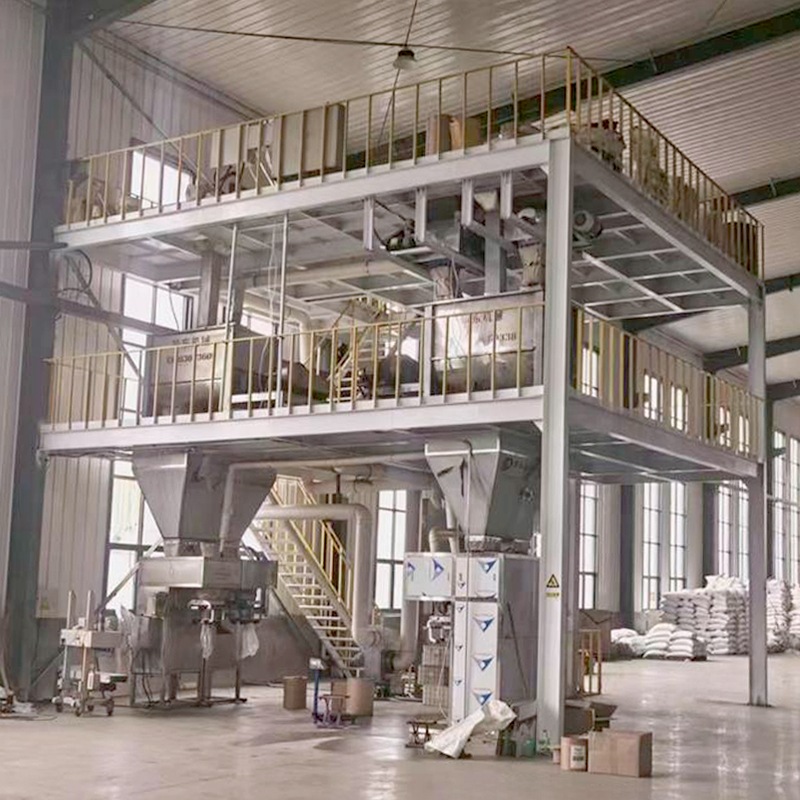
Formula control starts with clear production data. The operator enters the target formula into the control system, including each raw material and its percentage or weight. The fertilizer dosing system then follows that recipe during batching.
For example, a plant may produce a balanced NPK formula in the morning and a high potassium formula in the afternoon. The raw materials may be similar, but their ratios are different. Automatic fertilizer batching helps the line change the dosing plan without relying on workers to recalculate every material manually.
Why formula accuracy matters?
Formula accuracy affects both product quality and customer trust. If a bag is sold as a specific NPK formula, the nutrient ratio must stay stable across batches. Inconsistent dosing may lead to customer complaints, failed repeat orders or problems in export markets.
Good formula control is especially important in these cases:
- OEM orders with customer-owned formulas
- Trace element fertilizer production
- High-value greenhouse fertilizer
- Drip irrigation and fertigation products
- Export bags with marked nutrient ratios
For these products, “close enough” is not a safe production standard. A custom fertilizer production line should be planned around accurate weighing, batch control and repeatable production habits.
Can one line produce NPK, trace element and custom crop formulas?
Yes, one water soluble fertilizer manufacturing line can produce different formulas when the raw materials are compatible with the equipment and the line is designed with enough batching points. The same production system may handle NPK water soluble fertilizer, crop-specific fertilizer, trace element blends and private-label fertilizer.
The key is to match the equipment with the formula range before production starts. A plant making only three basic NPK products has simpler needs than a factory making 20 formulas with micronutrients and different bag sizes.
Formula range should be planned before buying equipment
Before ordering water soluble fertilizer production equipment, buyers should list the formulas they plan to produce in the first one to three years. This helps the supplier design the correct feeding, batching and mixing arrangement.
Important details include:
- Number of ingredients in each formula
- Maximum and minimum batch size
- Raw material form, such as powder, crystal or granule
- Bulk density and flow behavior
- Moisture sensitivity
- Required packing sizes
- Need for automatic formula storage
This information helps avoid a common mistake: buying a simple line first, then finding out later that it cannot support more complex formulas.
How important is mixing uniformity in multi-formula production?
Mixing uniformity is one of the biggest quality points in water soluble fertilizer production. Even if the batching weight is correct, the final product can still be unstable if the raw materials are not mixed evenly.
A water soluble fertilizer mixer must deal with differences in particle size, density and additive amount. Larger ingredients may move differently from fine powders. Trace elements may be added in very small quantities. If the mixer design or mixing time is not suitable, the final product may show poor nutrient consistency.
What can poor mixing cause?
Poor mixing may create several problems in real production:
- Different nutrient content between bags from the same batch
- Uneven color or texture in the finished fertilizer
- Inconsistent dissolving performance
- Customer complaints from farms or distributors
- Extra testing and rework inside the factory
For a plant producing multiple fertilizer formulas, mixing time and feeding sequence should be set based on material behavior. A high potassium formula may not behave the same as a trace element blend. Good operators usually build working rules for each formula instead of treating every batch the same way.
How can formula changeover be handled without cross-contamination?
Formula changeover is where many fertilizer plants lose time. When one batch ends and another begins, old material may remain in the hopper, conveyor, mixer or packing section. If that residue moves into the next batch, it may affect formula accuracy.
Cross-contamination in fertilizer production is a bigger issue when switching between very different formulas. For example, a high phosphorus product followed by a trace element formula needs more careful cleaning than two similar NPK blends.
Practical changeover points
A clean water soluble fertilizer formula changeover should include:
- Emptying remaining material from feeding points
- Checking the batching system for stuck powder
- Cleaning the mixer and discharge area
- Removing residue from conveyors and packing parts
- Recording the batch number and formula name
- Taking samples when the next batch starts
The goal is not to make the changeover complicated. The goal is to make it repeatable. A simple cleaning checklist can save many problems, especially for OEM fertilizer production where one customer’s formula should not affect another customer’s order.
Is a multi-formula line suitable for OEM fertilizer manufacturers?
A multi-formula water soluble fertilizer production line is often a good fit for OEM manufacturers. OEM work usually means smaller order batches, more formula changes, different packaging styles and stricter customer requirements. A factory may produce one customer’s vegetable fertilizer today and another customer’s fruit fertilizer tomorrow.
For this kind of work, flexible production is more valuable than only chasing high output. The line should support custom NPK formulas, private-label fertilizer production and different bag sizes. Formula storage, automatic batching and steady mixing can help the factory accept more orders without turning the workshop into a manual weighing area.
What should OEM buyers pay attention to?
OEM-focused factories should pay close attention to batch control. Customers may ask for repeat production months later. If the plant cannot reproduce the same formula with the same process, customer trust may drop.
A practical OEM fertilizer production line should support:
- Repeatable formula settings
- Clear production records
- Clean formula changeover
- Stable bag weight
- Flexible packing options
- Easy communication between production and quality teams
These points directly affect order delivery, repeat business and factory reputation.
What should buyers check before ordering a multi-formula fertilizer line?
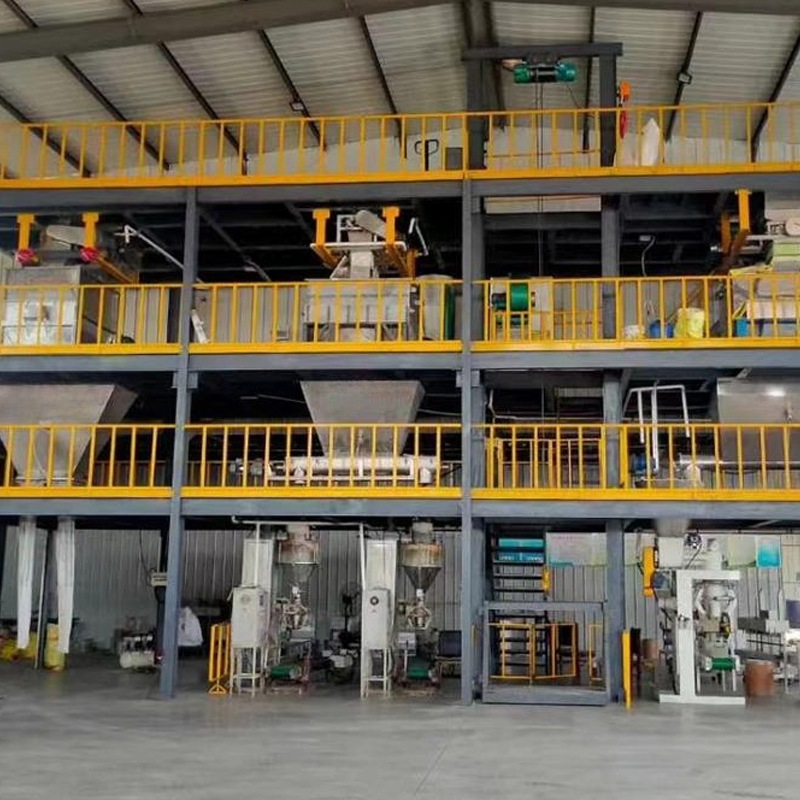
Buying a water soluble fertilizer plant is not only about price. A low-cost line may work for simple production, but it may become expensive later if it cannot handle enough formulas or requires too much manual work.
Buyers should discuss real production needs with the fertilizer production equipment supplier before confirming the line design.
Buyer checklist for multi-formula production
| Question | لماذا يهم |
|---|---|
| How many formulas will be made? | Decides batching and control system needs |
| How many raw materials are used? | Affects feeding points and weighing design |
| What is the target capacity per hour? | Sets mixer, conveyor and packing size |
| Are ingredients powder, crystal or granular? | Affects flow and mixing behavior |
| What bag sizes are required? | Decides packing system configuration |
| How often will formulas change? | Affects cleaning and changeover design |
| Is OEM production planned? | Requires better batch records and flexibility |
| Is dust control needed? | Improves workshop condition and material handling |
A careful discussion at the beginning can prevent many site problems later. It also helps the supplier design a custom fertilizer production line that fits real production instead of a generic equipment list.
Hebei Aoliande Chemical Equipment Co., LTD. as a Water Soluble Fertilizer Production Line Supplier
هيبي Aoliande المعدات الكيميائية المحدودة. manufactures chemical equipment and production line systems for several industrial fields, including water soluble fertilizer production, potassium/sodium sulfate production, sulfuric acid production, calcium chloride production, HPMC production and FRP/GRP equipment. The company combines manufacturing capacity with design support for material, structure and product-related requirements.
For water soluble fertilizer projects, Aoliande can provide production line solutions covering feeding, batching, mixing, measuring, filling and packing. Its line structure is suitable for producers working with 3–10 raw materials per formula and for plants that need automatic batching instead of heavy manual weighing. For buyers planning a new fertilizer plant, expanding an existing workshop or preparing OEM production, the company can support technical advice, equipment supply, transportation and installation supervision.
استنتاج
One water soluble fertilizer production line can handle multiple formulas when the line is planned with the right batching, mixing, packing and changeover design. The most important points are formula accuracy, mixing uniformity, clean material flow and flexible packing. For producers making NPK water soluble fertilizer, trace element blends, crop-specific products or OEM formulas, a multi-formula line can improve factory flexibility and reduce repeated equipment investment.
Before ordering equipment, buyers should define formula types, raw material numbers, hourly capacity, bag sizes and expected changeover frequency. A clear production plan gives the supplier enough detail to build a line that fits real factory work.
الأسئلة الشائعة
Can one water soluble fertilizer production line make different NPK formulas?
Yes. One water soluble fertilizer production line can make different NPK formulas if it has a proper automatic batching system, mixing system and control setup. The operator can set different raw material ratios for each formula, then the line batches, mixes and packs the product according to the selected recipe.
How many raw materials can a water soluble fertilizer production line handle?
A typical line can be designed to handle several raw materials, often 3–10 ingredients depending on the formula and equipment layout. The final number should be based on the planned products, such as NPK fertilizer, trace element fertilizer or custom crop nutrition formulas.
Is automatic batching necessary for multi-formula fertilizer production?
Automatic batching is strongly recommended for multi-formula fertilizer production. It reduces manual weighing work, improves formula accuracy and helps the plant repeat the same formula more reliably. This is especially useful for OEM fertilizer manufacturers and factories with frequent formula changes.
How can a factory switch formulas without cross-contamination?
The factory should clean key contact areas such as feeding points, conveyors, mixer discharge and packing parts before starting the next formula. A simple batch record and cleaning checklist can help reduce cross-contamination in fertilizer production.
Is a custom fertilizer production line better for OEM orders?
Yes. A custom fertilizer production line is usually better for OEM orders because different customers may require different formulas, bag sizes and batch records. Flexible batching, steady mixing and adjustable packing make the production process easier to manage.