
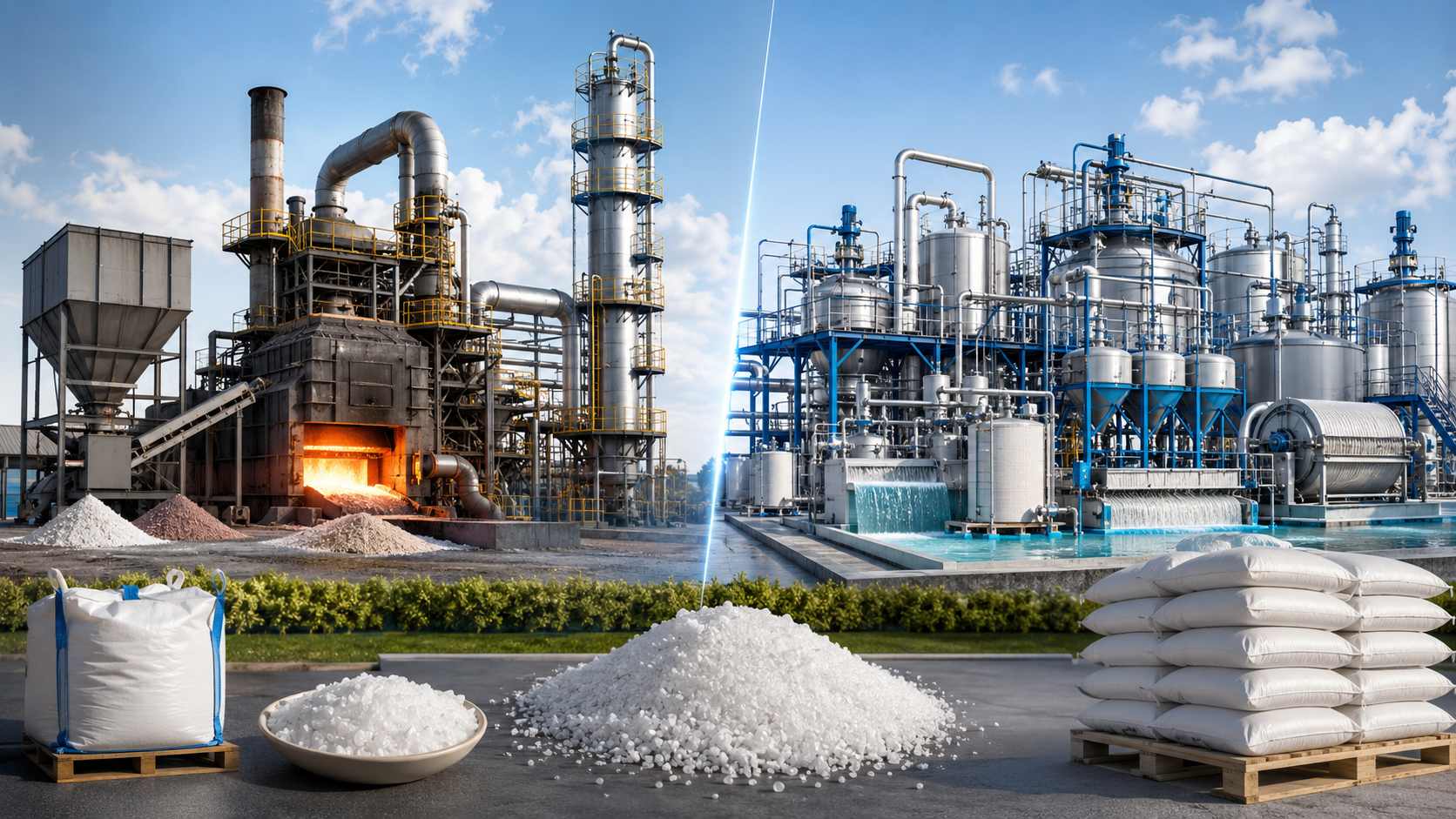
Choosing the right process for a potassium sulfate production line is not only a chemistry question. It affects product purity, energy use, raw material cost, plant layout, exhaust treatment, manpower, maintenance, and the payback period of the whole SOP plant.
For most commercial potassium sulfate production line projects, the Mannheim process is usually the more practical choice when the investor needs continuous production, stable product quality, high output, and a mature equipment system. The double decomposition process can also produce potassium sulfate, but it depends more heavily on raw material quality, solution chemistry, crystallization control, and mother liquor management.
The better choice comes down to one question: what kind of SOP plant does the buyer want to build?
Why Does Process Selection Matter for a Potassium Sulfate Production Line?
A potassium sulfate plant is usually built for long-term fertilizer supply, not for short production runs. Once civil work, reactors, furnace systems, absorption towers, conveyors, cooling units, and control cabinets are installed, changing the process route later is difficult and costly.
SOP fertilizer is valued because it provides potassium and sulfur with very low chloride content. This makes it suitable for crops such as tobacco, potatoes, grapes, vegetables, citrus, tea, and greenhouse crops, where chloride stress can reduce yield or market quality. For a fertilizer producer, this means the production line must deliver steady purity and low chloride, not only acceptable output on paper.
A poor process choice may lead to:
- higher cost per ton
- unstable K₂SO₄ purity
- more shutdowns for cleaning or maintenance
- difficult waste liquid or gas treatment
- weak competitiveness in premium SOP fertilizer markets
That is why investors usually compare the Mannheim process and the double decomposition process before ordering SOP plant equipment.
How Does the Mannheim Process Work?
The Mannheim process uses potassium chloride and sulfuric acid as the main raw materials. They react in a high-temperature Mannheim furnace. The main reaction is commonly written as:
2KCl + H₂SO₄ → K₂SO₄ + 2HCl
In actual production, the reaction moves through intermediate steps. Feedstock is added into the furnace, heat drives the reaction, and potassium sulfate is discharged as the main solid product. Hydrogen chloride gas is collected and absorbed to produce hydrochloric acid.
What Makes the Mannheim Furnace Important?
The furnace is the heart of this production route. Its structure, heating uniformity, corrosion resistance, flue design, residence time, and feeding control all affect the final product. If heat is uneven, some material reacts too much while some remains incomplete. If the flue design wastes heat, fuel cost rises. If the HCl absorption system is weak, environmental pressure and product loss increase.
A well-designed Mannheim process potassium sulfate production line usually includes:
- raw material feeding system
- Mannheim furnace
- cooling and crushing system
- HCl absorption system
- dust and exhaust treatment
- PLC control system
- conveying and packing sections
This route is widely used because it is direct, industrially mature, and suitable for continuous potassium sulfate production.
How Does the Double Decomposition Process Work?
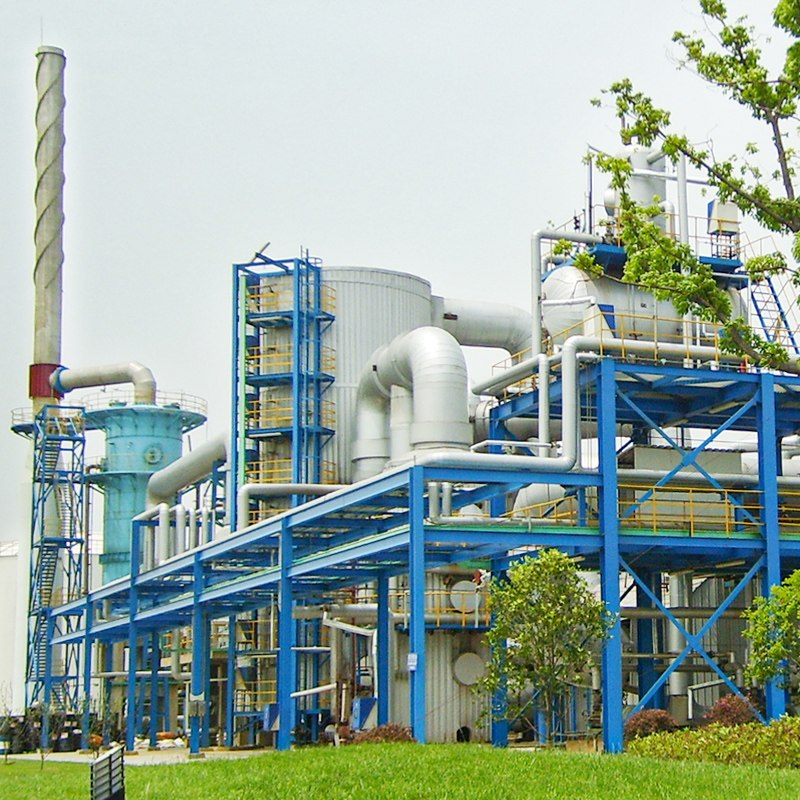
The double decomposition process is different. It is usually a wet chemical route based on salt exchange. Potassium chloride reacts with sulfate-containing materials such as ammonium sulfate, magnesium sulfate, sodium sulfate, gypsum, or other sulfate sources, depending on the process design.
Instead of using a high-temperature furnace as the central unit, this method often needs reactors, crystallizers, filters, centrifuges, dryers, evaporators, and mother liquor circulation systems.
Where Can Double Decomposition Make Sense?
The double decomposition method may be attractive when a plant has easy access to low-cost sulfate raw materials, existing wet-process equipment, or a special byproduct route. It may also fit projects where high-temperature furnace operation is not preferred.
However, the process is more sensitive to solubility, temperature, concentration, impurities, crystallization speed, and liquid-solid separation. In simple terms, the chemistry may look clean in a reaction equation, but factory operation can become complicated when the raw materials change.
For potassium sulfate fertilizer production, the buyer must check whether this route can keep chloride low, purity stable, and waste liquid manageable over years of operation.
Mannheim Process vs Double Decomposition Process
The two routes can both produce potassium sulfate, but they suit different project conditions.
| عامل | عملية مانهايم | Double Decomposition Process |
|---|---|---|
| Main route | High-temperature reaction of KCl and sulfuric acid | Wet reaction between KCl and sulfate materials |
| Core equipment | Mannheim furnace and HCl absorption system | Reactor, crystallizer, filter, evaporator |
| Product stability | Strong when furnace and feed ratio are well controlled | Sensitive to crystallization and impurities |
| Byproduct | Hydrochloric acid from HCl absorption | Depends on sulfate source and process route |
| Energy use | Higher furnace heat demand | Lower temperature in many wet systems |
| Operation focus | Furnace condition, feed ratio, gas absorption | Solubility, concentration, mother liquor, filtration |
| Suitable plant type | Medium and large continuous SOP plant | Special raw material or wet-process projects |
| Main risk | Furnace wear, HCl handling, fuel cost | Product purity, liquid waste, process balance |
The table shows why there is no one-size-fits-all answer. A plant with stable sulfuric acid supply, good HCl market demand, and a need for large continuous output will often prefer Mannheim. A plant with cheap sulfate raw materials and strong wet-process experience may study double decomposition in more detail.
Which Route Gives Better Product Quality?
Product quality is one of the strongest reasons many SOP plant investors choose the Mannheim process. In fertilizer markets, potassium sulfate is often sold based on K₂O content, chloride level, moisture, particle size, color, and solubility. Buyers of high-value crop fertilizers do not want frequent quality swings.
The Mannheim process has fewer liquid-phase variables. Once the furnace temperature, feedstock ratio, reaction time, and discharge system are stable, the production line can keep a more consistent product range. This is useful for producers that supply agricultural-grade SOP, water-soluble fertilizer raw materials, or export markets.
Double decomposition can also produce good potassium sulfate, but quality control is more tied to crystallization. If impurities build up in the mother liquor, if cooling is not steady, or if filtration is incomplete, the product may carry more unwanted salts or moisture. This does not mean the route is poor. It means the plant needs stronger process control and more careful raw material management.
Which Process Has Better Cost and ROI?
Equipment price alone is not enough to judge SOP plant ROI. A cheaper initial setup can become expensive if it brings unstable operation, low conversion, high waste treatment cost, or frequent downtime.
Key Cost Items in a Mannheim SOP Plant
The Mannheim process needs spending on furnace construction, heat supply, acid-resistant materials, HCl absorption, dust control, and automation. It also needs stable potassium chloride and sulfuric acid supply. The energy load is higher because the reaction runs at high temperature.
However, there are two important economic advantages. First, the process is mature and easier to scale for continuous production. Second, HCl byproduct can be absorbed and sold or used, turning a treatment burden into a possible revenue stream where local demand exists.
Key Cost Items in a Double Decomposition SOP Plant
The double decomposition process may reduce high-temperature fuel use, but it can add other costs. Reactors, crystallizers, filtration units, evaporation systems, wastewater handling, and mother liquor recycling can become major parts of the investment.
The route may be competitive when sulfate raw materials are cheap and nearby. If the plant must buy expensive raw materials or deal with complex waste liquid, the cost advantage can shrink quickly.
For investors, the real comparison should be cost per ton of stable qualified SOP, not only equipment cost.
Which Process Is Easier to Operate and Maintain?
A Mannheim potassium sulfate production line is mechanical, thermal, and corrosive at the same time. Maintenance focuses on the furnace body, feeding system, scraper parts, flue, cooling equipment, HCl absorption tower, and acid-resistant pipelines.
The main operation points are easy to name but must be carefully managed:
- keep feed ratio stable
- keep furnace temperature even
- avoid incomplete reaction
- keep HCl absorption efficient
- reduce corrosion in acid-contact parts
- prevent dust leakage around discharge and cooling sections
A PLC control system helps reduce manual adjustment. It can control feedstock ratio, production rhythm, and related equipment actions, which is useful for plants that run long shifts.
The double decomposition route has a different maintenance profile. Pumps, agitators, crystallizers, filters, centrifuges, evaporators, and pipelines need regular attention. Scaling, blockage, crystal buildup, and mother liquor balance are common concerns. Operators also need strong judgment when raw material concentration changes.
For a buyer with limited wet-chemical operation experience, Mannheim is often easier to standardize after commissioning.
Which Process Fits Environmental Compliance Better?
Environmental compliance depends on how well each plant handles byproducts and emissions. The Mannheim process produces HCl gas, so the absorption system must be treated as a core production unit, not an accessory. A strong HCl absorption system can turn gas into hydrochloric acid while reducing environmental risk.
This matters in real projects. If a plant is near users of hydrochloric acid, such as chemical processing, metal cleaning, mining, or water treatment sectors, the byproduct may have commercial value. If no local HCl market exists, storage, transport, and sales planning must be studied before investment.
Double decomposition does not usually face the same furnace gas load, but it can create liquid waste, salt-containing streams, or byproducts that need separation and disposal. In water-sensitive regions, this can be a major issue.
The better environmental route is the one with a complete treatment plan, local byproduct use, and realistic operating cost.
When Is the Mannheim Process More Suitable?
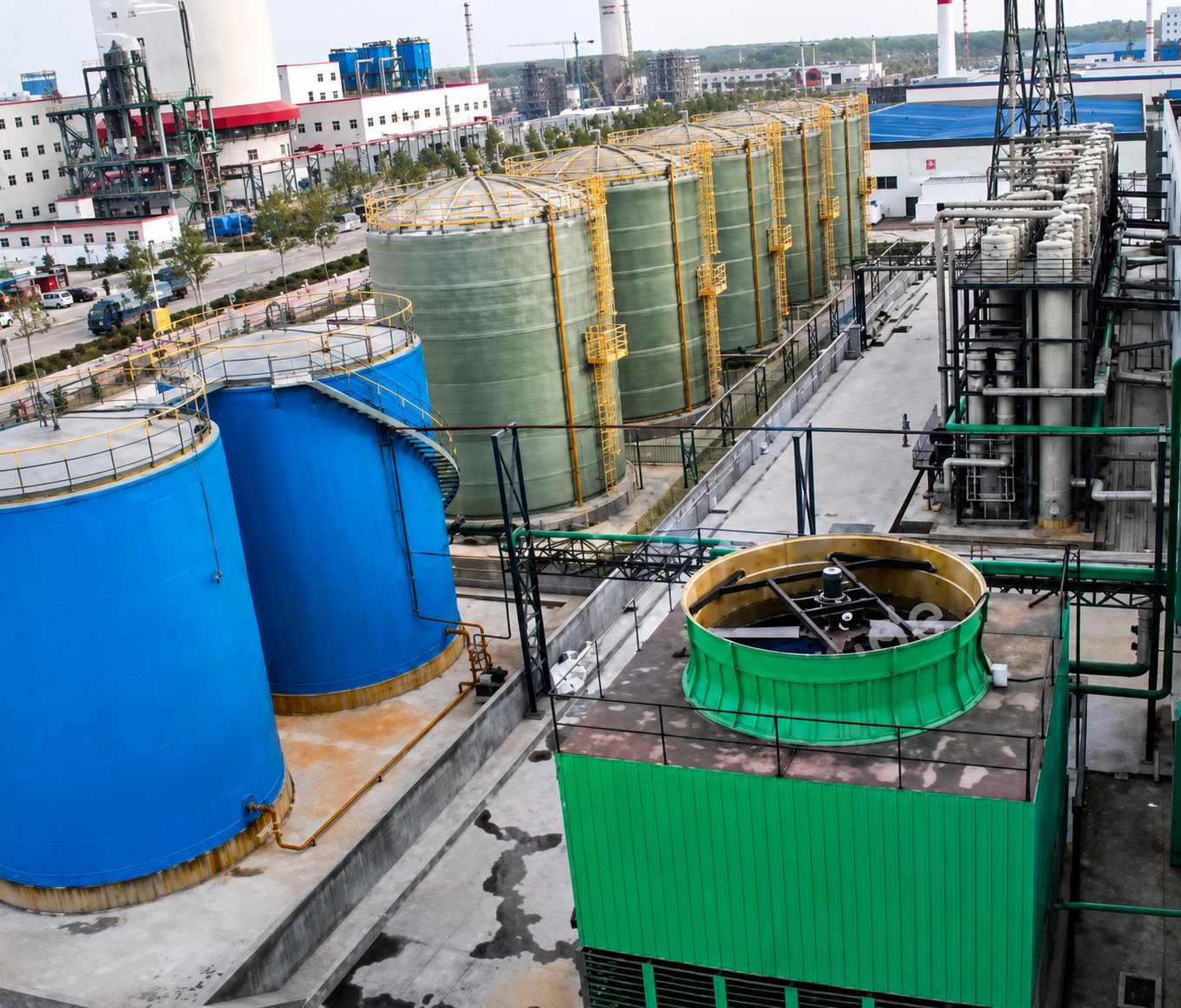
The Mannheim process is usually more suitable when the project has a clear commercial production target.
It is a strong fit when:
- the plant needs medium or large annual output
- the buyer wants a continuous potassium sulfate production line
- raw material supply of KCl and sulfuric acid is stable
- local demand exists for hydrochloric acid
- product quality must remain steady for fertilizer buyers
- the investor wants a mature SOP plant equipment system
- the project needs engineering support from design to commissioning
For many fertilizer producers, the biggest advantage is predictability. The production route is clear, the equipment system is mature, and the main operation risks are known before construction starts.
When Can Double Decomposition Still Be Considered?
The double decomposition process should not be dismissed. It can be considered when local project conditions clearly support it.
It may be worth studying when a plant has low-cost sulfate resources, strong crystallization experience, reliable wastewater treatment, and a market that accepts the planned product grade. It may also fit smaller or special chemical projects where the byproduct chain is more important than large SOP output.
The main caution is process sensitivity. A small change in raw material purity or solution concentration may affect conversion, crystal quality, filtration speed, and final chloride level. Before large investment, pilot testing and detailed mass balance are important.
About Hebei Aoliande Chemical Equipment Co., LTD.
هيبي Aoliande المعدات الكيميائية المحدودة. is a chemical equipment manufacturer focused on Mannheim process potassium and sodium sulfate production lines, along with sulfuric acid production lines, calcium chloride production lines, water-soluble fertilizer production lines, HPMC production lines, and FRP/GRP equipment.
For SOP plant buyers, its value lies in practical engineering experience around the Mannheim furnace process. The company has built a potassium fertilizer factory in Inner Mongolia with annual output of 160,000 tons of potassium sulfate and 200,000 tons of hydrochloric acid, giving buyers a reference for industrial production rather than only equipment drawings.
Its Mannheim process potassium sulfate production line is designed around stable heating, complete reaction, HCl recovery, corrosion-resistant key parts, PLC control, lower labor demand, and easier operation. The company also provides technical consultation, design support, material and equipment supply, transportation, installation supervision, and commissioning guidance for chemical production line projects.
For investors comparing SOP plant equipment suppliers, these capabilities are important because a potassium sulfate plant needs more than a furnace. It needs process balance, material selection, site coordination, exhaust treatment, and long-term operating support.
استنتاج
For most commercial potassium sulfate production line projects, the Mannheim process is more suitable than the double decomposition process. It is better matched with continuous production, high output, stable SOP fertilizer quality, and mature equipment supply. The HCl byproduct does create a treatment requirement, but with a proper absorption system and local hydrochloric acid demand, it can also support plant economics.
The double decomposition process can be useful under special raw material and wet-process conditions. Its success depends on crystallization control, mother liquor recycling, impurity management, and wastewater treatment.
A practical decision should compare raw material supply, product grade, HCl market, energy cost, environmental rules, operator skill, and total cost per ton. For buyers planning a stable industrial SOP plant, a well-designed Mannheim process production line remains the safer and more scalable route.
الأسئلة الشائعة
Is the Mannheim process better for a large SOP plant?
Yes, it is usually more suitable for a large SOP plant that needs continuous production and stable product quality. The process is mature, the equipment system is clear, and the production line can be designed for long-term industrial operation.
What is the main disadvantage of the Mannheim process?
The main challenges are high-temperature furnace operation, energy use, corrosion control, and HCl gas absorption. These issues can be managed through better furnace design, acid-resistant materials, stable feed control, and an efficient HCl absorption system.
Is the double decomposition process cheaper than the Mannheim process?
It may be cheaper in some locations with low-cost sulfate raw materials and existing wet-process facilities. But the total cost also includes crystallization, filtration, mother liquor recycling, wastewater treatment, and product quality control. Equipment price alone does not show the real SOP plant ROI.
What equipment is needed for a Mannheim potassium sulfate production line?
A typical Mannheim potassium sulfate production line includes raw material feeding equipment, Mannheim furnace, cooling system, crushing or granulation equipment, HCl absorption system, dust treatment, PLC control system, conveying equipment, and packing sections.
How should investors choose between Mannheim and double decomposition?
Investors should compare raw material supply, energy cost, target product purity, chloride control, byproduct sales, environmental treatment, operator experience, and annual capacity. For stable medium and large SOP fertilizer production, the Mannheim process is usually the more practical choice.