ALT: Product Cooling, Crushing, and Screening After the Mannheim Furnace
Finishing starts with the condition of that discharge and ends with the material after its ordinary conveyor route. A good furnace rate means little if the bagging line receives warm, dusty material or the return conveyor quietly fills up.
What the Post-Furnace Section Must Control
A useful operating target covers more than one average particle size:
• product temperature low enough for conveying and packaging;
• a defined top size without excessive production of fines;
• a saleable size range matched to the buyer’s handling needs;
• separate routes for oversize, fines and acceptable product;
• a recycle stream that does not carry impurities forward.
Agree on a full size distribution and test the material after the last normal transfer point, where handling damage will already have occurred. A crusher setting alone cannot establish that distribution.
Cooling: Set the Limit Where It Matters
Remove heat before asking a screen or bagging line to handle the solids. Cooler selection should be tied to the highest expected inlet temperature and the lowest stable production rate as well as the nominal rate. Screw, rotary and air-based machines give different residence times; the result must be judged for both outlet temperature and newly formed fines.
A nearby screen, a long enclosed conveyor and direct bagging impose different temperature limits. State the measuring point on the layout.
More air may raise dust carryover without correcting a blocked material path.
|
Cooling observation |
First comparison |
Possible next check |
|---|---|---|
|
Warm product, steady exhaust |
Fresh discharge rate against residence time |
Cooler hold-up or bypass |
|
Warm product, rising exhaust |
Inlet temperature against air flow |
Air distribution |
|
More recovered dust |
Collector load against fan setting |
Attrition and entrainment |
|
Condensation at later chute |
Product and ambient temperatures |
Air leakage and insulation |
Crushing: Break Only What Is Too Large
A top-size cut is the crusher’s assignment. The feed envelope should name the largest credible lump, moisture and material temperature. Where metal or refractory chips can reach the machine, place a protection or removal step before repeated returns damage the crusher.
Several signs reveal when the breakage step is too severe or poorly fed:
• fines rise although the oversize fraction falls;
• crusher current cycles with furnace discharge surges;
• dust loading increases at the crusher outlet;
• hard pieces pass through and return repeatedly;
• product stays inside the machine long enough to heat further.
• Guarded isolation for blockage removal;
• inspection point before repeated crusher returns.
Foreign pieces should not be allowed to circulate repeatedly.
Drop height is another source of breakage. Check the actual transfer elevations on the arrangement drawing. Put access and dust pickup at each handover on the same drawing.
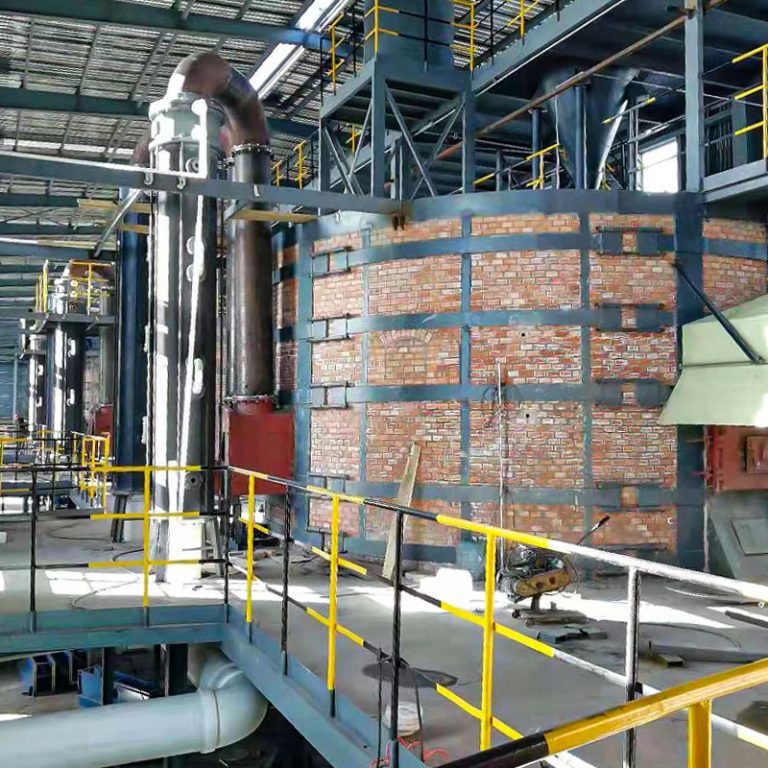
ALT: Mannheim Furnace and KCl Feeding
Screening: Locate the Separation Loss
The screen defines the saleable cut while separating fines and material that needs rework. Opening size, deck area and vibration matter, but so does feed distribution. If most material lands on one side, unused deck area cannot rescue separation efficiency.
Take samples at the feed and every outlet. The final-product sample confirms whether the grade is met; the other samples reveal where it was lost. New fines in the screen feed point upstream. Acceptable particles leaving with oversize suggest loading or aperture problems. Large pieces in the finished stream point toward a damaged deck or bypass.
|
Stream |
Typical material |
Where it goes |
What to check |
|---|---|---|---|
|
Saleable |
Agreed size range |
Silo or packaging |
Does the size distribution hold after conveying? |
|
Oversize |
Large agglomerates |
Crusher return or rejection |
Are foreign pieces present? |
|
Fines |
Powder and undersize |
Rework, separate grade or disposal |
Is repeated handling making more fines? |
|
Recovered dust |
Collector solids |
Controlled route |
Is its chemistry fit for return? |
Screen condition deserves an inspection after a stable run. Look for particles lodged in apertures, uneven bed depth, loose panels and worn seals. A clear product sample does not prove the whole deck is open if some material escapes through a worn edge.
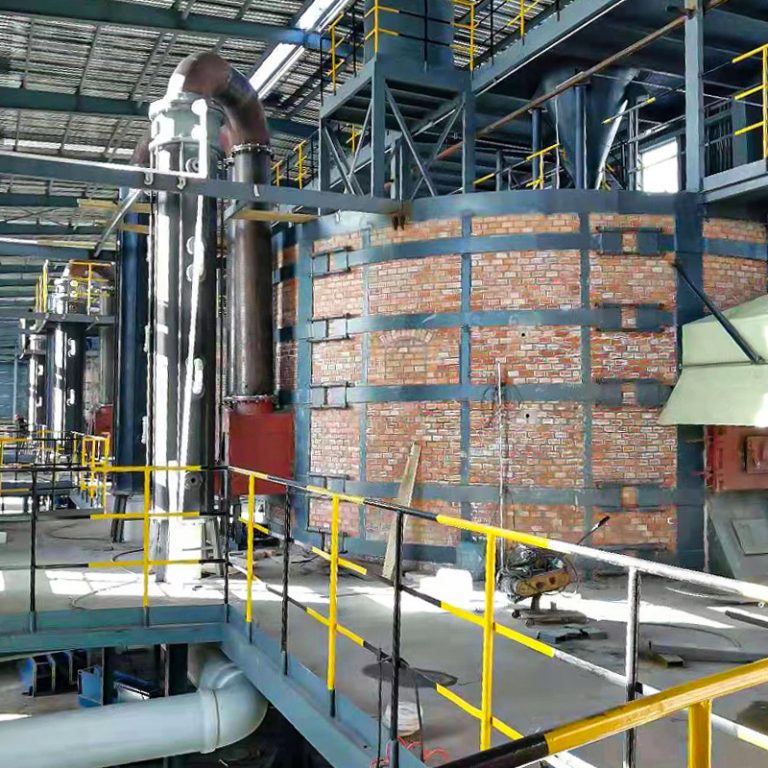
ALT: Potassium Fertilizer Production Workshop
Recycle Is Throughput, Not Free Storage
The return loop adds to the load on every machine it passes. For example, 10 tonnes per hour of fresh discharge and 2 tonnes per hour of return can give 12 tonnes per hour at a common screen feed. This is an illustrative balance, not a claimed plant result; the joining point decides which conveyor and crusher see the extra load.
A practical balance records fresh discharge, saleable output, oversize, fines, recovered dust and material rejected or sold separately. Close it over a stable period, allowing for changes in bin inventory. If the numbers do not reconcile, check spill points and material held in chutes before changing the furnace feed assumption.
Recycle destination also depends on chemistry. Clean oversize may go back through a controlled crushing pass. Fines or recovered dust need separate acceptance limits for moisture, residual acid and foreign matter. A return stream that fails them should not contaminate the saleable fraction.
Product Quality After the Last Transfer
Check potassium content, residual chloride, free acid, moisture, insolubles and size against the intended grade. Each sample label should include the furnace discharge period, cooler condition, crusher setting, screen load and storage destination.
A delayed bagging sample can then be matched to the material that produced it.
Hot product at the silo calls for a cooler and bypass check first. If fines rise, compare samples before and after the crusher, each transfer and the screen. If oversize grows after maintenance, inspect panel fit and chute alignment before altering furnace operation.
هيبي Aoliande المعدات الكيميائية المحدودة. can scope the cooling, crushing, screening, dust and return equipment with the furnace discharge conditions. A project inquiry is most useful with representative discharge samples, a target size distribution and an agreed sampling method. Those details make the downstream performance boundary testable.
استنتاج
Consistent SOP leaves the finishing line at the required temperature and size, after its ordinary handling route. Cooling, controlled breakage, screening and measured recycle have to be sized and checked as one circuit. The packer result, not the furnace outlet alone, is the meaningful product test. For a project review, send discharge samples and the target size range through the SOP contact page.
الأسئلة الشائعة
These answers address common finishing-line questions.
Why cool potassium sulfate before screening?
A cooler establishes the temperature needed by the screen, conveyors and package. The limit should be checked where that equipment receives the product.
Should oversize always return to the crusher?
No. Inspect for metal, refractory, moisture and off-spec chemistry first. Clean oversize may be reworked; suspect material needs another route.
Where do new fines appear?
Sample across the circuit to find the first increase. Crusher discharge, high drops and repeated return passes are useful comparison points.
How is screen blinding distinguished from a crusher problem?
Compare screen feed and outlet samples, then inspect deck openings and feed distribution. A crusher change alters feed size; blinding changes separation on the deck.
What should a supplier receive before designing the finishing section?
Provide discharge rate and temperature range, incoming and target size distributions, product grade, moisture limit, utilities, storage route and recycle policy.