
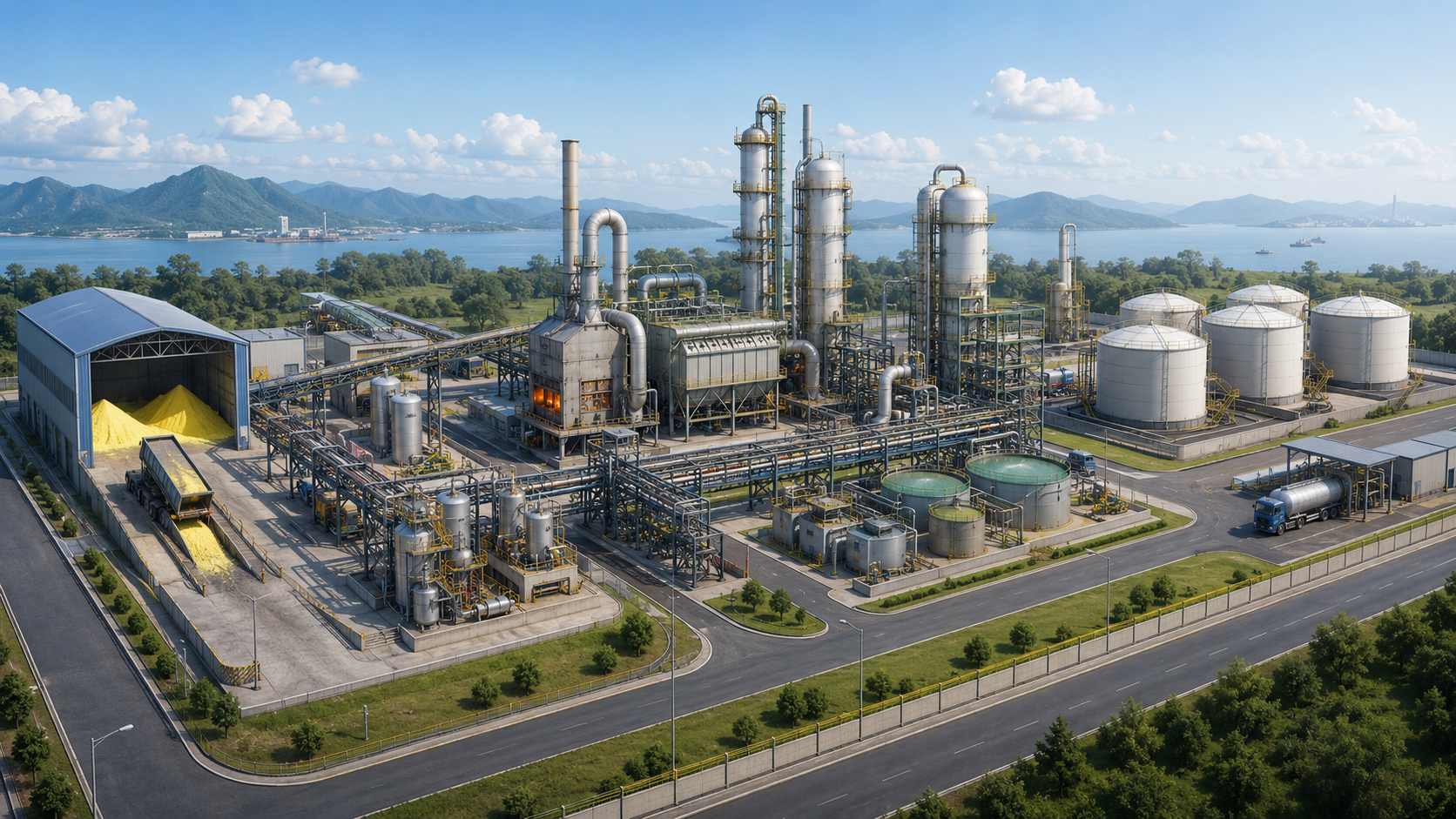
A sulfuric acid plant layout is the working route for sulfur receiving, melting, gas generation, heat recovery, acid circulation, storage, loading, maintenance, and emergency access. In a practical sulfuric acid production line, solid sulfur moves in, dry air enters the furnace, gas passes through conversion and absorption, heat is recovered as steam, and finished acid leaves through a controlled acid tank farm.
Poor layout decisions become operating problems: plugged molten sulfur lines, slow acid cooler cleaning, unsafe truck movement, and harder maintenance. Good sulfuric acid plant design starts from real movement: people, sulfur, air, gas, heat, acid, trucks, and tools.
Why Layout Matters in a Sulfuric Acid Production Line
A sulfuric acid production line usually includes sulfur melting, sulfur combustion and conversion, drying and absorption, and final product handling. Each section has different temperature, corrosion, access, and safety needs.
The Main Layout Goal
The main goal is to keep risky movements short and give operators room to work. High-temperature gas ducts should be direct. Hot acid lines should stay visible. Sulfur unloading, acid storage, and truck loading should sit near site roads, but away from offices, control rooms, and high-temperature equipment.
| Plant Area | Main Equipment | Layout Priority |
| Raw material | Sulfur warehouse, melting tank, filter | Short sulfur route |
| Hot process | Sulfur burner, waste heat boiler, converter | Short gas path and service space |
| Acid circulation | Drying tower, absorption tower, acid cooler | Direct circulation loop |
| Final product | Storage tanks, loading station | Containment and truck movement |
Start with Sulfur Storage and Melting
Raw sulfur is the first physical flow on the site. If this front end is placed badly, the plant will face repeated handling, dust, long conveyors, blocked aisles, and harder cleaning.
Sulfur Warehouse Location
The sulfur storage area should be near the logistics entrance. Trucks can unload without entering the main process area, and conveyors can feed the sulfur melting section with fewer turns. A straight route also reduces spillage and cleaning work.
The warehouse needs room for unloading, fire access, drainage, and cleaning. In humid regions, damp sulfur can disturb feeding around hoppers and belts.
Molten Sulfur Handling Area
The sulfur melting section works best when the melting tank, filtration tank, pre-coating tank, molten sulfur filter, and refined sulfur storage tank are grouped in one controlled area. Molten sulfur is often kept around 135°C to 145°C so it can flow. Long molten sulfur pipelines need steam jackets and insulation, and they can become weak points during startup or low-load operation.
Refined sulfur storage should stay close to the sulfur combustion section while leaving access for pumps, filters, valves, instruments, and condensate recovery.
Put Combustion and Conversion at the Process Core
After sulfur is melted and filtered, the process becomes hotter and more energy-intensive. This part of the sulfuric acid plant layout sets the serviceability of the whole line.
Furnace, Boiler, and Converter Arrangement
Molten sulfur is pumped to the sulfur burner and sprayed into the furnace. Dry air is supplied after filtration, compression, and drying with concentrated sulfuric acid. Furnace gas then passes through heat recovery and conversion equipment.
The sulfur burner, waste heat boiler, converter, and heat exchangers should form the process core. The aim is to shorten hot gas ducts while leaving room for platforms, manholes, lifting access, and inspection routes.
Heat Recovery and Maintenance Space
Waste heat boilers, superheaters, economizers, and steam lines need clear routes for boiler feed water, steam, blowdown, and condensate return. Heat exchanger bundles need pull space, and large valves need lifting points. A compact-looking layout can still create difficult shutdowns.
Design Drying and Absorption Around Acid Circulation
The drying and absorption section links gas handling with concentrated acid handling. It should be planned around circulation loops, not only around tower positions.
Tower Placement and Acid Route
The drying tower connects with the air system before combustion. Absorption towers connect with converter gas routes. Their location should keep the gas path smooth and reduce unnecessary bends, pressure drop, and dead zones.
A common acid circulation path is tank → pump → acid cooler → tower → tank. When this loop is compact, pipe runs are shorter, heat loss is lower, and operators can inspect the pump, cooler, sample point, and tank level from a safer working zone.
Sampling and Operation Access
98% sulfuric acid may be used for air drying and SO₃ absorption. Product acid concentration and temperature are tied to circulation, water balance, cooling capacity, and instrument control. Acid coolers should be close to the acid circulation tank and pump, but not boxed in by tower foundations or pipe racks.
Sampling points, flowmeters, drain points, and dilution control areas need safe access because operators repeat these checks every shift.
Plan the Final Product Section and Acid Tank Farm
The final product section turns process acid into stored, measured, and shipped product. Its layout affects safety, truck loading speed, spill control, and delivery reliability.
Finished Acid Tank Location
The acid tank farm should not sit in the middle of the main process area. It usually works better near the site road and loading station, with separation from offices, electrical rooms, and high-temperature equipment.
Each sulfuric acid storage tank needs a bund wall or containment area, acid-resistant floor, drain collection point, and safe access for level gauges, vents, inspection ports, and maintenance. The layout should also leave room for future storage days because truck schedules and downstream demand often change after startup.
Loading Area and Truck Movement
The acid loading area should follow one simple traffic rule: trucks enter, load, and leave without reversing across pedestrian routes. Weighing, sampling, hose draining, washing, and emergency response points should sit in sequence.
Truck routes should not pass through the sulfur melting section or converter area. A separate loading road reduces traffic conflict and keeps drivers away from operating equipment.
Utilities, Safety, and Emergency Access
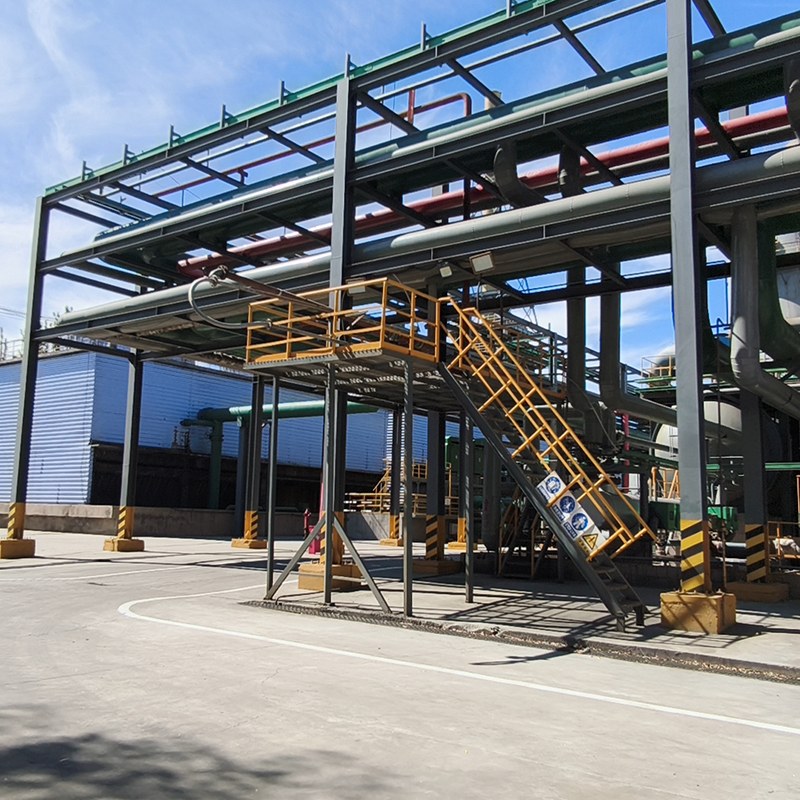
Utilities decide whether the plant feels organized or patched together. Steam, cooling water, compressed air, instrument air, boiler feed water, condensate, power cables, and control signals all need planned space.
Utility Routes and Control Room Position
A sulfuric acid plant layout should give the main pipe rack a clear job: serve the furnace, converter, acid circulation area, acid tank farm, and utility station without blocking emergency roads or crane access.
The control room should be close enough for operators to reach the process area quickly, but not placed next to acid mist sources, hot gas equipment, or truck loading. Electrical rooms and motor control centers need similar care.
Drainage and Risk Zones
High-temperature equipment, acid pumps, storage tanks, and loading stations should be treated as separate risk zones. Safety showers and eyewash stations must be easy to reach from acid handling points. Emergency roads should allow rescue teams to approach without passing through a spill zone.
Acid-resistant floors should slope toward controlled collection points. Acid spills should go to an emergency collection pit or neutralization system, not to a rainwater channel.
Common layout mistakes include:
- Making molten sulfur pipelines longer than needed
- Placing acid coolers where tube cleaning is difficult
- Mixing truck routes with operator walkways
- Putting the control room too close to acid mist or hot gas zones
Hebei Aoliande Chemical Equipment Co., LTD. as a Sulfuric Acid Production Line Supplier
Industrial buyers need more than equipment names when planning a sulfuric acid production line. They need support on material selection, structure, site arrangement, corrosion resistance, transport, and installation supervision.
Supplier Capability for Layout-Oriented Projects
Hebei Aoliande Chemische Ausrüstung Co., LTD. works as a Sulfuric Acid Production Line supplier for buyers planning complete chemical production systems. Its range covers sulfuric acid production equipment and related lines for potassium/sodium sulfate, calcium chloride, water soluble fertilizer, HPMC, and FRP/GRP equipment.
The company combines manufacturing ability with design support for materials, structures, and finished products. This matters because sulfuric acid equipment faces heat, acid corrosion, heavy loads, and strict maintenance needs. Technical advice, material supply, transportation, and installation supervision help buyers connect equipment selection with site conditions.
Schlussfolgerung
A strong sulfuric acid plant layout follows the process from sulfur storage to finished acid tanks, but it also follows daily work. Sulfur should move with little rehandling. Molten sulfur lines should stay short and heated. Hot gas equipment should sit in a serviceable process core. Drying and absorption should be built around acid circulation. The acid tank farm should support safe containment and smooth loading.
Before discussing equipment supply, buyers should prepare site size, capacity, sulfur supply, acid concentration, storage days, utilities, emission targets, and local safety rules. These details make sulfuric acid plant project planning more accurate and reduce costly redesign later.
Häufig gestellte Fragen
What is the best layout for a sulfuric acid plant?
There is no single best sulfuric acid plant layout for every project. The right layout depends on capacity, sulfur supply method, process route, available land, utility location, and finished acid delivery method. A good plan keeps high-temperature gas, molten sulfur, and hot acid routes short.
Why is the acid tank farm separated from the main process area?
An acid tank farm is separated to improve containment, loading safety, and traffic control. Sulfuric acid storage tanks need bund walls, acid-resistant floors, controlled drainage, and truck access. Keeping them away from the furnace, converter, and control room reduces the impact of leaks and vehicle movement.
What should buyers prepare before planning a sulfuric acid production line layout?
Buyers should prepare capacity, site boundary, sulfur form, storage requirement, acid concentration, loading method, utilities, emission target, soil conditions, drainage, and preferred supply scope. These data help shape a sulfuric acid production line layout that matches both process needs and site limits.