
If you’ve ever worked in composite pipe manufacturing, you know that efficiency, consistency, and precision are everything. From my years of experience in the industry, I can tell you that a FRP pipe filament winding making machine is one of the most impactful investments a factory can make. It’s not just a piece of equipment—it’s the backbone of a modern, high-quality FRP pipe production process.
In this article, I’ll walk you through what an FRP pipe filament winding making machine is, how it works, its advantages, and important considerations before investing. I’ll also share real-world examples that illustrate how it can boost productivity and product quality.
What Is an FRP Pipe Filament Winding Making Machine?
Ein FRP pipe filament winding making machine is specialized equipment designed to produce fiberglass reinforced plastic (FRP) pipes by winding resin-impregnated fibers around a rotating mandrel. Unlike simple manual setups, this machine automates the winding process, ensuring precise fiber placement, uniform wall thickness, and consistent structural integrity.
In simpler terms, it’s like layering thin threads soaked in resin around a mold in a highly controlled pattern. The result is a pipe that is stronger, more durable, and corrosion-resistant compared to traditional materials like steel or PVC.
For me, the most impressive part is how a single machine can produce high-quality pipes repeatedly without depending heavily on skilled labor. This consistency is what separates top-tier manufacturers from average ones.
Wie die Maschine funktioniert
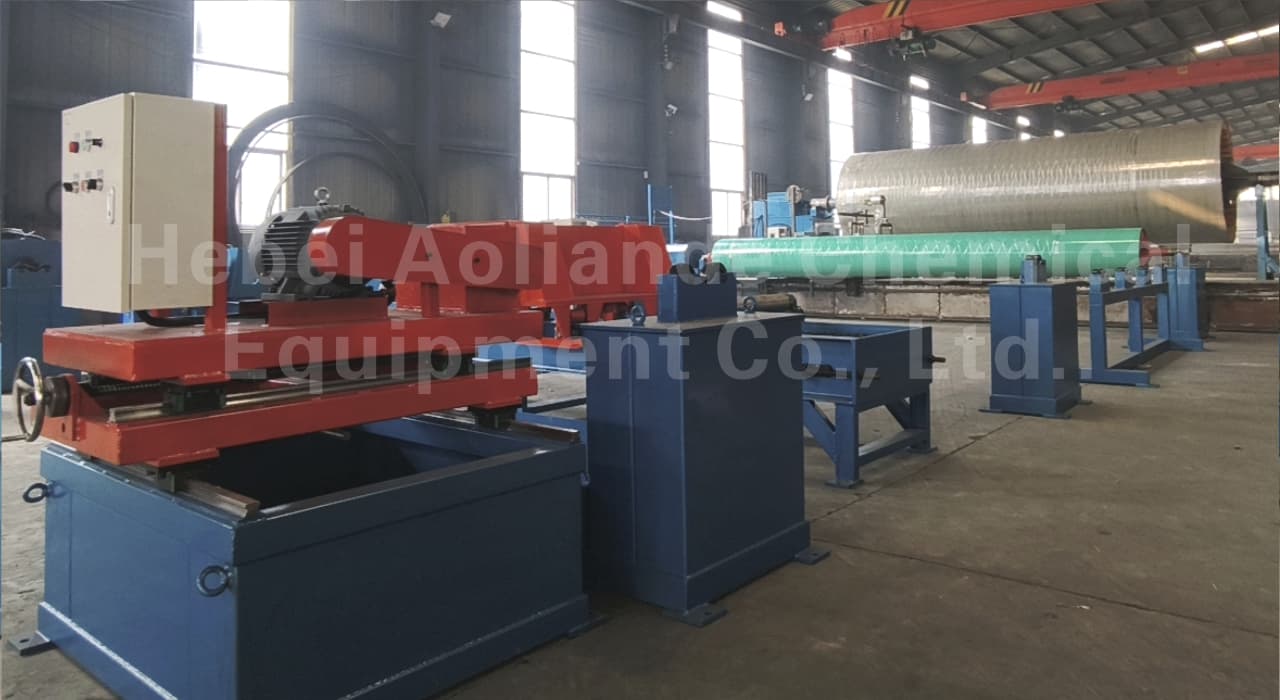
Understanding the workflow helps explain why a FRP pipe filament winding making machine is so valuable. Here’s a typical process:
1. Mandrel Setup
The mandrel serves as the pipe mold. It must be cleaned and coated with a release agent if necessary. Proper mandrel preparation ensures smooth surfaces and accurate pipe dimensions.
2. Fiber Impregnation
Continuous fiberglass rovings are pulled through a resin bath or injection system. This step saturates the fibers with resin, which is critical for strength, bonding, and chemical resistance.
3. Filament Winding
Fibers are wound around the rotating mandrel at specific angles under controlled tension. The winding angles determine the pipe’s strength under axial and radial loads. Modern machines use automated controls to ensure precision and consistency.
4. Optional Fillers
Some applications, especially large-diameter pipes, include fillers like silica sand between layers to reduce costs while maintaining strength.
5. Curing
After winding, the pipe is cured, either at room temperature or using integrated heating systems. Curing solidifies the resin and locks the fibers in place.
6. Demolding and Finishing
The finished pipe is removed from the mandrel and trimmed or polished to meet specifications. Some machines also allow for automated quality checks on dimensions or surface integrity.
By integrating these steps into one machine, a FRP pipe filament winding making machine ensures consistent quality, reduces labor requirements, and minimizes material waste.
Advantages of Using a Filament Winding Making Machine
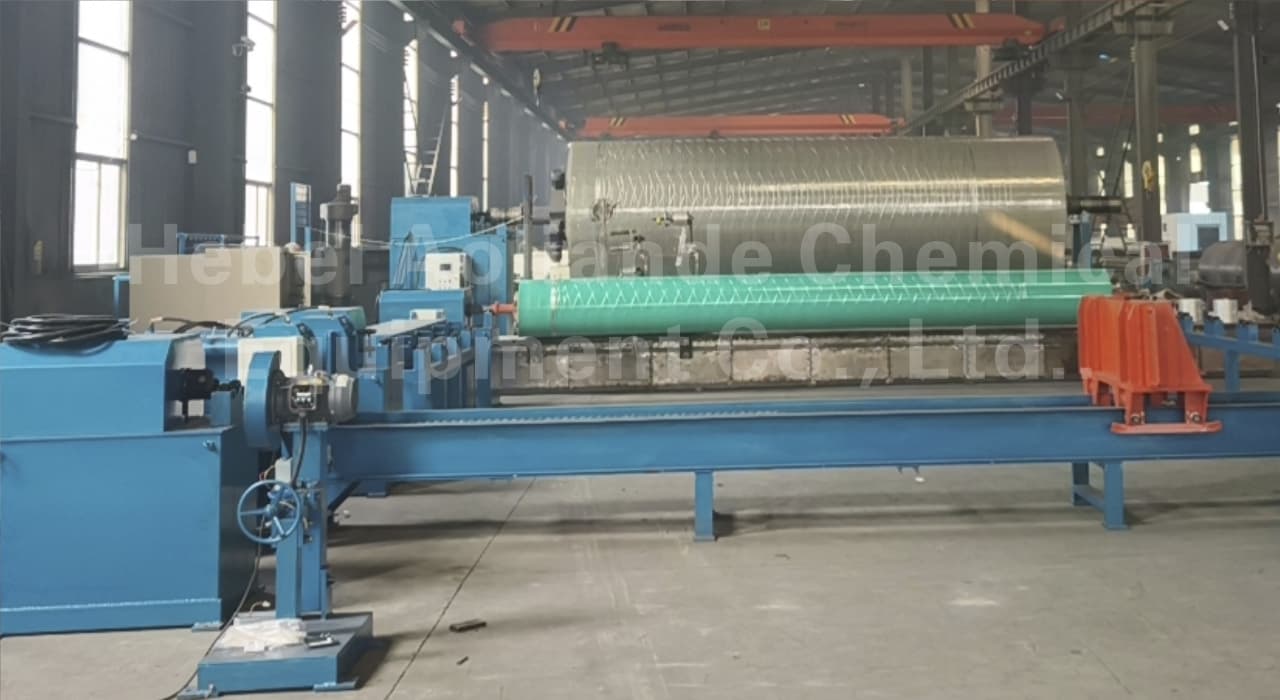
From my experience, investing in a FRP pipe filament winding making machine offers several clear benefits:
1. High Efficiency
Automation significantly increases output compared to manual or semi-automatic methods. A single machine can produce more meters of pipe per day without additional labor.
2. Consistent Product Quality
Automated fiber placement and controlled resin application ensure every pipe has uniform wall thickness and meets structural requirements. This is essential for chemical, water treatment, and industrial pipelines.
3. Versatility
Many machines allow adjustable winding angles, pipe diameters, and wall thicknesses. This flexibility enables manufacturers to produce pipes for various applications without retooling.
4. Material and Cost Savings
Optimized resin use and precise fiber placement minimize waste, reducing production costs over time.
5. Reduced Labor Requirements
Fewer operators are needed, freeing staff to focus on maintenance, quality inspection, or other production tasks.
Real-Life Example: Improving Production
I once worked with a factory producing FRP pipes for municipal water systems. They relied on manual winding setups, which limited production to about 100 meters per day and resulted in inconsistent wall thickness.
After introducing a FRP pipe filament winding making machine, production jumped to 250 meters per day. The pipes were stronger, more uniform, and passed all quality inspections without rework. The company also reduced labor costs and was able to expand into larger projects.
This is a prime example of how a single machine can transform an operation—not just in efficiency, but also in reliability and market credibility.
Key Considerations Before Buying
Not all filament winding machines are the same. Here’s what I recommend evaluating before investing in a FRP pipe filament winding making machine:
-
Production Capacity: Match the machine’s output with both current needs and future growth.
-
Pipe Diameter and Length Range: Make sure the machine can handle the sizes you plan to produce.
-
Automation Level: Fully automated machines reduce labor but require higher initial investment. Semi-automatic options may suit smaller operations.
-
Resin and Fiber Compatibility: Ensure the machine supports the types of resin and fiberglass you intend to use.
-
After-Sales Support: Training, maintenance guidance, and spare parts availability are essential for long-term reliability.
Maintenance Tips for Longevity
Even the most advanced FRP pipe filament winding making machine requires proper maintenance. From my experience:
-
Regularly check fiber tension and alignment.
-
Clean and calibrate resin delivery systems to prevent uneven coating.
-
Inspect mandrels for wear and replace when necessary.
-
Train operators in troubleshooting and preventive maintenance.
Consistent maintenance ensures the machine continues producing high-quality pipes and minimizes downtime.
Industry Trends
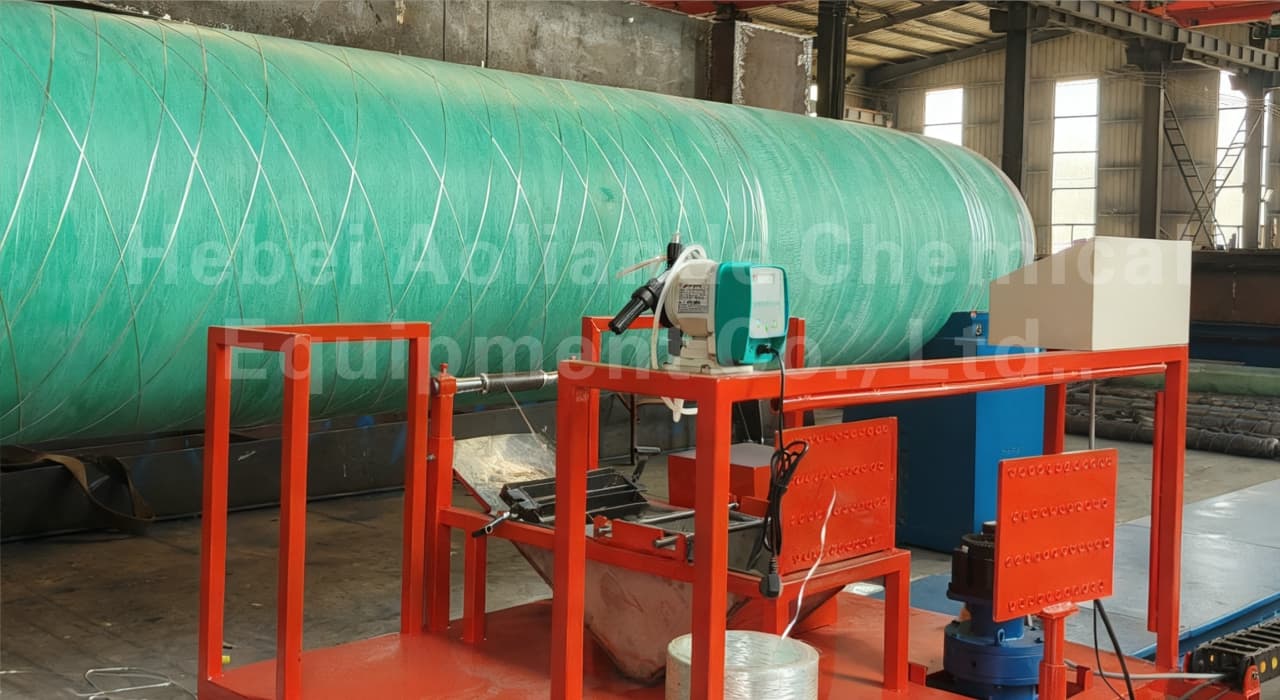
Moderne FRP pipe filament winding making machines are increasingly integrated with smart manufacturing technology. Features now include:
-
Real-time monitoring of production parameters
-
Digital control of winding angles and resin flow
-
Remote troubleshooting and diagnostics
-
Energy efficiency optimization
These innovations improve efficiency, reduce errors, and help manufacturers meet international standards—especially important if you’re exporting products.
Why Investing in a Filament Winding Machine Pays Off
From my perspective, a FRP pipe filament winding making machine is more than just equipment—it’s a strategic investment. It allows manufacturers to:
-
Increase production efficiency
-
Ensure consistent pipe quality
-
Reduce material waste and labor costs
-
Scale operations to meet growing market demand
With rising global demand for corrosion-resistant pipelines, having a reliable filament winding machine gives your business a competitive edge.
Abschließende Gedanken
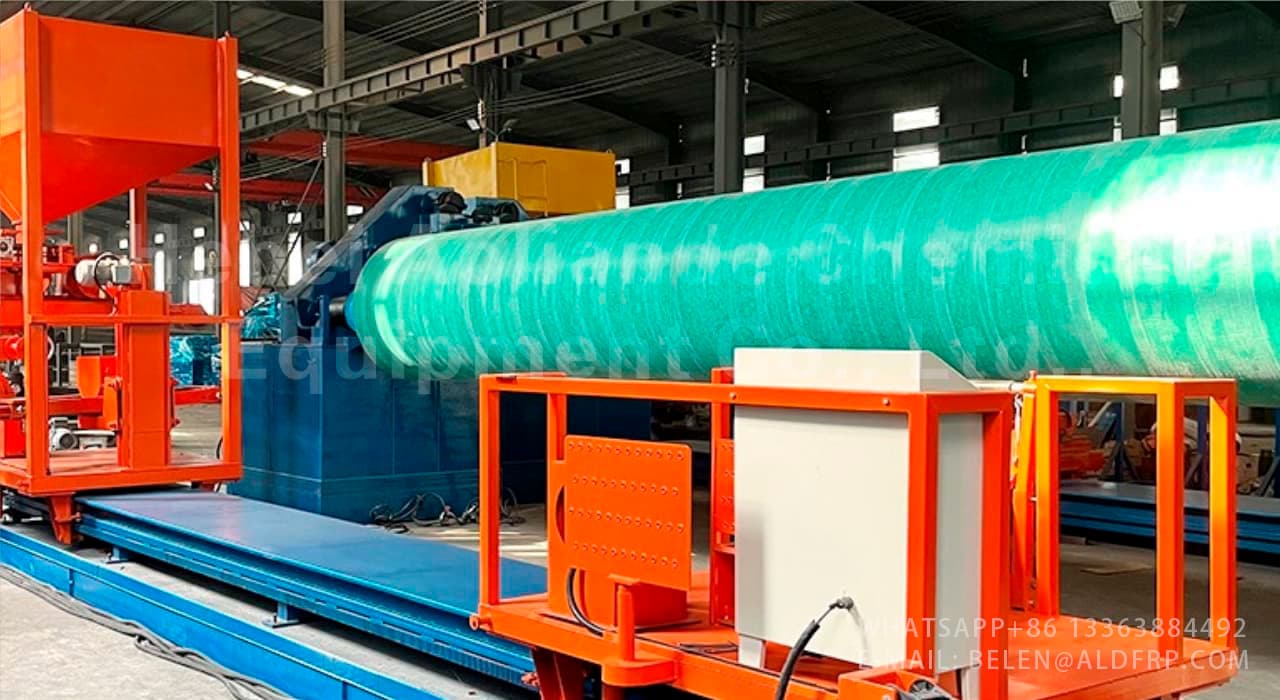
In my years working with FRP pipe manufacturers, I’ve seen companies transform their operations by investing in a FRP pipe filament winding making machine. They achieve higher output, consistent quality, and cost savings, while gaining credibility in the market.
If you want to grow your FRP pipe business and stay competitive, this machine isn’t just an option—it’s a foundation for long-term success. Investing in reliable filament winding technology ensures your pipes meet industry standards and your production keeps pace with market demand.