
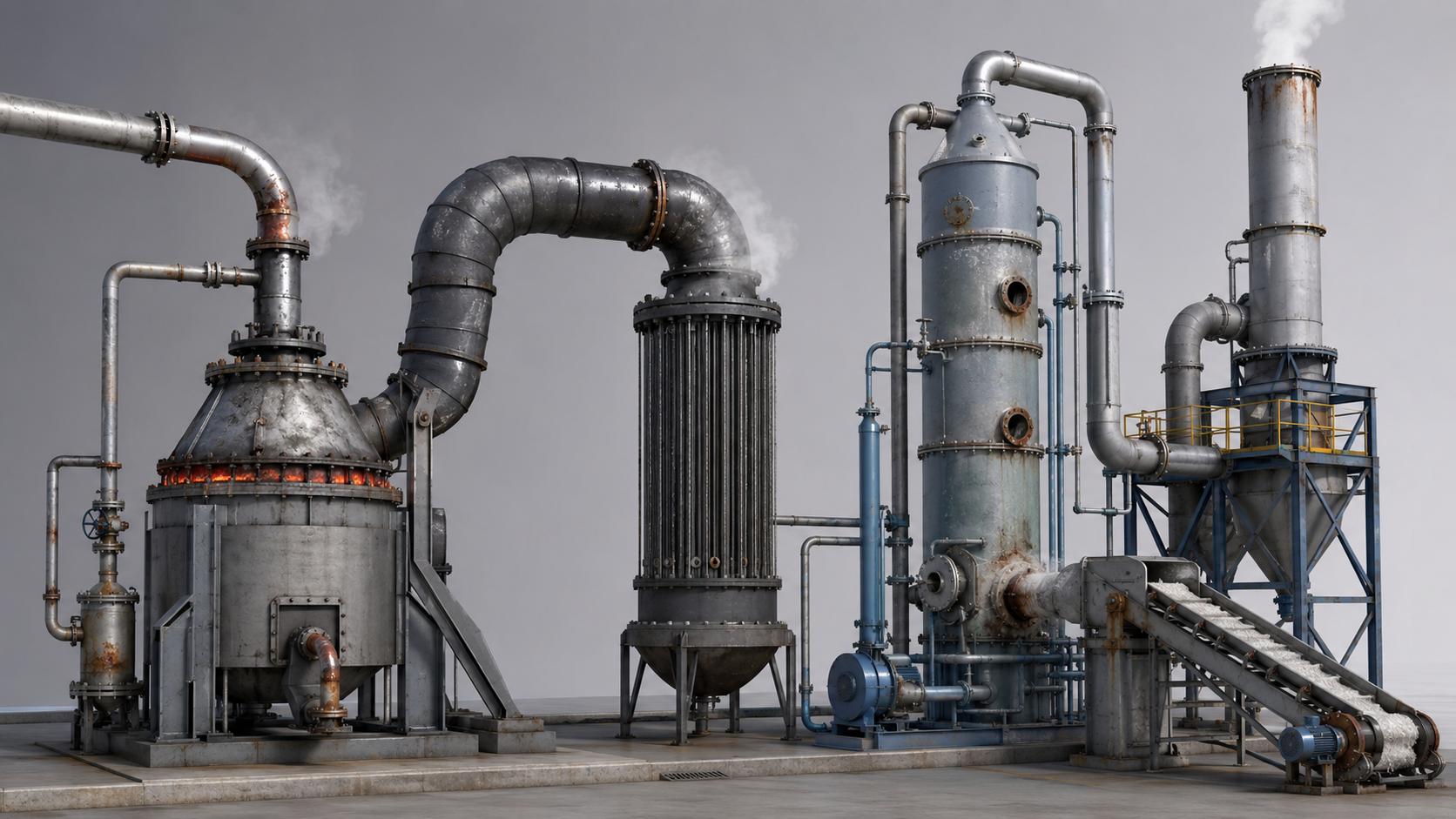
A Mannheim process potassium sulfate plant handles high heat, concentrated sulfuric acid, chloride salts, hydrogen chloride gas, acid mist, and abrasive solids. Corrosion becomes a major cause of leaks, unstable output, and shutdowns across the potassium sulfate production line, from acid feeding to HCl recovery and tail-gas cleaning.
Good corrosion control starts by separating the plant into operating zones. Dry hot HCl, wet hydrochloric acid, concentrated sulfuric acid, refractory surfaces, and hot SOP attack equipment differently. Six locations deserve priority in design and Mannheim process equipment maintenance.
Why Mannheim Process Corrosion Is So Severe
Potassium chloride first reacts with sulfuric acid to form potassium bisulfate and HCl. The intermediate then reacts with more potassium chloride to form potassium sulfate and more HCl. Many furnace designs heat the feed above 600°C, while the combustion chamber runs much hotter. Uneven heating can create hot spots, thermal stress, cracks, and HCl leakage paths.
Corrosion changes as gas cools. When moisture condenses, wet hydrochloric acid becomes more aggressive, causing acid dew point corrosion around cool surfaces, joints, and low points. Sulfuric acid behavior also shifts with temperature, concentration, velocity, and water content. Corrosion-resistant materials must match each duty.
The 6 Most Corrosion-Prone Locations
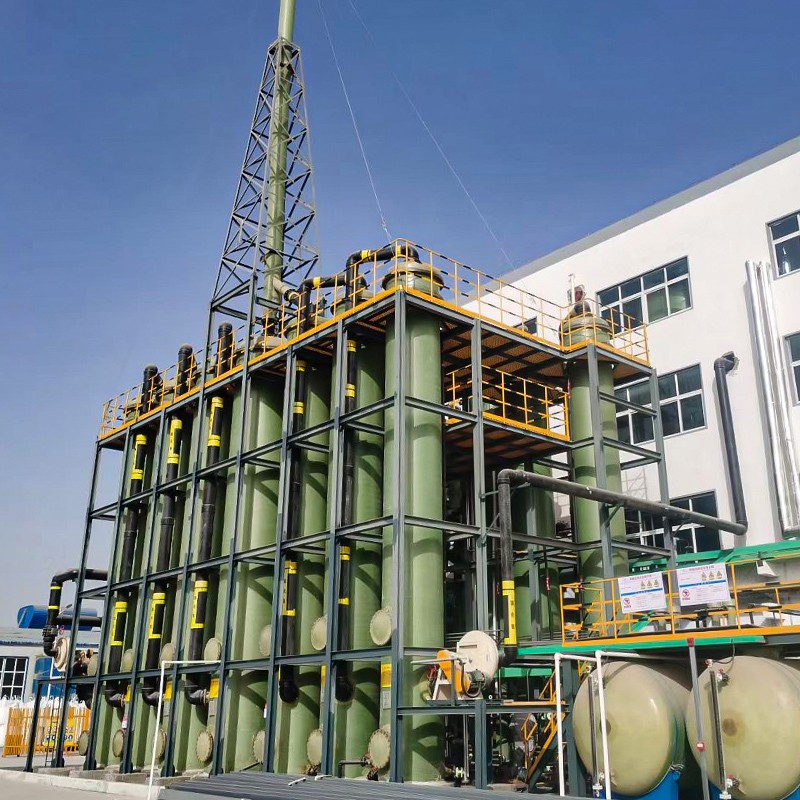
Each hotspot has a distinct failure pattern.
| Location | Typical damage | Early warning |
| Acid feed | Wall loss, plugging | Unstable flow, stains |
| Furnace and rake | Cracks, wear | Hot spots, rising load |
| HCl duct | Pinholes, joint attack | Fumes, wall loss |
| Gas cooler | Condensation, deposits | Higher pressure drop |
| Absorber loop | Wet-acid attack | Heat rise, weak absorption |
| Tail gas and discharge | Acid mist, abrasion | Deposits, vibration |
Sulfuric Acid Feed Pipe and Distributor
Sulfuric acid feed pipe corrosion often starts at elbows, welds, valves, and injection points where velocity or temperature changes. Furnace heat raises metal temperature near the inlet, while water contamination alters acid behavior.
Poor distribution sends excess acid to one part of the hearth and too little to another. This can damage refractory, raise residual chloride, and disturb product quality. Main defenses include acid-resistant piping, corrosion allowance, stable acid temperature, and feed ratio control.
Furnace Hearth, Dome, Lining, and Rake
Mannheim furnace corrosion combines chemical attack, heat, and mechanical wear. The furnace refractory lining faces acidic salts and repeated expansion. Fast startups, sudden cooling, flame imbalance, and uneven feeding can cause thermal cycling damage and expose steel to HCl.
Rake arm corrosion and worn teeth disturb the material bed, increase drive load, and reduce conversion. Operators should track motor current, abnormal sound, shell temperature, and product chloride. Infrared scans can reveal developing hot spots.
High-Temperature HCl Outlet and Ductwork
The outlet carries hot HCl, fine solids, acid mist, and traces of moisture. High-temperature HCl pipeline corrosion is often most serious at the furnace nozzle, bends, expansion joints, welds, and cooler inlet.
Material choice depends on temperature, water content, dust loading, and condensation risk. The duct needs thermal movement space, drainable low points, and inspection ports. Ultrasonic thickness testing should focus on bends and welds.
Graphite Cooler and Connecting Joints
The gas cooler is where a hot stream becomes cooler and wetter. Graphite cooler corrosion may appear in resin-bonded joints, gaskets, nozzles, metal shells, supports, or condensate piping rather than in the graphite block.
Dust deposits reduce heat transfer, while poor drainage leaves acid in low sections after shutdown. Graphite heat exchanger maintenance should include leak tests, pressure-drop records, cooling-water checks, cleaning, and joint inspection.
Sistema de absorción de ácido clorhídrico
The hydrochloric acid absorption system handles severe wet-acid service. A falling film absorber or FRP absorption tower must remove HCl while carrying away the heat released during absorption. Poor liquid distribution creates hot areas, lowers HCl capture, and shortens packing, gasket, or lining life.
Acid piping, tank nozzles, valves, and pumps need equal attention. Where duty allows, a magnetic drive hydrochloric acid pump removes a common shaft-seal leakage path. Trend flow, acid temperature, concentration, pressure drop, and outlet HCl together.
Tail-Gas System and SOP Discharge Equipment
HCl tail gas treatment is the final barrier before gas leaves the process. Scrubbers, demisters, fans, ducts, stacks, and drains face dilute acid, acid mist, and wet-dry cycling. Weak acid mist control can also corrode platforms, cable trays, handrails, and nearby steelwork.
Hot SOP is abrasive. Seals, conveyors, crushers, coolers, and chutes can lose thickness through wear plus chemical attack. Stable negative pressure control keeps HCl inside, while sealed discharge points reduce gas escape.
How to Extend SOP Production Equipment Lifespan
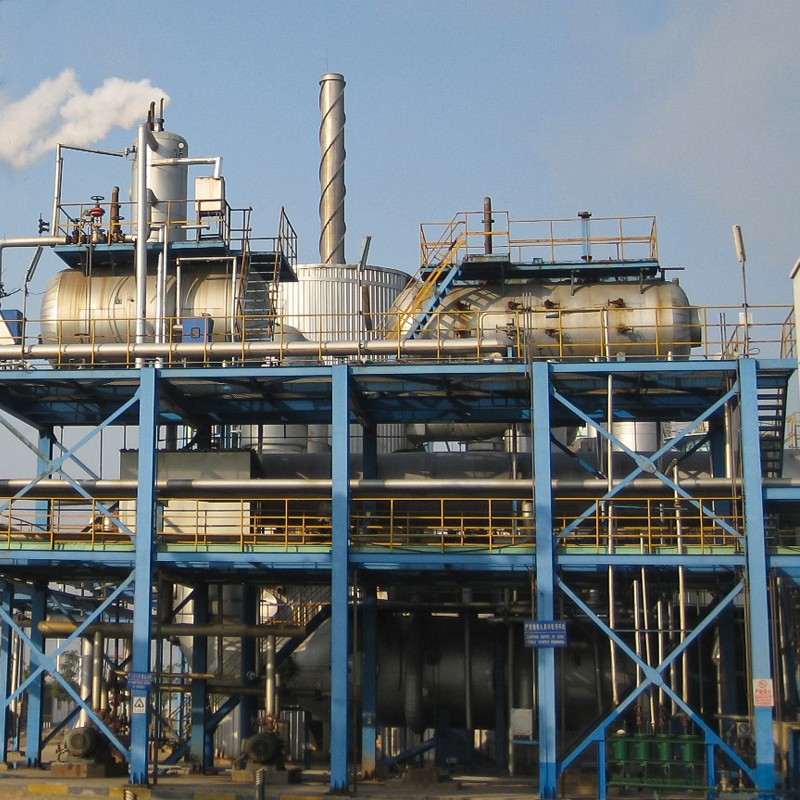
Longer service life comes from matching materials, process control, and inspection. A thicker replacement pipe may simply move the next failure to a joint.
Match Materials to the Corrosion Zone
Separate dry hot gas, condensation areas, concentrated acid, wet HCl, and abrasive solids. Choices may include heat-resistant alloys, graphite, FRP, fluoropolymer linings, acid-resistant brick, or selected resins. Check compatibility during operation, startup, shutdown, cleaning, and upsets.
Keep Temperature, Feed, and Pressure Stable
PLC control for Mannheim process operation should link sulfuric acid flow, potassium chloride feed, furnace temperature, combustion air, and pressure. Stable feeding limits excess acid and incomplete reaction. Controlled heating and cooling protect refractory. Gas cooling and absorption rates should follow production load.
Build Maintenance Around Measured Risk
A practical preventive maintenance for SOP plant equipment can include:
- Per shift: check leaks, HCl odor, pressure, pumps, and unusual temperatures.
- Weekly: inspect flanges, flexible joints, drains, seals, and scrubber pressure drop.
- Monthly: record wall thickness and compare infrared images.
- Each shutdown: inspect refractory, rake parts, cooler joints, absorber internals, and discharge seals.
Corrosion monitoring works best when readings stay tied to fixed locations. Thickness loss per operating month gives a clearer remaining-life estimate than isolated measurements.
Equipment Integration Matters
A durable plant links dosing, combustion, HCl by-product recovery, cooling, dust control, storage, packing, utilities, and automation. A sulfuric acid production line may support acid supply, while a calcium chloride production line can use recovered HCl where local economics permit. FRP pipe filament winding machine technology supports corrosion-resistant piping and tanks.
Hebei Aoliande Equipo Químico Co., LTD.
Hebei Aoliande Equipo Químico Co., LTD. is a Mannheim Process Potassium/Sodium Sulfate Production Line SOP Plant supplier in Hebei, China. Its scope covers chemical process equipment, FRP systems, material and structural design, technical advice, supply, transport support, and installation supervision. The company lists 300 employees, over 10 R&D engineers, over 10 quality inspectors, and certified quality, environmental, and occupational safety management systems.
Buyers comparing potassium sulfate production equipment should discuss raw materials, capacity, fuel, HCl demand, emissions, utilities, inspection access, corrosion zones, and spare parts before final selection.
Conclusión
Potassium sulfate plant corrosion is concentrated where chemistry and conditions change: acid injection, the furnace, hot HCl ducting, gas cooling, wet absorption, tail-gas cleaning, and product discharge. Longer life comes from steady operation, drainable layouts, suitable materials, inspection access, and measured corrosion rates. Treating the line as one system reduces leakage, repairs, and lost production.
Preguntas frecuentes
Where is Mannheim process corrosion most severe?
The highest-risk areas are the acid feed, furnace refractory and rake, HCl outlet, graphite cooler, absorber loop, tail-gas equipment, and SOP discharge. Joints and transition zones often fail before long straight sections.
How can Mannheim furnace maintenance reduce refractory damage?
Control heating and cooling rates, keep combustion balanced, track shell-temperature patterns, and inspect the dome, hearth, seals, rake arms, and drive during planned stops. Stable acid-to-KCl feeding also limits local attack.
What materials are suitable for wet HCl service?
Selection depends on acid concentration, temperature, pressure, velocity, solids, and cleaning method. Graphite, FRP, fluoropolymer-lined parts, and selected alloys may serve different zones. No single material fits every wet hydrochloric acid duty.
How often should corrosion-prone equipment be inspected?
Frequency should follow measured corrosion rate and failure consequence. High-risk pumps, flanges, acid lines, and gas joints may need shift or weekly checks. Fixed-point thickness readings, infrared surveys, and internal inspections belong in planned shutdown work.