
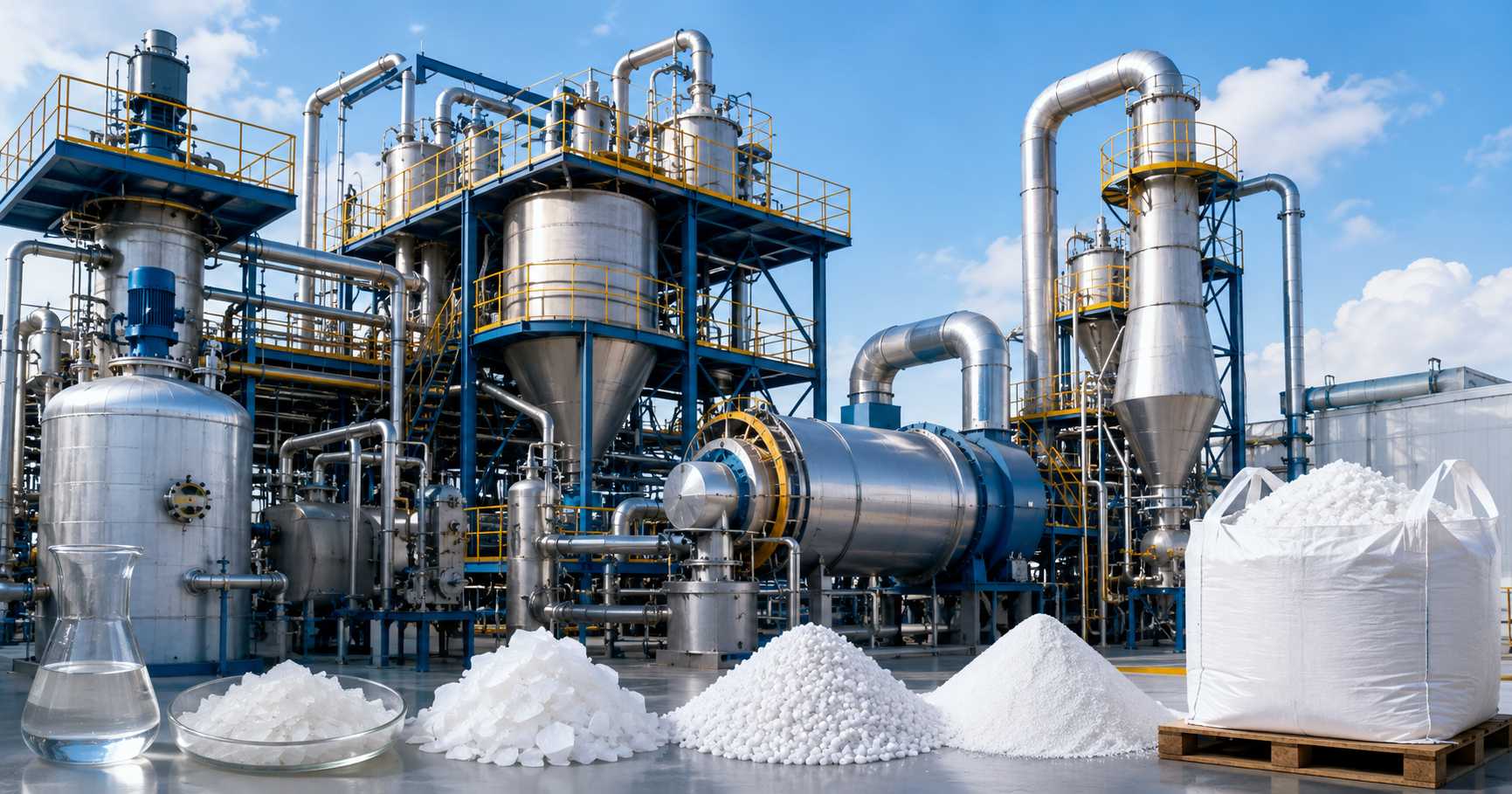
The purity of Calcium Chloride is created by controlling the raw materials, balancing the reaction, filtering, evaporating, drying, granulating and the design of the plant.
In calcium chloride production plants, the focus is on achieving repeatable quality, such as constant concentration, low content of insoluble matter, correct moisture content, clean color, correct particle size, and proper storage behavior. This is especially important when producing high-quality calcium chloride in high purity or anhydrous form, above 95%.
What Calcium Chloride Purity Means in Production
The term ‘purity’ in relation to calcium chloride refers to the percentage of CaCl2 in the end product. However more than this parameter is required to accurately judge a material. Meeting the CaCl2 assay from the assay results is important but water, suspended solids, magnesium salts, iron and dust all can seriously affect performance of the material even when the assay is met.
Key Quality Indicators Buyers Often Check
Calcium chloride, sold as flakes, granules, powder or liquid solution, has several quality indicators that a buyer looks at to accept them.
| Quality point | Why it matters in real use |
| CaCl2 content | Decides grade, pricing, and application range |
| Moisture content | Affects anhydrous calcium chloride purity and caking risk |
| Insoluble matter | Causes cloudy solution and blocks downstream use |
| Magnesium and iron | May affect color, clarity, and final assay |
| Particle size | Influences dissolution speed, dust level, and packaging |
Control Point 1: Raw Material Quality
Calcium chloride production typically begins with a reaction between hydrochloric acid and limestone. In order to use this method it is necessary for the plant to have a supply of hydrochloric acid, preferably from a local process. This way calcium chloride is made from by-product hydrochloric acid which can be sold as a product.
Hydrochloric Acid and Limestone Reaction
In a typical reaction, hydrochloric acid reacts with calcium carbonate to produce a calcium chloride solution, carbon dioxide gas, and water. Naturally occurring limestone can also contain other minerals, such as magnesium and silica as well as clay and iron bearing compounds. The hydrochloric acid used in the process can also contain metal ions and organic materials, particularly if it is received from another process unit.
Common raw material checks include:
- CaCO3 content and acid-insoluble matter in limestone
- MgO, Fe, and SiO2 levels in mineral feed
- HCl concentration and impurity profile
- Raw material stability from batch to batch
Since the limestone quality may change from week to week, the neutralization reaction of the calcium chloride will change. Therefore, in addition to the production capacity, it is also necessary to match the production line with the limestone supply source. Increased amount of sludge may be formed, the load on the filtration increases, the amount of insoluble matter in the end product increases.
Control Point 2: Neutralization and pH Balance
Neutralization is the production of a calcium chloride solution in a basic acid-base reaction. This stage of production is critical in determining the quality of the final product. If the pH of the neutralization stage is not controlled, there is a risk of the liquid containing free acid, increasing corrosion, and the operators having to add excess limestone to neutralize. This excess limestone will then result in high levels of suspended solids in the liquid.
Why pH Drift Causes Purity Problems
Acid feed, limestone feed, mixing and residence time all interact in a steady process for making calcium chloride. Feed of acid too in excess of requirement can attack metal work. Similarly, feed of limestone in excess of requirement can result in unreacted solids passing to the next stage of process.
The reaction control points of typical chemical plants are pH, temperature rise, foam, feed rate and end point of reaction. Plants producing high-purity calcium chloride solution should keep clear and complete production records. Such records may help to trace back the cause when a customer reports cloudy solution, high residue or abnormal color etc.
Control Point 3: Filtration and Impurity Removal
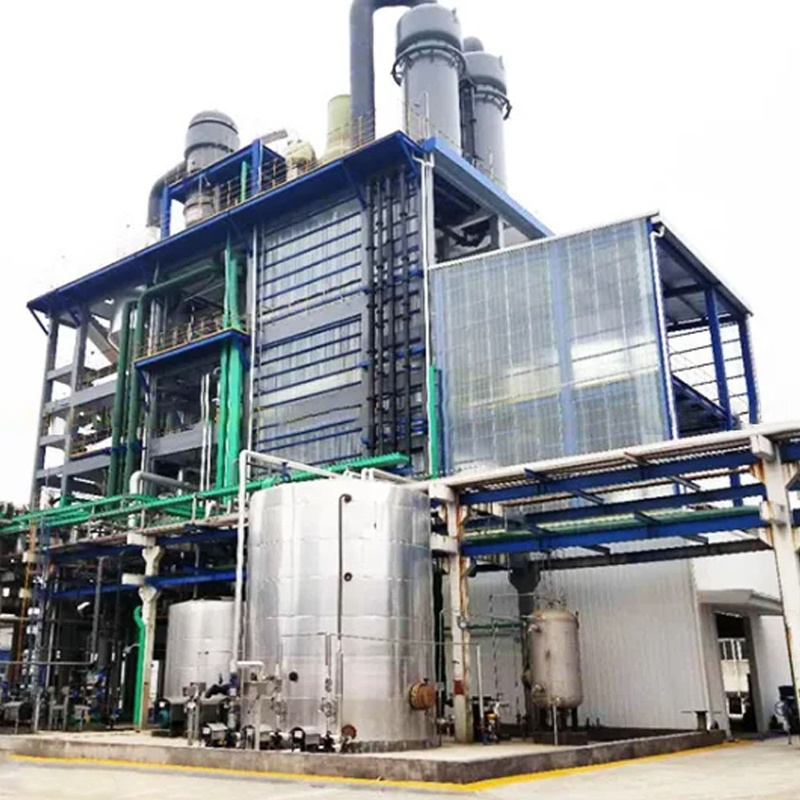
Calcium chloride solutions prepared after reaction will often contain fine solids such as unreacted limestone, silica, clay particles, iron hydroxide and other solids which have precipitated from the solution. It is essential to remove these solids from the solution as early as possible, otherwise they will be carried into the evaporation, drying and granulation sections and result in visible defects in the product.
Filtration Before Evaporation
The clear liquid from the filtration process of the calcium chloride production is good for product and equipment. It reduces scaling, lessens the chance of blockage and improves heat transfer in the evaporation system. For the production of solid and anhydrous calcium chloride, the insoluble matter will concentrate with the withdrawal of water.
Magnesium and iron need to be controlled on a regular basis. Dolomitic limestone is a common source of magnesium. Iron can come into solution from the raw material being used, from corrosion of plant items, or from wear of plant equipment. It is suggested that all samples are analyzed for CaCl2 assay, Mg, Fe, sulfate, heavy metals, insoluble material and pH. The internal limits for these parameters can vary depending on the end use of the material, road deicing material may have different limits than refrigeration brine, gas drying chemical synthesis etc.
Control Point 4: Evaporation Concentration
Concentrating a calcium chloride solution prior to drying or granulation is essential. Removing water by evaporation increases the concentration of the solution and enables the subsequent processing step to run properly. Should the evaporation process prove to be instable then the dryer is affected by constant changes in load throughout the day.
How Concentration Affects Final Purity
A low concentration going into the dryer will require more water to be removed than at a higher concentration which could increase the requirement for fuel/steam, decrease the capacity of the dryer, and increase the possibility of wet particles being discharged from the dryer. A concentration that is too high could result in scaling within the dryer, poor flow through feeders, and uneven operation of feeders. High concentrations of a solution can also negatively impact the moisture content and purity of the resulting calcium chloride.
Items to check include feed concentration, evaporation temperature, steam pressure, scaling potential and outlet concentration. A well-run evaporation section gives a dryer a predictable feed. This is one of the simplest things to do to increase the purity of calcium chloride.
Control Point 5: Drying and Granulation
Drying is the most critical step in achieving the correct anhydrous calcium chloride purity. The residual water in the product lowers the CaCl2 assay and may cause product to stick and form cakes in storage. However, excessive drying can create a dusty product which sticks, forms uneven shaped granules and also causes cakes to form in storage.
Spray Fluidized Bed Drying
Spray fluidized bed system – here the solution of calcium chloride is sprayed into a moving mass of particles. The heat and air release the water from the particles that grow in the course of time to form granules of suitable size. For the proper functioning of a fluidized bed also a special air distribution is required. This allows for a sufficient fluidization of the material and for the removal of large single particles or agglomerates. The risk of oversized lumps containing moisture in the interior of the lumps is thereby avoided.
Drying control cannot be based on outlet temperature alone. Additional parameters, such as feed moisture, air temperature, exhaust humidity, bed behavior, particle size and end product moisture analysis must be monitored. Increased feed moisture and constant air volume may not result in wet product until packaging.
Control Point 6: Product Form and Storage Behavior
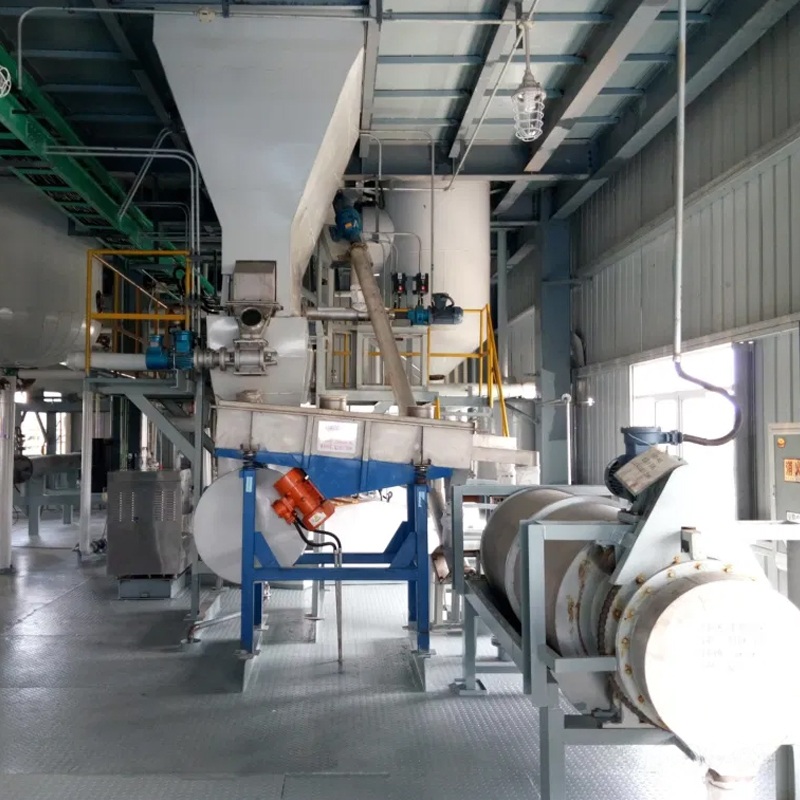
Calcium chloride is available in the form of flakes, granules, powder and a liquid solution. Each form of calcium chloride has different quality characteristics. For example, deicing granules are required to have flowability and a controlled size. Calcium chloride powder can have low coarse particles. A calcium chloride solution is required to have clarity and a stable concentration. Calcium chloride flakes require a good appearance and minimal breakage.
Particle Size, Dust, and Caking
Poor granulation of calcium chloride can have more consequences than just a bad appearance. There is a risk of dust, of weak particles which do not have the same properties as bigger ones, of uneven drying and of high losses during packaging. Big wet particles can even clog up bags and form a cake. Fine, dusty material can absorb air moisture quickly and cause problems during handling.
For buyers a constant particle size is a sign of a stable production line of calcium chloride. It indicates that reaction, concentration, drying and screening are being operated as one process.
Hebei Aoliande Chemical Equipment Co., LTD. as a Calcium Chloride Production Line Supplier
Hebei Aoliande Equipo Químico Co., LTD. produces equipment for production in industry of chemical and composite materials. Our products include equipment for calcium chloride production line, potassium or sodium sulfate production line, sulfuric acid production line, HPMC production line, water-soluble fertilizer production line, and FRP/GRP equipment.
To make calcium chloride, we can supply a complete processing line from calcium liquid through to anhydrous granular calcium chloride. This includes the pipeline work, electrical, instrument control, valves and associated public utilities. The process uses hydrochloric acid and limestone as raw materials and can take hydrochloric acid from a variety of chemical sources, including: caustic soda; PCl3; MCA; Na2SO4; K2SO4; high-test bleaching powder mother liquor.
A calcium chloride production line within the spray drying plant is able to produce 100% anhydrous calcium chloride of greater than 95% purity. Use of a spray fluidized bed drying process provides good heat transfer, lower energy, flexibility to deal with feed and moisture variations and automation for larger scale industrial use. The tail gas can be treated by desulfurization and washing prior to discharge.
Conclusión
The purity of the calcium chloride is influenced by the entire production chain. Impurities are kept low by using clean raw materials. A stable neutralization is the base for a good calcium chloride solution. Solids which could cause defects in the product are removed by sufficient filtration. A good evaporation is a prerequisite for a dryer that works stable. Drying and granulation determine the moisture content, the quality of the particles and the storage behavior of the product.
In establishing a production line for high-purity calcium chloride or anhydrous calcium chloride, strong results can be obtained by matching the production equipment to raw material supply, form, capacity and local environment.
Preguntas frecuentes
What affects calcium chloride purity during production?
The main factors affecting calcium chloride production are raw material quality, neutralization control, filtration, evaporation concentration, drying conditions, impurity removal and granulation. The quality of the limestone, the concentration of the hydrochloric acid, the amount of magnesium in the form of MgCl2, the iron content, the amount of insoluble matter and the final moisture content all affect the purity of the calcium chloride.
How can manufacturers improve calcium chloride purity?
The calcium chloride manufactured can be made of higher purity by ensuring the purity of the raw materials, viz., the hydrochloric acid and the limestone which are to be used for manufacturing the said chemical, by maintaining a stable pH during the course of reaction between the said two chemicals, removing the insoluble matters formed during the course of said reaction by appropriate filtration, maintaining the concentration of the solution formed as a result of said evaporation, and checking the moisture content of the dried chemical.
Why is drying important for anhydrous calcium chloride?
Drying in the production of calcium chloride removes water from concentrated solution or from wet particles. High moisture content leads to low purity of the anhydrous product and to its possible caking during storage. Proper control of the drying stage is also crucial to producing particles that are strong enough and that flow well.
What equipment is used in a calcium chloride production line?
A typical Calcium Chloride production line includes Raw Material Storage, Reaction, Filtration/Clarification, Evaporation, Drying and Granulation, Screening, Packing, Tail Gas Treatment, Piping, Valves, Electrical, Instruments and Utility systems.
Can by-product hydrochloric acid be used for calcium chloride production?
By-product HCl can be used, provided the process and pretreatment are of a quality to which this can be added. It is essential to check the concentration, level of impurities and the stability of supply before making design decisions.