
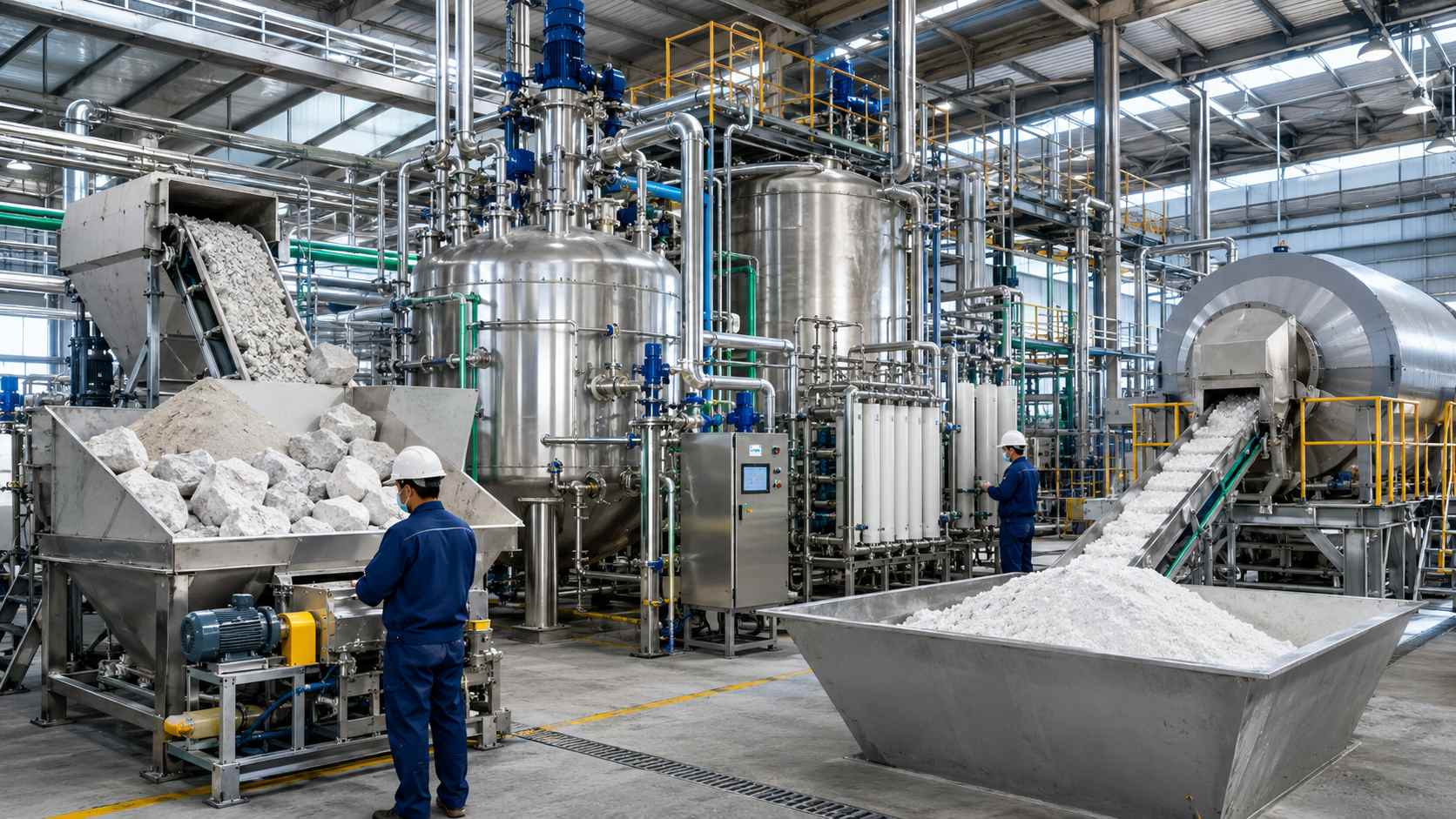
Can by-product hydrochloric acid be used for production de chlorure de calcium? Yes, in many industrial projects it can. The real question is not whether HCl reacts with limestone. It does. The more important question is whether the acid source, impurity level, concentration range, and plant layout can support stable calcium chloride production at commercial scale.
For chemical plants that already generate waste hydrochloric acid, a calcium chloride production line can turn a handling problem into a saleable chemical product. The same idea applies to chlor-alkali plants, potassium sulfate plants, chloroacetic acid production, phosphorus chloride processes, sulfate-related production, and high test bleaching powder mother liquor. Each acid source brings different risks. A good calcium chloride plant design starts with those differences.
How By-product Hydrochloric Acid Becomes Calcium Chloride
The basic route is simple. Hydrochloric acid reacts with limestone or other calcium-containing raw materials to form calcium chloride solution. The reaction is:
CaCO₃ + 2HCl → CaCl₂ + CO₂ + H₂O
This equation looks clean, but an industrial HCl calcium chloride process is more than a reaction tank. Real production includes acid storage, limestone preparation, calcium liquid preparation, neutralization control, filtration, concentration, drying granulation, cooling, screening, packing, and tail gas treatment.
Why the Acid Source Matters
By-product hydrochloric acid often contains small amounts of other chemicals from the upstream plant. These may be chlorides, sulfates, organics, iron, suspended solids, color bodies, or trace metals. Even low impurity levels can affect color, insoluble matter, pH, particle quality, and long-term storage behavior.
For buyers, the first step is not ordering equipment. It is testing the acid.
Useful raw acid data includes:
- HCl concentration range and daily fluctuation
- Suspended solids and insoluble matter
- Sulfate, iron, organics, and heavy metal content
- Acid temperature and storage condition
- Daily and annual acid volume
- Target calcium chloride form and purity
Common Sources of By-product HCl and Their Design Impact
Different HCl sources can be used, but they do not require the same calcium chloride production line setup. A plant built for clean, stable acid may not fit variable mother liquor. A line designed for one product form may not suit a market that needs flakes, pellets, powder, and liquid calcium chloride.
| By-product HCl source | Common concern | Design impact |
|---|---|---|
| Chlor-alkali process | Stable acid supply, possible chlorine-related traces | Careful material selection and gas handling |
| PCl3 production | Phosphorus-related impurities | Stronger purification and filtration planning |
| Chloroacetic acid process | Organic residues and odor risk | Better liquid treatment and emission control |
| Na2SO4 or K2SO4 process | Sulfate-related impurities | Product purity monitoring and residue control |
| Bleaching powder mother liquor | Variable composition | Wider process tolerance and raw material testing |
Chlor-alkali By-product Acid
Chlor-alkali plants may have a steady acid stream, which is helpful for continuous calcium chloride production. Stable feed makes plant control easier. Still, the design should consider acid mist control, corrosion-resistant equipment, and clear reaction control. When the acid quality is consistent, the plant can focus more on efficient concentration, drying, and product form control.
PCl3, MCA, and Sulfate-related Acid Sources
HCl from PCl3, MCA, Na2SO4, or K2SO4 production may bring more complex impurity profiles. In these cases, calcium chloride plant design must pay closer attention to pre-treatment, filtration, and by-product management. The goal is not just to consume waste hydrochloric acid. The goal is to produce a product that buyers can store, transport, and use without quality complaints.
Acid Concentration Changes the Whole Plant Balance
HCl concentration affects reaction speed, heat release, water load, evaporation demand, and drying cost. A low-concentration acid stream means more water enters the process. That water must be removed later through concentration and drying. A high-concentration acid stream may lower evaporation load, but it can raise corrosion and safety demands.
A practical calcium chloride production line should be selected according to real feed data, not only target annual output. If feed acid concentration moves up and down during the day, the system needs enough buffer capacity, dosing control, and stable neutralization logic.
Why Feed Fluctuation Cannot Be Ignored
A feed fluctuation that looks small on paper can create real trouble in the drying section. More water in the calcium chloride solution means higher heat demand. More solids can increase filter load. Higher impurity content can cause scaling, color changes, or unstable granules. These problems often appear after start-up, when the plant moves from trial operation into daily running.
From Calcium Liquid to Solid Calcium Chloride
The early part of the process produces calcium chloride solution. Some markets can use liquid calcium chloride directly, such as dust control, brine preparation, cooling media, and industrial liquid applications. Other markets need solid products, including calcium chloride flakes, calcium chloride pellets, calcium chloride powder, or anhydrous calcium chloride granules.
Solid product production adds more process sections. The calcium chloride solution must be concentrated, dried, formed, cooled, screened, and packed. Moisture control becomes critical because calcium chloride absorbs water easily. Poor drying or weak packaging can lead to caking during storage and shipping.
Key Equipment in a Calcium Chloride Production Line
A complete by-product HCl calcium chloride plant usually includes:
| Process section | Main function |
|---|---|
| HCl storage and dosing | Safe acid feeding and flow control |
| Limestone preparation | Stable calcium source supply |
| Reaction system | Calcium liquid preparation |
| Filtration or clarification | Removal of insoluble matter |
| Concentration system | Water removal before drying |
| Spray fluidized bed drying | Drying and granulation |
| Cooling and screening | Particle control before packing |
| Packaging system | Moisture protection and product handling |
| Tail gas treatment | Acid mist, dust, and exhaust control |
Drying and Granulation Decide Product Value
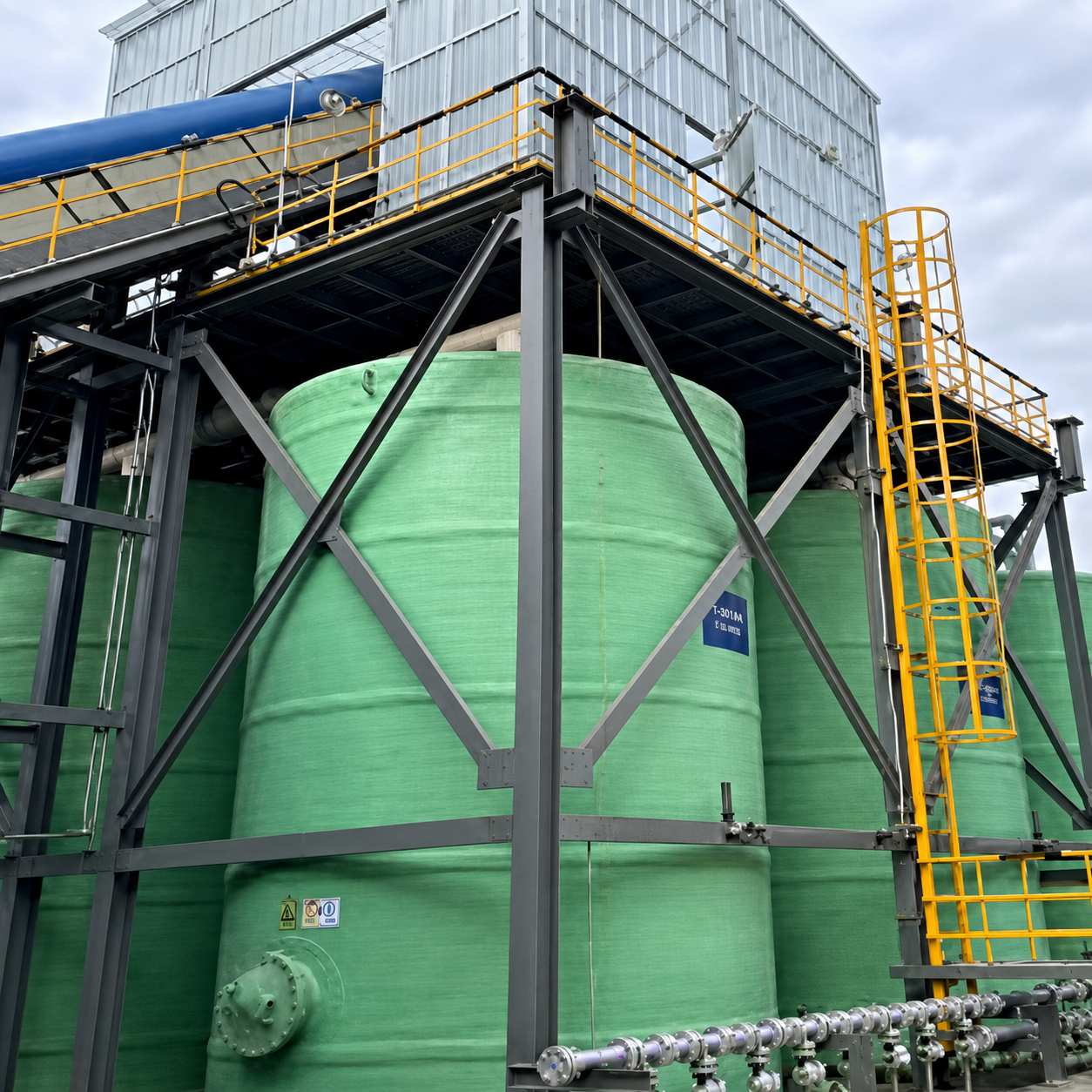
For anhydrous calcium chloride production, drying is one of the most important cost and quality points. Spray fluidized bed drying is widely used because it increases contact between hot air and material, supports steady granulation, and helps lower material loss when the air distribution and exhaust treatment are well designed.
What Buyers Should Check in the Drying Section
The drying section should not be judged only by nameplate capacity. Buyers should ask how the system handles moisture fluctuation, large particles, agglomerates, exhaust gas, and product temperature. A good calcium chloride granulation system should produce stable particles while keeping operation practical for plant workers.
Important points include:
- Feed moisture tolerance
- Particle size control
- Heat exchange efficiency
- Dust recovery and exhaust treatment
- Outlet gas temperature
- Maintenance access
- Automatic operation level
These details affect power use, product appearance, plant cleanliness, and packaging stability.
Quality Control for Calcium Chloride Made from By-product HCl
Using by-product hydrochloric acid can reduce raw material waste, but product quality must still match the target market. Industrial buyers may accept a wider specification for some uses. Applications such as food preservation, refrigeration, drilling fluids, metallurgy, paper, rubber, pigments, and desiccant production may have different quality demands.
Common calcium chloride quality indicators include CaCl₂ content, water content, insoluble matter, pH value, iron, sulfate, heavy metals, color, clarity, and particle size distribution. For anhydrous calcium chloride, a purity level above 95% is often an important target in industrial production.
Matching Product Form with Market Demand
A plant owner should decide the product form before final equipment selection. Liquid calcium chloride may fit nearby bulk users. Flakes are common for many industrial markets. Pellets often suit buyers who need better flow and cleaner handling. Powder works for fast dissolution or blending.
The wrong product form can reduce profit even when the process runs well. For example, a road deicing supplier may prefer pellets or flakes in moisture-resistant bags. A nearby industrial user may prefer liquid calcium chloride delivered by tank truck. An export trader may care more about packaging, anti-caking behavior, and container loading stability.
Environmental Control Starts at Raw Acid Evaluation
A calcium chloride production line using waste hydrochloric acid needs a strong environmental control plan. Acid mist, CO₂ release, dust, drying exhaust, and washing liquid must be handled properly. Tail gas treatment, desulfuration, washing, dust collection, and clean discharge routes should be part of the plant design from the beginning.
Environmental control also protects product yield. When dry exhaust gas carries fine calcium chloride dust, the loss is not only an emission issue. It is lost product. Good exhaust treatment can improve workshop conditions, lower material loss, and make daily operation easier.
Why Emission Control Affects Project Approval
Many calcium chloride projects are built inside chemical parks or near existing production plants. Local approval teams often check acid storage, tail gas, wastewater, dust, noise, and emergency plans. A plant with clear gas washing, exhaust treatment, and corrosion-safe layouts is easier to evaluate than a line that treats environmental systems as add-ons.
When Is By-product HCl Suitable for Calcium Chloride Production?
By-product HCl is suitable when the acid supply is stable, impurity levels can be managed, and the target product has a real market. It is not suitable when the acid stream changes too much, contains difficult impurities, or cannot support steady production volume.
Before building a calcium chloride plant, project owners should confirm:
- How much by-product hydrochloric acid is produced per day?
- Is the acid concentration stable across shifts?
- What impurity profile does the acid have?
- Is limestone or another calcium source locally available?
- Will the final product be liquid, flakes, pellets, or powder?
- What purity and packaging does the target market need?
- Are steam, power, water, and land available?
- What emission limits apply to the plant site?
These checks reduce costly changes after installation.
Hebei Aoliande as a Calcium Chloride Production Line Supplier
Hebei Aoliande Chemical Equipment Co., LTD. supplies chemical production line systems including calcium chloride production lines, potassium/sodium sulfate production lines, HPMC production lines, water soluble fertilizer production lines, and FRP/GRP production equipment. For calcium chloride projects, its process route uses hydrochloric acid and limestone to produce calcium chloride through calcium liquid preparation and drying granulation.
The calcium chloride production line is designed for wide HCl source adaptability. It can handle hydrochloric acid from ionic membrane caustic soda production, PCl3, chloroacetic acid, Na2SO4, K2SO4, and high test bleaching powder mother liquor, depending on project testing and process matching. The system also covers pipeline, electrical, instrument, valve, utility, drying, granulation, and environmental treatment design.
For project owners, this matters because by-product HCl projects are rarely identical. One plant may need stronger impurity control. Another may need higher automation. A third may need flexible product output for liquid and solid calcium chloride. A supplier with manufacturing, process design, technical consulting, material supply, transportation, and installation guidance can help connect raw acid conditions with a practical plant layout.
Conclusion
By-product hydrochloric acid can be used for calcium chloride production when the plant is designed around the real acid source. The key is not only the reaction between hydrochloric acid and limestone. The full project must handle acid concentration, impurities, liquid preparation, concentration, drying granulation, product form, packaging, tail gas treatment, and long-term operation.
For chemical plants with a stable HCl stream, a calcium chloride production line can reduce waste acid pressure and create a saleable product. A careful early study of raw acid quality, output target, market demand, and environmental limits gives the project a stronger start and fewer costly changes later.
Questions fréquentes
Can by-product hydrochloric acid be used to produce calcium chloride?
Yes. By-product hydrochloric acid can react with limestone to produce calcium chloride solution. The acid must be tested first because concentration, suspended solids, organics, sulfates, iron, and other impurities can affect plant design and product quality.
What raw materials are needed for calcium chloride production?
The common process uses hydrochloric acid and limestone. The reaction produces calcium chloride solution, carbon dioxide, and water. Further concentration, drying, granulation, cooling, screening, and packing are needed when making solid calcium chloride.
Does waste hydrochloric acid affect calcium chloride purity?
Yes. Waste hydrochloric acid may contain impurities from the upstream process. These impurities can affect calcium chloride purity, color, insoluble matter, pH, particle quality, and storage stability. Filtration, clarification, and process control are often needed.
Can one calcium chloride production line make liquid and solid products?
Yes, if the calcium chloride production line is designed with a flexible layout. Liquid calcium chloride can be taken after reaction and clarification, while flakes, pellets, powder, or anhydrous calcium chloride need concentration, drying, granulation, and packing sections.
What should buyers provide before asking for a calcium chloride plant proposal?
Buyers should provide HCl concentration, daily acid volume, impurity test results, limestone quality, target capacity, final product form, required purity, local emission limits, and available utilities such as steam, power, water, and land.