
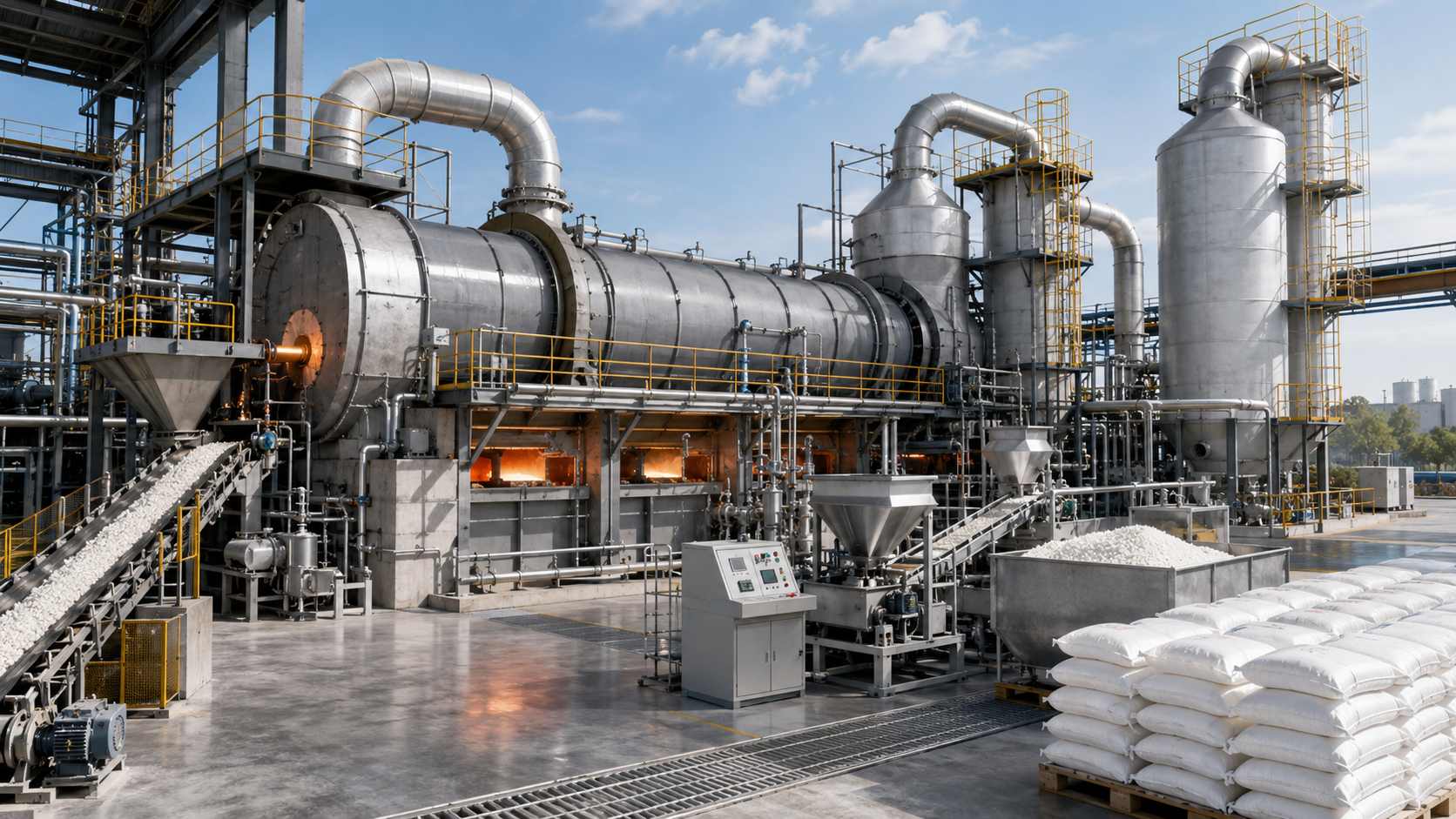
A Mannheim furnace sets the reaction rate, fuel use, product consistency, maintenance workload, and hydrochloric acid recovery performance of a potassium sulfate production line. A low initial quote can become costly when refractory repairs are frequent or gas control is poor.
For a new SOP production plant or capacity expansion, the RFQ should describe operating conditions rather than request only “one complete furnace.” Suppliers need clear data on feedstocks, output, fuel, utilities, product targets, emissions, and supply boundaries.
How Does a Mannheim Furnace Fit into SOP Production?
The Mannheim process reacts potassium chloride with sulfuric acid at high temperature, passing through potassium bisulfate before forming potassium sulfate and hydrogen chloride. Industrial furnaces use indirect heating, controlled feeding, mixing, and gradual movement of the salt bed toward discharge. The hot product is cooled, screened, neutralized when required, stored, and packed. Hydrogen chloride gas is cleaned and absorbed to produce hydrochloric acid.
A sound buying decision therefore covers more than the furnace shell. Feeding, combustion, gas handling, product cooling, acid recovery, automation, and site services must work as one process.
Which 15 Specifications Belong in the RFQ?
Technical proposals are easier to compare when every bidder answers the same questions. The table below turns broad requests into measurable items.
| No. | Specification | What the Supplier Should State |
| 1 | Production capacity | Normal and peak TPD, annual operating days, and furnace quantity |
| 2 | Raw material basis | KCl purity, acid concentration, moisture, particle size, and impurities |
| 3 | Furnace geometry | Chamber size, bed depth, residence path, and discharge layout |
| 4 | Operating temperature | Normal range, control points, alarm limits, and uniformity |
| 5 | Heating method | Fuel type, burner layout, flue route, and start-up method |
| 6 | Specific energy use | Fuel and electricity per tonne of finished product |
| 7 | Refractory system | Material grades, thickness, joints, and expected campaign life |
| 8 | Corrosion resistance | Materials for gas ducts, towers, tanks, pumps, and acid piping |
| 9 | Feeding accuracy | Metering method, ratio control, turndown range, and interlocks |
| 10 | Mixing and discharge | Rake design, drive load, seals, blockage control, and access |
| 11 | Product quality | Expected K2O, chloride, free acidity, moisture, and particle size |
| 12 | HCl recovery | Gas basis, absorption stages, acid concentration, and recovery rate |
| 13 | Emissions control | Tail-gas treatment, draft control, monitoring, and design limits |
| 14 | Automation | PLC scope, instruments, alarms, recipes, and data export |
| 15 | Service scope | Engineering, supply, commissioning, training, spares, and warranty |
1–5: Capacity, Feed Basis, Furnace Design, Temperature, and Heating
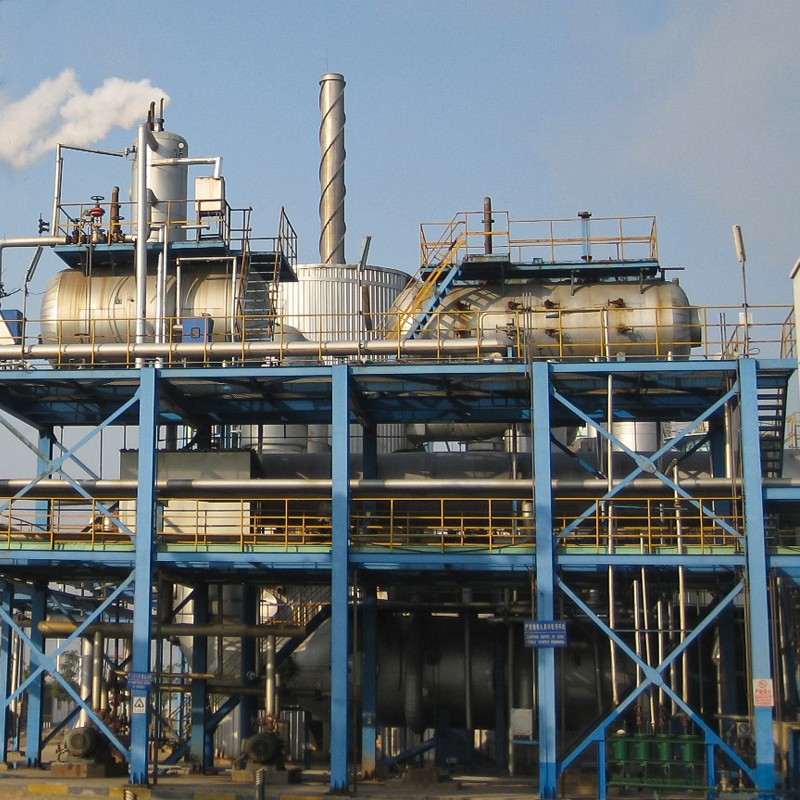
Capacity should be stated as stable output, not a short test maximum. A plant targeting 30,000 tonnes per year must also define operating days and planned shutdowns. The bidder should state whether one or several furnaces will meet the duty.
Moist KCl, fine powder, insoluble solids, or changing sulfuric acid strength can alter feeding and heat demand. The supplier should list the design feed analysis and allowable variation.
Drawings should show the reaction chamber, combustion space, flue path, rake system, seals, inspection points, and discharge route. The heating proposal must identify the fuel and give start-up, low-load, and normal-load conditions.
6–10: Energy, Refractory, Materials, Feeding, and Reliability
Request fuel and electricity per tonne of SOP, plus cooling-water and compressed-air demand at the stated feed composition.
A credible refractory proposal lists lining materials, thicknesses, joints, drying procedure, heat-up curve, inspection intervals, and replacement method. Corrosion review should extend from the furnace outlet to the final acid tank, including hot gas, acid mist, and condensate.
Metering should remain accurate at reduced output. Rake drives need overload protection, accessible bearings, suitable seals, and a safe method for clearing buildup.
11–15: Quality, HCl Recovery, Emissions, Control, and Services
Product guarantees should match the intended market. A fertilizer-grade SOP plant may track K2O, chloride, moisture, free acidity, and particle size. The proposal should state sampling points, test methods, and whether the guarantee applies before or after neutralization and screening.
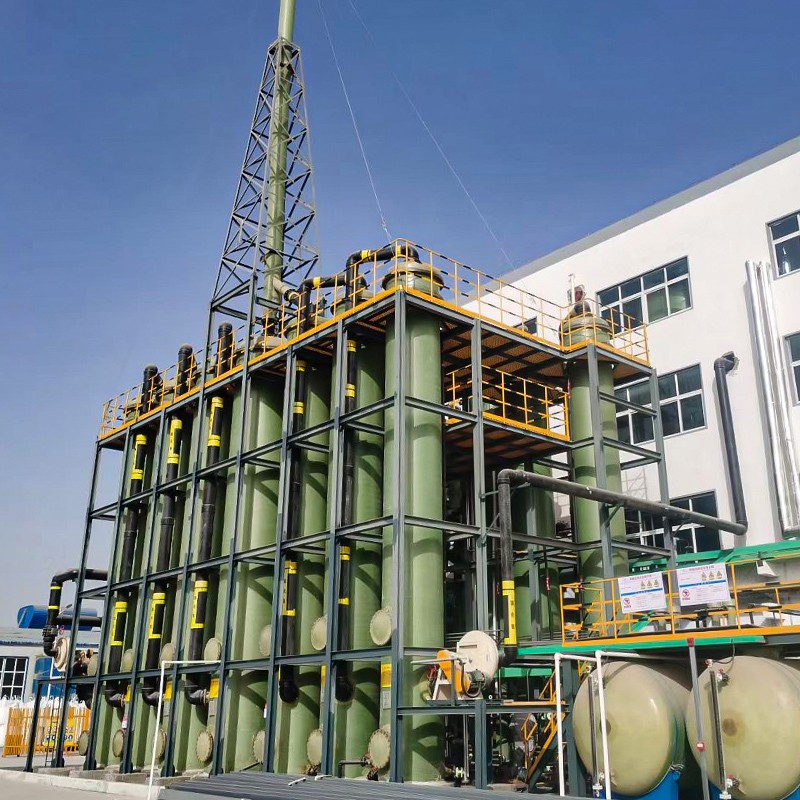
HCl recovery is a process unit, not a minor accessory. Ask for the design gas flow, inlet temperature, impurity load, cooling stages, absorption stages, water quality, acid concentration, recovery rate, and tail-gas condition. Multi-stage cooling and absorption can raise acid recovery while reducing the load on the final scrubber.
Automation should cover ratio control, furnace temperatures, draft pressure, drive loads, absorber circulation, levels, and alarms. The control narrative should cover loss of fuel, feed, cooling water, power, or draft.
Finally, define where the supplier’s responsibility starts and ends. A complete offer may include process design, equipment, civil-condition drawings, installation supervision, commissioning, performance testing, operator training, and recommended spares.
What Information Produces a More Accurate Quotation?
A short RFQ usually leads to assumptions, exclusions, and later price changes. The project team should attach a basic data sheet.
| RFQ Input | Minimum Detail |
| Output | TPD, TPA, operating hours, and future expansion |
| Site | Country, altitude, ambient range, seismic basis, and available plot |
| Feedstocks | KCl and acid analyses, supply temperature, and storage days |
| Utilities | Fuel composition, power supply, water quality, and cooling method |
| Products | SOP grade, packing form, HCl concentration, and storage needs |
| Compliance | Emissions, electrical code, pressure rules, and document language |
| Scope | Delivery term, schedule, installation role, testing, warranty, and spares |
Attach the plot plan, utility summary, product specification, and preferred battery limits. Require a deviation list from each bidder.
Common Buying Mistakes That Raise Operating Cost
Several problems appear repeatedly during technical clarification:
- Comparing furnace prices without comparing fuel use and HCl recovery.
- Accepting capacity without feed analysis and annual operating hours.
- Leaving corrosion-resistant ducts, tanks, or acid piping outside the scope.
- Treating PLC control as a hardware list rather than a control philosophy.
- Skipping performance-test terms, acceptance criteria, and critical spares.
A technically complete quotation may cost more initially, yet it often prevents missing equipment, repeated site work, and long shutdowns.
Hebei Aoliande Chemical Equipment Co., LTD.
Hebei Aoliande Chemical Equipment Co., LTD. supplies Mannheim process potassium and sodium sulfate production lines and related chemical equipment. Its capabilities cover material and structural design, manufacturing, technical consultation, transport coordination, installation guidance, and commissioning support.
Its project background includes a potassium fertilizer facility in Inner Mongolia with stated annual capacities of 160,000 tonnes of potassium sulfate and 200,000 tonnes of hydrochloric acid. The equipment approach includes corrosion-resistant components, revised furnace flue design, PLC-based feed control, and HCl recovery systems.
For buyers assessing a Mannheim Process Sodium Sulfate Production Line supplier, this mix of process design, manufacturing, and site services supports full-line evaluation rather than isolated equipment.
Conclusion
The best Mannheim furnace quotation is not the one with the fewest pages or the lowest equipment price. It is the one that clearly connects feed quality, capacity, heat balance, refractory life, corrosion control, product targets, HCl recovery, emissions, automation, and site services.
Before commercial comparison, place all bids on the same technical basis. Clarify deviations, utility figures, guarantees, spare parts, and acceptance testing. This reduces uncertainty before purchase and supports stable output after commissioning.
FAQs
What capacity data should be included in a Mannheim furnace RFQ?
State normal TPD, annual tonnage, operating days, daily hours, expected turndown, and future expansion. Include the KCl and sulfuric acid specifications used for that capacity.
How is Mannheim furnace price normally determined?
Price depends on capacity, furnace quantity, materials, fuel system, automation, HCl absorption scope, emissions equipment, documentation, and installation services. A price without battery limits is difficult to compare.
Why is the HCl absorption system important in an SOP production plant?
Hydrogen chloride is a major process stream. Its recovery affects by-product value, corrosion risk, water demand, tail-gas treatment, and environmental performance.
Which materials should a Mannheim furnace supplier specify?
The supplier should identify refractory layers and the materials used for hot-gas ducts, coolers, scrubbers, absorbers, tanks, pumps, valves, and acid piping.
What should be checked before signing the supply contract?
Confirm guaranteed capacity and quality, utility use, HCl recovery, emissions basis, delivery scope, commissioning duties, performance testing, warranty, and critical spare parts.