
Hydrochloric acid feed quality determines the real duty of calcium chloride pretreatment. Acid concentration sets the water balance and limestone demand. Iron, magnesium, suspended matter, and source-specific contaminants determine neutralization, clarification, and filtration load. A Линия производства хлорида кальция designed around one nominal HCl value may struggle when by-product acid changes.
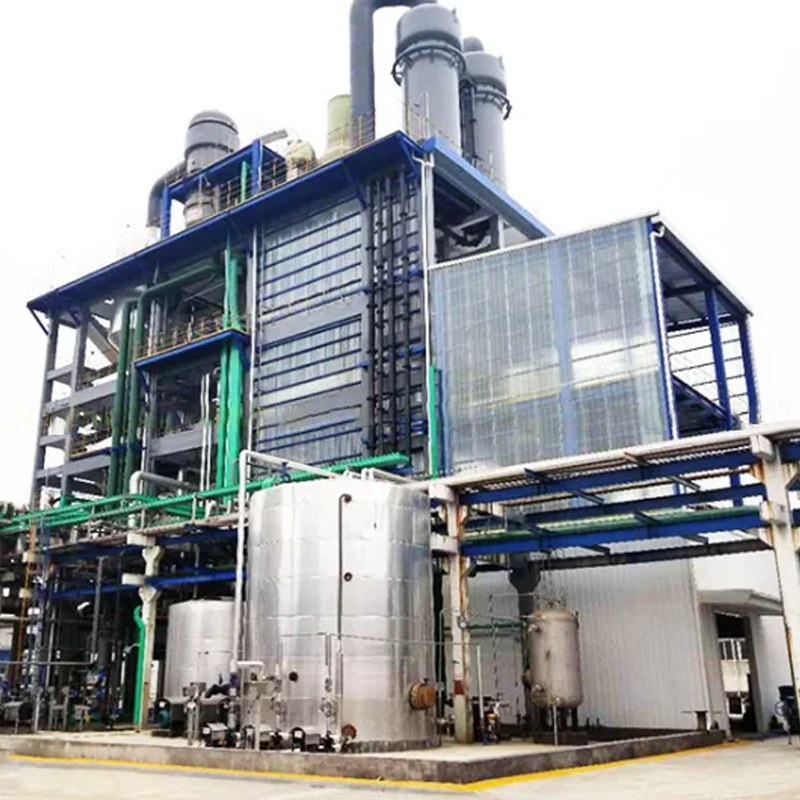
Why Test Hydrochloric Acid First
Calcium carbonate reacts with hydrochloric acid to form calcium chloride, carbon dioxide, and water. Industrial feed is less simple than that equation. By-product HCl may carry metals, organics, or suspended solids from another operation.
One sample shows one moment. Weekly or batch data show the operating range that storage, dosing, neutralization, and calcium chloride equipment must handle.
Results should distinguish acid strength from total dissolved material. Density is a convenient operating check, but dissolved salts can change density without providing additional HCl. Laboratory titration is therefore needed to confirm acid concentration, especially for by-product streams. The sample record should also state whether suspended solids were included, settled, or filtered before analysis.
| Feed item | Effect on the process | Контроль |
|---|---|---|
| HCl concentration | Limestone demand, water load, evaporation | Density plus laboratory titration |
| Iron | Product color and purification | pH-controlled precipitation |
| Magnesium | Purification load | Alkalization and solids removal |
| Suspended matter | Sludge and filter loading | Settling or feed filtration |
| Organics | Color, odor, or foaming | Source-specific testing |
The test list should follow the acid source and intended product grade. Testing every possible constituent wastes time; ignoring a known source contaminant is worse.
How Concentration Changes the Material Balance
Lower-strength acid brings more water into the line. The neutralized solution is more dilute, so producing flakes or granules requires more evaporation. Steam or electricity demand and the balance between reaction and concentration sections then change.
Process references often discuss HCl in the 30–40% range for the limestone route. That is a design reference, not a universal promise. Limestone composition, excess reagent, wash water, and impurity removal change the actual outlet concentration.
If operators dose acid by volume without correcting for assay, the chemical ratio moves from batch to batch. Excess acid leaves free acidity. Excess limestone increases undissolved solids. Flow measurement should therefore be paired with a verified HCl test.
Storage, Segregation, and Blending
A storage system should allow an untested or off-spec delivery to remain isolated. Combining it immediately with acceptable acid removes the chance to identify the source of a later problem. Separate receipt and process tanks, or a defined quarantine volume, support verification before release.
Blending can smooth normal concentration variation when both lots are within an approved feed envelope. The blend calculation should use measured concentration and available volume, followed by tank mixing and a confirmation sample. It should not be used to dilute an unknown contaminant. Tank materials, vents, transfer pumps, and instrumentation must suit the actual acid composition and temperature.
What Happens to Impurities
Some impurities remain dissolved as chlorides. Others precipitate when pH changes, while inert solids must be settled or filtered.
Iron and Magnesium Removal
Calcium hydroxide slurry can raise pH after the main reaction. Iron and magnesium then form less-soluble hydroxides. Too little dosing leaves metals in solution; careless excess introduces more solids.
The step needs mixing and residence time before clarification. A pH reading beside the dosing point does not represent the whole vessel. Sample after mixing at a consistent location and confirm the result through filtered-solution analysis.
The precipitation window is a process choice, not a single universal pH value. It depends on the metals present, solution concentration, temperature, residence time, and product requirement. Raising pH farther than necessary may increase chemical consumption and sludge volume without improving the purified solution. Bench testing with representative acid and limestone provides a sounder starting point than treating all by-product HCl alike.
Clarification and Filtration
Insoluble limestone, unreacted particles, and precipitated hydroxides create sludge. A clarifier reduces the downstream load, while filtration polishes the solution before evaporation. Tracking underflow, filter cycle time, cake mass, and filtrate clarity helps separate an acid-source change from a limestone problem.
Clarifier area, retention volume, and filter capacity should reflect the upper expected solids load. Average analysis may understate this duty when deliveries contain occasional settled material or when limestone reactivity varies. Providing sampling points before and after clarification makes removal performance measurable rather than inferred from the final product alone.
Sludge handling is part of pretreatment design. The quantity, moisture content, corrosivity, and disposal route influence underflow pumping, dewatering, wash-water use, and storage. A process that produces clear solution but cannot remove sludge reliably will still interrupt downstream operation.
Pretreatment for Variable By-Product HCl
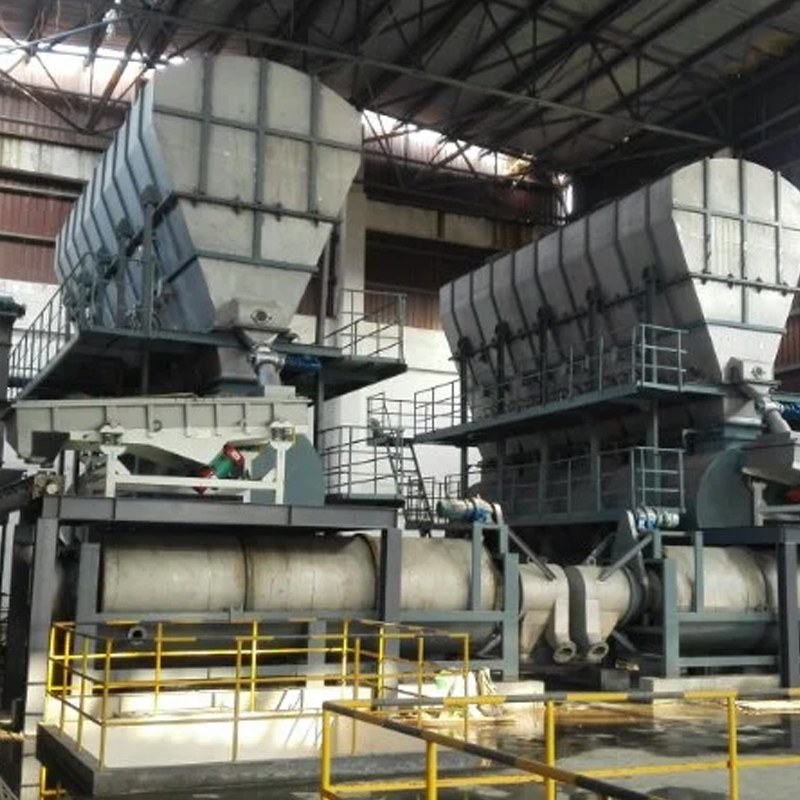
A practical sequence may include receipt and segregation, analysis, controlled blending, limestone reaction, retention, pH adjustment, clarification, filtration, and a purified-solution buffer tank. The buffer separates pretreatment from evaporation or granulation, preventing a short feed disturbance from becoming a full-line upset.
Buffer capacity should be based on operating continuity and response time. It needs enough usable volume to cover routine sampling, filter service, or correction of a pretreatment batch, while avoiding excessive residence that may encourage settling. Mixing requirements depend on whether the purified solution can still form solids during storage.
Clean, consistent acid may require little conditioning. Variable by-product acid may need separate off-spec storage, blending capacity, finer filtration, or a defined sludge route. Evidence from feed history should decide the configuration.
Pretreatment and the Final Product Form
Liquid calcium chloride, flakes, and granules do not place identical demands on the upstream section. A liquid product may tolerate a different water balance, while flake and granule production sends the solution through concentration and drying equipment where impurities can deposit, color the product, or affect handling.
The pretreatment target should therefore be written in terms of purified-solution concentration, free acidity or alkalinity, suspended solids, and relevant dissolved impurities. Those limits should connect directly to the final product contract and the selected evaporation or granulation route.
Control Points
- Feed density, temperature, flow, and laboratory HCl assay.
- Reaction pH, temperature, level, and off-gas condition.
- Clarifier overflow clarity and filter differential pressure.
- Purified solution concentration, free acidity, iron, and magnesium.
Measurements should be linked by batch or time period. A final impurity result without matching feed and pH records has limited diagnostic value.
Operators also need a response sequence for abnormal readings. First confirm the sample, instrument condition, and test method. Then compare the acid lot, limestone lot, dosing ratio, mixing time, and solids-removal performance. Changing several setpoints before establishing the cause makes the next batch harder to interpret.
A short daily material balance can reveal gradual drift. Acid volume and assay, limestone consumption, purified-solution volume and concentration, sludge quantity, and final product output do not need to close perfectly to be useful. Repeated movement in one direction signals a measurement, feed, or process change worth investigating.
Data to Give the Supplier
Provide the HCl source, analysis, concentration range, delivery schedule, suspended-solids data, limestone composition, target product, capacity, utilities, and sludge route. Send these details through the project contact page before equipment selection.
Хэбэй Aoliande Chemical Equipment Co., LTD. supplies calcium chloride production line solutions covering calcium-liquid preparation and downstream drying or granulation. Project configuration depends on raw-material tests, product requirements, utilities, site conditions, and the agreed service boundary.
Вывод
Hydrochloric acid feed quality sets the pretreatment load. Concentration controls the water and reagent balance; metals and solids control purification; variability determines how much storage, blending, and monitoring the line needs. Design from a realistic feed envelope and keep traceability from acid receipt to finished product.
Часто задаваемые вопросы
Can by-product hydrochloric acid make calcium chloride?
Yes, when its concentration, impurity profile, consistency, and the required product grade are understood through representative testing.
What HCl concentration is used?
References commonly discuss about 30–40% HCl for the limestone route. The correct design value is the actual supply range.
How are iron and magnesium removed?
Controlled alkalization precipitates them as hydroxides. Mixing, residence time, clarification, and filtration remove the solids.
Why can solution remain acidic?
Possible causes include insufficient or unreactive limestone, poor mixing, short residence time, inaccurate HCl assay, or incorrect dosing.