
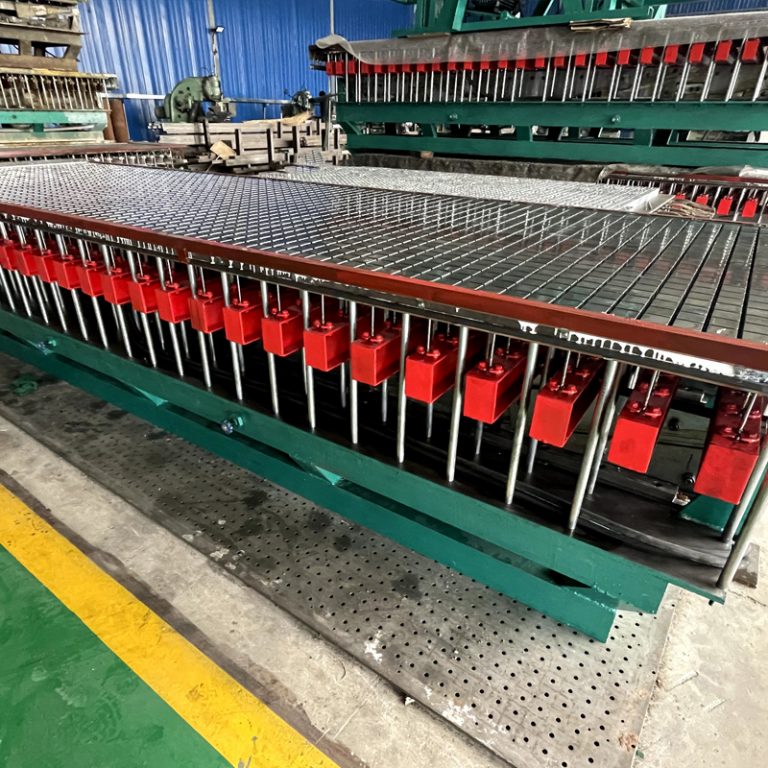
Start with the finished panel drawing, then work backwards to the mould and machine offer. Jiubo’s Aoliande FRP moulded grating document shows mesh, panel and module examples as well as ejector and heating details. Those entries identify useful questions for the supplier; they do not define the tolerances or supplied configuration of a new order.
Translate panel demand into mould dimensions
The cited six-row table includes 38 × 38 mm and 50 × 50 mm mesh. One entry pairs 38 × 38 mm mesh with a 1,220 × 3,660 × 38 mm panel and a 38.5–41 mm module figure. Another pairs 50 × 50 mm mesh with a 1,220 × 3,660 × 50 mm panel and a 50.5–52 mm module figure. They are examples in the cited document, not finished-part tolerances for a new purchase.
The table places panel size and module in separate columns. Keep that separation in your RFQ: show finished length, width, thickness, mesh, edge form and cut-outs on the panel drawing, and ask the supplier to relate those dimensions to the proposed mould cavity and module. Mark which measurements apply before trimming and which apply to the delivered panel. No trimming allowance or order tolerance appears in the cited table.
Rows one to three all list 38 × 38 mm mesh and 1,220 × 3,660 mm plan dimensions, but the panel thicknesses are 38, 30 and 25 mm, with different module figures. Mesh and plan size alone therefore do not identify the whole mould requirement. If more than one panel is needed, list each thickness and ask for a configuration response: same mould, a specified changeover, or another mould. The table does not establish interchangeability.
Check mould construction and release
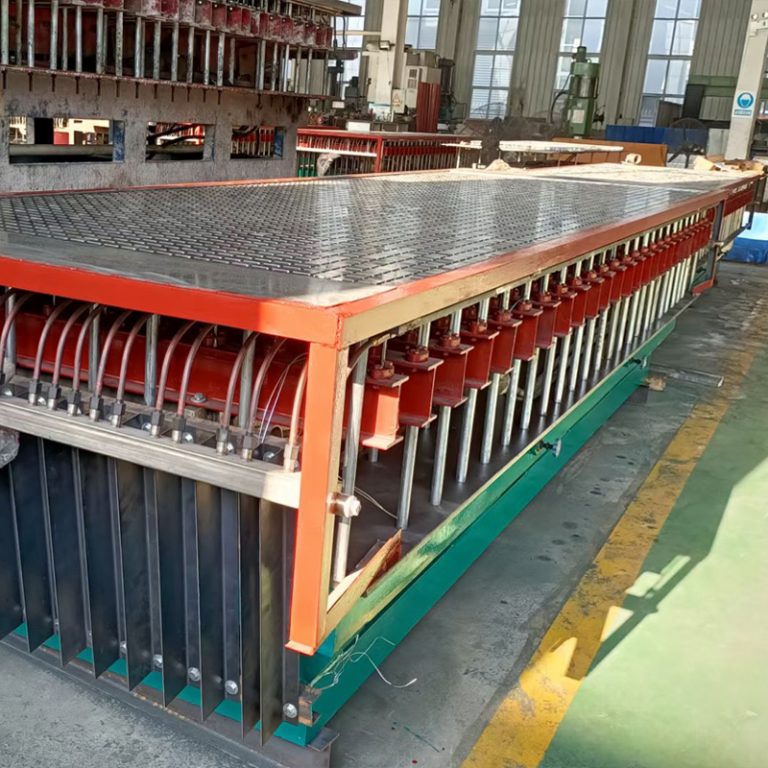
The cited mould module uses 45# steel and is described as ground, polished and plated. The same document describes a two-cylinder ejector-rod lifting device, an elastic connection between stripping plate and stripping beam, and ejector rods moving with the lifting device. These details describe the cited equipment; they do not establish the construction of every future mould.
For the offered mould, record module material and surface finish separately from the catalogue example. A supplier drawing should show how the stripping plate and ejector rods contact the panel, where those parts can be accessed, and which parts are replaceable. Use a sample panel to agree which release marks or dimensional changes would be unacceptable; the PDF does not provide that acceptance limit.
Match the mould to the production system
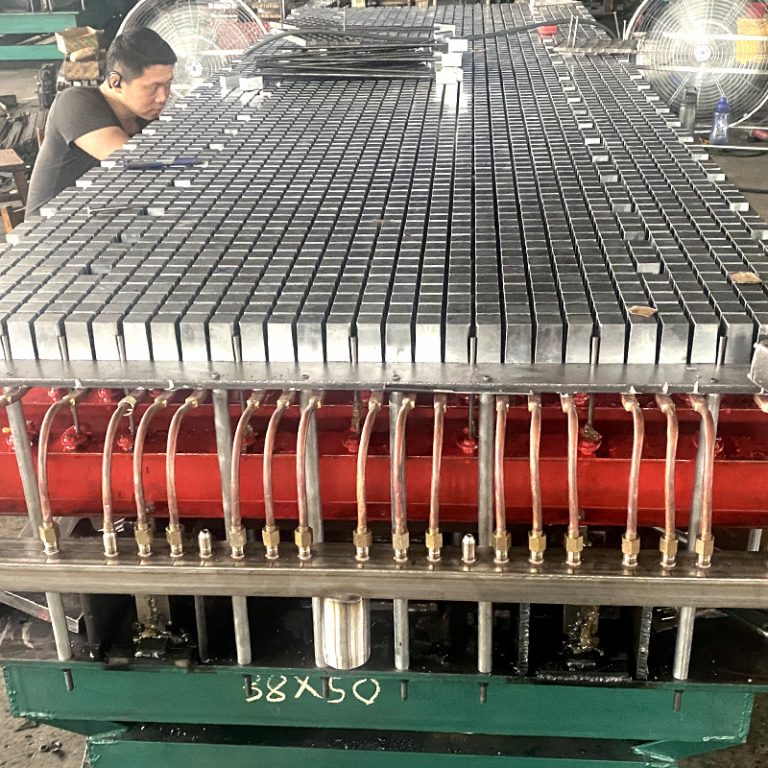
The described rectangular copper pipe contacts the template for temperature rise and drop and can heat the mould’s top surface. That makes the utility connection a drawing question for this equipment example. The PDF gives no project temperature range, cycle time or utility demand; put your intended process condition and available heating medium next to the supplier’s proposed controls and connection points.
The same source lists nine devices: FRP moulded grating machine, mixer, storage tank, hydraulic pump, grinding machine, water-circulating pump, stainless-steel hot-water tank, air-source heating pump and cooling tower. Treat this as a checklist for the offer’s boundary. Mark each device included / already on site / by another party, and pair utilities with their connection points. The list does not promise that every order contains all nine.
Compare samples using agreed criteria
Keep one drawing with the sample record. Identify the material, mould and process setting used, and record mesh and panel measurements at agreed locations before judging the visible surfaces after release. If the finished panel has a load or application requirement, bring its governing specification and test procedure into this discussion separately. The machine description does not give a project acceptance standard.
The signed record should tie the sample back to the mould drawing and list any approved deviation. A mesh or thickness entry from the catalogue is not a service rating for the finished panel.
RFQ specification table
| Buyer field | Information to provide | Supplier response to request |
|---|---|---|
| Finished panel | Drawing, mesh, length, width, thickness, edges and trim stage | Cavity/module dimensions and proposed tolerance |
| Panel variants | Each thickness and required plan size | Mould count or changeover for every variant |
| Release | Surfaces to inspect and access needs | Module finish, stripping layout and replaceable parts |
| Heating | Process condition and available medium | Controls and connection points for the offered mould |
| Line scope and sample | Existing equipment, representative part and proposed checks | Included devices, exclusions, trial measurements and record |
Use the Aoliande moulded grating equipment page to identify the equipment family. Ask Jiubo to attach its proposed mould drawing and acceptance schedule to the quotation.
Does the catalogue panel table fix my finished size?
No. It gives mesh, panel and module examples, with no stated order tolerance. State the finished dimensions and trimming stage on the drawing and agree the tolerance in the purchase documents.
Can one mould make every listed panel?
The cited material does not establish that. Request a configuration response for each required panel, including any mould replacement or changeover work.