
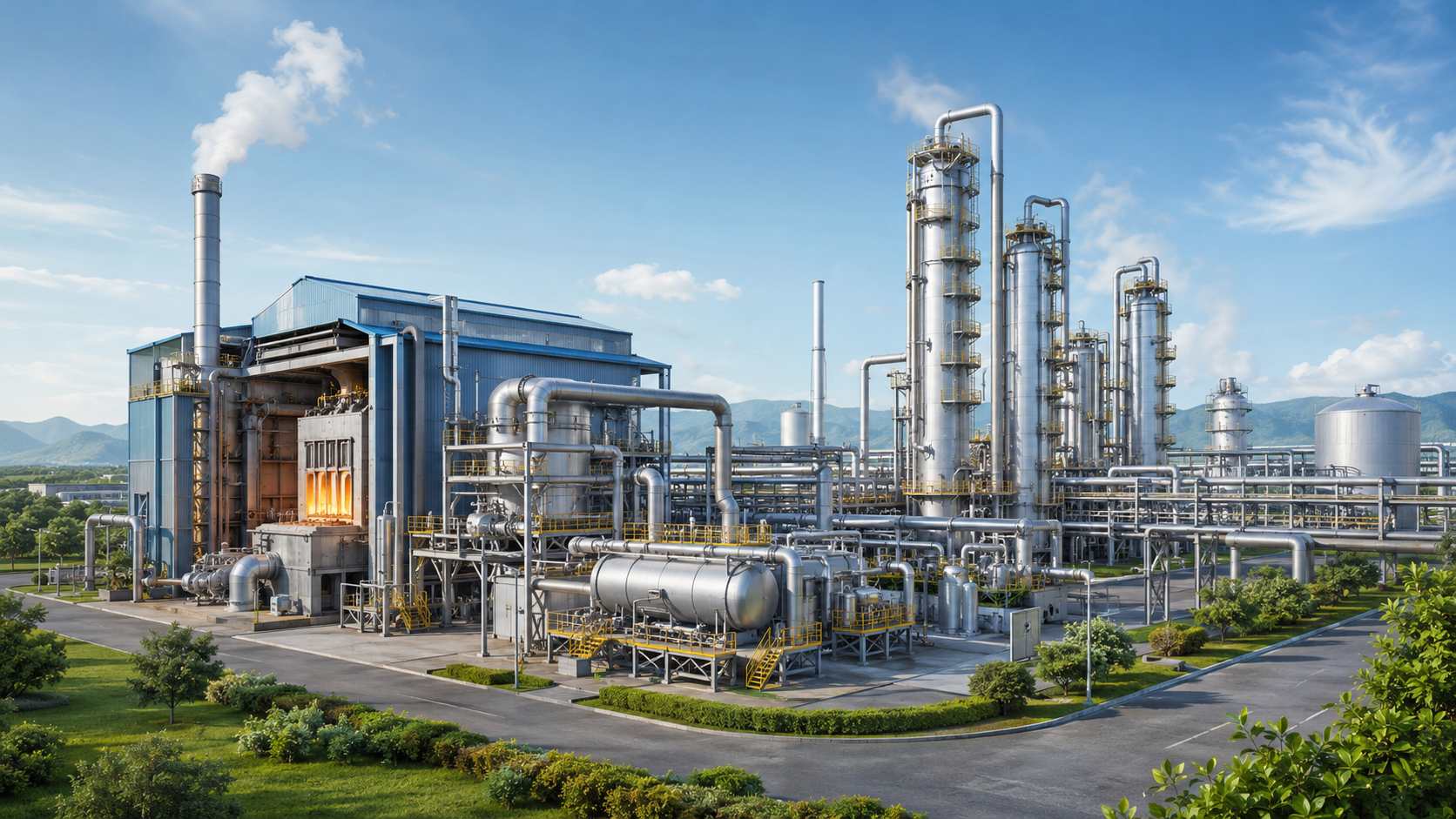
Measuring the production of potassium sulfate by means of the quantity of products has changed for manufacturers of fertilizers, EPC contractors and investors of chemical processing plants. Today the most important criteria for the design and operation of an efficient SOP production plant are the stability of the production of a high quality chloride-free potassium fertilizer and the parameters for the acid gases, the fuel, the corrosion, the dust and the maintenance. The Mannheim process is one of the most frequently applied processes for the sulfate of potash production, since the reaction of potassium chloride with sulfuric acid to form potassiumsulphate and hydrochloric acid is a well established industrial process.
Why Environmental Performance Matters in SOP Production
SOP is a highly valued fertilizer for crops that are sensitive to chloride, such as tobacco, potatoes, grapes, citrus, most vegetables and many green house crops. The nutrients in SOP provide a clean source of potassium for these crops. The factory from which the product was sourced must also comply with stricter environmental regulations concerning emissions and energy usage as well as stricter labor practices.
A number that is really useful in actual production line of potassium sulfate is environmental performance. It can affect the furnace, HCl recovery system, waste gas treatment, acid-resistant materials, power consumption, and frequency of shut down in the year that the operator faces. In the end, a plant that is producing and selling SOP will incur hidden cost if it loses heat, leaks acid mist, or breaks ducts.
How the Mannheim Process Produces Potassium Sulfate
The Mannheim process reacts potassium chloride with sulfuric acid at high temperature in a muffle furnace. The overall reaction is:
2KCl + H2SO4 → K2SO4 + 2HCl
The reaction usually takes place in two steps. Potassium chloride first reacts with sulfuric acid to form potassium bisulfate and hydrogen chloride. Then potassium bisulfate reacts further with potassium chloride to form potassium sulfate and more hydrogen chloride. Furnace temperature is commonly above 600°C, so heat transfer, feeding rhythm, residence time, and material choice all affect final plant performance.
For plant owners, this chemistry creates two products from one process stream: SOP fertilizer and hydrochloric acid. That is why the environmental design of a Mannheim furnace must be linked with the commercial design of the whole SOP production plant.
| Process area | Main job | Environmental value |
| Raw material feeding | Doses KCl and sulfuric acid | Reduces off-spec material |
| Mannheim furnace | Forms K2SO4 and HCl | Cuts waste through stable reaction |
| HCl absorption | Captures hydrogen chloride | Turns acid gas into hydrochloric acid |
| Cooling and packing | Handles finished SOP | Reduces dust and product loss |
| PLC control | Tracks feed, heat, and gas flow | Lowers process swings |
Environmental Benefits of the Mannheim Process
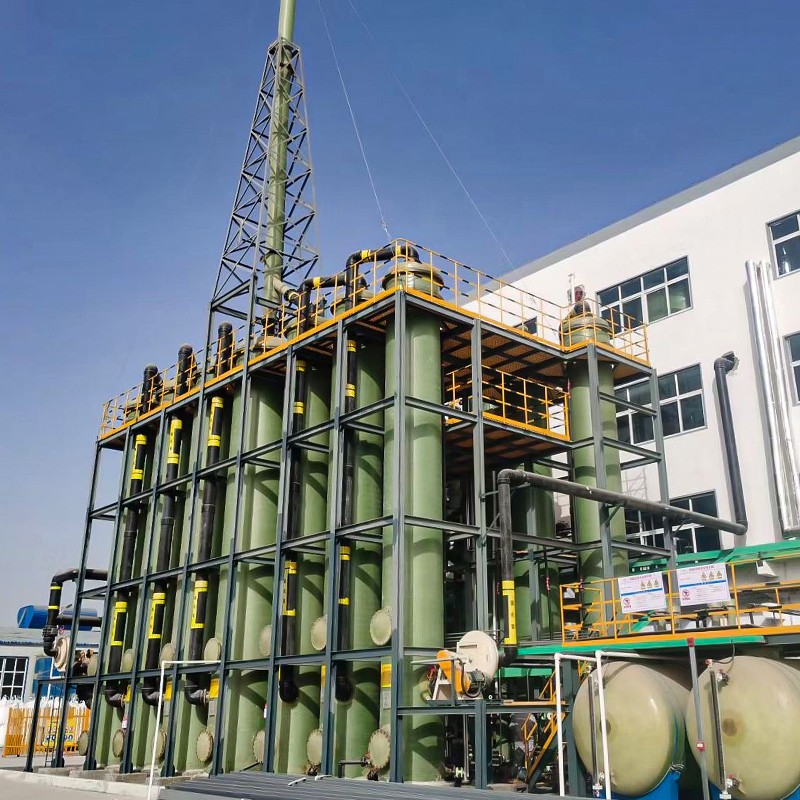
The Mannheim process can support cleaner production when furnace design, absorption, gas handling, and automation work together. Without those systems, high heat and acid gas become risks. With them, the same process becomes easier to control.
HCl Recovery Turns Acid Gas into Value
Hydrogen chloride is produced together with potassium sulfate. If it is poorly handled, it becomes the main environmental pressure in the plant. A strong HCl recovery system absorbs the gas and turns it into hydrochloric acid that can be reused or sold.
This is one of the clearest environmental benefits of Mannheim process technology. Instead of treating acid gas only as waste, the plant captures it as a chemical product. In industrial zones, recovered hydrochloric acid can serve metal cleaning, water treatment, chloride production, and other chemical uses. It can also reduce odor, acid mist, and corrosion around ducts, towers, and fans.
Furnace Design Cuts Fuel Waste
A Mannheim furnace must keep enough heat for complete reaction, but overheating wastes fuel and shortens furnace life. Poor heat distribution creates hot spots, incomplete conversion, unstable gas flow, and more stress on downstream equipment.
An energy-saving furnace design focuses on steady heat transfer, improved furnace materials, and better use of flue gas. When heat is distributed evenly, potassium chloride and sulfuric acid react more completely. This supports stable potassium sulfate quality, lower raw material waste, and lower energy consumption per ton of product.
Corrosion Control Reduces Leaks and Shutdowns
SOP plants work with sulfuric acid, hydrogen chloride, hot gas, salts, dust, and moisture. This mix can attack ordinary materials quickly. A small corrosion point in the wrong place may become an acid leak, an emergency repair, or a production stop.
Corrosion-resistant potassium sulfate equipment reduces that risk. Key sections such as furnace outlets, absorption equipment, acid tanks, ducts, and scrubber-related parts need materials matched to temperature and chemical concentration. Longer equipment life also means less replacement waste and more stable environmental control.
Automation Makes Cleaner Operation Repeatable
Clean operation cannot depend only on experienced workers watching gauges. A PLC automatic control system helps keep feed ratio, furnace temperature, gas flow, absorption circulation, and production rhythm within a stable range.
Small process swings can create big trouble. Too much acid feed may raise corrosion pressure. Poor feed balance can leave unreacted material. Unstable gas flow can weaken hydrochloric acid absorption. Automation gives operators earlier signals and helps stop abnormal emissions before they grow.
Mannheim Process vs. Other SOP Production Routes
Potassium sulfate can also be made through other routes, including double decomposition. The right choice depends on raw material supply, energy price, product grade, by-product demand, and local environmental rules. Still, the Mannheim process is often chosen for industrial SOP production because it is direct, scalable, and linked with recoverable hydrochloric acid.
| Buyer concern | Mannheim process advantage |
| Product consistency | High-temperature reaction supports steady K2SO4 output |
| By-product value | HCl recovery creates hydrochloric acid |
| Plant control | Feeding, furnace, and absorption can be linked |
| Emission pressure | Acid gas can be captured and treated |
| Expansion planning | Suitable for large SOP production plant projects |
For buyers, the useful question is not only “Which process can make SOP?” It is “Which process can make stable SOP while controlling acid gas, heat loss, corrosion, and maintenance over years of operation?”
Equipment Choices That Support Cleaner SOP Production
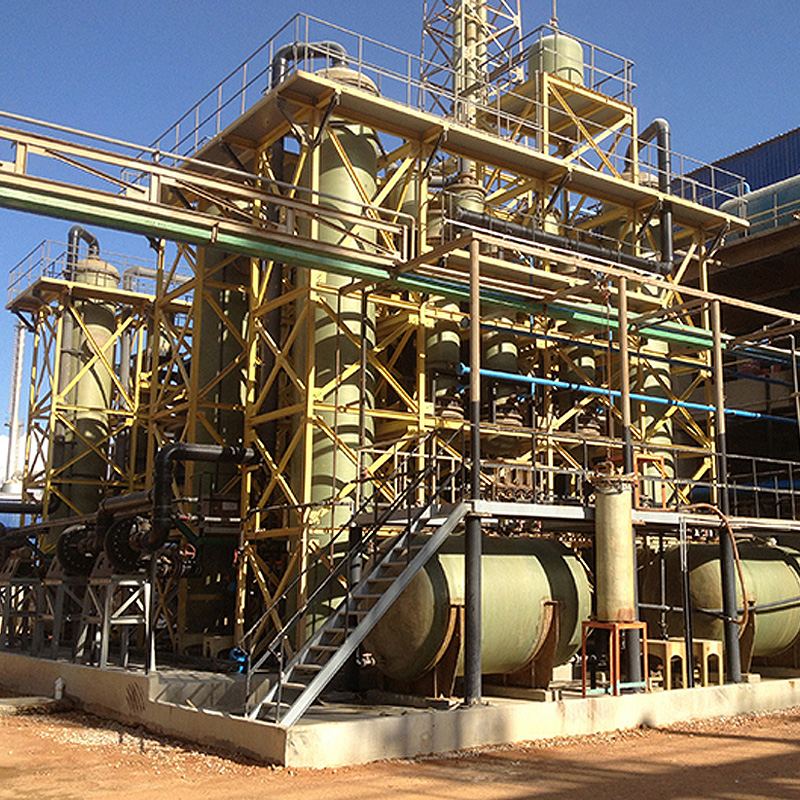
A potassium sulfate plant is more than a furnace. Several production lines may shape the environmental and commercial result of an integrated chemical site.
Core and Supporting Production Lines
A Mannheim Process Potassium/Sodium Sulfate Production Line is the core choice for SOP production from potassium chloride and sulfuric acid. It is suited for buyers who need furnace-based reaction control, HCl recovery, and continuous potassium sulfate production.
A sulfuric acid production line can be useful where a project needs steady acid supply or lower dependence on outside acid transport. For remote industrial parks, local acid production can reduce storage and logistics pressure.
A calcium chloride production line can fit sites that already handle hydrochloric acid and want more by-product use options. A water soluble fertilizer production line is relevant when an SOP producer wants to move downstream into drip irrigation fertilizer, foliar fertilizer, or specialty blended fertilizer.
Before choosing equipment, buyers should review:
- Raw material supply distance and storage conditions
- Local demand for hydrochloric acid and SOP fertilizer
- Fuel type, power cost, and heat recovery plans
- Limits for acid gas, dust, wastewater, and noise
- Supplier experience in furnace design, absorption, installation, and commissioning
Hebei Aoliande Chemical Equipment Co., LTD. as a Supplier
Hebei Aoliande Chemische Ausrüstung Co., LTD. supplies Mannheim Process Potassium/Sodium Sulfate Production Line solutions for chemical and fertilizer projects. Its equipment range also covers sulfuric acid production lines, calcium chloride production lines, water soluble fertilizer production lines, and FRP equipment used in corrosive industrial environments.
For Mannheim process projects, the company combines equipment manufacturing with material, structure, and product design ability. This matters because an SOP plant is not a single-machine purchase. The furnace body, hydrochloric acid absorption section, corrosion-resistant parts, PLC control, transport, installation guidance, and commissioning support must match the same production goal.
The company has passed ISO9001, ISO14001, and OHSAS18001 management system certifications. It also has project experience connected with potassium sulfate and hydrochloric acid production, including a potassium fertilizer factory reference with annual output of 160,000 tons of potassium sulfate and 200,000 tons of high-quality hydrochloric acid. For buyers planning a new SOP production plant, such operating reference can make technical review more concrete.
Schlussfolgerung
The Mannheim process can bring strong environmental benefits to potassium sulfate production when the plant is designed as a complete system. HCl recovery cuts acid gas waste and creates hydrochloric acid value. Improved furnace design lowers fuel loss and supports complete reaction. Corrosion-resistant materials reduce leakage and maintenance pressure. PLC control keeps daily operation more stable.
For investors and plant owners, the best SOP production plant is not simply the one with the biggest nameplate capacity. It is the one that can produce clean, consistent potassium sulfate fertilizer while controlling emissions, energy use, by-products, and long-term maintenance cost.
Häufig gestellte Fragen
Is the Mannheim process environmentally friendly?
The Mannheim process can be environmentally friendly when it includes an efficient HCl recovery system, waste gas treatment, corrosion-resistant equipment, and stable furnace control. Its main environmental value comes from capturing hydrogen chloride and turning it into hydrochloric acid instead of releasing acid gas.
Why is HCl recovery important in an SOP production plant?
HCl recovery is important because hydrogen chloride is produced during potassium sulfate production. A good hydrochloric acid absorption system reduces acid gas emissions, protects equipment, improves working conditions, and creates a useful by-product.
What should buyers check before choosing a potassium sulfate production line?
Buyers should check the Mannheim furnace design, energy consumption, HCl absorption efficiency, waste gas treatment, corrosion-resistant materials, PLC automatic control system, installation support, and the supplier’s complete SOP plant experience.