
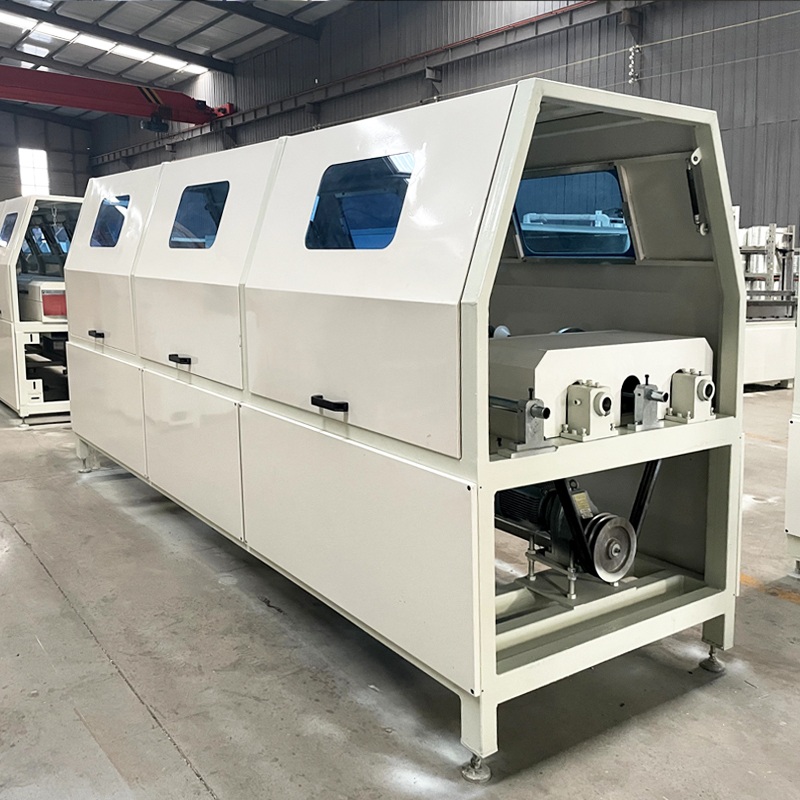
FRP rebar manufacturing is at the core of our production of corrosion resistant reinforcement for infrastructure. The FRP rebar manufacturing process transforms Glass fibers and thermosetting resins into high tensile strength reinforcement bars, in a continuous pultrusion process. These reinforcement bars have much greater durability than steel, and thus are particularly suited for applications such as coastal bridges, Chemical Plants, and Tunnels.
Raw Materials Used in FRP Rebar Manufacturing
The performance of fiberglass rebar depends heavily on material selection and ratio control. In most industrial production setups, two core materials define the final quality.
Glass Fiber Reinforcement System
Glass fiber rovings are the primary load-bearing component. They are usually continuous strands with high tensile strength and stable chemical resistance. The fiber content in finished bars typically ranges between 55% and 75%, depending on application requirements.
Resin Matrix System
Thermosetting resins act as the bonding phase. Common systems include vinyl ester, epoxy, and polyester resins. These materials provide:
- Chemical resistance in alkaline environments
- Structural bonding between fibers
- Thermal stability during curing
Additives are often introduced to improve surface bonding or fire resistance in specific construction conditions.
Step-by-Step FRP Rebar Manufacturing Process
The FRP rebar production process is based on continuous pultrusion technology. Unlike batch molding, this method allows stable mass production with consistent mechanical properties.
Fiber Feeding and Tension Control
Glass fiber rovings are pulled from creels and guided into the production line. Tension control is critical at this stage because uneven tension can lead to weak spots in the final product.
Resin Impregnation Stage
Fibers pass through a resin bath or injection system where they are fully saturated. The resin must penetrate every fiber bundle to ensure uniform strength distribution. Excess resin is removed before shaping.
Forming and Alignment System
Impregnated fibers enter a forming guide that gradually shapes them into a circular or ribbed profile. This stage aligns fibers in the axial direction, which directly improves tensile strength.
Heated Die Curing Process
The shaped material enters a heated steel die. Inside the die, polymerization occurs under controlled temperature. This step defines the final diameter, surface quality, and mechanical stability of the rebar.
Continuous Pulling System
A synchronized pulling machine drives the entire process. Speed stability is important; even small fluctuations can affect curing quality and bar consistency.
Cutting and Surface Treatment
After curing, the continuous bar is cut into required lengths. Some production lines also apply sand coating or surface texturing to improve concrete bonding performance.
FRP Rebar Machine and Production Line System
A fiberglass rebar production line is a fully integrated system designed for continuous manufacturing. It usually includes multiple coordinated units working together.
| System Component | Function |
|---|---|
| Creel Rack System | Holds glass fiber rovings |
| Resin Impregnation Unit | Saturates fibers evenly |
| Forming Die Section | Shapes the bar profile |
| Heating Curing Oven | Solidifies composite structure |
| Pulling Machine | Maintains continuous movement |
| Automatic Cutter | Produces standard bar lengths |
Modern FRP rebar machine setups are designed for stable output and reduced manual operation. In industrial applications, production speed can vary depending on bar diameter and resin formulation.
Pultrusion Technology in FRP Rebar Manufacturing
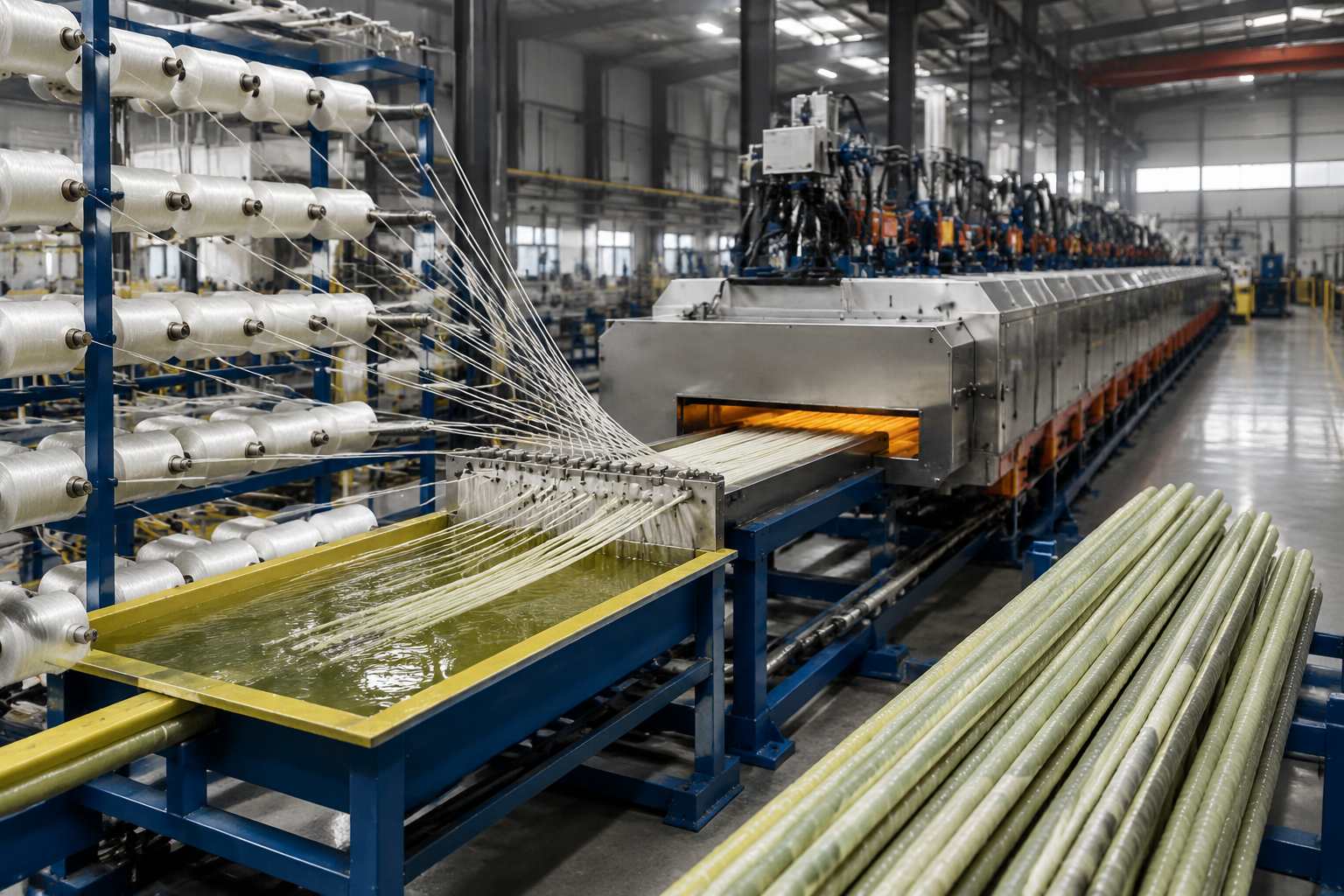
The pultrusion process is the core technology behind fiberglass rebar manufacturing. It enables continuous production instead of mold-based batch processing.
In this method, fibers are pulled through resin and heated dies in a single direction. This creates a highly aligned fiber structure, which is the main reason FRP rebar achieves high tensile strength.
Compared with traditional extrusion, pultrusion offers:
- Continuous output without interruption
- Stable fiber orientation
- High consistency in mechanical properties
- Lower material waste
This process is widely used in composite rebar production equipment designed for industrial-scale manufacturing.
Quality Control in Fiberglass Rebar Production
Quality control plays a key role in ensuring that FRP rebar meets construction standards. Several checkpoints are commonly used in production lines.
- Tensile strength testing for each batch
- Resin curing temperature monitoring
- Fiber distribution inspection
- Surface bonding evaluation with concrete
- Dimensional accuracy measurement
In many infrastructure projects, especially bridges and marine structures, consistency is more important than peak strength.
Applications of FRP Rebar in Real Construction Projects
FRP rebar is widely used in environments where steel corrosion is a major issue.
Typical applications include:
- Coastal bridges exposed to saltwater
- Chemical plants with acidic exposure
- Tunnel linings in humid environments
- Parking structures with de-icing salts
- Concrete seawalls and docks
In many cases, maintenance cycles are significantly reduced due to the non-corrosive nature of composite reinforcement.
FRP Rebar vs Steel Rebar in Engineering Use
The comparison between FRP and steel reinforcement is often a key factor in material selection.
- FRP rebar does not rust in chloride environments
- It is significantly lighter, reducing transport and handling costs
- It offers a long service life in aggressive conditions
- It is electrically non-conductive, suitable for sensitive infrastructure
Steel still dominates in general construction, but FRP is increasingly selected for specialized environments where long-term durability is critical.
FRP Rebar Production Line Investment and Factory Setup
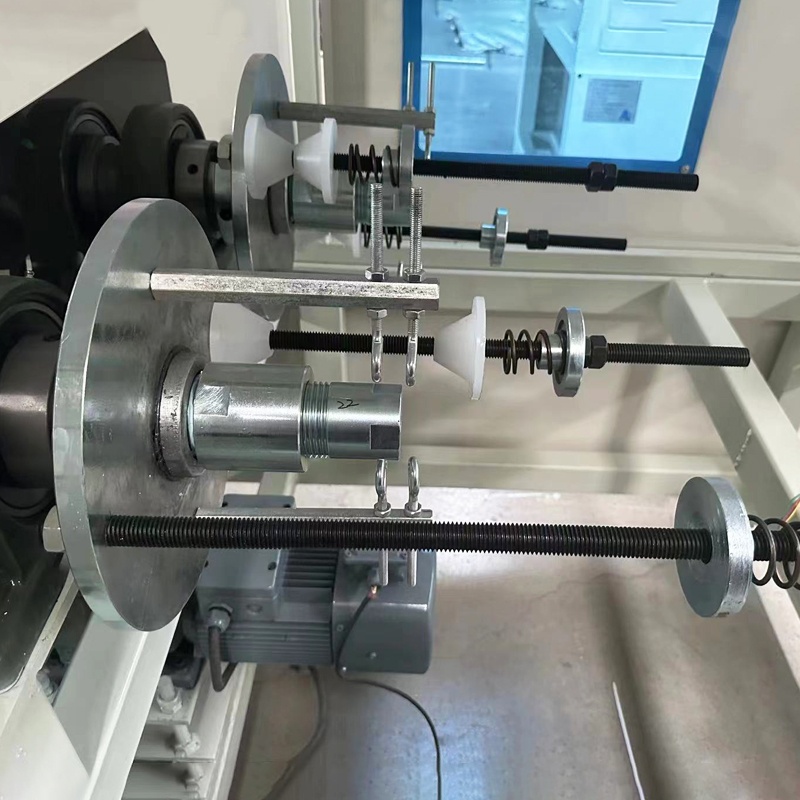
Setting up a fiberglass rebar production line involves both equipment selection and process planning. Investment scale depends on output capacity, automation level, and material configuration.
Key considerations include:
- Factory space layout for continuous line operation
- Power supply stability for heating systems
- Resin storage and safety handling
- Labor requirements for monitoring and maintenance
In many industrial cases, production efficiency improves significantly after process stabilization, especially when raw material ratios are well controlled.
About Hebei Aoliande Chemical Equipment Co., LTD.
Hebei Aoliande Chemische Ausrüstung Co., LTD. focuses on the design and manufacturing of FRP and GRP composite production systems, including complete fiberglass rebar production lines. The company provides integrated equipment solutions covering fiber processing, resin systems, pultrusion machinery, and automated cutting systems.
Its production systems are widely applied in composite material manufacturing industries where consistent output and stable mechanical performance are required. Engineering teams support customized configurations based on plant capacity, product diameter range, and automation requirements. The equipment is used in multiple infrastructure-related manufacturing environments where durability and efficiency are critical factors.
Schlussfolgerung
The FRP rebar manufacturing process combines material science and continuous production technology to deliver reinforcement products suitable for modern infrastructure challenges. From glass fiber preparation to heated die curing, each stage of the pultrusion process directly influences final product strength and consistency. As construction environments become more demanding, fiberglass rebar production lines are increasingly adopted in projects requiring corrosion resistance and long service life.
Häufig gestellte Fragen
What is the FRP rebar manufacturing process?
The FRP rebar manufacturing process is a continuous pultrusion method that combines glass fiber and resin to form high-strength reinforcing bars used in construction.
How does a fiberglass rebar production line work?
A fiberglass rebar production line pulls fiber through resin, shapes it, cures it in a heated die, and then cuts it into standard lengths in a continuous cycle.
What machines are used in FRP rebar production?
Key machines include fiber creel systems, resin impregnation units, forming dies, curing ovens, pulling machines, and automatic cutting systems.