Specify the unloading station around the pipe and mandrel combinations the plant will actually run. Then agree how each combination is supported, pulled and handed to the next operation. Jiubo’s Aoliande QFW-4000VI RPM pipe production line document gives a model-specific example; it cannot substitute for drawings and acceptance conditions for a new order.
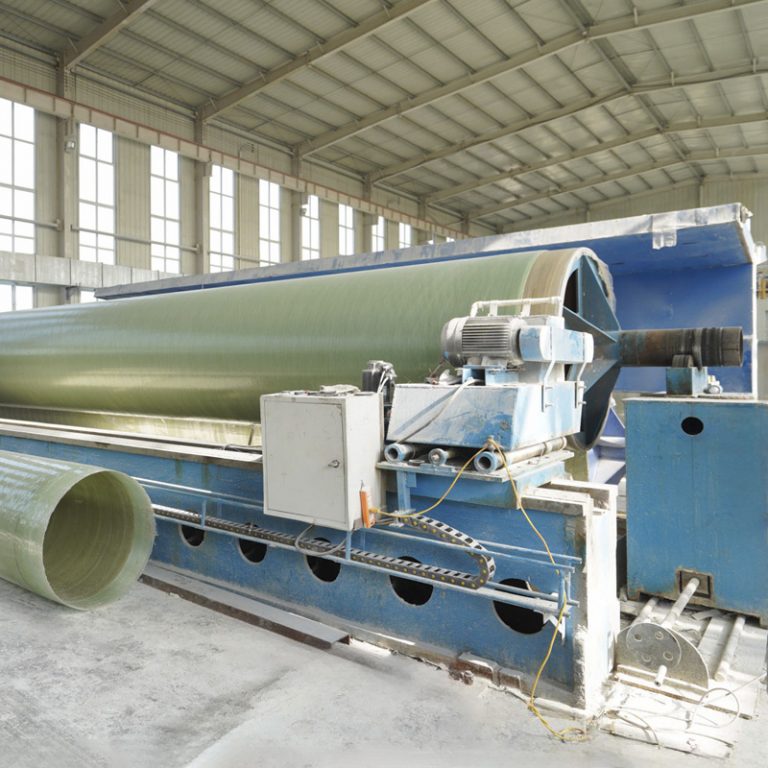
The PDF describes six line parts: inner-layer manufacturing, mortar winding, curing, repairing, mould unloading and resin mixing. Keep the PDF’s model identity attached to its technical figures, and ask the supplier to identify the model in its written offer.
Start with the pipe and mandrel envelope
Make a schedule with one row per pipe and mandrel combination. Enter pipe outside diameter and length, mandrel dimensions and mass, support points, and handover height. Mark routine combinations separately from future options. Request the offered station’s handling range and exclusions against those rows.
The QFW-4000VI document describes a hydraulic lifting platform on the inner-layer trolley for different pipe diameters. At the unloading station it describes forklift-type structures on the mould-supporting and pipe-supporting trolleys. These are arrangements in the cited line. Ask for a drawing showing the proposed support positions and adjustment range rather than assuming that every mandrel fits.
Check the stations before and after unloading
The cited curing station uses infrared baking boards positioned lengthwise alongside the mould. The repairing machine includes a water-spraying device. Except for the unloading machine, the document describes head and tail components on the other single machines to support and drive the mould.
Use a layout drawing to mark the transfer route from curing and repairing to unloading, the pipe support location, and the empty-mandrel exit. Ask who supplies each handling device and how the proposed centre heights relate to your plant datum. The PDF describes equipment components; it does not define your site’s transfer path.
Specify alignment, support and pulling method
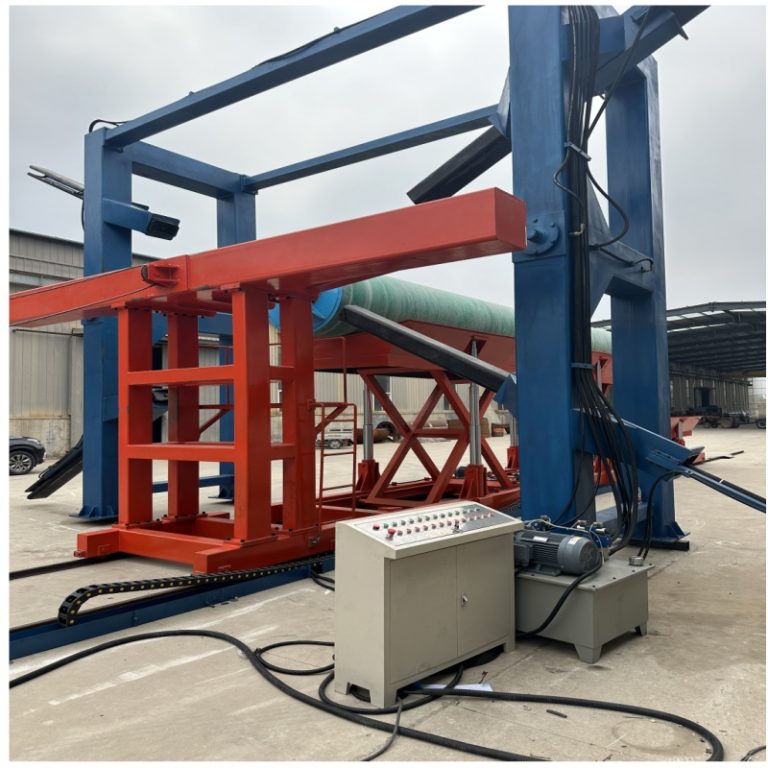
In the PDF, the resistance centre between pipe and mould aligns with the force centre of the unloading hydraulic device. The described sequence starts with hydraulic force while resistance is higher. Once the mould has moved and resistance falls, a capstan increases unloading speed.
Ask for a drawing that shows the force centreline, pipe and mandrel supports, restraint and the proposed changeover position. Review the drawing against your longest and heaviest scheduled combinations, not just a catalogue photograph.
The same QFW-4000VI document lists 83 t maximum mould-unloading force, 5 t capstan rated drawing force, 40 t supporting-pipe-trolley rated lifting force, 16 MPa hydraulic-system rated pressure, 2,000 mm unloading-machine centre height and 1,500 mm other single-machine centre height. These are catalogue figures for that cited line. Ask which values apply to the offered machine and what operating conditions accompany them; do not treat the list as a safe working limit or an acceptance result.
Plan a witnessed test around your equipment
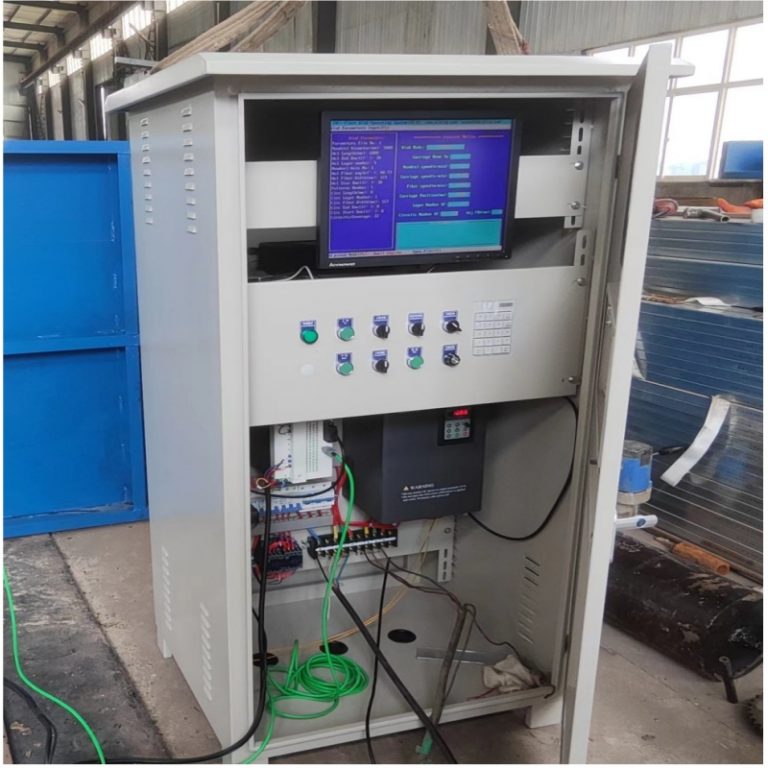
Write a test sheet for a representative mandrel and pipe. Record their dimensions, mass and starting condition; support and restraint positions; the hydraulic stage and changeover to capstan pulling; and observations during release. If pressure or force indicators are instrumented, specify how readings will be logged. Agree in advance on stop conditions and the visible condition of pipe and mandrel after the test.
An empty travel check and a product trial answer different questions. The first can expose travel or clearance problems; the second can show the agreed unloading sequence on the selected item. They are proposed project tests, not a test procedure prescribed by the QFW-4000VI document. Set the method and pass criteria with the supplier for the installation.
RFQ and acceptance checklist
| Field | Buyer provides | Supplier returns |
|---|---|---|
| Pipe and mandrel range | Drawings, dimensions, mass and representative variants | Offered range, support adjustment and exclusions |
| Layout | Plant datum, adjacent stations and transfer space | Station drawing, centreline and handover points |
| Pulling method | Item for demonstration and intended sequence | Hydraulic and capstan stages for the offered model |
| Witnessed test | Representative item and proposed observations | Instruments, stop conditions, pass criteria and record |
Use the Aoliande pipe production line page to locate the equipment family. For a QFW-4000VI proposal, ask Jiubo to identify that model explicitly and attach the configuration and test sheet to the offer.
Can one unloading station handle several pipe diameters?
The cited line describes adjustable supports for different diameters but gives no assurance for your complete schedule. Submit every required pipe and mandrel combination for written confirmation.
Is the 83 t catalogue figure an acceptance criterion?
No project criterion follows from that entry alone. Agree on the test item, operating condition, measurement and pass result separately.