
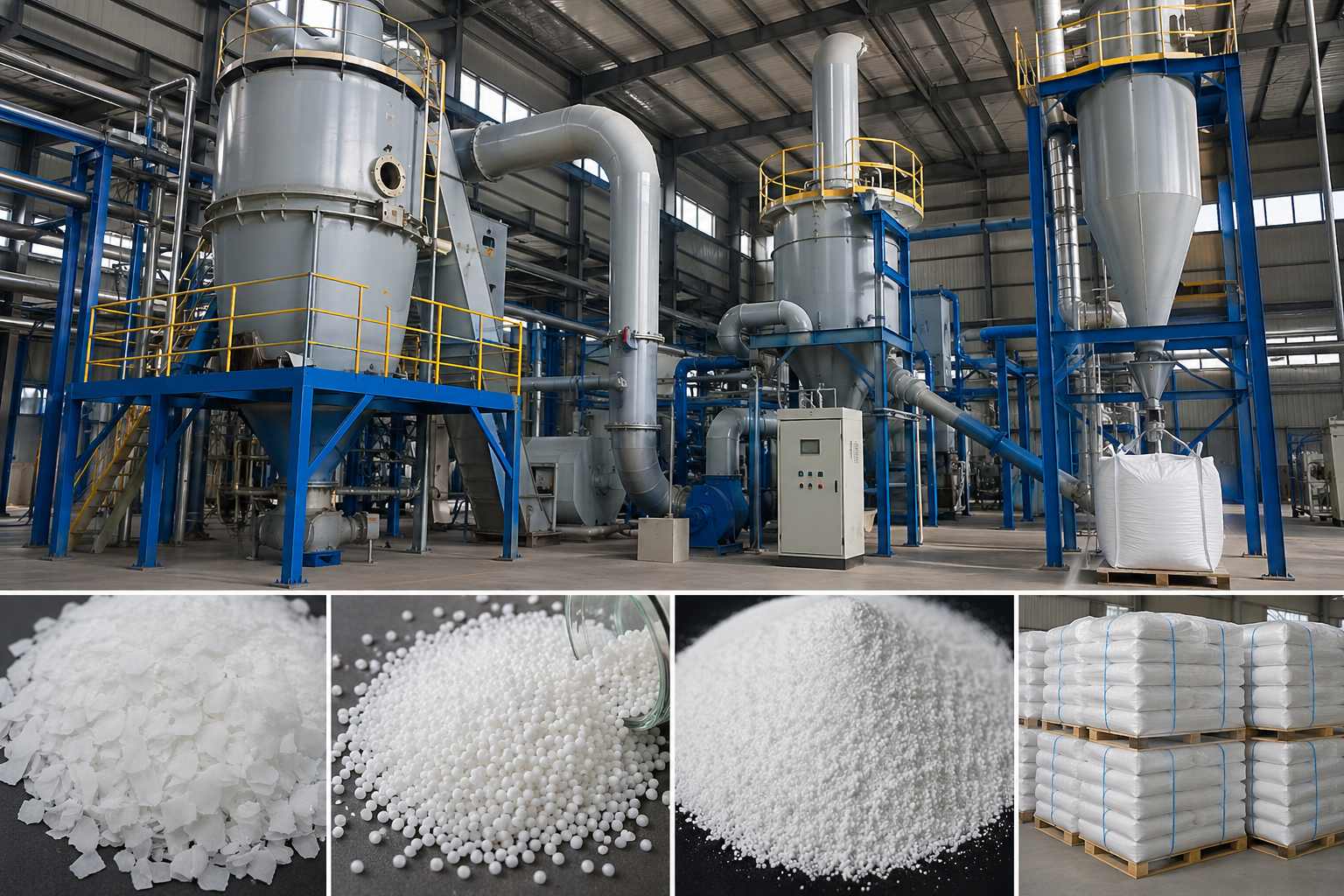
Calcium chloride caking is a small-looking problem that can create large losses across production, packing, storage, shipping, and customer use. A few hard bags in the warehouse may seem harmless at first. Later, they can slow bag unloading, block screw conveyors, cause complaints from deicing buyers, or reduce the flow rate in dust control and drilling fluid applications.
For calcium chloride producers, moisture control is not only a packaging task. It starts much earlier, from calcium liquid preparation and drying granulation to cooling, conveying, bagging, palletizing, and warehouse handling. When each step is designed with calcium chloride’s strong moisture absorption in mind, the final product stays cleaner, freer-flowing, and easier to sell.
Why Does Calcium Chloride Cake So Easily?
Calcium chloride is highly hygroscopic, which means it pulls moisture from the surrounding air. It is also deliquescent, so under humid conditions it can absorb enough water to become sticky, wet, or even partly liquid. This natural behavior makes calcium chloride useful as a desiccant, but it also creates trouble for producers of flakes, pellets, granules, and powder.
Moisture Turns Free-Flowing Particles Into Hard Lumps
At first, moisture usually appears as a thin wet layer on the particle surface. That layer works like glue. When flakes or pellets sit under pressure inside a 25 kg bag, a 50 kg bag, or a jumbo bag, the wet surfaces start bonding together. Over time, the product loses flowability and forms clumps.
The risk becomes higher when:
- The product is packed while still warm
- The final moisture content is too high
- Fine powder is mixed with larger particles
- Bags are stored directly on a damp floor
- Pallet covers are torn during transport
- Containers travel through hot and humid ports
For export markets, this is especially important. A calcium chloride shipment may spend several weeks in a container. During that time, daytime heat, night cooling, and sea-air humidity can create a tough test for packaging quality.
What Causes Caking During Calcium Chloride Production?
Caking is often blamed on bags or warehouse workers, but the real cause may begin inside the calcium chloride production line. If the drying process is unstable, packaging alone cannot fully fix the problem.
Common Process Points That Create Moisture Problems
In a typical CaCl2 production line, hydrochloric acid and limestone are used to prepare calcium liquid. After reaction and purification, the liquid goes through concentration, drying, and granulation. Each stage can affect the final product’s behavior.
| Production Point | Possible Problem | Result in Final Product |
| Calcium liquid preparation | Unstable concentration | Uneven drying load |
| Drying granulation | Short drying time or poor air distribution | High residual moisture |
| Screening | Too many fines remain | Higher surface area and faster moisture pickup |
| Kühlung | Product enters bags too hot | Condensation inside packaging |
| Förderung | Open transfer points | Moisture absorption before bagging |
| Bagging | Poor sealing or weak liner | Caking during storage |
A good calcium chloride drying process must treat moisture as a full-line issue, not a single-machine issue. The dryer, cooler, screener, conveyor, and bagging machine all need to work together.
How Can Drying Granulation Reduce Calcium Chloride Caking?
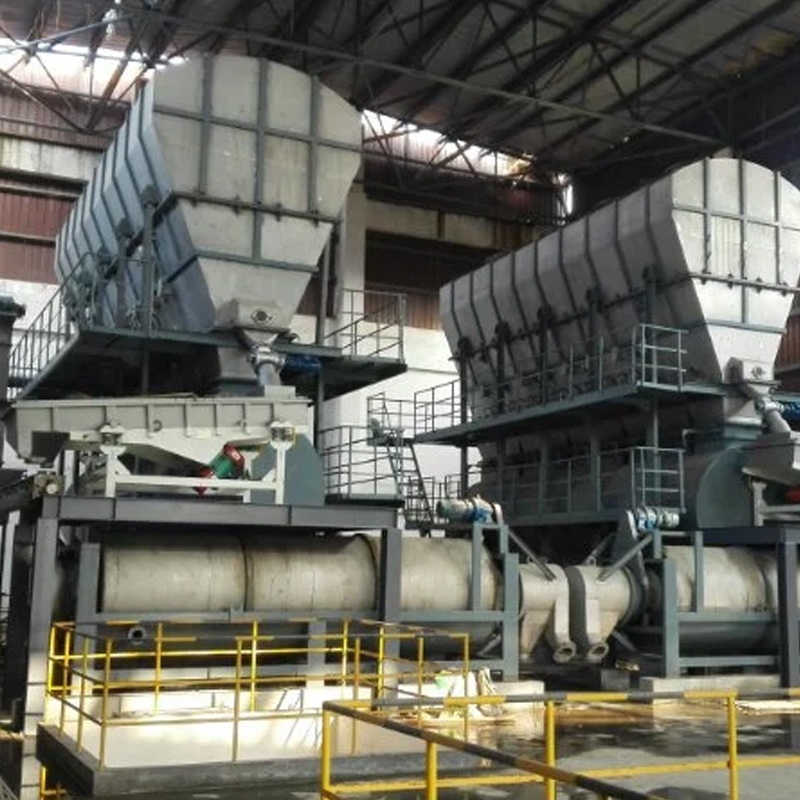
Drying granulation is one of the most important stages for calcium chloride moisture control. The goal is not only to remove water. The system also needs to build particles with steady size, proper strength, and lower tendency to stick together.
Why Spray Fluidized Bed Drying Helps
A spray fluidized bed dryer exposes material to hot air while keeping the particles in motion. This creates better contact between air and material than a simple static drying method. When the contact area is larger, heat exchange becomes faster and more even.
For calcium chloride production, this matters because wet spots inside the material stream can later become the starting point of clumping. If a batch has both dry particles and damp particles, the damp ones may stick to fines, form oversized lumps, or cause unstable bag filling.
A stable drying granulation system can help by:
- Lowering residual moisture before packaging
- Creating more uniform granules
- Reducing sticky wet material inside the dryer
- Discharging oversized or agglomerated particles
- Keeping production steadier when feed moisture changes
- Cutting material loss through controlled exhaust treatment
For buyers planning a new calcium chloride plant, the drying granulation section should be discussed early. Capacity, feed concentration, product form, fuel choice, exhaust gas treatment, and moisture target all affect the final design.
Why Cooling Before Packaging Matters?
Hot calcium chloride should not be rushed into bags. Even when the product has passed the drying stage, poor cooling can create moisture problems later.
Warm Product Can Create Condensation Inside Bags
When hot pellets or flakes are packed into a sealed bag, the heat trapped inside the package can move moisture toward the inner wall. As the bag cools, condensation may appear. That small amount of water is enough to start clumping, especially in powder or small granules.
In daily production, this problem often shows up as bags that feel acceptable after packing but become hard after one or two weeks in storage. The root cause may not be bad warehouse practice. It may be product temperature at the bagging point.
Before bagging, a plant should check:
- Product outlet temperature
- Moisture content after drying
- Cooling air humidity
- Time between cooling and packing
- Dust and fines level
- Bag sealing quality
A short delay before bagging may be cheaper than dealing with returned goods later. For continuous production, a properly matched cooler and enclosed conveying system can help keep the product dry without exposing it to open air for too long.
What Packaging Works Best for Calcium Chloride?
Calcium chloride packaging needs to block moisture, support stacking, and survive transport. The right choice depends on product form, destination climate, shipping time, and customer handling method.
Packaging for Flakes, Pellets, Granules, and Powder
Flakes usually have broad surfaces and irregular edges. They can cake when pressed together in humid conditions. Pellets and granules often flow better, but they still need moisture-proof packaging for long-distance shipping. Powder has the highest surface area, so it can absorb moisture faster than larger particles.
| Product Form | Main Caking Risk | Practical Packaging Choice |
| Calcium chloride flakes | Surface sticking under pressure | Woven bag with PE liner |
| Calcium chloride pellets | Moisture pickup during export | Moisture-proof bag or lined jumbo bag |
| Calcium chloride granules | Fines mixed with larger particles | Good sealing plus screening control |
| Calcium chloride powder | Fast clumping due to high surface area | Strong inner liner and dry packing room |
| Liquid calcium chloride | No caking, but leakage risk | Tank, drum, or IBC based on use |
For solid products, a PE liner is often a practical choice because it gives another barrier between calcium chloride and humid air. For jumbo bags, the liner should match the discharge method. If the end user needs fast unloading into a hopper, the liner design and outlet must not create bridging or tearing.
Export Packaging Needs Extra Attention
Export calcium chloride packaging should be tested against real shipping conditions. A bag that performs well in a dry local warehouse may fail in a container moving through tropical ports. Pallets should be wrapped, lifted off the floor, and kept away from container walls when possible. Damaged bags should not be loaded just to “save one bag.” One torn bag can wet nearby bags and create a larger problem.
How Should Calcium Chloride Be Stored After Production?
Even the best calcium chloride production line cannot protect product quality if the warehouse is wet, open, or poorly managed. Storage habits matter every day.
Keep the Warehouse Dry and the Bags Sealed
Calcium chloride should be stored in a covered, dry, and well-ventilated warehouse. Bags should stay sealed until use. Pallets should keep bags off the floor, especially in areas with concrete sweating, rain splash, or poor drainage.
Good storage practice includes:
- Keep doors closed during rain or fog
- Avoid storage near steam pipes or water lines
- Repair roof leaks quickly
- Use pallets rather than placing bags directly on the floor
- Keep torn bags separate from clean stock
- Follow first-in, first-out stock rotation
- Avoid long outdoor storage, even under simple covers
For users in coastal regions, mining areas, road maintenance depots, or concrete admixture plants, storage conditions can change fast. A dry morning can turn into a humid afternoon. That is why sealed packaging and covered storage should work together.
How Production Line Design Keeps Calcium Chloride Free-Flowing
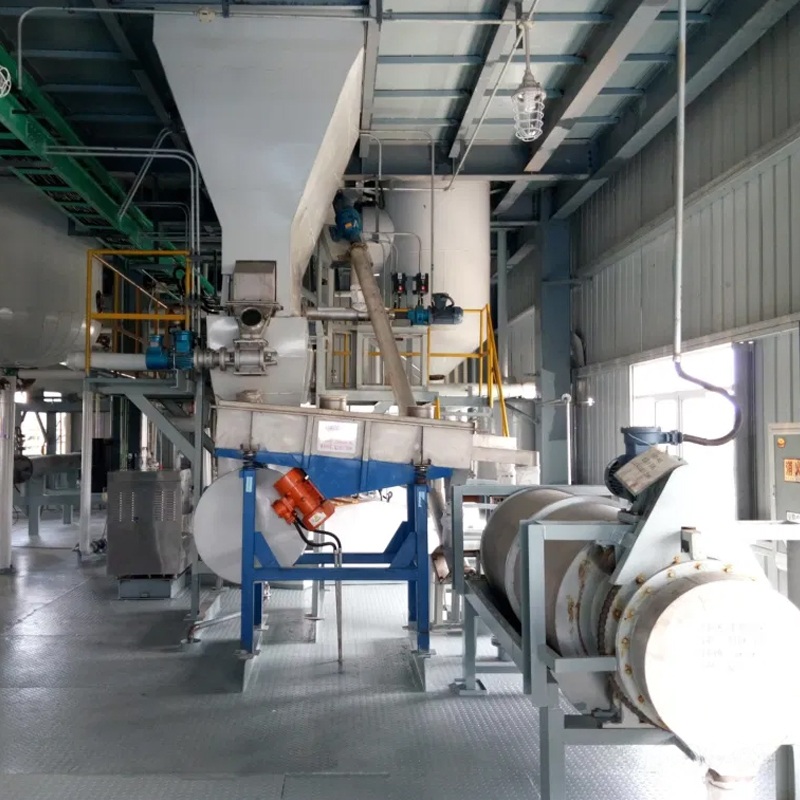
A calcium chloride production line should be designed around the product form the market needs. Deicing buyers may prefer pellets or flakes. Dust control users may buy liquid calcium chloride. Drilling fluid and industrial drying users may need higher-purity granular or powder products. Each product form has different handling behavior.
Design Details That Lower Moisture Risk
A practical CaCl2 production line does more than make dry material. It controls how material moves from liquid preparation to final packaging.
Key design points include:
- Stable calcium liquid preparation from hydrochloric acid and limestone
- Proper concentration control before drying
- Spray fluidized bed drying granulation
- Air distribution that keeps material moving
- Screening to remove oversized agglomerated particles
- Cooling before packaging
- Enclosed conveying to reduce air exposure
- Automatic operation to reduce manual variation
- Exhaust gas treatment to reduce dust and material loss
These details are not isolated. For example, better screening reduces fines. Fewer fines can improve bag flow. Better cooling lowers condensation risk. Enclosed conveying reduces moisture pickup before the bagging machine. Together, they help maintain stable CaCl2 product quality.
Calcium Chloride Caking Troubleshooting Checklist
When a plant faces repeated caking complaints, operators should avoid guessing. The same symptom can have several causes. A simple checklist can narrow the problem faster.
Field Problems and Practical Checks
| Problem Seen in Plant or Warehouse | Likely Cause | Check First |
| Bags become hard within days | Packed too hot or too wet | Product temperature and moisture before bagging |
| Pellets stick together | Uneven drying or high humidity exposure | Dryer outlet and conveying area |
| Powder flows poorly | Too many fines or weak sealing | Screening and bag liner quality |
| Lumps appear after shipping | Container humidity or damaged bags | Pallet wrap and export packaging |
| Product feels wet on bag opening | Air leakage or poor storage | Seal strength and warehouse humidity |
| Bagging weight varies | Poor flowability at hopper | Fines level and hopper design |
A useful rule is to check the process before blaming the customer. If the product leaves the plant with a high moisture level, every later step becomes harder. If the product is dry but packaging fails, storage and shipping become the weak point.
About Hebei Aoliande Chemical Equipment Co., LTD.
Hebei Aoliande Chemische Ausrüstung Co., LTD. is a chemical equipment supplier with experience in calcium chloride production line engineering and related industrial production systems. Its calcium chloride process covers calcium liquid production and drying granulation, with hydrochloric acid and limestone used as main raw materials for anhydrous calcium chloride production.
For producers planning a CaCl2 project, the company can provide process-related equipment selection based on required output and product form. The production line design includes key supporting areas such as pipeline, electrical, instrument, valve, utilities, drying, granulation, and environmental protection systems. The spray fluidized bed drying method, special air distribution structure, automatic operation, and exhaust gas treatment are all relevant for plants that need steady output, lower material loss, and better moisture control.
The company also has manufacturing and design capabilities, with service support covering technical consultation, material supply, transportation, and installation guidance. For buyers comparing calcium chloride plant equipment, this type of full-line support can reduce mismatch between process design, equipment capacity, and final product quality.
Schlussfolgerung
Calcium chloride caking is not a single packaging problem. It is the result of moisture, heat, pressure, particle shape, storage time, and handling conditions working together. A producer that only changes bags may still see hard lumps if the drying process is unstable or the product enters packaging too hot.
The better approach is to control moisture across the full calcium chloride production line. Stable calcium liquid preparation, efficient drying granulation, proper cooling, sealed conveying, moisture-proof packaging, and dry warehouse storage all play a role. When these details are planned together, calcium chloride flakes, pellets, granules, and powder can keep better flowability during storage and transport.
For plants serving deicing, dust control, drilling fluid, concrete, refrigeration, and industrial drying markets, free-flowing product quality can directly affect customer trust. A well-designed calcium chloride production line helps reduce caking, protect product value, and make export shipments more reliable.
Häufig gestellte Fragen
Why does calcium chloride cake in bags?
Calcium chloride cakes in bags because it absorbs moisture from the air. Once particle surfaces become damp, flakes, pellets, or powder can stick together under bag pressure. Warm packing, poor sealing, high residual moisture, and humid storage can all make calcium chloride caking worse.
How do you prevent calcium chloride from absorbing moisture?
The best way is to control moisture from production to storage. Dry the product properly, cool it before bagging, use moisture-proof packaging, seal bags well, and store pallets in a dry covered warehouse. For export, PE liner bags and strong pallet wrapping are often needed.
Are calcium chloride pellets less likely to cake than flakes?
Calcium chloride pellets may flow better than flakes because of their smoother shape, but they can still absorb moisture and cake during storage or shipping. Product moisture, particle strength, packaging quality, and warehouse humidity matter more than shape alone.
What is the best packaging for calcium chloride export?
For solid calcium chloride export, woven bags with PE liners, lined jumbo bags, and moisture-proof pallet wrapping are common choices. The best option depends on whether the product is flakes, pellets, granules, or powder, and how long the shipment will stay in humid conditions.
How can a calcium chloride production line reduce caking?
A calcium chloride production line can reduce caking through stable liquid preparation, efficient drying granulation, proper air distribution, cooling before packaging, screening, enclosed conveying, and automatic operation. These steps help lower residual moisture and keep the product more free-flowing.