
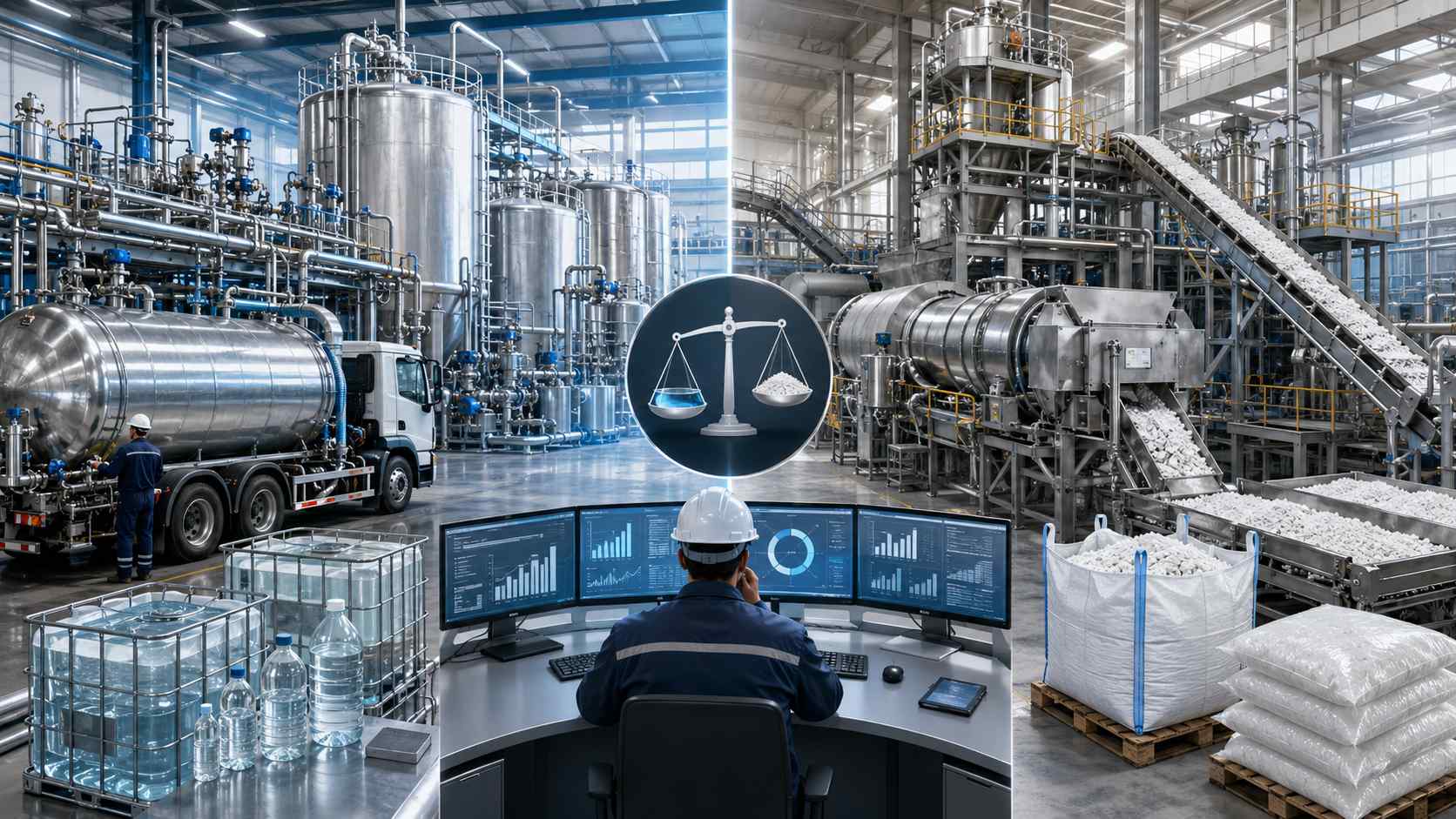
Choosing between a liquid calcium chloride production line and a solid calcium chloride production line is not only about the price of the machines. The better choice depends on how far you sell the product. It also depends on energy cost. Raw material supply matters too. Customer needs play a big role. The market may want brine, flakes, granules, or anhydrous material. You must look at all these points before you decide.
Liquid production often needs less money at the start. It also needs fewer finishing steps. Solid production adds extra work. It needs evaporation. It needs drying. It may need granulation or flaking. Cooling, screening, and packaging come next. This makes the plant more complex. But it also creates products with higher concentration. These products can travel farther. The most profitable calcium chloride plant is the one built around real demand. It is not the one with the lowest first quote.
How the Two Production Routes Differ
Both routes share the front part of the calcium chloride manufacturing process. Limestone or another calcium source reacts with hydrochloric acid. This forms calcium chloride solution. The liquid is then clarified. It is filtered. When needed, it is purified. This controls iron, magnesium, heavy metals, and insoluble matter.
The main difference starts after clean calcium chloride liquid has been made.
Liquid Calcium Chloride Production
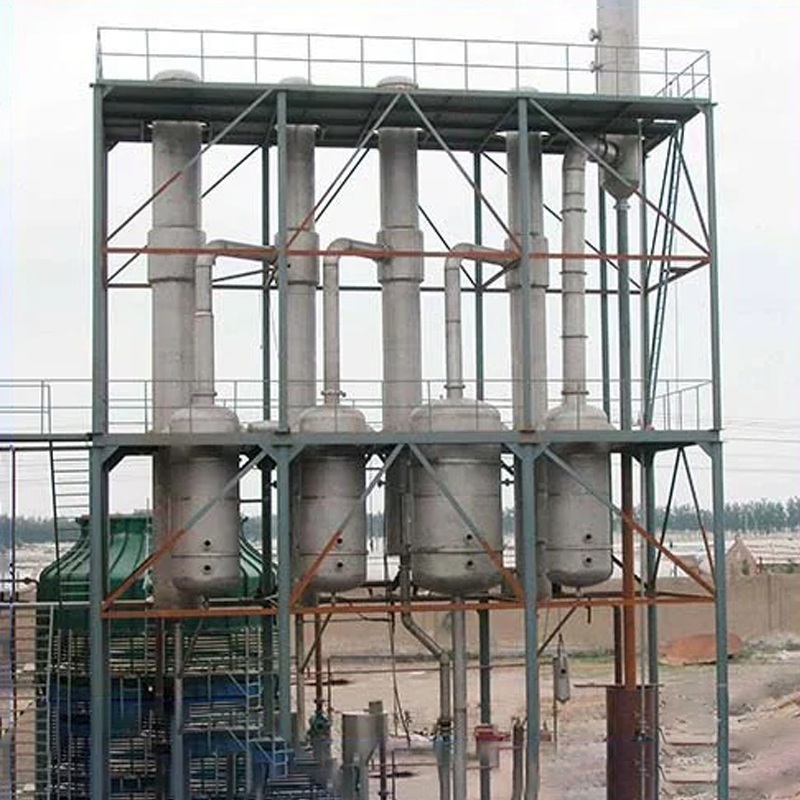
A liquid calcium chloride production line usually stops after reaction, filtration, concentration, storage, and loading. Commercial solutions often sit in the 32% to 42% range. They can be sent in road tankers. They can go in intermediate bulk containers. They can also go straight to customer storage tanks.
Typical users include road authorities that apply anti-icing brine. Mines use it to control haul-road dust. Oilfield companies blend it into completion fluids. Industrial sites use it as refrigeration brine.
No dry product is formed. So fewer unit operations usually mean lower heat demand. The plant footprint stays smaller. Maintenance stays simpler too.
Solid Calcium Chloride Production
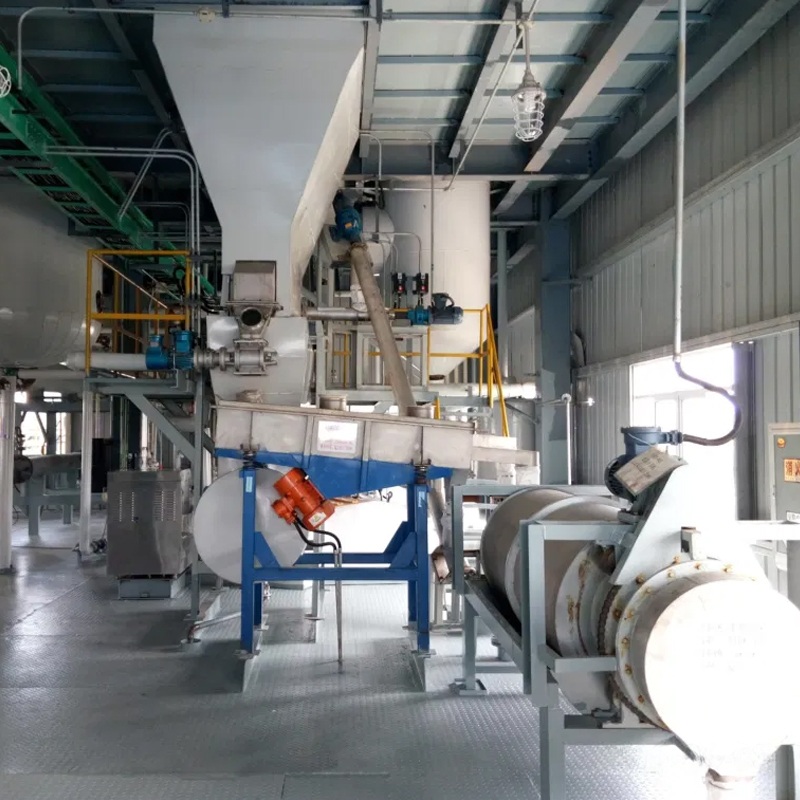
A solid calcium chloride production line takes filtered liquid through further concentration and water removal. The finishing section may make flakes, granules, pellets, powder, or anhydrous calcium chloride. Common commercial ranges include about 74% to 77% for hydrated flakes. High-strength or anhydrous grades reach 94% to 97%.
Drying is the key stage. Water must be removed carefully. Too much dust is bad. Caking is bad. Poor particle strength is bad. Uneven size is bad. A calcium chloride granulation line may use spray fluidized-bed drying. Cooling follows. Screening comes next. Off-size material is recycled. Packaging finishes the job.
Production Cost and Revenue Comparison
Profit must be measured across the full production and delivery chain. A low-cost plant can still lose money through freight. A more complex line may do well when it sells several grades to far markets.
| Factor | Liquid Line | Solid Line |
|---|---|---|
| Initial investment | Lower | Higher |
| Energy demand | Lower | Higher |
| Process complexity | Moderate | Higher |
| Packaging cost | Low | Moderate to high |
| Sales radius | Mainly regional | Regional and export |
| Product value per tonne shipped | Lower | Higher |
| Maintenance load | Lower | Higher |
Capital and Operating Costs
A liquid plant needs reaction vessels. It needs corrosion-resistant piping. Filters are required. Concentration equipment is needed. Tanks, pumps, controls, and a loading area complete the setup. A solid plant adds drying equipment. Dust collection is necessary. Conveying systems are used. Warehouse space is larger.
Solid production also uses more steam, gas, or electricity. Packaging and maintenance add extra cost.
A useful calculation is:
Profit per tonne = net selling price − raw materials − utilities − labor − maintenance − packaging − freight
The word “net” matters a lot. Solid calcium chloride may have a higher invoice price. But liquid brine sold in full tanker loads to a nearby customer can give a stronger delivered margin.
When Is a Liquid Line More Profitable?
Liquid production often gives the better return in a regional market with steady bulk demand. A plant close to municipal depots can deliver by tanker. Mines nearby can take the product. Construction projects and oilfield operations work the same way. Water does not travel over long distances in these cases.
A liquid calcium chloride production line looks good when:
- investment capital is limited
- low-cost hydrochloric acid is available nearby
- customers accept standard brine concentrations
- the delivery radius is short
- energy is expensive
- early production and cash flow are priorities
Seasonality needs attention. De-icing demand may peak in winter. Dust-control sales rise in dry months. Serving several industries can reduce idle periods.
The main weakness is freight. Water makes up a large share of each shipment. Distance can remove the production-cost advantage.
When Is a Solid Line More Profitable?
Solid production becomes more attractive when buyers are spread across several regions or countries. Removing water increases the active calcium chloride carried in each truck or container. Bagged flakes and granules are also easier for distributors to store. They are easier to resell. They are easier to dose.
A solid calcium chloride production line has stronger potential when:
- export sales are part of the business plan
- customers request several concentrations or particle sizes
- the market pays more for anhydrous calcium chloride
- low-cost steam or waste heat can be used
- the plant can maintain high yearly utilization
Product consistency directly affects revenue. Buyers may reject material with excess moisture. Too much powder is a problem. Weak particles cause trouble. Unstable purity leads to returns. Feed control, dust recovery, screening, and cooling must work as one process.
Spray fluidized-bed granulation increases contact between material and drying air. It supports heat transfer. Suitable air distribution can help discharge large or agglomerated particles. Tail gas may be treated through washing and desulfuration. Equipment selection can be adjusted to planned output.
Is a Flexible Calcium Chloride Plant the Better Choice?
For many projects, a combined line provides the strongest long-term position. The liquid section can serve nearby bulk users. The drying and granulation section converts part of the same stream into flakes or granules for distant customers.
This product split lowers dependence on one market. During strong local demand, more liquid can move through tanker loading. When demand slows, more solution can enter solid production.
Before design begins, confirm annual sales by product form. Check required purity. Look at monthly demand. Calculate freight cost. Know the energy price. Plan storage space.
Hebei Aoliande as a Calcium Chloride Production Line Supplier
Hebei Aoliande Chemical Equipment Co., LTD. designs and manufactures chemical production systems. This includes calcium chloride plants. Its work covers calcium liquid production. It covers drying granulation. Equipment selection is part of the service. Material and structural design are included. Technical advice is given. Supply coordination happens. Transportation is arranged. Installation supervision is provided. The company applies management systems for quality. Environmental practice is followed. Occupational health and safety rules are kept.
For calcium chloride projects, the line can be configured around the required capacity and product specification. Available process features include spray fluidized-bed drying. Automatic operation is possible. Tail-gas washing and desulfuration are offered. Production of high-purity anhydrous calcium chloride is supported. This project-based approach is useful when feedstock quality differs by site. Utilities change from place to place. Local emission rules vary. Customer requirements are not the same everywhere.
Conclusion
Neither route is automatically more profitable. A liquid calcium chloride production line normally offers lower capital cost. It uses less energy. It allows quicker entry into a nearby bulk market. A solid calcium chloride production line needs more equipment and operating skill. But it opens access to higher-concentration products. Distant distributors become reachable. Export customers can be served.
The decision should be based on delivered margin. Factory-gate price alone is not enough. Plants close to large liquid users may recover investment faster with a brine line. Producers serving wider markets may earn more from flakes, granules, and anhydrous grades. Mixed demand favors a flexible calcium chloride plant.
FAQs
Which calcium chloride production line has the lower investment cost?
A liquid calcium chloride production line usually costs less. It does not require a complete drying, granulation, cooling, screening, and bagging section. Capacity still affects the final price. Materials matter. Utilities change the number. Automation level counts. Emission treatment adds cost too.
Is solid calcium chloride always more profitable?
No. Solid product often sells at a higher price. But it also brings higher energy cost. Packaging costs more. Maintenance is heavier. Handling needs more care. Liquid calcium chloride can be more profitable when large customers are close to the plant.
What has the greatest effect on calcium chloride production cost?
Raw material price has a big effect. Acid consumption matters. Evaporation duty is important. Fuel or steam price changes the result. Plant utilization must stay high. Maintenance cost adds up. Packaging is another factor. Freight can remove margin. Product loss and off-spec batches can also cut the margin quickly.
Can one calcium chloride plant make liquid and solid products?
Yes. A flexible calcium chloride processing plant can sell part of the purified solution as liquid. It can send the remaining stream to concentration, drying, and granulation.
How should a buyer choose a calcium chloride plant supplier?
Review process design carefully. Check material selection. Look at energy performance. Emission treatment must meet local rules. Automation level should match needs. Product-quality targets must be clear. Installation support is valuable. Comparable project experience gives confidence. A mass balance and utility estimate should be completed before the equipment scope is fixed.