
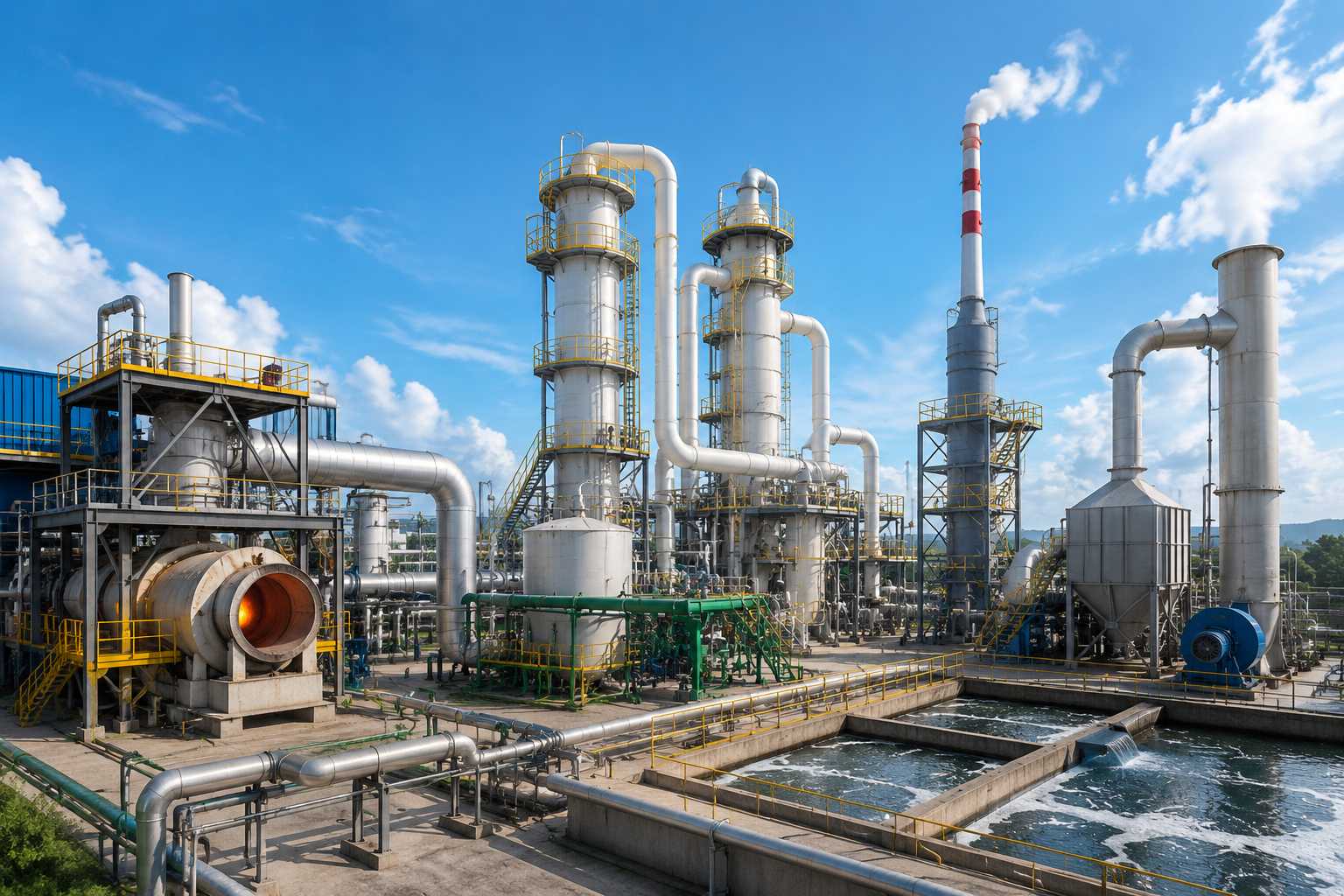
Environmental compliance in a sulfate of potash facility begins with furnace layout, gas collection, materials, water balance, and operating discipline. In a Mannheim process SOP plant, potassium chloride reacts with sulfuric acid above 600°C to produce potassium sulfate and hydrogen chloride. The fertilizer is the main solid product, while the HCl stream can become a saleable hydrochloric acid by-product when it is cooled, absorbed, stored, and handled correctly.
A sound potassium sulfate production line treats by-product recovery and pollution control as one system. This limits product loss, acid exposure, and wastewater volume.
Where Environmental Risks Develop
Environmental risks are tied to specific equipment. Source mapping guides controls and monitoring points.
| Plant area | Main concern | Typical control |
| Mannheim furnace and duct | Hot HCl gas, acid mist, dust | Sealed collection, cooling, solids removal |
| HCl absorption section | HCl slip, heat, corrosion | Staged absorption, cooling, demisting |
| Combustion system | SO₂, particles, unstable flue gas | Fuel control, burner tuning, wet scrubbing |
| Acid storage and loading | Fumes, leaks, runoff | Closed vents, bunding, scrubber connection |
| Washing and maintenance | Acidic wastewater, solids | Segregation, neutralization, settling |
A single tail gas scrubber cannot fix every problem. Hot gas needs cooling, dust can block packing or nozzles, and liquid waste needs a separate route.
HCl Recovery in the Mannheim Process
The main reaction is:
2KCl + H₂SO₄ → K₂SO₄ + 2HCl
Hydrogen chloride leaves the furnace in a hot gas stream. Sending it directly to a final scrubber wastes product and raises the treatment load. A complete HCl recovery system conditions the gas and absorbs HCl into water or dilute hydrochloric acid. Water absorbers used for acid production are closely related to water scrubbers used for HCl emission control.
Cooling and Staged HCl Absorption
HCl absorption releases heat. As circulating liquid warms, absorption performance drops and more HCl can pass to the next stage. Reliable SOP plant HCl absorption depends on cooling, stable circulation, and good gas-liquid contact.
A practical line may include a gas cooler, hydrochloric acid absorption towers, an acid circulation tank, a mist eliminator, and a polishing scrubber. Packed towers provide strong contact, but inlet dust must be controlled because deposits restrict flow. High inlet temperature can also reduce absorption and increase liquid loss.
Operators should track temperature, circulation flow, acid concentration, pressure drop, and outlet HCl. A rising outlet value may signal weak cooling, damaged packing, channeling, or higher gas load.
Acid Storage and Transfer
Recovered acid remains an emissions source after the absorber. Tanks, loading points, pumps, flanges, and vents need corrosion-resistant construction and closed collection. Tank vents can return to the scrubbing system instead of releasing fumes in the storage area.
Secondary containment, isolated drainage, emergency showers, and inspection access simplify spill response.
SO₂ Control Without Overdesign
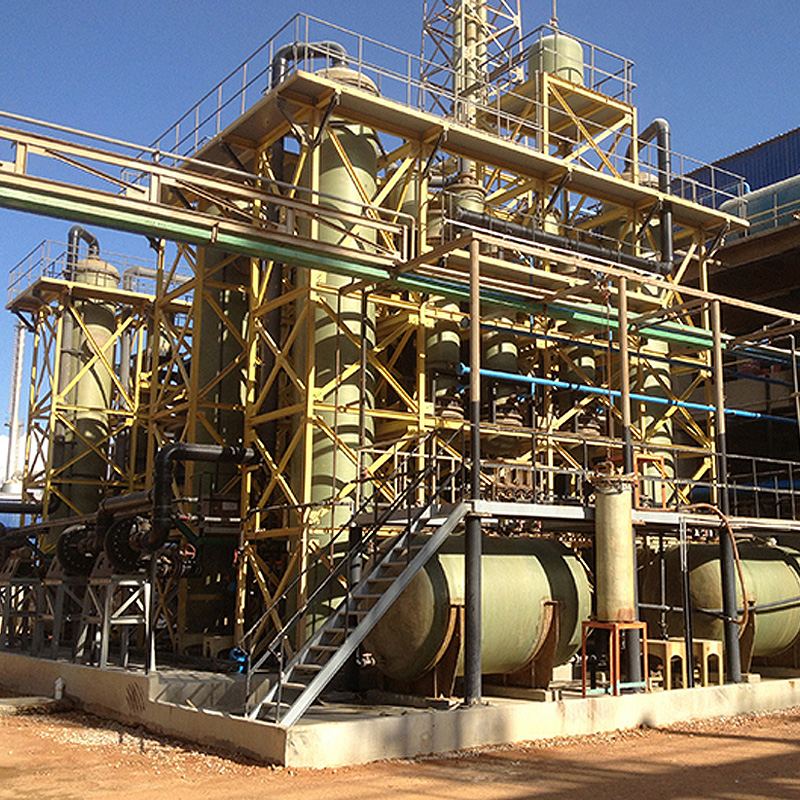
SO₂ is not always the main pollutant in a Mannheim process potassium sulfate plant. Its importance depends on heating fuel, sulfur content, burner condition, utility boilers, and the local process arrangement.
Fuel Quality and Combustion Stability
Stable fuel quality, balanced air supply, even heating, and burner maintenance reduce flue-gas swings. Oxygen, temperature, pressure, and SO₂ readings help locate the cause.
Where end-of-pipe removal is required, wet scrubbing brings gas into contact with water or an alkaline reagent. Spray towers are used for soluble gases and SO₂ service, though their mass-transfer performance is lower than packed systems. The choice depends on dust loading, gas flow, fouling risk, reagent supply, and the plant’s emission limit.
A Reliable Tail Gas Treatment Train
Tail gas treatment should cover startup, shutdown, and upset conditions, when short emission peaks may occur.
From Furnace Outlet to Stack
A common treatment sequence includes:
- sealed furnace gas collection;
- cooling or quenching;
- dust and entrained-solids removal;
- primary HCl absorption;
- secondary absorption or polishing scrubbing;
- mist elimination;
- induced-draft fan and monitored stack.
The fan should maintain controlled negative pressure without pulling excessive air into the furnace. Too little draft allows acid gas to escape through doors and joints. Too much draft raises gas volume and increases the load on downstream towers.
Interlocks can connect furnace feed, acid circulation, cooling water, fan status, and high outlet emissions. If a critical system stops, controlled feed reduction or shutdown is safer than continued production.
Wastewater Control and Water Reuse
Industrial wastewater treatment in an SOP plant starts with segregation. Acid drainage, wash water, cooling water, stormwater, and domestic sewage should not enter one common pit. Mixing streams increases treatment volume and hinders reuse.
Acidic Wastewater Neutralization and Solids Removal
Acidic wastewater is commonly collected in an equalization tank, mixed, and neutralized with a suitable alkaline reagent. Later stages may include precipitation, settling, filtration, and final pH adjustment. Sludge should be characterized before disposal because it may contain salts, corrosion products, or process solids.
Useful daily practices include:
- use dry cleanup before washing floors;
- repair leaking pumps and seals promptly;
- return suitable scrubber liquid to the process;
- keep cooling circuits closed where practical;
- collect runoff from acid handling zones separately.
The treatment target must follow the local discharge permit. Besides pH, chloride, sulfate, suspended solids, temperature, and site-specific contaminants may be regulated.
Monitoring That Supports Daily Compliance
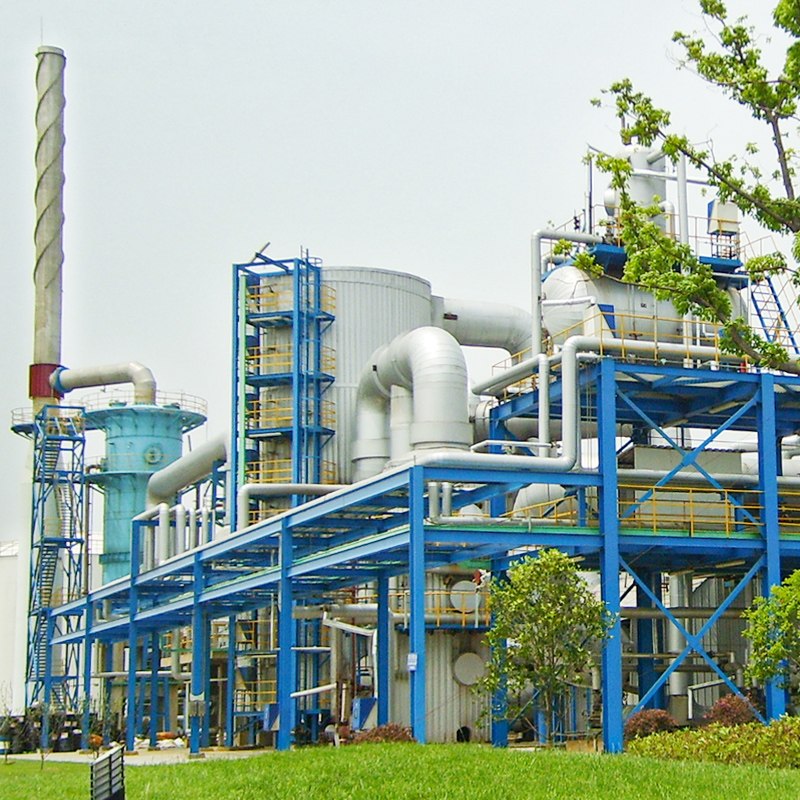
A practical environmental dashboard may track stack HCl and SO₂, tower pressure drop, circulation flow, scrubber pH, acid concentration, wastewater pH, tank level, and fan current.
Each alarm needs a response. Rising pressure drop may call for packing inspection. Falling circulation flow may require pump changeover and furnace load reduction. Trends reveal deterioration before an emission event.
Planning an Integrated SOP Production Line
Environmental performance is stronger when the furnace, HCl recovery system, tail gas purification system, acid storage, wastewater treatment, and PLC controls are designed as one package. Mismatched capacities create bottlenecks. An absorber sized for average flow may struggle during feed changes, while an undersized cooler can limit the recovery section.
Buyers should request a mass balance, gas-flow basis, HCl recovery range, utility use, materials list, control philosophy, wastewater balance, and operating guarantees.
Hebei Aoliande Chemical Equipment Co., LTD.
Hebei Aoliande Chemical Equipment Co., LTD. supplies Mannheim Process sodium sulfate production lines and potassium sulfate production lines, with engineering services covering gas recovery, corrosion-resistant equipment, automation, installation guidance, and commissioning. Its work links furnace design, HCl absorption, energy use, and environmental control rather than treating them as isolated units.
The company also operates a potassium fertilizer facility used for process reference and customer visits, with stated annual capacity of 160,000 tons of potassium sulfate and 200,000 tons of hydrochloric acid. Its service scope includes technical consultation, material and structural design, equipment supply, transportation, installation supervision, and commissioning guidance.
Conclusion
Environmental compliance for SOP plants depends on stable furnace operation, cooled HCl absorption, effective tail gas treatment, careful acid storage, and segregated wastewater management. The best results come from treating HCl recovery as a production asset and pollution control as part of process reliability. New plants and upgrades should size environmental systems from the same mass balance as the potassium sulfate production line.
FAQs
How does an HCl recovery system work in an SOP plant?
Hot HCl-rich gas is collected from the Mannheim furnace, cooled, and passed through absorption towers. Water or dilute acid absorbs the hydrogen chloride to produce hydrochloric acid. A polishing scrubber and mist eliminator reduce residual HCl before the gas reaches the stack.
What causes high HCl emissions from a potassium sulfate plant?
Common causes include high gas temperature, low circulation flow, weak cooling, damaged packing, blocked nozzles, air leakage, sudden furnace-load changes, and poor demisting.
Is SO₂ emission control required in every Mannheim process SOP plant?
Not always. SO₂ risk depends mainly on fuel sulfur, combustion equipment, utility boilers, and site-specific conditions. Actual fuel data and permit limits should guide the choice of sulfur dioxide removal system.
What wastewater comes from an SOP production line?
Typical streams include equipment wash water, acid-area drainage, scrubber purge, laboratory wastewater, and contaminated stormwater. Clean cooling water and uncontaminated rainwater should be kept separate where local rules allow.
What should buyers check when selecting an SOP plant supplier?
Key checks include HCl absorption capacity, tail gas treatment sequence, corrosion-resistant materials, emission monitoring, wastewater balance, emergency storage, control interlocks, and commissioning support.